Hidden Similarity between Confession and the Holy Eucharist
Why the Words Spoken by the Priest Actually Create Reality
Hidden Similarity between Confession and the Holy Eucharist
Why the Words Spoken by the Priest Actually Create Reality
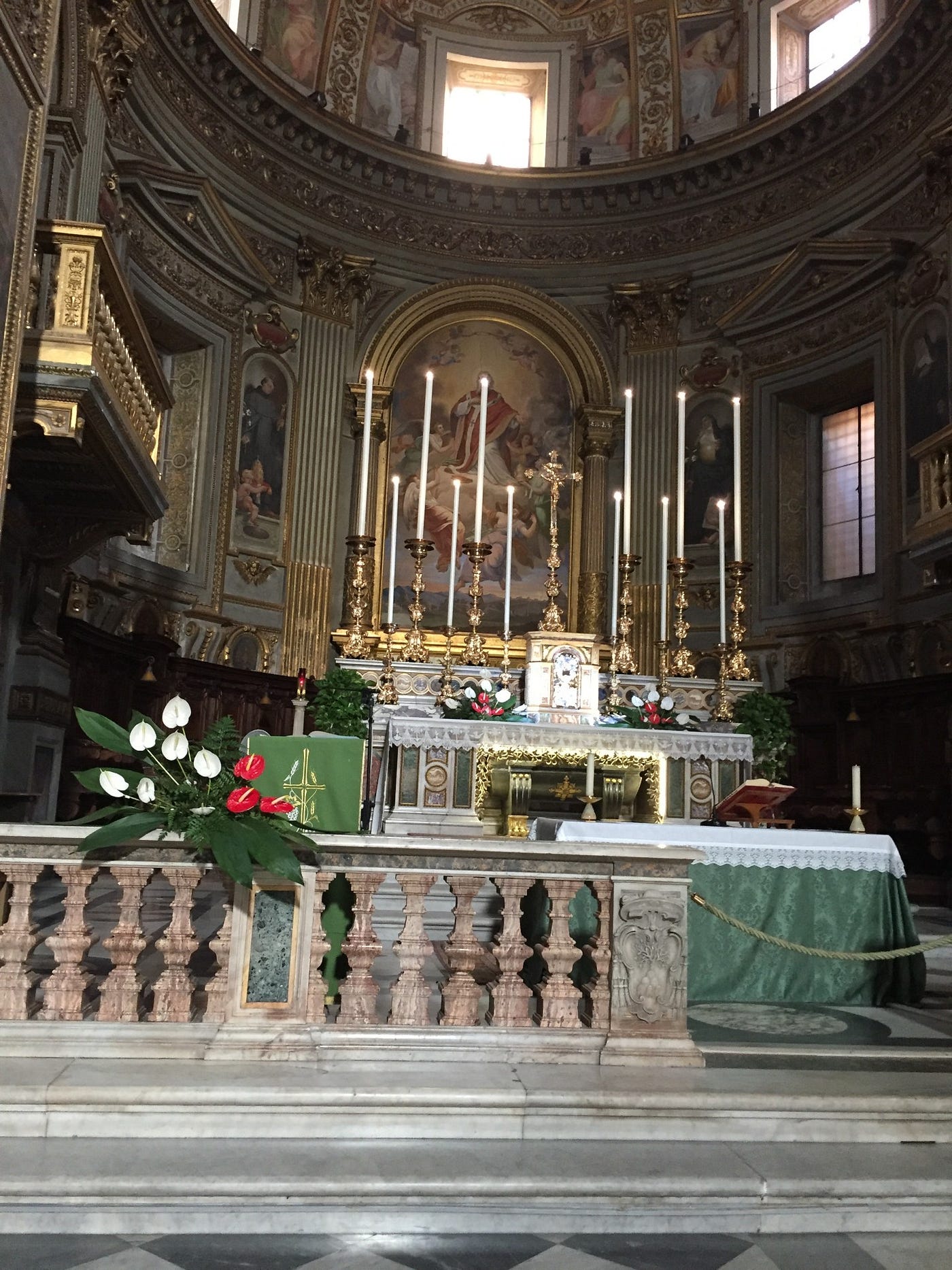
Photo by Sara McLaughlin
Both the sacrament of Penance and the sacrament of the Holy Eucharist in the Roman Catholic Church share an amazing similarity that many people — especially non-Catholics — probably don’t realize.
In both cases, the spoken words of the priest actually cause the action they represent to occur. Standing in as a representative of Jesus Christ, by virtue of Holy Orders, the priest has the authority to say, “This is my Body,” and “This is my Blood” at the appropriate moment of the Holy Mass. Likewise, he has the authority to say “I absolve you of your sins” after a person has confessed his or her sins in confession [or what is officially called the Sacrament of Penance and Reconciliation].
As those words are spoken every time, something actually happens! Reality changes!
Formally, this type of performative speech act is known more precisely as a declaration. We have secular examples as well, such as when a president declares war. His words cause the action. Or when a justice of the peace proclaims, “I now pronounce you husband and wife.” Though the justice of the peace cannot create a sacramental marriage, people everywhere recognize that the power of those words cause an action to take place.
Far more powerful are the words of the priest who officiates at the Sacrament of Holy Matrimony because God’s grace is operational as a bond is created between husband and wife.
When God said, “Let there be light,” those amazing words created a new reality.
Jesus said, “This is my Body,” and “This is my Blood” when He spoke to His disciples at the Last Supper. The power and the truth embodied in those words caused an action to take place.
In the same manner, and only because of the authority handed down through the apostolic continuity of the priesthood, each Roman Catholic priest utters those same words of Jesus during the consecration of the Sacrifice of the Holy Mass. At that instant, wafers and wine become the true Body and Blood of Christ.
Jesus could have said, “This is a symbol of my death and Resurrection” or “Take part in this ceremony to remember this night” or any number of statements. However, His words were always chosen carefully and deliberately. He knew His words had the power to create a new reality.
By doing so, He instituted a sacrament through which His Holy Church — all of us who receive the Holy Eucharist — is flooded with His grace.
Perhaps even less recognized is the unique power of the words spoken by the priest during the Sacrament of Penance and Reconciliation [Confession]. Protestants, for example, do not appreciate or understand the value of confessing one’s sins to a priest.
According to the Catechism of the Catholic Church, “Indeed bishops and priests by virtue of the Sacrament of Holy Orders, have the power to forgive all sins in the name of the Father, and of the Son, and of the Holy Spirit.”
Thus, the priest’s words, “I absolve you of your sins,” is no empty statement. It actually creates or bestows the state of forgiveness on the person who made the confession. This action makes perfect sense because it is in keeping with other declarative speech acts that God instituted.
Ordinary language can be true or false. People sometimes lie or unintentionally say something false, such as “It is going to rain today.” It might rain; it might not rain. We cannot even know the intention of the speaker. Is it to deceive? Is it to convey what that person believes to be true or perhaps wants to be true?
We need a reminder of the earth-shattering difference between ordinary conversation and the declarative, performative speech acts spoken by the priests because these special words are backed by Almighty God.
The reason I singled out and specified the connection between the Sacrament of Penance and the sacrament of the Holy Eucharist is that unlike the other sacraments which also involve declarations, these two sacraments are readily available to us so frequently that it is easy to take them for granted or worse, not partake in them at all.
All sacraments are nothing short of miraculous gifts to us from God.
They create heaven on earth.
메타데이터
- post_id
- 759a87fbe63c
- slug
- hidden-similarity-between-confession-and-the-holy-eucharist-759a87fbe63c
- url
- https://medium.com/catholicism-for-the-modern-world/hidden-similarity-between-confession-and-the-holy-eucharist-759a87fbe63c
- canonical_url
- https://medium.com/catholicism-for-the-modern-world/hidden-similarity-between-confession-and-the-holy-eucharist-759a87fbe63c
- author_url
- https://medium.com/@sara.mclaughlin
- status
- ok
- fetched_at
- 2026-07-22 23:32:06