Melodious Odin Tales
Permanence, perseverance and persistence in spite of all obstacles, discouragements, and impossibilities: It is this, that in all things…
Melodious Odin Tales
Permanence, perseverance and persistence in spite of all obstacles, discouragements, and impossibilities: It is this, that in all things distinguishes the strong soul from the weak. **Thomas Carlyle**
Photo by Carla Santiago on Unsplash
What is a Melody other than a song
Music is the broadest term for the art form itself. Song refers specifically to a musical composition with lyrics. Melody is the tuneful sequence of notes within music or a song. Think of music as the overall experience, song as a complete piece with words, and melody as the catchy tune you hum.So Whistle While you work.
Source: Music vs. Song vs. Melody: Differences & Examples
So we give you a Melody of Tears from Beethoven. Sound Familiar? Haven’t you heard that in sad song somewhere. All classical music sounds so familiar because it is in movies or reimagined. Listen.
[embed]Ludwig Van Beethoven — A melody of tears
The definition of melody…
melody(n.)
c. 1300, melodie, “vocal or instrumental music, a succession of agreeable musical sounds,” from Old French melodie “music, song, tune” (12c.) and directly from Late Latin melodia “a pleasant song” (in Medieval Latin also “music” generally), from Greek melōidia “a singing, a chanting; a choral song, a tune for lyric poetry,” from melos “song, part of song; limb, member” (a word of uncertain origin) + ōidē “song, ode” (see ode). From late 14c. as “a song of clear and balanced form.” Sense of “a series of tones so related to one another as to produce a distinct musical phrase or idea, a tune” is by c. 1600. Meaning “the principal voice-part in a harmonic composition” is by 1880.
1580s, from French ode (c. 1500), from Late Latin ode “lyric song,” from Greek ōidē, an Attic contraction of aoidē “song, ode;” related to aeidein (Attic aidein) “to sing;” aoidos (Attic oidos) “a singer, singing;” aude “voice, tone, sound,” probably from a PIE *e-weid-, perhaps from root *wed- “to speak.” In classical use, “a poem intended to be sung;” in modern use usually a rhymed lyric, often an address, usually dignified, rarely extending to 150 lines. Related: Odic.
Ode or Odin is the Norse God of Wednesday.
Here are some interesting tales about Odin and the Raven
and his Mead of Heaven.
The name, Hávamál can be translated as Words of Hávi. Hávi is a version of Hár, meaning the **“High one”, another name for Odin**. The common understanding is that the Hávamál are words directly from Odin, sharing his wisdom, learnings and insights.
Having said that, I feel I have to point out that it doesn’t necessarily read as one coherent poem, and likely never was either. Most scholars agree that it was likely created by combining anywhere from four to six existing poems into one, somewhat coherent entity.
The original poems themselves are believed to be from the 900s to 1000s, having been shared and passed down orally. As is the case with all the old Norse poems, they likely existed in slightly different variations, colored by the skald retelling them.
The first part is The Gestabáttr, covering verses 1 to 83. This is like a handbook for travelers and those who are visiting others. Look here to find simple wisdom for your safe passage in the world beyond the threshold of your home.
The second part is a bit more jumbled, but covers verses 84 to 110. This part deals with various advice Odin has about matters of the heart, and women.
Following this section is part three, called the Loddfáfnismá, covering verses 111 to 137. It is structured as a series of moral codes addressed to one Loddfáfnir who Odin deemed in need of instruction.
The fourth part is Rúnatal, it covers verses 138 to 145. This poem relates how Odin hung himself on the Yggdrasil in order to gain the knowledge of the runes.
Finally, the last part is the Ljódatal, covering verses 146 to 164. In this part Odin lists a number of spells he knows covering everything from love spells to raising the dead.
Together, these parts constitutes the Hávamál as we know it today. It’s nearly impossible though to know if it was ever presented like this back in the Viking Age proper, or if the collection of these parts into a whole was created only after the end of the Viking Age.
Selected Wisdom
One’s own house is best, small though it be; at home is every one his own master. Though he but two goats possess, and a straw-thatched cot, even that is better than begging.
With all doorways, before walking through, you must look around, you must peer around, one can not know, where enemies are sitting inside.
A tree withers that on a hill-top stands; protects it neither bark nor leaves: such is the man whom no one favours: why should he live long?
I know that I hung, on a wind-rocked tree, nine whole nights, with a spear wounded, and to Odin offered, myself to myself; on that tree, of which no one knows from what root it springs.
Tis better not to pray than too much offer; a gift ever looks to a return. ’Tis better not to send than too much consume. So Thund graved before the origin of men, where he ascended, to whence he afterwards came.
Those songs I know which the king’s wife knows not nor son of man. Help the first is called, for that will help thee against strifes and cares.
Mead of Poetry | How Kvasir was Killed and the Mead was Created
Odin and the Ravens.
[embed]ODIN’S RAVENS — prophecy of ragnarök
So we go back to the begnning of song and melody. Norse mythology brought us days of the week and the beginnings of song and melody.
Songs tell the stories the old and we should not forget that humanity has long lasted through. The ancients felt as much as we did. They escaped through song and wisdom.
Tales are timeless. Melody and Odin.
Music gives and steals just like Odin. The Gods are still with us. Even Beethoven felt it the tears.
Have a great day of Mars. Tomorrow is the day of Odin.
Odin, one of the principal gods in Norse mythology. His exact nature and role, however, are difficult to determine because of the complex picture of him given by the wealth of archaeological and literary sources. The Roman historian Tacitus stated that the Teutons worshiped Mercury; and because dies Mercurii (“Mercury’s day”) was identified with Wednesday (“Woden’s day”), there is little doubt that the god Woden (the earlier form of Odin) was meant. Though Woden was worshiped preeminently, there is not sufficient evidence of his cult to show whether it was practiced by all the Teutonic tribes or to enable conclusions to be drawn about the nature of the god. Later literary sources, however, indicate that at the end of the pre-Christian period Odin was the principal god in Scandinavia.
Hugin and Munin Fly every day Over all the world; I worry for Hugin That he might not return, But I worry more for Munin.
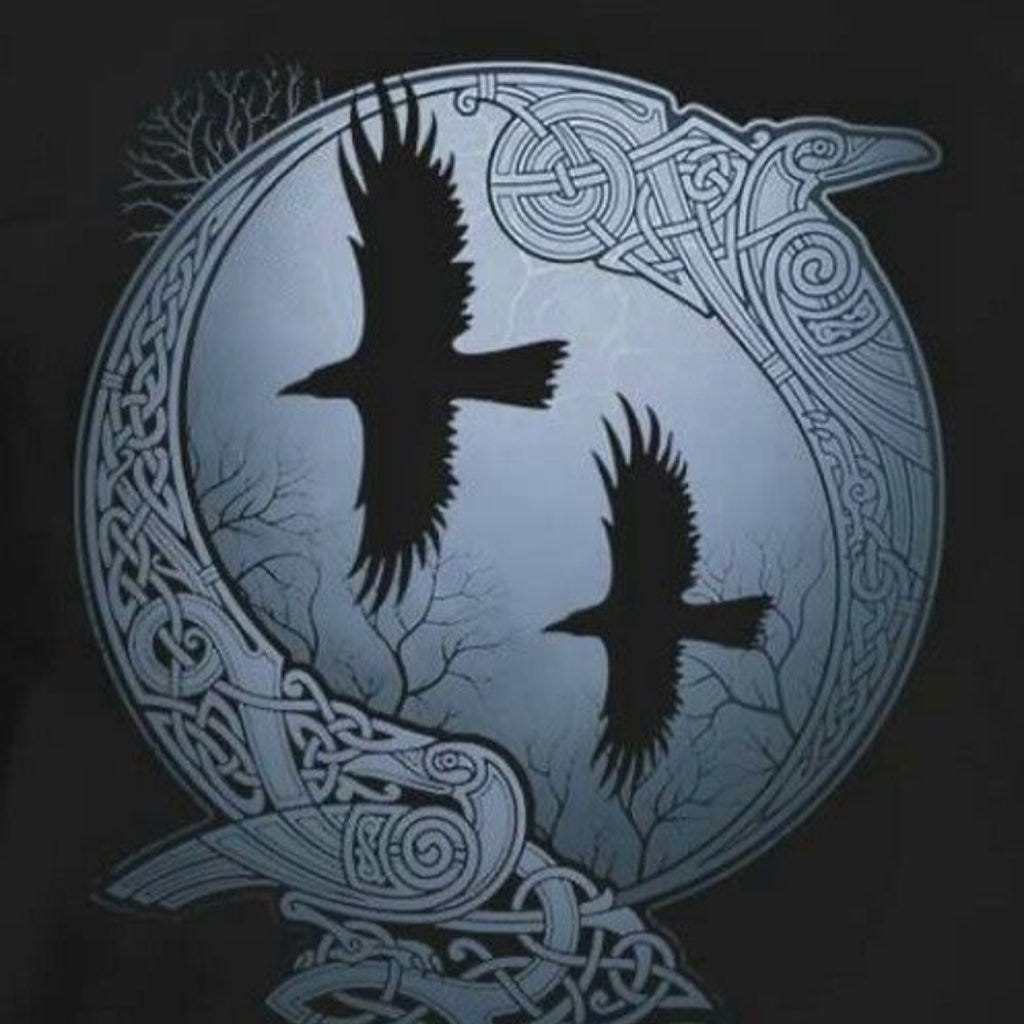
Hugin and Munin
Thank you for listening.
Sources:
Melody — Etymology, Origin & Meaning
Hávamál | Odin’s Words of Wisdom from the Poetic Edda (Full Text)
Odin: The Allfather of Norse Mythology | Complete Guide
메타데이터
- post_id
- 75a8b0ba3db4
- slug
- melodious-odin-tales-75a8b0ba3db4
- url
- https://medium.com/@rtrocki1969/melodious-odin-tales-75a8b0ba3db4
- canonical_url
- https://medium.com/@rtrocki1969/melodious-odin-tales-75a8b0ba3db4
- author_url
- https://medium.com/@rtrocki1969
- status
- ok
- fetched_at
- 2026-06-20 20:29:01