Why Is My Snake Plant Turning Yellow? (And How I Fixed Mine)
I almost made it worse before I figured out what was actually happening under the soil.
Why Is My Snake Plant Turning Yellow? (And How I Fixed Mine)
I almost made it worse before I figured out what was actually happening under the soil.
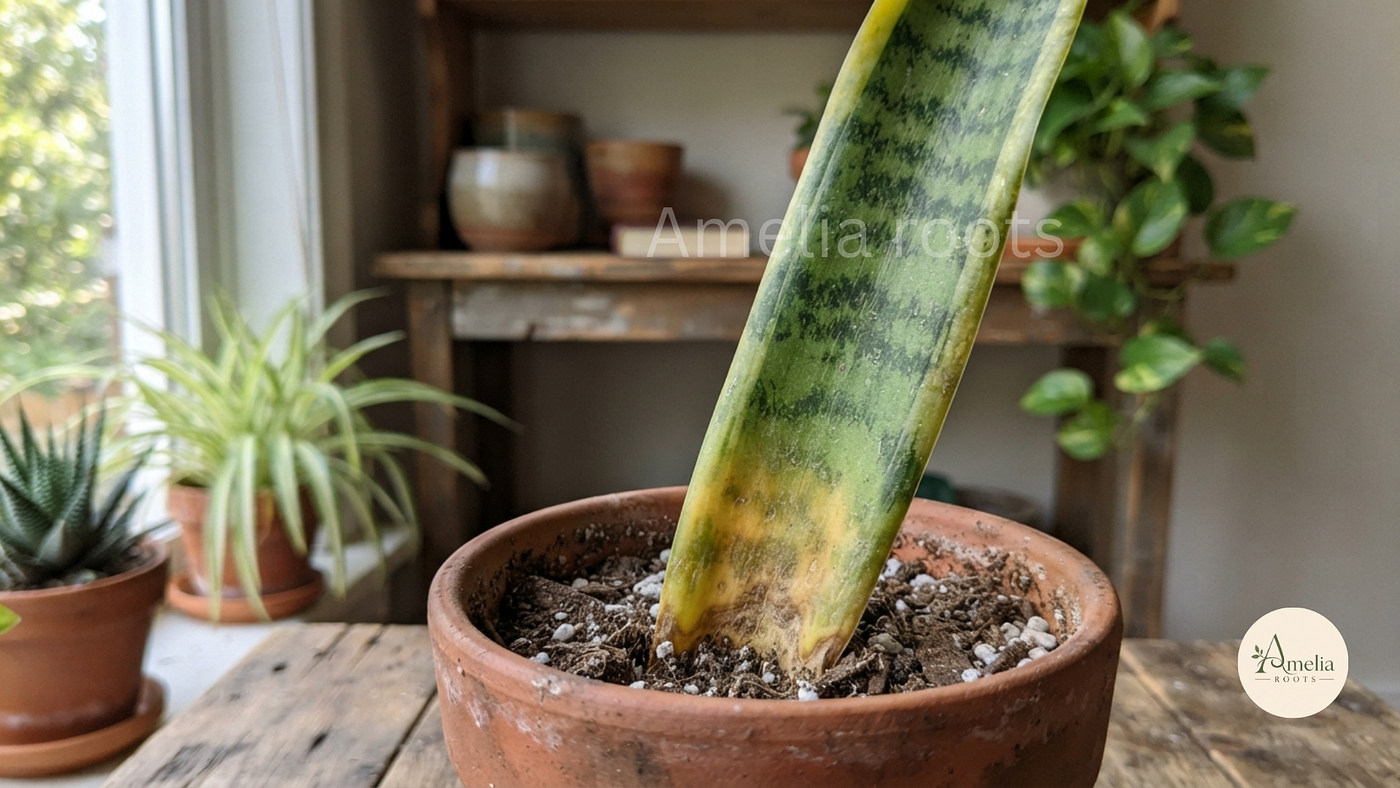
The first leaf I noticed. I almost watered it that same afternoon.
I noticed one yellow leaf on a Tuesday morning while watering my other plants. I didn’t think much of it. Snake plants are supposed to be nearly impossible to kill, right?
By that weekend, there were three.
My first thought was the same one every plant owner has when a leaf changes color: it’s thirsty. I actually filled up my watering can and walked over to give it a drink before something made me stop. I’m still not sure what it was exactly, maybe the way the leaf felt when I touched it, soft, not the firm rubbery texture snake plant leaves are supposed to have. But I put the can down and decided to actually look at what was going on before doing anything else.
That pause is probably what saved the plant. Because if I’d watered it that day, I would have made everything so much worse.
Here’s what was actually happening.
The Biggest Mistake I Almost Made
Like most people searching “snake plant turning yellow” at midnight, I assumed yellow leaves meant thirst. That’s how it works with most houseplants I’d owned before. Wilting and yellowing usually meant “give me water.”
So my instinct was to water more.
Turns out that’s almost backwards for a snake plant. In most cases, yellow leaves mean the opposite of what you’d expect: too much water, not too little.
I know that sounds strange for a plant famous for surviving weeks of total neglect. But that’s exactly the trap. Snake plants store water in their thick leaves and roots, kind of like a succulent. When you keep adding more water on top of what’s already sitting there, the roots can’t get the oxygen they need, and that’s when things start going wrong underground, long before you see it in the leaves.
I wasn’t underwatering mine. I was slowly drowning it, one well-intentioned top-up at a time.
Before You Do Anything, Diagnose the Problem
Before you water it, move it, repot it, or trim a single leaf, spend five minutes actually figuring out what’s going on. This is the part most guides skip straight past, and it’s the part that actually matters.
This is the exact sequence I worked through, in order.
Check #1: Soil moisture
Stick a finger about two inches into the soil, then ask:
- Is it still damp several days after the last watering?
- Does the pot feel unusually heavy when you lift it?
- Is there a musty or slightly sour smell coming off the soil?
A yes to any of these usually points to overwatering. Mine was still cool and damp four days after I’d last watered it. And when I got close enough to actually smell the soil (yes, I did that), there was a faint mustiness that had no business being there.
Check #2: The leaves themselves
Not every yellow leaf is telling you the same story. Texture matters as much as color.
- Soft, almost mushy yellow leaves usually mean overwatering or early root rot.
- Firm, dry, wrinkled yellow leaves usually mean underwatering.
- Yellowing at the edges or tips often points to light stress or mineral buildup from tap water.
- Yellowing starting near the base, closest to the soil, more often means a root problem.
Mine were soft. Not falling-apart soft, but nowhere near the firm, almost plastic feel healthy snake plant leaves have. That texture told me more than the color ever did.
Check #3: Light conditions
- Is the plant in a dark corner with barely any natural light?
- Has it been moved recently?
- Is it getting hit with harsh, direct afternoon sun?
Snake plants tolerate low light, which is exactly why so many of us shove them in the darkest corner of the room and forget about them. Mine was living about six feet from the nearest window. Low light on its own probably wouldn’t have killed it, but it was slowing down evaporation, which meant the soil stayed wet for far longer than it should have after every watering.
Check #4: Pot and drainage

The pot swap that actually fixed things. Not the watering can.
- Does the pot actually have drainage holes?
- Is the pot too big for the root ball?
- Is water pooling at the bottom after you water it?
This is where I found my real answer. I’d repotted mine into a decorative ceramic pot a few weeks earlier because, honestly, the plastic nursery pot looked ugly in my living room. That ceramic pot had no drainage hole. I’d kept watering it on my usual schedule, and all that extra water had nowhere to go except straight down, sitting against the roots.
What I Found Was Wrong With Mine
This is what I actually found.
The plant had been sitting in that shaded corner for close to two months, watered roughly once a week out of habit, the same schedule I used for my pothos and peace lily. Snake plants don’t want that. They want water every two to four weeks, sometimes less in winter, and only once the soil has properly dried out.
Add a ceramic pot with no drainage hole into that mix, and I’d basically built a small swamp around the roots without realizing it.
The clue that made it click was lifting the pot. It was heavier than it should have been days after watering, and when I tilted it slightly, I could feel liquid shifting at the bottom. Not a good feeling.
The first thing I changed was the pot. I moved the plant back into a plastic nursery pot with real drainage holes, sitting inside the ceramic one but raised up on a couple of small stones so it wasn’t sitting in anything that pooled. The second thing I changed was the location, moving it closer to a window with bright, indirect light.
What I didn’t touch right away was the watering schedule. I wanted to see what the roots actually looked like first.
Exactly What I Did to Save It
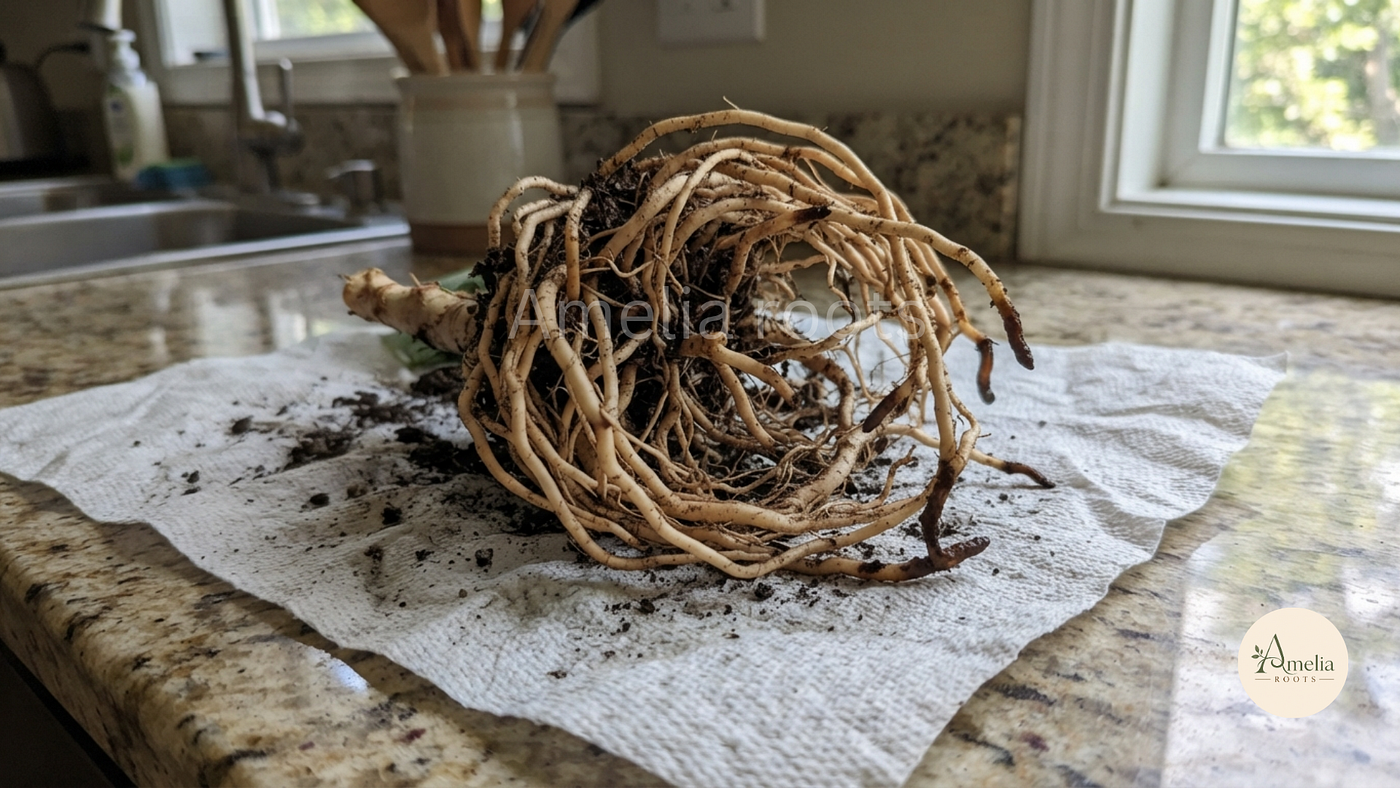
Pale and firm is what you want to see. Dark and mushy is not.
This wasn’t a tidy checklist I followed. It was more like a sequence of small decisions, each one only happening because the last one hadn’t made things worse.
Stopped watering, immediately. That was step one, and it felt wrong. Every instinct told me a sick plant needed more care, not less.
Checked the roots. I gently pulled the plant out of its pot. A few roots were dark and mushy at the tips, easy to tell apart from the healthy ones because they basically fell apart between my fingers instead of holding shape. Most of the root system was still pale and firm, which was a relief.
Trimmed the damage. I cut away the mushy, blackened bits with scissors wiped down with rubbing alcohol first, then let the whole root ball sit out on a paper towel overnight so the cuts could dry and callus over before going back into soil.
Repotted properly. Fresh, well-draining succulent mix, a pot with actual drainage holes this time, no cachepot involved. I placed it near an east-facing window for bright, indirect light most of the day, nothing harsh hitting the leaves.
Waited. I resisted watering again for almost ten days, even though the soil looked dry within the first few. No fertilizer, no repositioning, no fussing.
The patience is what actually worked. Not any single fix.
Recovery Timeline
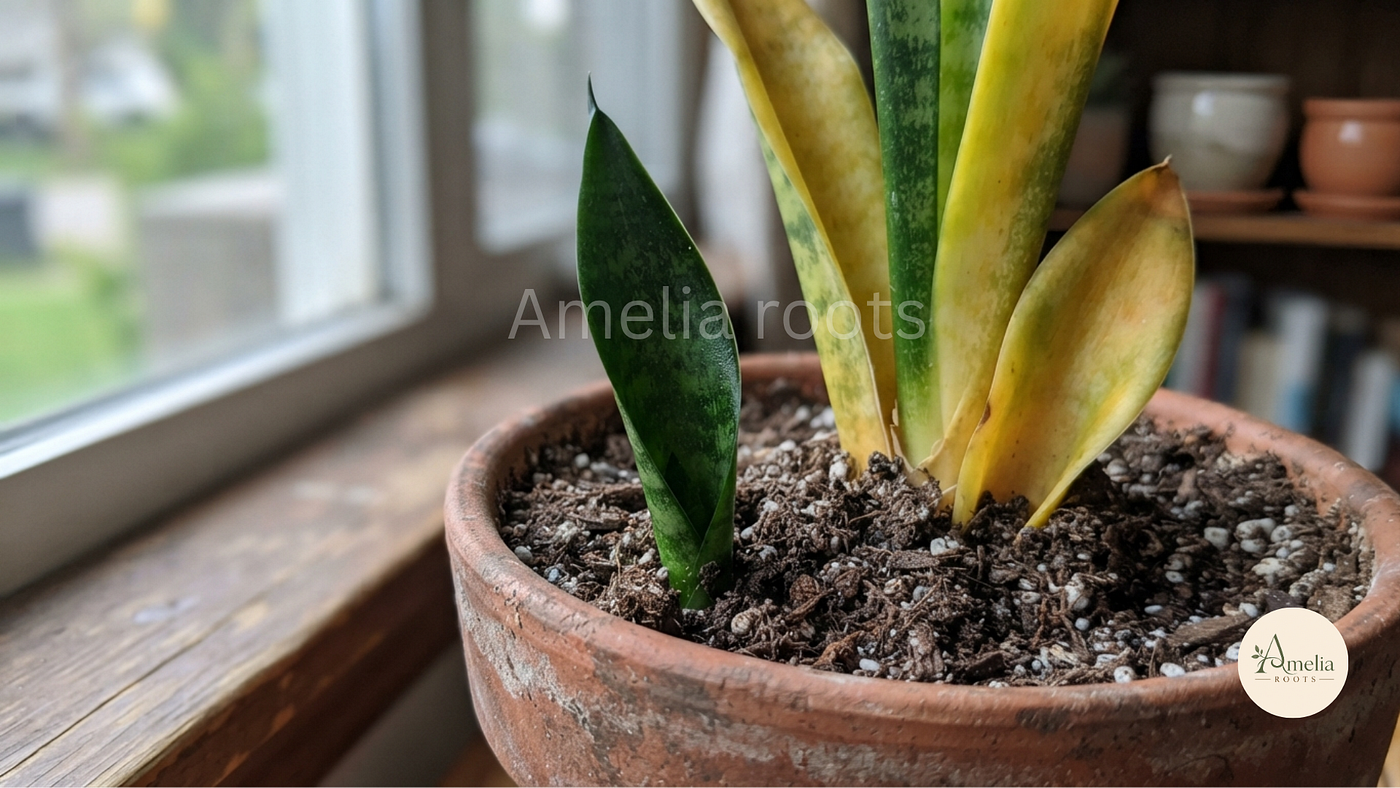
Week five. This is the sign that actually mattered, not the old leaves getting better.
If you’re going through this right now, the question on your mind probably isn’t “what caused it.” It’s “when will mine look normal again.”
The recovery generally breaks into three stretches.
First week: nothing visibly changes. This is the hardest part, because it feels like nothing is working. The existing yellow leaves stay yellow.
Two to four weeks: if you’ve actually fixed the underlying cause, no new yellowing should be spreading. This stretch is mostly just watching and resisting the urge to intervene again. By day twenty or so I’d basically stopped expecting anything to happen, which oddly enough made it easier to leave the plant alone. Two months isn’t unusual before new growth shows up, so if you’re still waiting at that point, you haven’t failed.
One to two months: this is usually when you’ll see the real sign of recovery, new growth. For me, it was a new spear pushing up from the base around week five, dark green and firm from the start.
One thing worth knowing upfront: the yellow leaves you already have generally won’t turn back green. Once that tissue has broken down, it doesn’t return to full health. Recovery isn’t about the old leaves fixing themselves. It’s about new, healthy growth replacing them over time.
Mistakes That Make Yellowing Worse
Once you know what’s happening, it’s tempting to “do something” immediately. I get it. But a few of the most common reactions actually make things worse, and I almost made more than one of these myself.
Watering more because the leaves look unhealthy. This is the single most common mistake, and the one I almost made on day one. Yellow, droopy leaves look thirsty. They usually aren’t.
Fertilizing a stressed plant. Feeding a plant that’s already struggling to process what’s in its soil just piles more stress on top of stress. Wait until it’s stable and showing new growth.
Moving it straight into full sun. If it’s been sitting in low light, sudden direct sun can scorch the leaves, adding a second problem on top of the first.
Repotting without checking the roots first. Repot without looking underground, and you can bury a rot problem in fresh soil and just delay the moment you notice it’s spreading.
Cutting off every damaged leaf immediately. Unless a leaf is mushy or actively rotting, it’s often still doing some work for the plant. Removing every yellow leaf at once adds stress right when the plant needs to conserve energy.
Quick Diagnosis Cheat Sheet
If you want the short version, here’s the pattern that holds true most of the time:
- Wet soil + soft yellow leaves → likely overwatering
- Dry soil + wrinkled yellow leaves → likely underwatering
- Yellowing right after a move to a sunnier spot → light stress
- Yellow leaves + a pot the plant has clearly outgrown, roots crowding out of the drainage holes → root-bound or pot size issue
Saving that one plant taught me the overwatering-and-yellowing connection. It didn’t stop me from panicking a few months later when a completely different plant developed crispy brown tips that had nothing to do with water at all. Or when I found a tiny cluster of bugs near the soil of another one and had no idea what I was looking at. Each time, I was back at 11pm scrolling through different articles, trying to figure out if this new symptom meant the same thing as last time or something else entirely.
Eventually I got tired of relearning the same lessons every time a leaf changed color. So I put everything I’d figured out into one place I could check before spiraling.
It covers yellow leaves the way I just walked you through here. It also covers brown tips versus brown spots, which I used to think were the same problem and aren’t. Drooping that’s an actual emergency versus drooping that’s just normal. Catching root rot early, before it turns into a three-week ordeal. The pests that show up most often, and what to actually do about them. There’s a ten-second weekly check in there too, the kind of thing that catches most of this before it starts, plus a one-page reference card I keep near my plants now instead of my browser history.
I ended up calling it the Indoor Plant SOS Guide. It’s free, no strings attached. I just didn’t want anyone else spending their evenings the way I spent mine.
A few questions kept coming up while I was working through all this, so here they are, straight and short.
A Few Things I Got Asked About Along the Way
Can yellow snake plant leaves turn green again? Generally, no. Once that tissue has yellowed from overwatering or age, it stays that way. The plant puts its energy into new growth instead of repairing old leaves.
Should I cut yellow leaves off? Only if they’re mushy, rotting, or clearly dying. If it’s just a cosmetic yellow patch and the leaf is still firm, you can leave it. It’s still doing some work.
How often should I water a snake plant? Roughly every two to four weeks, and always check the soil first rather than sticking to a fixed schedule. Stretch it out even more in winter.
Will root rot spread? Yes, if you leave it. It moves from root to root and can eventually take out the whole system, which is why treating it early matters more than treating it perfectly.
Is one yellow leaf normal? Usually, yes. Snake plants naturally shed their oldest leaves over time. If it’s a single older leaf near the outside of the plant, it’s probably not a sign of a bigger issue.
Can too much sunlight cause yellow leaves? Yes, especially after a sudden move into direct afternoon sun. That kind of yellowing usually shows up as bleached or pale patches rather than a leaf turning uniformly yellow, and the fix is shade, not water.
Closing Thought
Most yellow snake plants aren’t dying. Somewhere under all that yellow is a plant asking for one small adjustment, not a rescue mission.
I know because I turned mine into a rescue mission for about a week, checking the soil every morning, moving the pot around to see if slightly different light would speed things up, basically hovering over it like that would help. It didn’t. The plant only really started coming back once I backed off and let the roots do their own thing without me interfering every few hours.
If your snake plant is turning yellow right now, take a breath before you reach for the watering can. Check the soil first. Then, and this is the part I had to learn the hard way, leave it alone for a while. That’s usually the actual fix.
메타데이터
- post_id
- 75e4e12f952b
- slug
- why-is-my-snake-plant-turning-yellow-and-how-i-fixed-mine-75e4e12f952b
- url
- https://medium.com/@ameliaroots/why-is-my-snake-plant-turning-yellow-and-how-i-fixed-mine-75e4e12f952b
- canonical_url
- https://medium.com/@ameliaroots/why-is-my-snake-plant-turning-yellow-and-how-i-fixed-mine-75e4e12f952b
- author_url
- https://medium.com/@ameliaroots
- status
- ok
- fetched_at
- 2026-07-30 11:22:16