The Surprising Link Between Your Gut and Brain as You Get Older
How the vagus nerve, gut inflammation, and groundbreaking new Stanford research are revealing a hidden “remote control” for cognitive…
BRAIN HEALTH & LONGEVITY
The Surprising Link Between Your Gut and Brain as You Get Older
How the vagus nerve, gut inflammation, and groundbreaking new Stanford research are revealing a hidden “remote control” for cognitive aging.
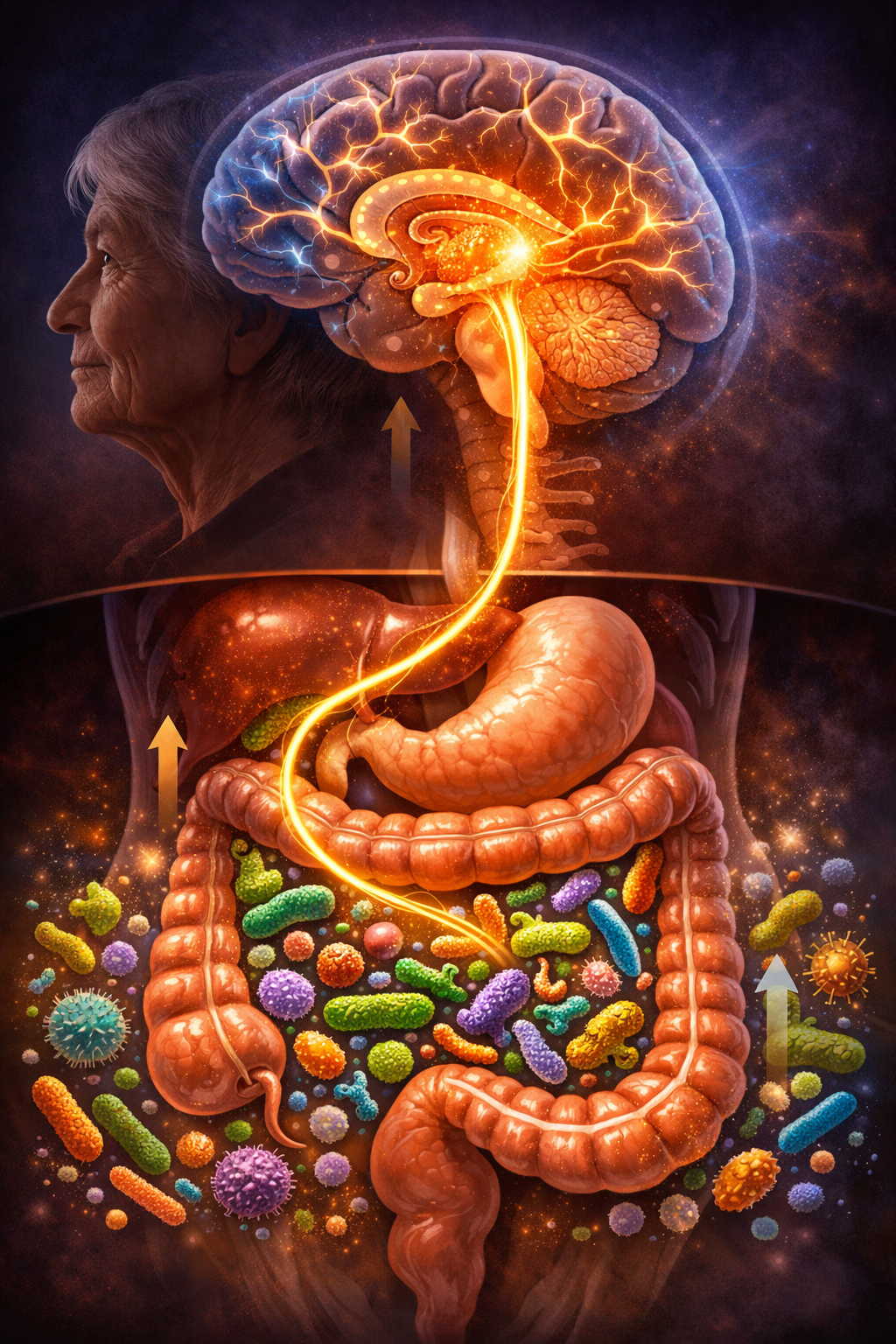
Image by Author
Last month, I sat with my aunt on her porch in Tangail. At 72, she shared how forgetful she felt lately — misplacing keys, struggling to recall names, and feeling a bit down more often than before. “It’s just old age,” she said with a sigh.
But what if it wasn’t only that? What if the tiny world inside her belly was quietly talking to her brain — and the conversation had gone off track?
Many of us over 65 notice these shifts: slower thinking, mood dips, or that foggy feeling.
New research shows our gut and brain stay closely connected throughout life, and this link gets even more important with age. Understanding the gut-brain connection in aging could be a game-changer for staying sharp and feeling good longer.
What Is the Gut-Brain Axis Anyway?
Think of the gut-brain axis as a busy two-way highway. Your gut has its own nervous system, often called the “second brain.” It communicates with your actual brain through nerves, hormones, and chemicals produced by trillions of gut bacteria.
These microbes — your microbiome — break down food, make vitamins, and send signals that affect everything from how you feel to how clearly you think.
As we age, this highway can get bumpy. Gut bacteria change, the gut lining becomes leakier, and communication slows. The result? More inflammation that reaches the brain, affecting memory and mood.
How Aging Changes the Conversation
Recent studies, including exciting 2026 work from Stanford, show what happens in older mice. Their gut bacteria shift, weakening signals to the brain. This led to poorer memory performance. But when researchers restored gut-brain communication, the mice improved at learning and remembering — even in old age.
In people, similar patterns appear. Lower gut diversity often links to higher chances of cognitive decline, Alzheimer’s, and Parkinson’s. Harmful bacteria can multiply, producing toxins that travel through the bloodstream and trigger brain inflammation.
Good bacteria that make helpful short-chain fatty acids (like butyrate) tend to drop. This “inflammaging” — low-grade inflammation — speeds up brain aging.
The good news? This connection works both ways. A healthier gut can support a sharper mind, and calming your brain helps your gut too.
Photo by alpay tonga on Unsplash
Why This Matters More After 65
After 65, our bodies produce fewer digestive enzymes, we absorb nutrients less efficiently, and medications or reduced activity can throw off gut balance. Loneliness or stress, common in later years, also hurts the microbiome.
Research ties gut changes to early signs of dementia and mood issues. For example, people with Parkinson’s often have gut problems years before movement symptoms appear. Fixing the gut early might slow brain changes.
9 Practical Ways to Strengthen Your Gut-Brain Link
You don’t need complicated plans. Small daily choices add up. Here are practical steps based on the latest findings:
Eat More Plants and Fiber
Fill half your plate with colorful vegetables, fruits, whole grains, beans, and nuts. Fiber feeds good bacteria that produce brain-protecting compounds. Aim for 25–30 grams daily. Berries, oats, garlic, onions, and leafy greens are especially helpful.
Include Fermented Foods
Yogurt, kefir, sauerkraut, or kimchi add live probiotics. Start with small amounts if your stomach is sensitive. These help restore balance and reduce inflammation that reaches the brain.
Stay Hydrated
Drink water steadily throughout the day. Dehydration stresses both gut and brain. Herbal teas like ginger or peppermint offer extra soothing benefits.
Move Your Body Gently
A 15–20-minute walk after meals helps improve gut motility and blood flow to the brain. Light-intensity exercise a few times a week supports microbiome diversity.
Prioritize Sleep
Aim for 7–9 hours. Poor sleep disrupts gut bacteria, which then affects brain repair overnight. A regular bedtime routine works wonders.
Manage Stress
Try deep breathing, short meditation, or quiet time in nature. Chronic stress harms gut lining and brain function. Even 5–10 minutes daily helps restore balance.
Limit Processed Foods and Sugars
These feed harmful bacteria and promote inflammation. Choose whole foods most of the time. Your gut and brain will both feel the difference.
Consider Prebiotics
Foods like bananas, asparagus, and oats help good bacteria grow. Some studies show prebiotic blends can support cognition in older adults.
Stay Social
Eating with family or friends reduces stress and encourages better food choices. Connection benefits both gut and brain health.
Talk to Your Doctor
If you have ongoing issues, ask about probiotics, tests, or medication adjustments that might affect your gut.
2025–2026 research highlights microbiome-targeted nutrition for healthy cognitive aging. Restoring gut balance in older models reversed some memory problems. Human trials are growing, pointing to diet, probiotics, and lifestyle as powerful tools.
Frequently Asked Questions
What are early signs of gut-brain issues in aging?
Bloating, irregular bowels, brain fog, anxiety, or memory slips. These can appear before bigger problems, so pay attention.
Can changing diet really help brain health at 70+?
Yes. Studies show that even older adults benefit from more fiber, fermented foods, and less processed foods. It’s never too late.
Are probiotic supplements useful?
They can help, especially strains like Lactobacillus or Bifidobacterium. Food sources are great, but talk to your doctor for personalized advice.
How does stress affect the gut-brain axis?
Stress weakens the gut barrier and changes bacterial balance, sending negative signals to the brain. Managing it protects both.
Is there a connection to Alzheimer’s or Parkinson’s?
Emerging research shows gut changes often appear early. Supporting the microbiome may help lower risks or slow progression.
People are finding immense relief in their lifestyles by returning to these fundamental pillars.
My aunt in Tangail began incorporating daily traditional yogurt and structured morning walks into her weekly routine; within a few weeks, she noticed improved mental clarity and daily energy.
The latest medical consensus highlights that we are never too old to support our bodies. By proactively managing our gut health today, we are directly investing in a more vibrant, sharper, and happier future with the people we love.
What small lifestyle step are you excited to try first this week?
Let’s talk about your experiences with nutrition and mental clarity in the comments section below — I read and reply to every learner!
Medical Disclaimer
This article is for educational purposes only and is not medical advice. I’m not a doctor. Gut health changes with age, so please consult your physician or qualified healthcare professional before making any diet, supplement, or lifestyle changes — especially if you’re over 65 or have existing conditions. Always prioritize professional medical guidance for your personal health.
Tamzidul Haque, AI Content Editor & Humanizer | Technical SEO Specialist. I translate complex, cutting-edge scientific updates and technology trends into clear, human-centered resources.
메타데이터
- post_id
- 760d30f612e2
- slug
- the-surprising-link-between-your-gut-and-brain-as-you-get-older-760d30f612e2
- url
- https://medium.com/illumination/the-surprising-link-between-your-gut-and-brain-as-you-get-older-760d30f612e2
- canonical_url
- https://medium.com/illumination/the-surprising-link-between-your-gut-and-brain-as-you-get-older-760d30f612e2
- author_url
- https://medium.com/@tamzidulhaque
- status
- ok
- fetched_at
- 2026-06-14 11:28:49