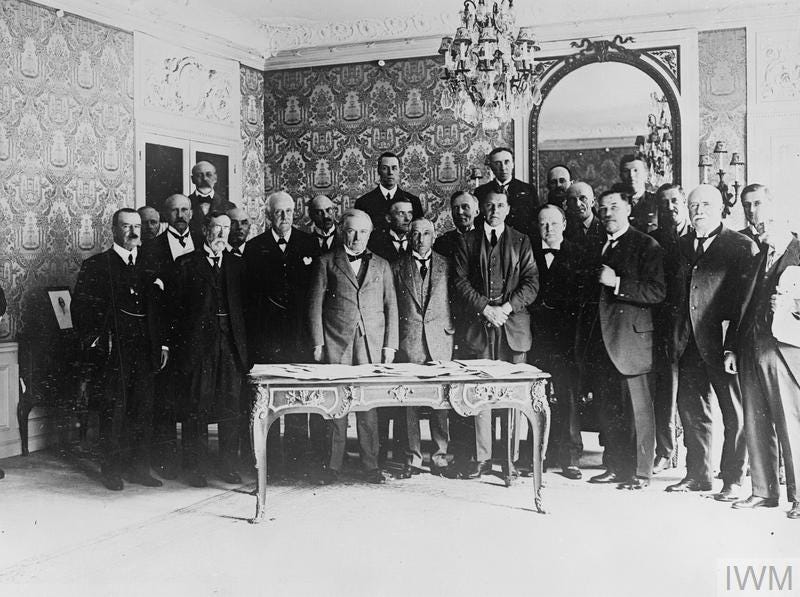
The Roman Resurgence: Italian Imperialism and the Prelude to War (1930–1939)
A Look at Fascist Italy From 1930 to 1939
The Roman Resurgence: Italian Imperialism and the Prelude to War (1930–1939)
A Look at Fascist Italy From 1930 to 1939
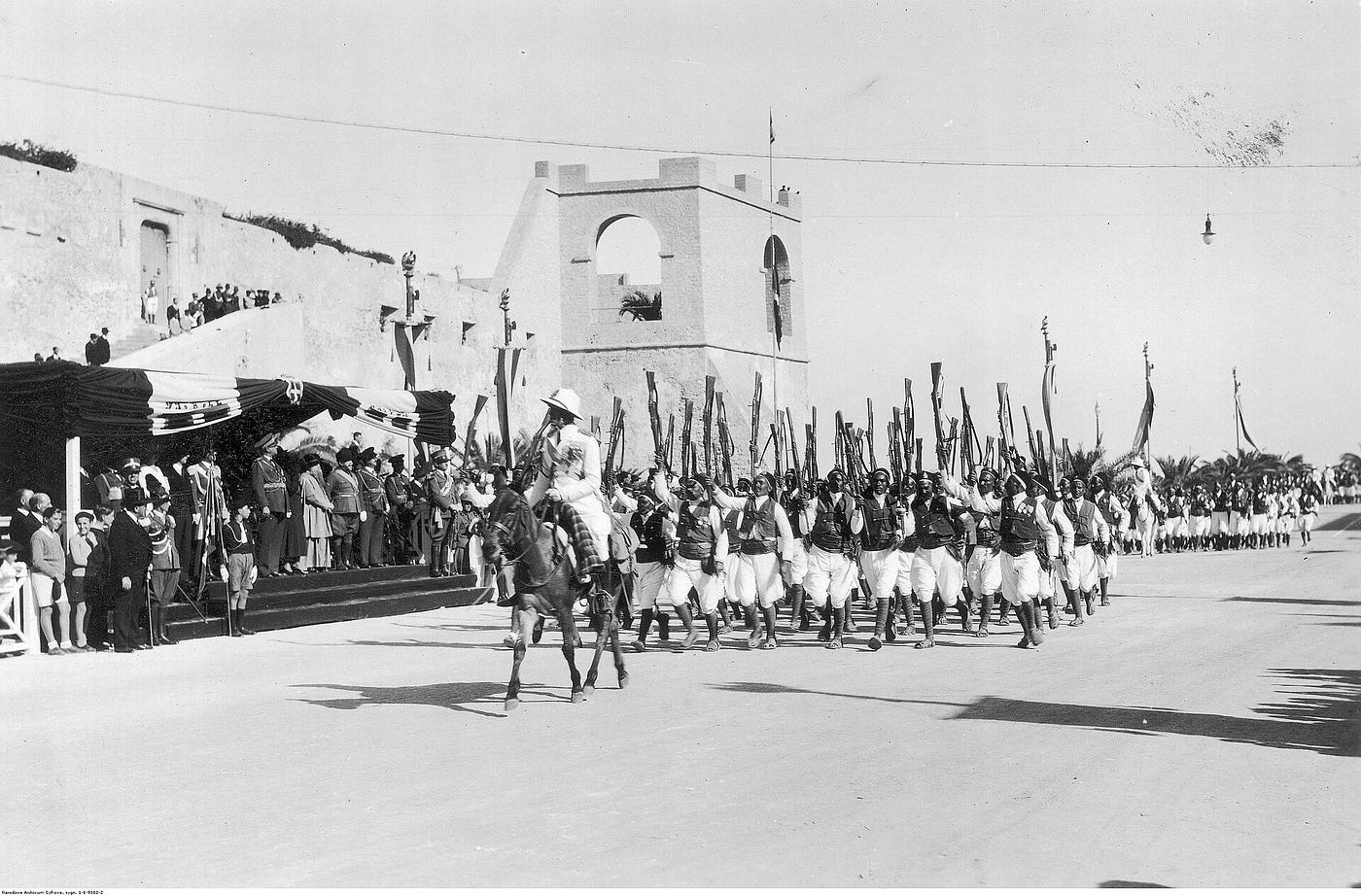
Parade of Libyan colonial troops in 1932 (public domain image from Wiki Commons)
In the 1920s, a fascist regime had emerged in Italy. With the emergence of Benito Mussolini, the Liberal era had effectively passed. The National Fascist Party was certainly a firmer government, as opposition dispersed, and it introduced economic reforms in the 1920s.
The impact of these reforms was not strictly felt until the 1930s. For example, the Battle for Land was introduced in the late 1920s. This scheme hoped to enhance agriculture in Italy by clearing marshland. By the 1930s, thousands of hectares of land had been reclaimed. However, much of this land is in the north. fascist propaganda also grossly exaggerated how much land had actually been reclaimed.
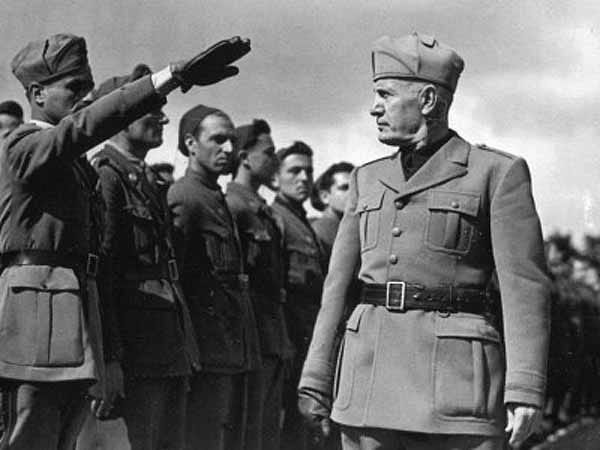
Mussolini (public domain image from Wiki Commons)
In the early 1930s, the general economic downturn was felt in Italy as elsewhere. Public work schemes were organised by the National Fascist Party. However, despite this and further policies aimed at expanding Italian industry, economic growth remained very modest indeed. Much of the Italian economy was still dominated by agriculture in the 1930s, as had been the case before the fascist regime.
Some of the earliest motorways were also built in Fascist Italy in the 1930s. Over a hundred thousand miles of motorways were built in the early 1930s, and many other roads were further enhanced. Overall, such investment did enhance Italy’s transport and road infrastructure.
In 1934, border skirmishes at Walwal between Italian and Ethiopian armies prompted Ethiopian protests to the League of Nations. In 1935, war emerged between Italy and Ethiopia as Italian troops crossed the Ethiopian border. The League of Nations supported the Ethiopians, with economic sanctions on Italy. With the fall of Addis Ababa in ’36, Italy effectively won the war, with Ethiopia being merged into Italian East Africa.
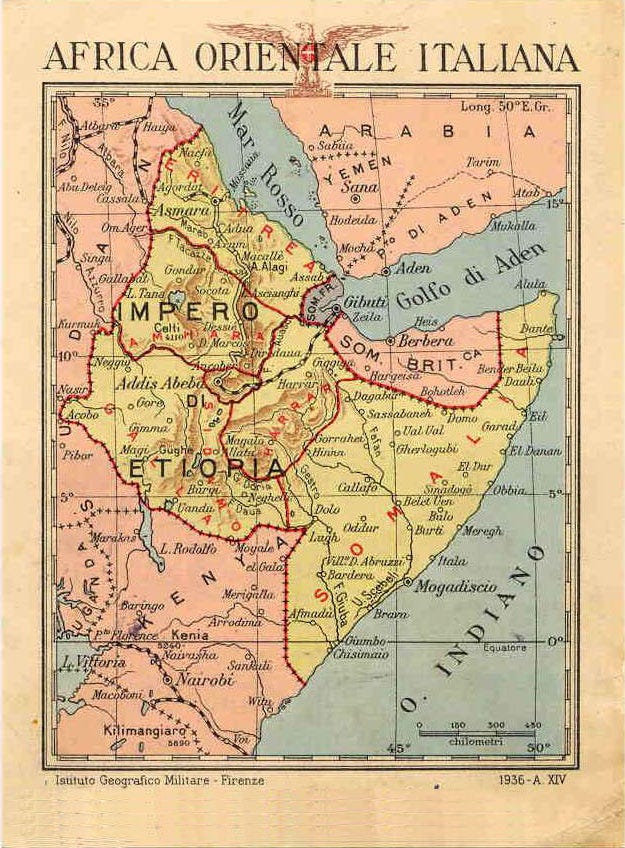
Italian East Africa (public domain image from Wiki Commons)
Overall, the war certainly highlighted that Italy’s continued membership of the League of Nations remained controversial. As such, there was something of a shift in Italian foreign policy as Italy withdrew from the League of Nations in 1937. Firmer relations with Germany and Franco’s Spain were then pursued as a potential alliance.
The German union with Austria in 1938 brought Italy and Germany closer. With Austria merged, Germany and Italy shared a border. As such, the Pact of Steel in 1939 was a formal alliance between Italy and Germany, with each giving military and economic aid to the other.
However, with the advent of war in 1939, Italy did not immediately join. This was perhaps wise, although in 1940 Italy declared war on Britain and France, expecting that the war might soon end. As such, this was the beginning of the end for Italian fascism, as the war would quickly turn in Toronto, where Britain bombed Italian warships. Further defeats in the Mediterranean region prompted Italy to call upon German assistance. However, despite this, by 1943, the fascist regime ended as Allied troops occupied Italy.

Sicily invasion (public domain image from Wiki Commons)
So overall, Italy was unprepared for war in 1939. By 1939, the fascist regime had not expanded Italy’s economy and industry greatly, or indeed the military, and so with that, inevitable military defeats followed. Increasing dependence on the German alliance only delayed the fall of Fascist Italy.
Read more of my Italian history articles on Medium:
A Timeline of the Italian Campaign: 1943 to 1945
Remembering Operation Husky, July 1943
메타데이터
- post_id
- 76741ab9e60f
- slug
- the-roman-resurgence-italian-imperialism-and-the-prelude-to-war-1930-1939-76741ab9e60f
- url
- https://medium.com/illumination/the-roman-resurgence-italian-imperialism-and-the-prelude-to-war-1930-1939-76741ab9e60f
- canonical_url
- https://medium.com/illumination/the-roman-resurgence-italian-imperialism-and-the-prelude-to-war-1930-1939-76741ab9e60f
- author_url
- https://medium.com/@mav44233
- status
- ok
- fetched_at
- 2026-06-14 11:28:49