The Word “Shortage” Implies Nobody Chose This
Twenty-four hours in June — one record margin, two price hikes, one federal antitrust suit — showed exactly who gets to choose.
The Word “Shortage” Implies Nobody Chose This
Twenty-four hours in June — one record margin, two price hikes, one federal antitrust suit — showed exactly who gets to choose.
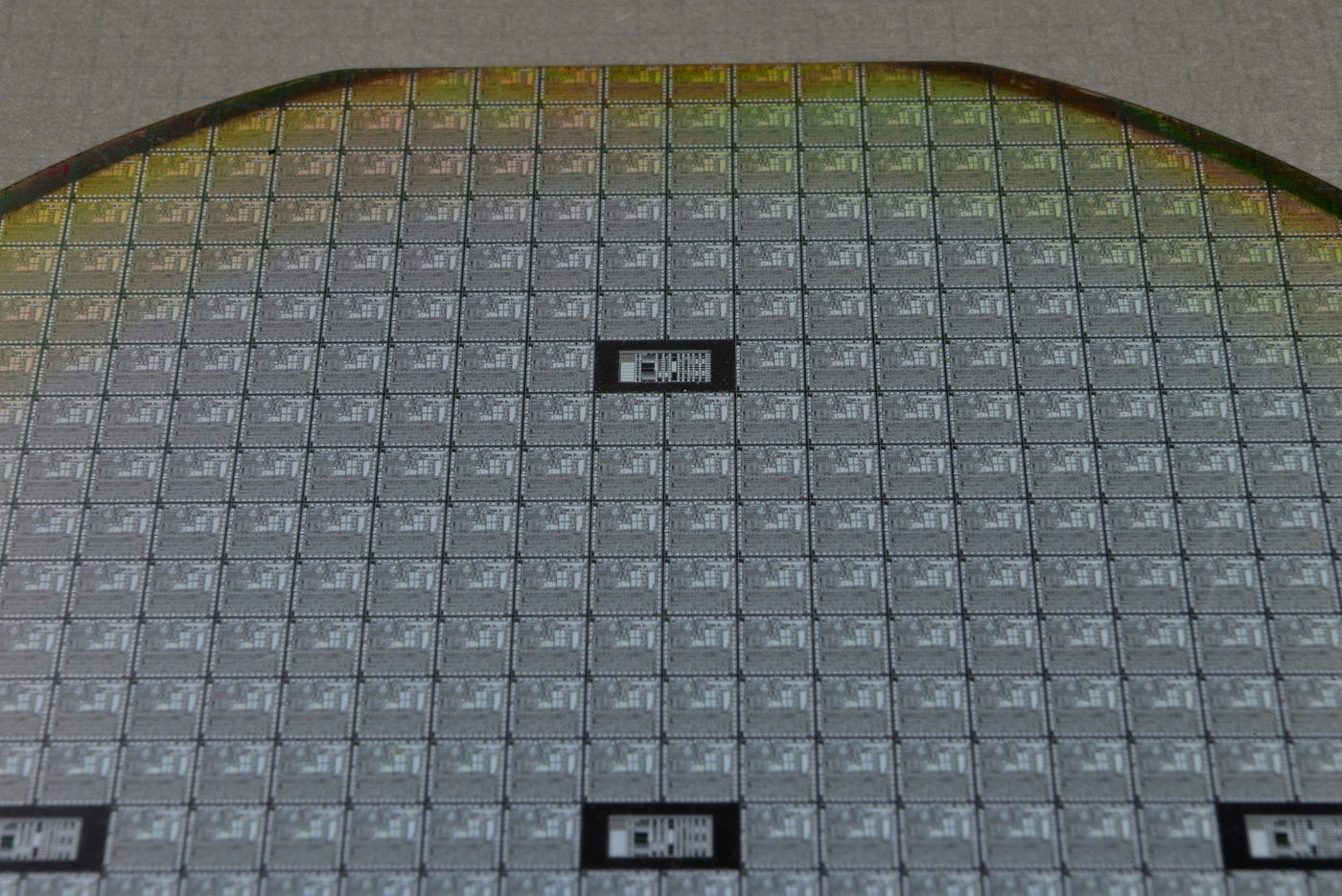
Photo by Laura Ockel on Unsplash
June 24, 2026, after the close of Wall Street: Micron reports $41.46 billion in quarterly revenue. Twelve months earlier, the same quarter brought in $9.3 billion.
June 25, morning: Apple raises prices on nearly everything it sells. MacBooks, iPads, iMacs, HomePods, Vision Pro. The iPhone is spared. For now.
June 25, a few hours later: Microsoft announces that every Xbox will cost $100 to $150 more starting August 1, and that the 2TB model is being discontinued outright.
June 25, the same day, a federal courthouse in Northern California: seventeen plaintiffs sue Samsung, SK hynix and Micron for conspiring to keep memory artificially scarce.
Twenty-four hours.
The component underneath all four events is DRAM: the working memory inside every phone, laptop, console and server on Earth. Its contract price rose roughly 98 percent in the first quarter of 2026 alone. And the standard explanation comes in a single word: shortage. AI data centers are devouring memory, especially HBM (the stacked, high-bandwidth kind that feeds GPUs), and there isn’t enough left over for everyone else.
That explanation is true. It’s also doing an enormous amount of work. An economist will object, correctly, that “shortage” is a neutral term: an imbalance between supply and demand, implying nothing about intent. But that is not the job the word performs in a press release. There, it works like weather: something that happens to a company, not something companies do. And the window of June 24–25 becomes hard to read as weather once you notice that the same event carries a different name at each position in the supply chain. At Micron, it’s called a record. At Apple and Microsoft, it’s called an unsustainable cost. In the Northern District of California, it’s called Exhibit A.
The margin that broke the word
Start with the numbers published under disclosure rules, not the ones crafted to persuade. Micron’s quarterly revenue didn’t grow; it multiplied by more than four year over year, beating analyst consensus by nearly six billion dollars. Adjusted gross margin: 84.9 percent. A company record, and higher than the last gross margin Nvidia reported. For the next quarter, Micron is guiding to roughly $50 billion in revenue and a gross margin around 86 percent. Sixteen multi-year Strategic Customer Agreements now carry approximately $100 billion in minimum committed revenue, a floor Micron itself calls conservative, backed by $22 billion in customer deposits. Its CEO, Sanjay Mehrotra, framed the results as reflecting “the strategic value of memory in the AI era.”
Gross margin is not net profit: R&D, overheads, taxes and $7.1 billion of quarterly capital spending still come out of it. They did. What remained was $18.3 billion in adjusted free cash flow. Of every $100 of memory Micron sold, about $15 covered the cost of producing it.
84.9 percent is not the gross margin of a company navigating a shortage. It’s the gross margin of a company the shortage works for.
Now put the buyers’ documents next to it. In mid-June, Tim Cook had told the Wall Street Journal that the situation was becoming difficult to sustain. Apple could no longer keep shielding its customers from memory and storage costs. A week later, prices moved: +$100 on the entry-level MacBook Neo, +$200 on the MacBook Air, +$300 on the MacBook Pro. Microsoft was blunter. In its own announcement, Xbox stated that “console storage and memory prices have increased by more than 2.5x,” warned it expects another doubling by fall 2027, and reminded everyone that consoles are typically sold for less than they cost to make. It was the third Xbox price increase in roughly fifteen months. Sony had already pushed the PS5 to $649.
One more fact, placed here without further comment: Microsoft’s own data-center division is among the largest buyers of the very memory its console division says it can no longer afford.
Three ordinary decisions, performed simultaneously
There’s a distinction worth building before going further. A shortage is a statement about quantity: there isn’t enough. An allocation is a statement about power: someone decides who goes without. Most “shortages” in concentrated markets are allocations wearing the first word as a coat.
And the DRAM market is about as concentrated as markets get. Samsung, SK hynix and Micron together control close to 90 percent of global supply. HBM is genuinely harder to produce, and far more lucrative; it competes with conventional DRAM for wafers, engineers and, above all, scarce advanced-packaging capacity. So every production line assigned to HBM, every long-term contract signed with an AI buyer at premium prices, is capacity that phones, PCs and consoles will not get. Analyst Ming-Chi Kuo estimates that 15 to 20 percent of the memory capacity available to consumer electronics will be redirected toward data centers by 2027.
From inside any one of the three firms, this is ordinary rationality: you sell to whoever pays most, for as long as they’ll commit. But when three companies that are the market perform the same ordinary rationality at the same time, the market doesn’t experience a coincidence. It experiences the same decision, made three times. The open question is only whether it was also made together.
What the lawsuit must prove — and what it reveals if it can’t
That question is now formally in front of a judge. Garciaguirre v. Samsung Electronics, filed June 25 in the U.S. District Court for the Northern District of California under Section 1 of the Sherman Act, assigned to Judge Noel Wise. The seventeen plaintiffs (fourteen individuals and three small PC-building businesses) allege the HBM transition served as a pretext for a deliberate wind-down of DDR3 and DDR4 output, driving conventional DRAM prices up roughly 700 percent over four years. They point to Micron shuttering its consumer brand Crucial at the most profitable price point in its history, and argue that three simultaneous retreats, with none of the three moving to capture the others’ abandoned customers, make “no economic sense absent collusion.” They also note this industry has been here before: Samsung paid a $300 million criminal fine for DRAM price-fixing in 2005, and SK hynix paid $185 million the same year.
Here, the analysis has to sit with its strongest objection, because that objection is almost entirely factual and almost entirely correct. AI demand is real, not invented. HBM’s economics are real. Nobody needs a conspiracy to explain why three companies independently chase the same once-in-a-generation margin, and American antitrust law broadly permits exactly that. Watching your two competitors retreat from a market and retreating alongside them, without a word exchanged, is called conscious parallelism, and it is legal. If discovery produces no agreement, no channel, no wink, the case dies. Micron says it competes lawfully. It may well be telling the truth.
Concede all of it. Then look at what the concession leaves standing. If the plaintiffs lose, the verdict will not be that the market is healthy. It will be that a three-firm market can produce cartel-priced outcomes with no cartel to prosecute. A new fab costs $15 to $20 billion and takes years to build; no fourth competitor is coming to close the gap. The complaint’s weakness, if it proves weak, is the structure’s strength. That is a more uncomfortable conclusion than collusion would be.
The best-positioned buyer on Earth asks for a favor.
Apple was supposed to be the company this couldn’t happen to. Enormous volumes, contracts negotiated years out, unified memory integrated into its own silicon, and premium pricing that swallows cost swings its competitors can’t. For months, it did absorb: a quiet memory bump folded into prices in March, the $599 Mac mini discreetly removed in May. On June 25, it stopped absorbing. The stock erased $263 billion of market value in a single day, its second-largest drop ever.
What it did next says more than the price list. Within days, the Financial Times reported that Apple was lobbying the Commerce Department and the White House over ChangXin Memory Technologies (CXMT), China’s largest DRAM maker and a company on the Pentagon’s list of firms with alleged ties to the Chinese military. Apple isn’t barred from buying CXMT chips. What it wants is stranger: a forward-looking guarantee that CXMT will not later be added to the Commerce Department’s Entity List, the far stricter blacklist, after Apple has built a dependency on it. Bloomberg added that negotiations extend to YMTC as well, for devices sold in China. Cook, asked whether security restrictions on Chinese memory suppliers should loosen, answered that “everything needs to be on the table.” The Republican chair of the House China committee called the prospect a “grave mistake.” Apple declined to comment; the White House didn’t respond.
Read the scene flatly: the company most celebrated for controlling its supply chain is spending political capital to ask its own government to promise not to use a blacklist it hasn’t used yet, so that a fourth supplier can be allowed to exist.
Even that would move less memory than it moves leverage. CXMT’s output is largely pre-committed, and analysts doubt its volumes could meaningfully close the gap or cut Apple’s costs. What Apple is negotiating is not more memory in the world. It’s a better place in the queue. By early July, per the Financial Times, Apple had already begun testing CXMT chips for devices sold in China.
That’s what demotion from price-setter to price-taker looks like at the very top of the chain. Farther down, it looks like the plaintiff roster in Judge Wise’s courtroom: Troy’s Computers LLC. My Florida PC. Apple gets to lobby. They get to sue.
Two clocks
What happens next runs on two clocks. The judicial one is discovery: the capacity-planning documents and executive emails that will show either an agreement or three parallel monologues. The industrial one is slower and indifferent to verdicts. Jefferies expects DRAM prices to climb another 40 to 50 percent this quarter, with little relief before 2028; Micron itself expects tight conditions to persist beyond calendar 2027; and new fabs take years that neither buyers nor plaintiffs can compress.
Either way, those twenty-four hours in June already settled the vocabulary. A shortage is what happens to you. An allocation is what someone does to you. For one day, the difference came fully itemized — on an earnings call, on two price lists, and in a federal complaint.
Thanks for reading! If you want more clear-eyed analysis on technology, power, and the future of infrastructure, follow BloomTheDigitalLens.
(Originally published on BloomTheDigitalLens)
메타데이터
- post_id
- 767de8ec3289
- slug
- the-word-shortage-implies-nobody-chose-this-767de8ec3289
- url
- https://medium.com/the-science-tech-frontier/the-word-shortage-implies-nobody-chose-this-767de8ec3289
- canonical_url
- https://medium.com/the-science-tech-frontier/the-word-shortage-implies-nobody-chose-this-767de8ec3289
- author_url
- https://medium.com/@bloomthedigitallens
- status
- ok
- fetched_at
- 2026-07-30 13:41:11