Token Unlock Communication Plan: How to Explain Vesting and Protect Holder Trust
TL;DR: A token unlock communication plan helps projects explain vesting before holders lose confidence. It should clarify unlock dates…
Token Unlock Communication Plan: How to Explain Vesting and Protect Holder Trust
TL;DR: A token unlock communication plan helps projects explain vesting before holders lose confidence. It should clarify unlock dates, token amounts, recipient groups, insider restrictions, treasury use, and post-unlock support. The goal is not to defend price. The goal is to reduce confusion, show alignment, and give holders enough context before market speculation takes control.
Why Token Unlock Communication Matters for Holder Trust in 2026
Token unlocks look simple inside a tokenomics calendar. A cliff ends. A vesting tranche opens. Tokens become available. For holders, the same event feels different. They see new supply entering the market. They also ask who receives it, whether insiders can move tokens, and why the unlock is happening now. That concern is growing in 2026.
In January 2026, Tokenomist data showed more than $5.5 billion in scheduled token unlocks. About $2.5 billion came through cliff unlocks. Another $3 billion came through linear releases. That scale makes holders more sensitive to timing, supply changes, and recipient groups.
Public unlock trackers make these events easy for holders to monitor. They show upcoming dates, token amounts, recipient groups, supply percentages, and market context. That visibility means projects should not wait for holders to interpret the unlock alone. The project should explain the event first.
Most holder questions are simple. Who receives the tokens? Can insiders move them? Does the unlock support real utility? If the team does not answer early, the market will answer first.
This is why token unlock communication needs planning. Unanswered questions become market narratives.
This starts with the original token model. Clear token utility and ecosystem value and planned vesting, unlocks, emissions, and float reduce confusion before unlocks arrive.
Why Token Unlocks Exist in Tokenomics
Token unlocks exist because projects should not release every token at launch. Most networks need time to grow. Teams need time to build. Investors and contributors also need a structure that keeps them aligned after launch. Vesting, cliffs, and lockups help manage that process.
They can support:
- long-term team and investor alignment
- lower early sell pressure
- contributor retention
- treasury planning
- ecosystem rewards and grants
This context matters before any unlock communication begins. If holders only see new supply, they may assume sell pressure. If they understand the purpose, the unlock becomes easier to explain.
Why Token Unlocks Create Holder Trust Risk
Token unlocks create risk because they change what holders can see. Before the unlock, tokens are locked on paper. After the unlock, holders start asking what can happen next. The problem starts when holders do not get enough context.
Common causes include:
- Silence before the unlock Holders may think the team is avoiding a sensitive topic.
- Unclear recipient groups Holders may not know whether tokens go to the team, investors, advisors, treasury, or ecosystem programs.
- Vague treasury use Holders may question why treasury tokens unlock and how they will be used.
- Missing lockup rules Holders may not know whether insiders can sell, transfer, or move tokens.
- Late communication Holders may see the team as reactive instead of prepared.
- Inconsistent community answers Holders may trust rumors when official channels give different answers.
These are the causes behind unlock anxiety. The effect is a loss of trust before the unlock even happens.
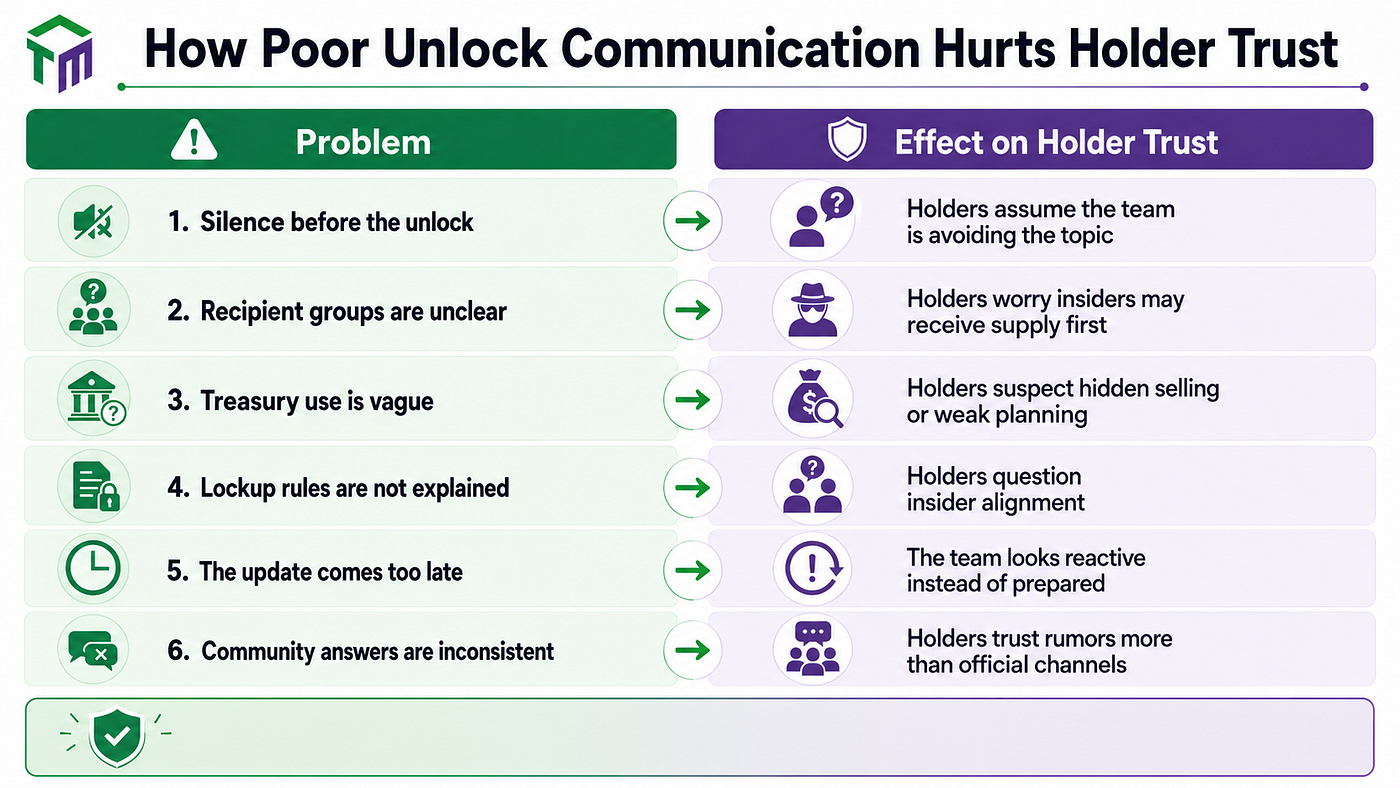
This is why unlock communication should start before the market reacts. A silent unlock creates suspicion. A vague update creates more questions. A last-minute post makes the team look unprepared.
Token Vesting Terms Every Holder Should Understand
Projects often use tokenomics terms that holders do not fully understand. That creates a gap between internal planning and public perception. A token unlock communication plan should define the key terms in plain language.

These terms should appear in the tokenomics page, unlock announcement, and FAQ. The same wording should appear across channels.
This matters because holders compare messages. If the blog says one thing and Telegram says another, confusion grows. Clear language is not basic. It is a trust tool.
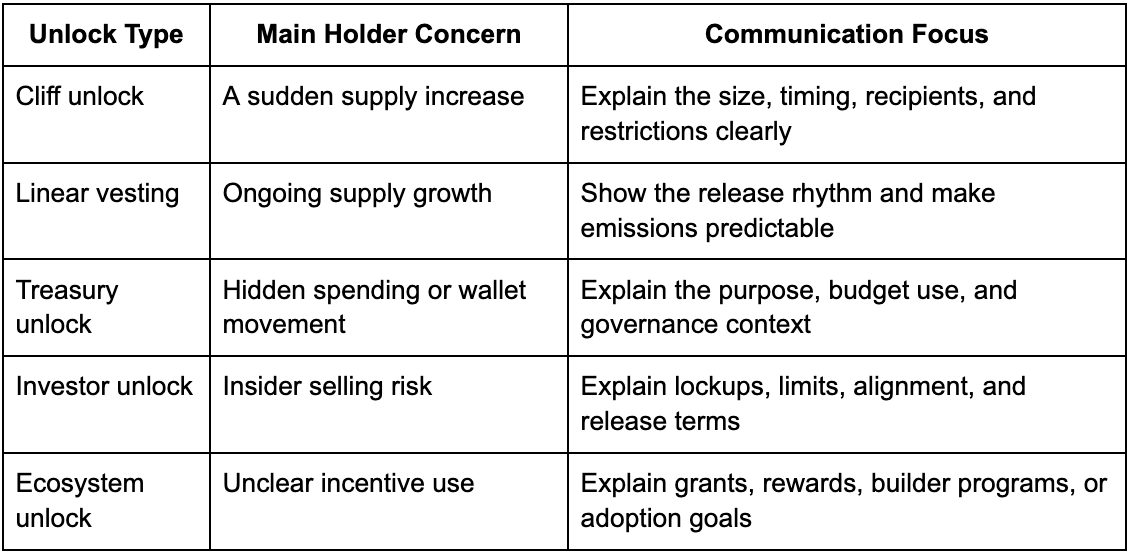
How Communication Changes by Unlock Type
Not every unlock needs the same message. The basic facts stay the same. Teams still need to explain the date, amount, recipient groups, restrictions, and support channels. The emphasis changes based on the unlock type.
How to Communicate Insider Lockups and Alignment
Insider allocations usually get the most attention. Holders do not only check the unlock date. They check whether insiders can move faster than the community.
That is why insider lockups need clear communication. The goal is to show how the rules protect alignment. a16z crypto says token lockups help show long-term conviction and align stakeholder interests. It also warns that different insider lockups or unclear enforcement can create mistrust around the protocol.
So the unlock update should answer one clear question. Can insiders access, move, or sell tokens after this unlock? The answer should be simple and consistent across channels.
What holders need to understand
A strong update should explain:
- Which insider groups are included This may include team, advisors, investors, partners, or contributors.
- Whether the same lockup rules apply Holders need to know if insiders follow the published schedule.
- How tokens unlock Tokens may unlock at once, in tranches, or through a linear schedule.
- What restrictions apply after the unlock The message should explain transfer limits, sale limits, or lockup terms.
- How restrictions are enforced This can include a vesting contract, custodian, smart contract, or approved process.
How to explain enforcement in public
Enforcement means how the lockup rules actually work. The public message does not need sensitive legal details. It does need enough clarity to reduce doubt. The wording should stay practical:
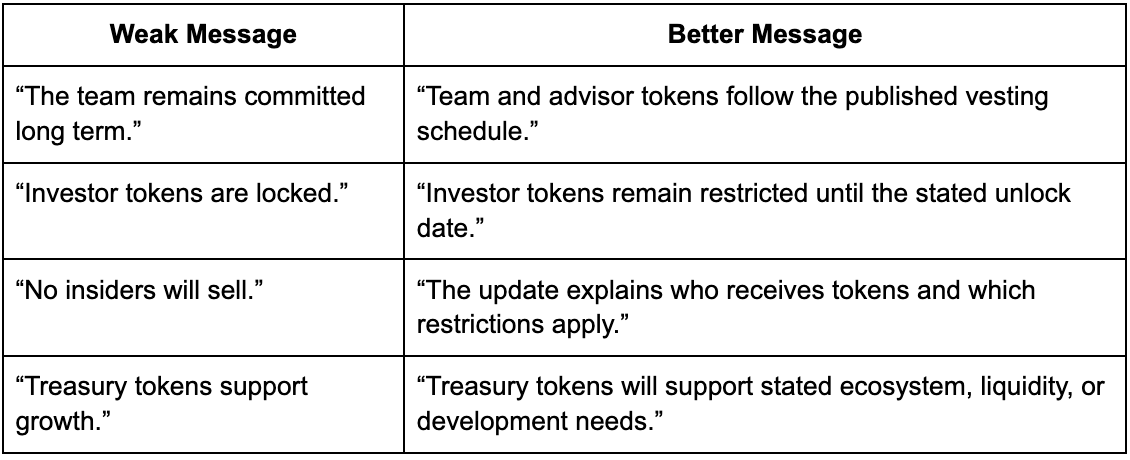
This turns alignment into something holders can understand. Good communication does not promise market behavior. It explains rules, timing, and restrictions before holders fill the gap themselves.
What Projects Should Say Before a Vesting Event
Projects should explain the vesting event before holders start guessing. The update should read like a clear operational note. Holders need to understand what is unlocking, who receives the tokens, and what rules still apply.
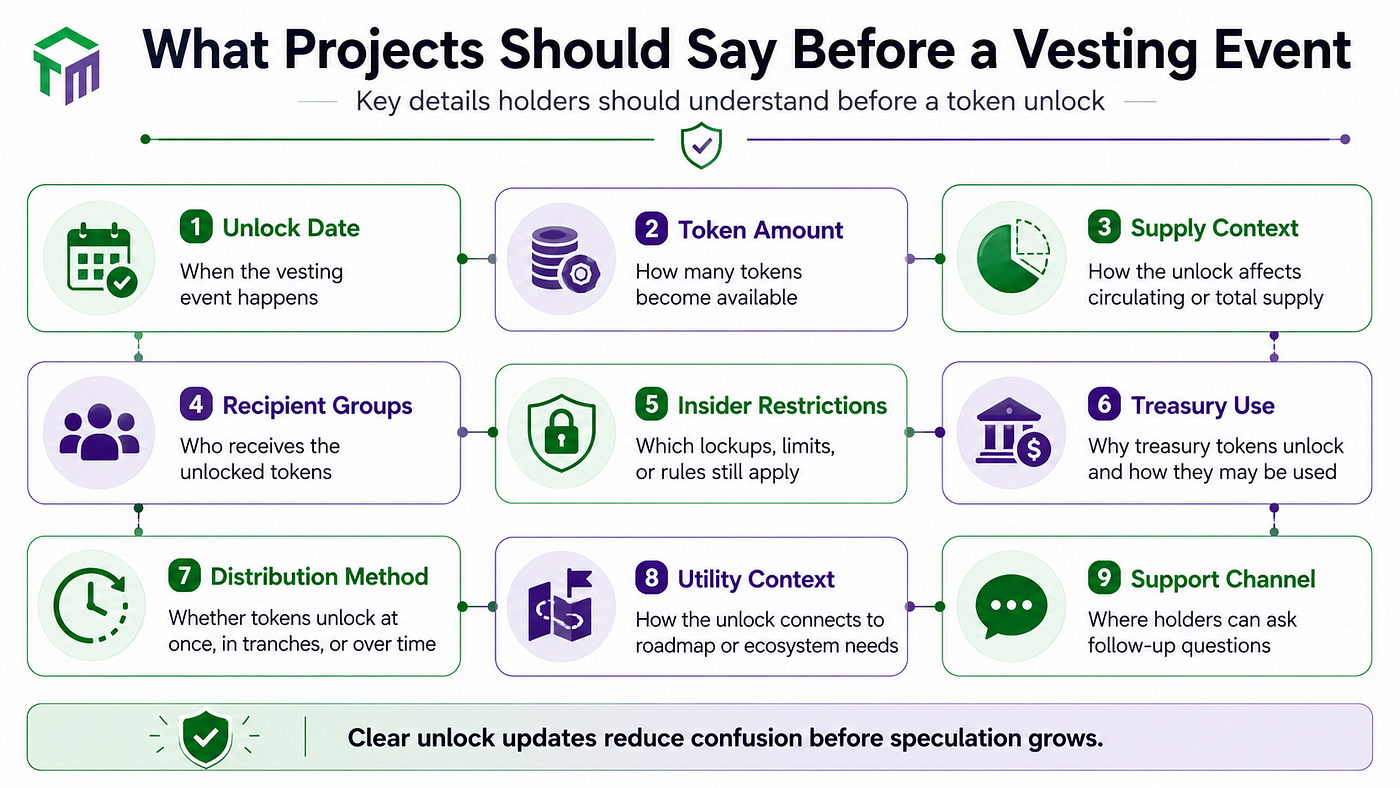
A strong pre-unlock message should answer these points:
- Unlock date
- Token amount
- Supply context
- Recipient groups
- Insider restrictions
- Treasury use
- Distribution method
- Utility context
- Support channel
Market Context to Include
Market context should explain supply facts, not price expectations. A pre-unlock update should include:
- current circulating supply
- unlock amount as a percentage of circulating supply
- whether the unlock is cliff-based, tranche-based, or linear
- whether tokens become transferable immediately
- whether lockups or transfer limits still apply
- whether treasury wallets will move after the unlock
This gives holders useful context without saying what the token price may do.
Token Unlock Announcement Template
A good unlock announcement should be short, factual, and easy to verify. Use this structure:
- Opening summary: date, token amount, and recipient groups
- Supply context: unlock size, supply impact, and release type
- Recipient groups: team, investors, advisors, treasury, ecosystem, or contributors
- Restrictions: lockups, transfer limits, sale limits, or staged release rules
- Treasury use: budget purpose, grants, liquidity support, or ecosystem use
- Utility context: how the unlock connects to roadmap or network growth
- Support channel: where holders can ask questions
Sample announcement:
On [date], [amount] [token] will unlock under the published vesting schedule. The unlock applies to [recipient groups]. Tokens will be released through [cliff / tranche / linear schedule]. [Restrictions] continue to apply. Treasury-related tokens will be used for [stated purpose]. The full schedule and FAQ are available here: [link].
The announcement should avoid price language. It should not claim the unlock will have no market impact. It should not promise that holders will be unaffected.
How Should Projects Communicate Token Unlocks?
A token unlock communication plan works best when it starts early. The plan should have one message, then adapt that message by channel.
a16z notes that token launches require time and teamwork across developers, custodians, investors, employees, and other stakeholders. That same logic applies to unlock communication. The team, partners, and support channels need the same version before the public update goes live.
Unlock communication timeline
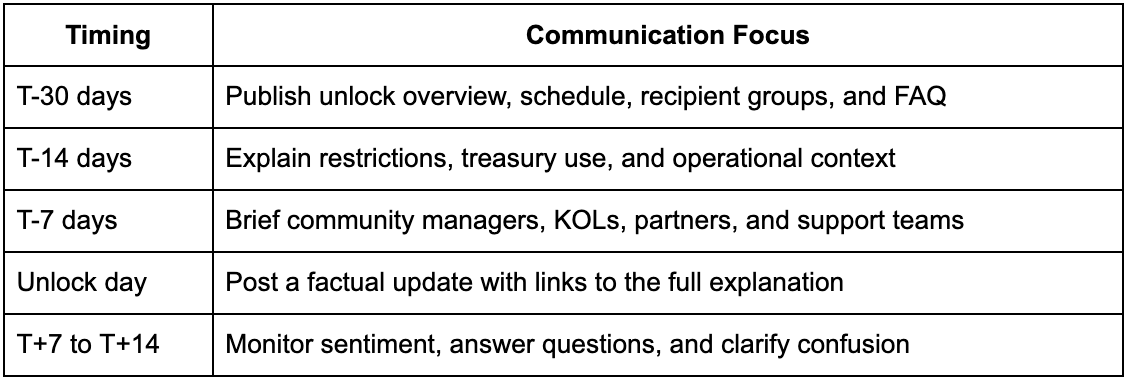
This timeline gives holders enough time to process the event. It also helps the team avoid panic posting.
After the unlock, teams should review which questions repeated most often, which channels created confusion, whether KOLs used approved wording, whether treasury or insider wallet activity created follow-up questions, and whether the FAQ needs updates.
Channel plan
Each channel should have one clear job. The goal is not to repeat the same long message everywhere. The goal is to make the same unlock facts easy to find.
- Website or tokenomics page Act as the source of truth. It should show the unlock schedule, recipient groups, and updated tokenomics details.
- Blog or announcement post Explain the full context. It should cover what is unlocking, why it matters, and how the unlock connects to the roadmap.
- X announcement Share a short public summary. It should link back to the full announcement or tokenomics page.
- Telegram and Discord Pin the FAQ and answer repeated questions. These channels should reduce confusion, not create new interpretations.
- Community managers Use approved answers for common questions. They should also know which questions need escalation.
- KOLs and partners Receive approved wording before posting. They should not explain the unlock before the project does.
- Exchange or listing partners Align on timing and wording when the unlock may affect market communication.
- Support channels Give holders a clear place to ask follow-up questions.
Holders should hear the same facts everywhere. Different wording is fine. Different information is the problem.
Common Token Unlock Communication Mistakes
Unlock messaging often fails when teams try to calm holders without giving clear facts. That approach creates the opposite effect. Holders do not need perfect certainty. They need clear details, consistent wording, and a place to ask questions.
The most common mistakes are:
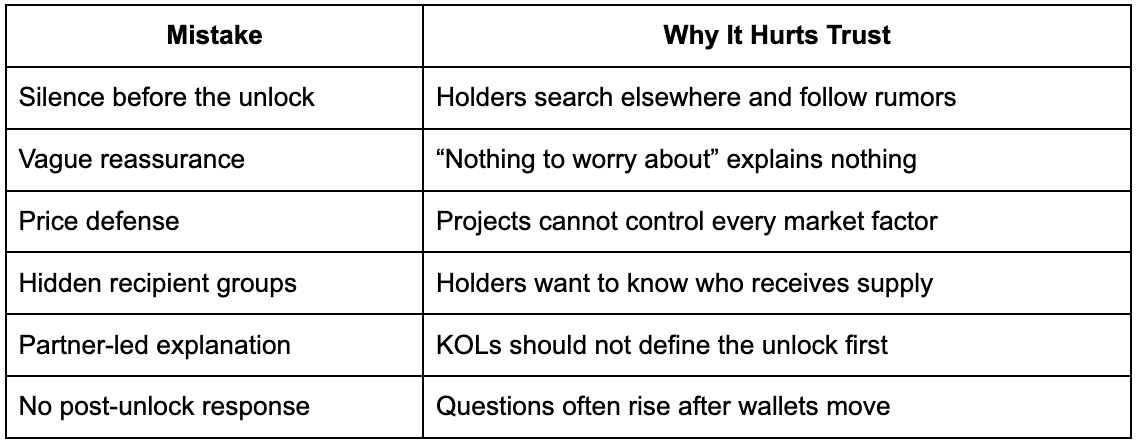
A better approach is calm and factual. Explain the unlock. Repeat the same facts. Update the FAQ. Track recurring concerns.
Case Study: Starknet’s STRK Unlock Revision
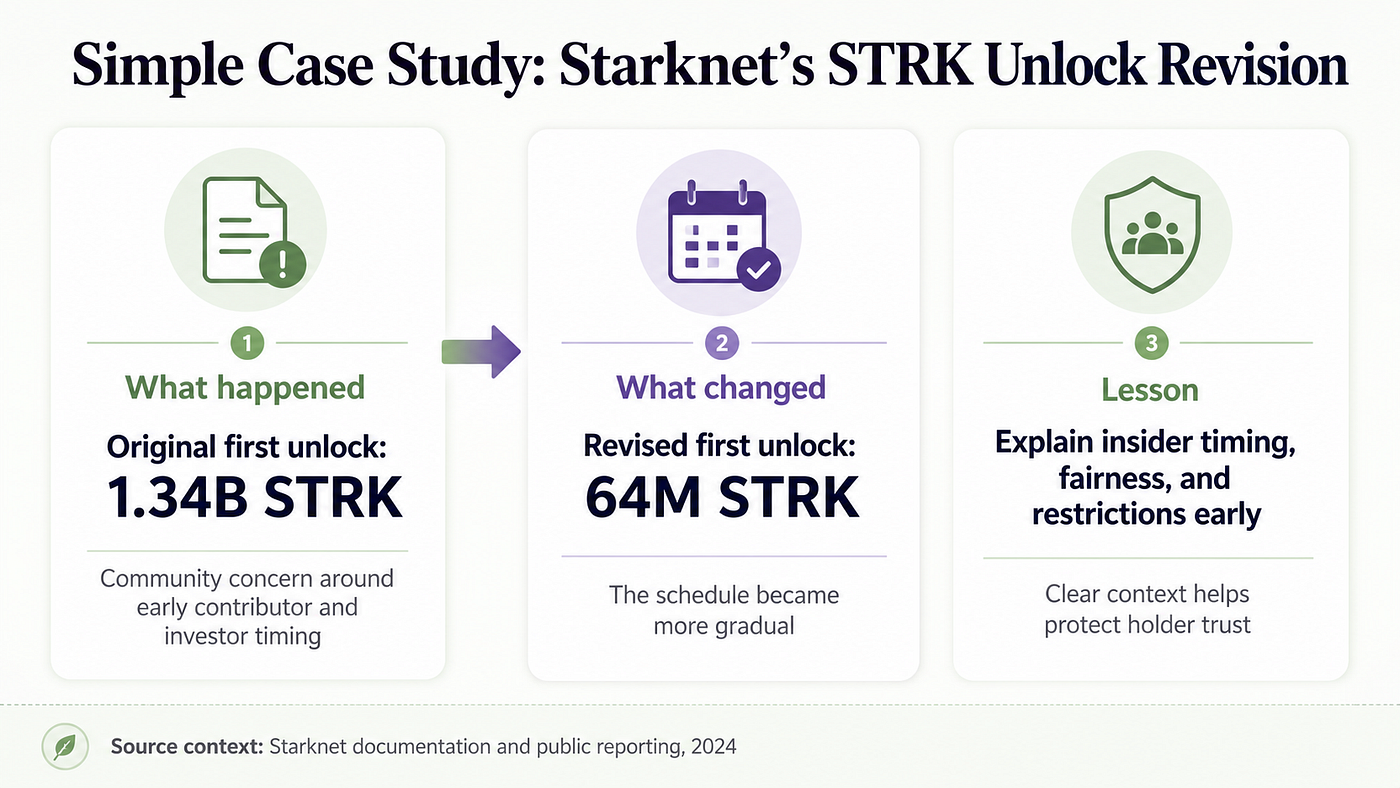
Starknet shows how unlock timing can become a trust issue.
- What happened In February 2024, StarkWare revised the STRK lockup schedule after criticism around early contributor and investor unlocks. The revised plan reduced the first April unlock from 1.34 billion STRK to 64 million STRK.
- What changed The unlock became more gradual. Starknet documentation later showed monthly unlocks for investors and early contributors, with locked holders unable to transfer, sell, or pledge STRK during the lockup period.
- Lesson for token teams Holders do not only react to token amounts. They react to timing, insider fairness, and restriction clarity. Those points should be explained before the unlock becomes a community concern.
Token Unlock Communication Checklist
After the risks, disclosure needs, and channel roles are clear, the team needs one final check before publishing.
This checklist helps turn the unlock plan into a clear communication process. It covers the facts, the message, the channels, and the post-unlock response.
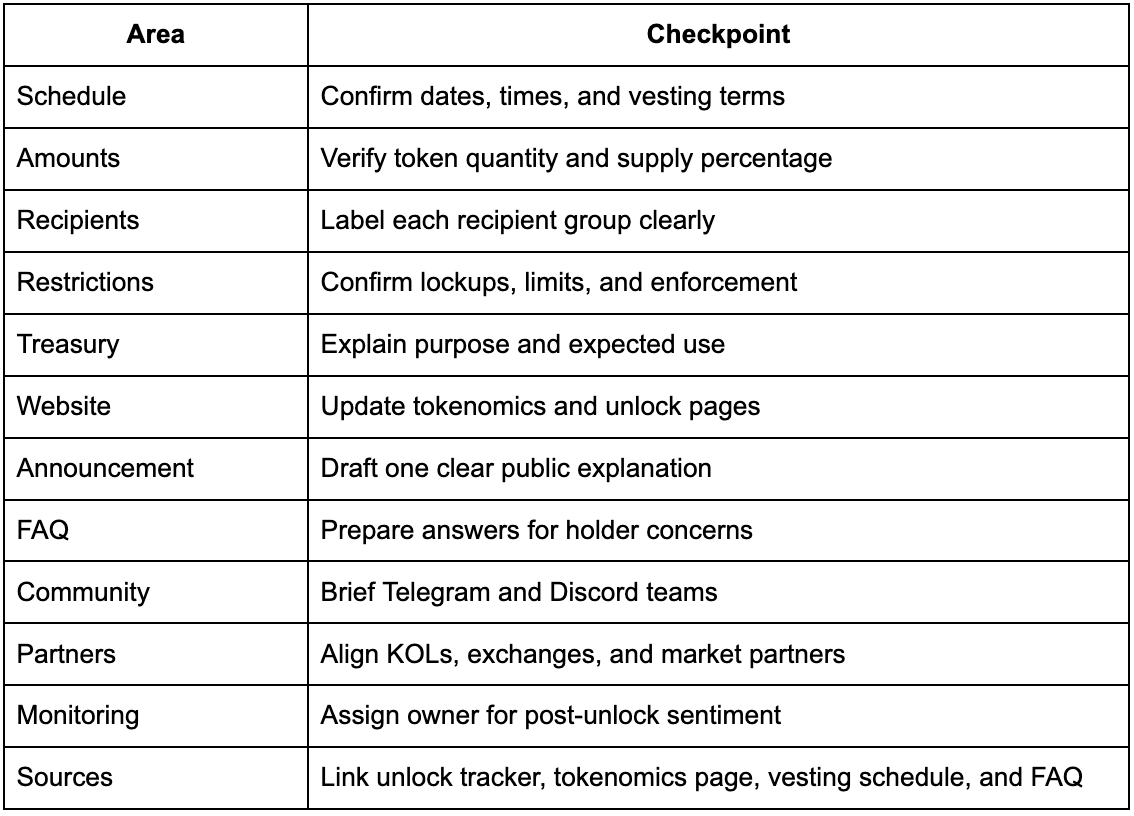
This checklist should be completed before public posting. It should also be reviewed after the unlock. The review should show which questions appeared most often and where the message was unclear.
Plan Token Unlock Communication With TokenMinds
Before a major unlock, token sale teams need more than a vesting calendar. They need a clear explanation of who receives tokens, when they unlock, which restrictions apply, how treasury tokens may be used, and where holders can ask questions.
TokenMinds helps projects review unlock schedules, prepare holder-facing announcements, align FAQs, brief community teams, and reduce communication risk before the unlock becomes a market narrative.
Book a call for an unlock communication review.
FAQs
Does a token unlock mean insiders will sell? No. A token unlock means locked tokens become available under the vesting schedule. It does not always mean insiders can sell right away. Some tokens may still have lockups, transfer limits, or staged release rules.
What happens during a token unlock? During a token unlock, a set amount of tokens becomes available to specific recipient groups. These may include the team, investors, advisors, treasury, or ecosystem programs. Holders usually care about the amount, timing, recipients, and restrictions.
How should projects announce token unlocks? Projects should announce unlocks before the event. The update should explain the date, token amount, recipient groups, restrictions, treasury use, and support channels. The message should stay factual and avoid price promises.
How early should projects announce a token unlock? Projects should usually start communication around 30 days before a major unlock. The first update should explain the schedule, recipient groups, and FAQ. Later updates can clarify restrictions, treasury use, and support channels.
메타데이터
- post_id
- 768094fb68f5
- slug
- token-unlock-communication-plan-how-to-explain-vesting-and-protect-holder-trust-768094fb68f5
- url
- https://medium.com/tokenminds/token-unlock-communication-plan-how-to-explain-vesting-and-protect-holder-trust-768094fb68f5
- canonical_url
- https://medium.com/tokenminds/token-unlock-communication-plan-how-to-explain-vesting-and-protect-holder-trust-768094fb68f5
- author_url
- https://medium.com/@tokenminds_marketing
- status
- ok
- fetched_at
- 2026-07-09 00:50:33