2025 wrap-up from Triveria
There are good results, finally…
2025 wrap-up from Triveria
There are good results, finally…
During the year of 2025, the Digital Identity and Verifiable Credentials working space has finally started to shape. Right now, it is becoming a lot more clearer what the future market will look like and which products and services will be in demand. When we started Triveria in the beginning of 2024, our product vision was of a Cloud Platform capable of operating with Verifiable Credentials and interacting with other wallets/verifiers etc. The platform would not only provide the needed functionality for real-world use-cases concerning only Verifiable Credentials, but it would also bridge back to current online processes and connect them with the world of Digital Identity. The product that I have described is called the “Business Wallet” in Working Groups focused on the EUDI Wallet and the infrastructure around it. Speaking of EUDI, the EUDI Architecture and Reference Framework (EUDI ARF) was published this year, describing the requirements and specifications that all EUDI-compatible Wallets have to implement. In my opinion, this is one of the most important steps forward, as it provides concrete and specific guidelines to Wallet Providers so that their products are harmonized and compatible with others. This finally opens the door to future mass adoption of these Wallets.
The technology of Self Sovereign Identity (more often referred to as the Digital Identity) and Verifiable Credentials has already been in use for a number of years. However, businesses have been struggling to make a serious business out of it, which, in my opinion, has mostly been caused by the lack of interoperability and backwards compatibility with current digital processes. There are mostly closed, encapsulated data spaces with a limited number of players exchanging credentials that are having a hard time recruiting new members or bridging back to whatever they are using outside of the data space. Year 2025 marks the start of a large transformation of these small, use-case specific data spaces into a global digital space where all users within the EU (in the future maybe also globally) will be able to present and exchange verifiable digital identity and verifiable data in a secure, fast, convenient and standardized manner.
How might this happen? Besides the ARF being published, which is one of the key parts, we have results from the EBSI Vector use-cases, some of which started an interoperability initiative among wallet providers. Companies participating in this initiative were testing interoperability of their digital wallets and have successfully fine tuned them. The OpenID4VCI and VP specifications used as the specs for wallets interactions have also reached stable versions and all the functionality of the EUDI Wallet for private persons became well defined. Legislation concerning EUDI Wallet and Digital Identity is being fleshed out and most importantly, individual roles or areas of the digital wallet ecosystem are getting defined, which helps to participating companies and organization to find their optimal position.
Three main areas of the future industry
Digital Identity of private persons will be controlled by each individual EU member state and any services associated with it will be provided free of charge to their citizens. The private sector may get involved by being selected as the service provider of the state’s EUDI Wallet. Moreover, considering the fact that the German organization SPRIN-D is planning to publish its EUDI Wallet solution as an open source and number of other EU states already have digital identity solutions deployed in production, entering this field as a business seems to be challenging.
Another key role in the future ecosystem of Digital Identity is the Trust Provider. Trust Provider has to be globally accepted by all entities in the ecosystem, which is absolutely necessary in order to break free from the previously mentioned closed data spaces and in order to make the ecosystem operational on a global scale. There are companies operating in the SSI area for a decent amount of time, that have their own trust solutions. However, these companies are limited by the fact that their vendor solutions are not inherently trusted by other entities in the digital space. The trust provider role is therefore being pushed into the hands of organizations and associations that have either decentralized legal structure or are state operated, preventing a single private entity controlling the trust of the whole environment. Given this shift in paradigm, business opportunities in providing trust frameworks become rather limited.
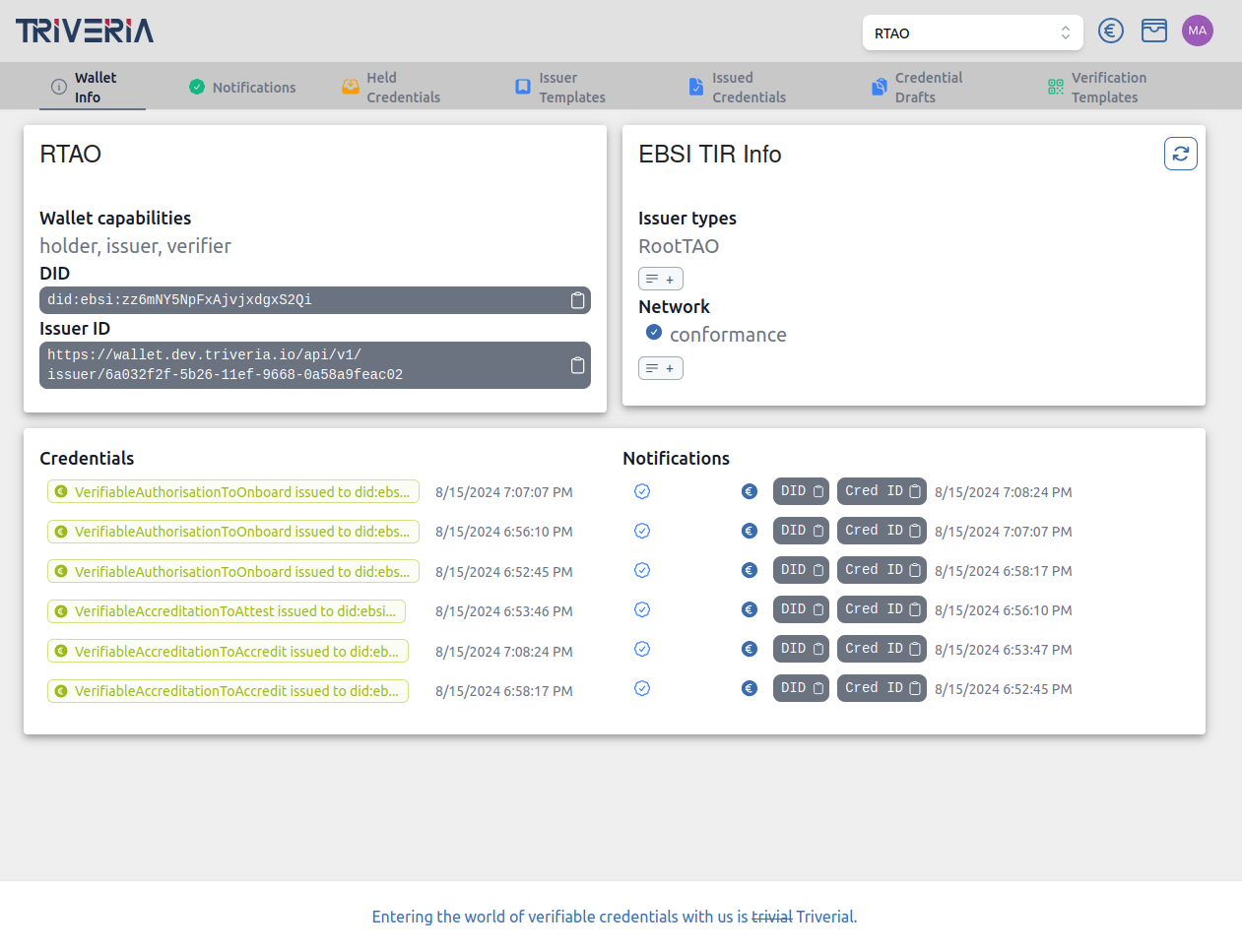
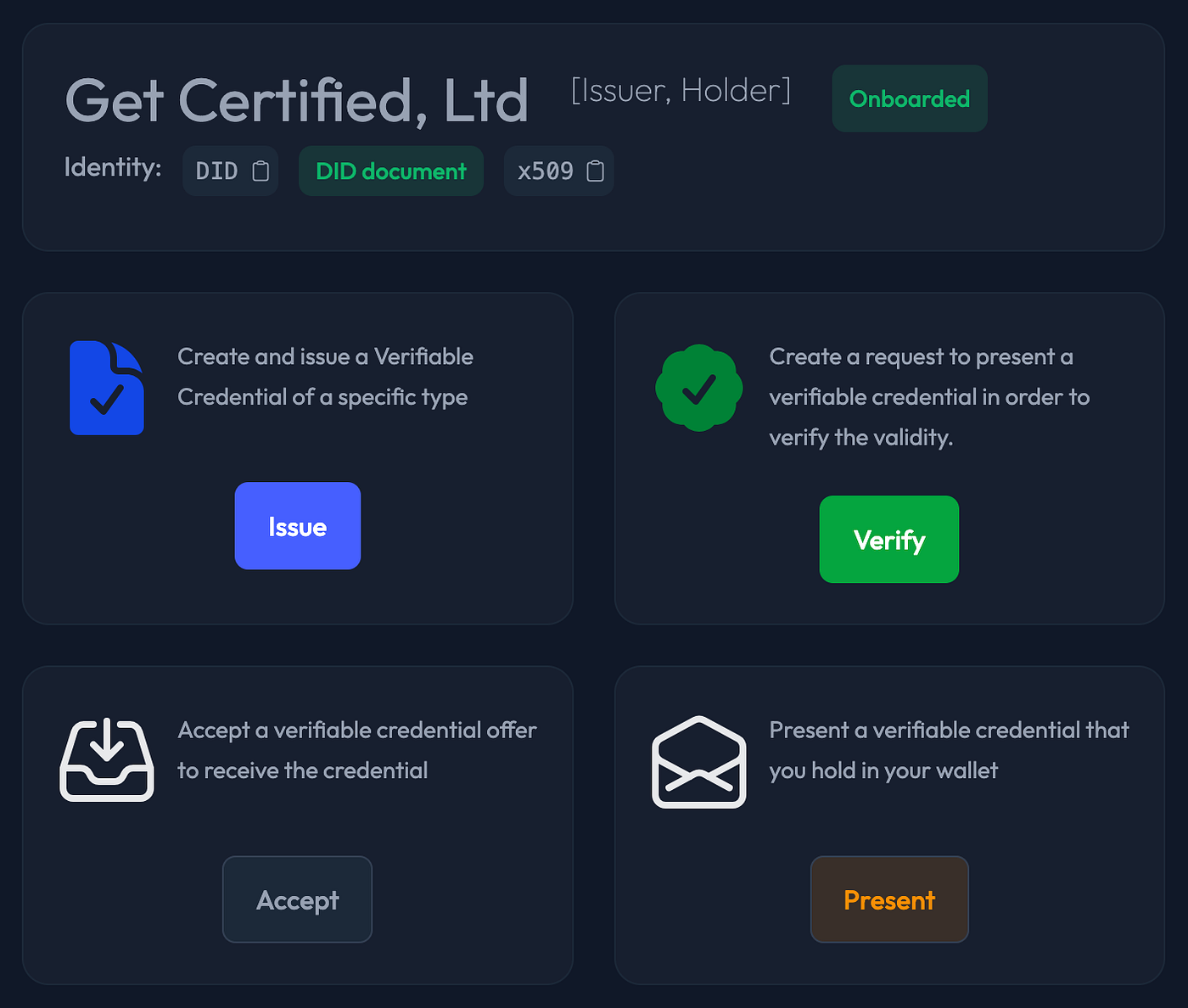
When it comes to the business wallets, things can get creative as this area is not going to be regulated much from the side of the EU. Also when a new technology emerges on which new products and services may be built, the private sector will burst out with new business ideas. In Triveria we started to build on this premise. We have created a Business Wallet Cloud Platform that provides the necessary infrastructure to launch products and services of the future that can utilize the availability and exchange of secured verified and trusted data globally and in the most convenient way possible.
What is Triveria's position in all that
So, what’s been cooked in Triveria’s kitchen this year? We wrapped up the Business Registry use case as part of the EBSI VECTOR working group where Triveria was the Wallet Provider and designed the technical aspect of the final deliverable. In addition to the Business Registry use-case, we did several university diploma prototypes as part of the EBSI VECTOR. We have started a close cooperation with IDunion SCE with the goal of building a new generation of Verifiable Data Registry. I personally took the role of a Solution Architect in the IDunion SCE and both teams jointly developed a concept of a Trust List Platform that combines the new trust model used in the Digital Identity spaces and the globally used and trusted X509 certificates model. Moreover, we successfully demonstrated our concept during the EU Digital Identity Wallets Forum that took place on 22nd of October in Berlin, where we gained attention with our scalable Trust List solution with the aforementioned capabilities. With the hand on experience and knowledge we gathered during the executed pilots and the work on the trust list platform we feel confident to design the Business Wallet API that will be ready to handle production use cases. We plan to release the first stable version of the wallet API by the end of this year.
And what about the upcoming year of 2026? It is still too early to have any specific predictions, but I think that it is definitely going to be a game changer. We already see the pilot use cases getting more and more closer to being production-ready and usable in real life. The standardization and legislation is getting more specific and stable. The demand for a globally trusted digital space minimizing fraud and decreasing due diligence costs is raising. However, interoperability is the key and the teams of Triveria and IDunion work jointly on another major contribution to the business wallet ecosystem. Please, stay tuned to learn more about the contribution with which we will start the upcoming year 2026!
메타데이터
- post_id
- 7691f44279a4
- slug
- 2025-wrap-up-from-triveria-7691f44279a4
- url
- https://medium.com/@triveria/2025-wrap-up-from-triveria-7691f44279a4
- canonical_url
- https://medium.com/@triveria/2025-wrap-up-from-triveria-7691f44279a4
- author_url
- https://medium.com/@triveria
- status
- ok
- fetched_at
- 2026-07-17 23:31:04