What Makes Alkaline Spring Water Different (and Is It Worth It)?
Walk down any beverage aisle in the GTA and you’ll see it now: bottles labeled “alkaline,” “pH 8+,” or “ionized,” sitting next to plain old…
What Makes Alkaline Spring Water Different (and Is It Worth It)?
Walk down any beverage aisle in the GTA and you’ll see it now: bottles labeled “alkaline,” “pH 8+,” or “ionized,” sitting next to plain old spring water at nearly double the price. It raises a fair question. Is alkaline water actually different, or is it the same water with better marketing?
The honest answer sits somewhere in the middle. There are real, measurable differences in alkaline spring water. Whether those differences matter for your health is a separate question, and one worth answering carefully rather than with a sales pitch.
What “Alkaline” Actually Means
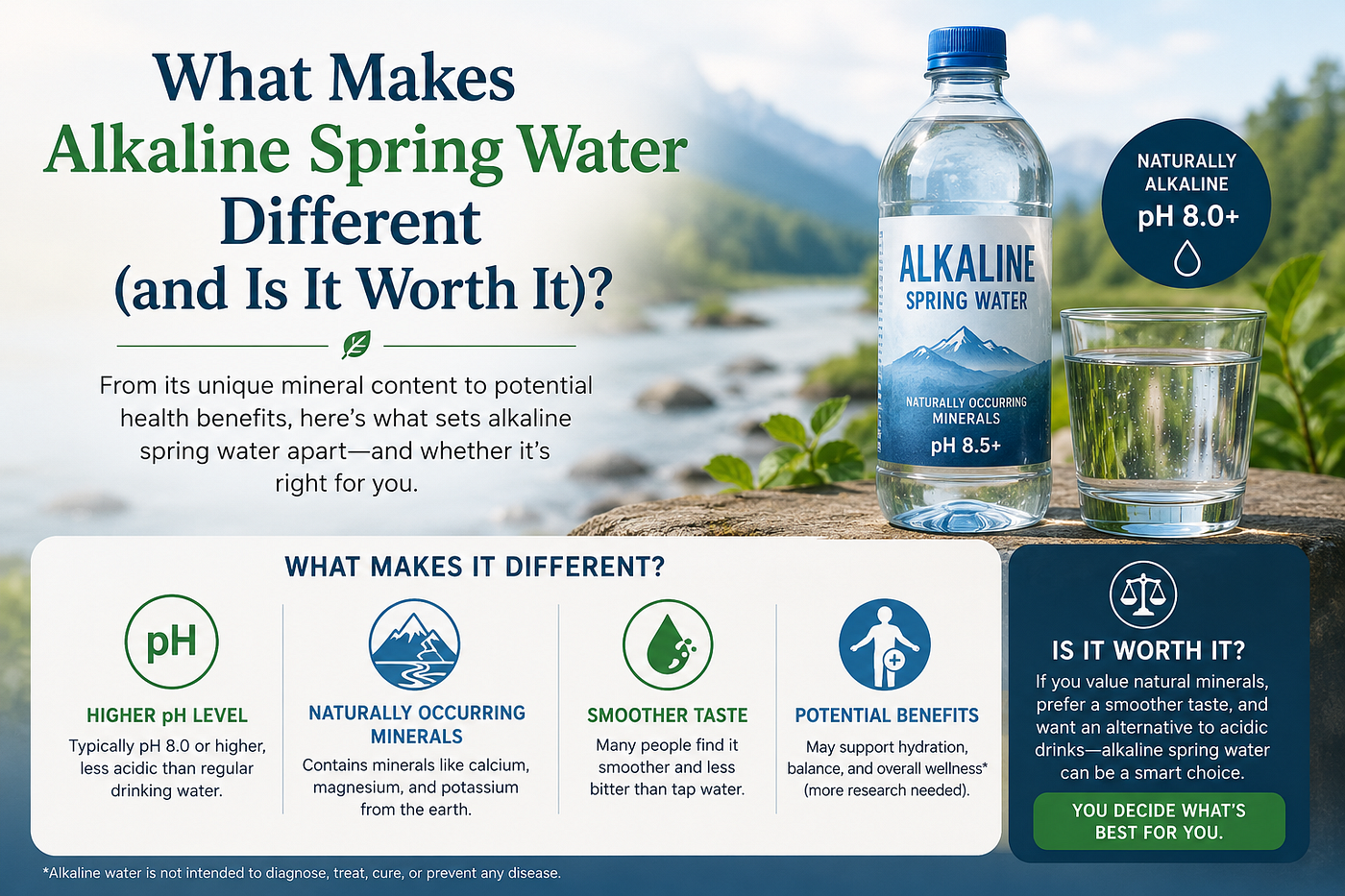
Water’s pH is measured on a scale of 0 to 14, with 7 sitting neutral. Anything above 7 is alkaline, anything below is acidic. Most municipal tap water lands somewhere around 7 to 7.5. Alkaline spring water typically runs from 8 to 9.5, depending on the source.
That shift happens naturally when water travels through mineral-rich rock formations, particularly limestone and other calcium- or magnesium-heavy deposits, before it reaches an aquifer or spring. As the water moves through these layers, it picks up dissolved minerals like calcium, magnesium, and potassium bicarbonate, which raise the pH and give the water a naturally alkaline character. This is different from artificially ionized water, which uses an electrolysis machine to split tap water into acidic and alkaline streams on demand. Both end up alkaline on paper, but the mineral content and the process behind them are not the same thing.
Naturally sourced alkaline water tends to carry a more rounded, mineral-forward taste, which is part of why people notice a difference when they switch from tap or standard bottled water.
The Science, Without the Hype
This is where a lot of marketing overreaches, so it’s worth being direct about what research actually supports.
The “alkaline diet” theory, the idea that alkaline foods and water can shift your blood’s pH and reduce disease risk, doesn’t hold up well under scrutiny. Your body regulates blood pH within an extremely tight range regardless of what you drink or eat; that’s a function of your lungs and kidneys, not your water bottle. No spring water is going to meaningfully change your blood chemistry.
Where the evidence is more interesting is narrower and more modest. A handful of small studies have looked at alkaline water’s effect on hydration efficiency and post-exercise recovery, with some suggesting it may be absorbed slightly differently than regular water due to its mineral content. Other research has explored whether higher-pH water can help buffer stomach acid for people with acid reflux. The findings here are real but limited in scale, and nobody serious is calling alkaline water a treatment for anything.
What alkaline spring water reliably offers is what any well-sourced natural mineral water offers: hydration, plus a modest dose of calcium, magnesium, and potassium that many people don’t get enough of from diet alone. That’s a genuine benefit. It’s just a smaller and more honest one than “detoxifies your body” or “fights disease,” claims that responsible brands should avoid making.
Taste and Everyday Use
Beyond the health conversation, a lot of people simply prefer how alkaline spring water tastes. The mineral content tends to soften harsh or metallic notes that come through in some tap water, giving it a smoother, slightly sweeter mouthfeel. It’s also popular in kitchens for coffee and tea, since mineral balance affects extraction and flavour in ways that plain filtered water doesn’t always replicate.
For offices and homes already using water cooler service, switching to a naturally alkaline spring source is a simple upgrade that doesn’t require new equipment or habits, just a different fill.
Is It Worth the Price?
If you’re expecting a health transformation, no. If you’re looking for a better-tasting, well-mineralized water sourced from a natural spring rather than a factory ionizer, then yes, it’s a reasonable upgrade, and one that a lot of people notice within the first few glasses.
The most honest way to think about it: alkaline spring water isn’t a cure for anything, but it is a genuinely different product from standard tap or filtered water, thanks to its natural mineral profile and higher pH. Whether the price premium is worth it comes down to taste preference and whether you value that mineral content, not to any dramatic health claim.
If you want to try it for yourself, Bear Springs sources alkaline spring water from Bear Springs directly from a natural Canadian spring, with no artificial ionization involved, just water shaped by the rock it travels through.
Bear Springs Canada supplies naturally sourced spring and alkaline water to homes and offices across the GTA. Learn more about our alkaline spring water from Bear Springs and cooler delivery options at bearsprings.ca.
메타데이터
- post_id
- 76a08bcde2c8
- slug
- what-makes-alkaline-spring-water-different-and-is-it-worth-it-76a08bcde2c8
- url
- https://medium.com/@waterdelivery/what-makes-alkaline-spring-water-different-and-is-it-worth-it-76a08bcde2c8
- canonical_url
- https://medium.com/@waterdelivery/what-makes-alkaline-spring-water-different-and-is-it-worth-it-76a08bcde2c8
- author_url
- https://medium.com/@waterdelivery
- status
- ok
- fetched_at
- 2026-08-08 00:58:04