The Career Ladder Is Breaking. Nobody Knows What Comes Next.
For decades, entry-level jobs were a primary means of learning. What happens when software starts doing the learning phase instead?
The Career Ladder Is Breaking. Nobody Knows What Comes Next.
For decades, entry-level jobs were a primary means of learning. What happens when software starts doing the learning phase instead?
Most people grow up hearing one big rule about jobs, as it will never change.
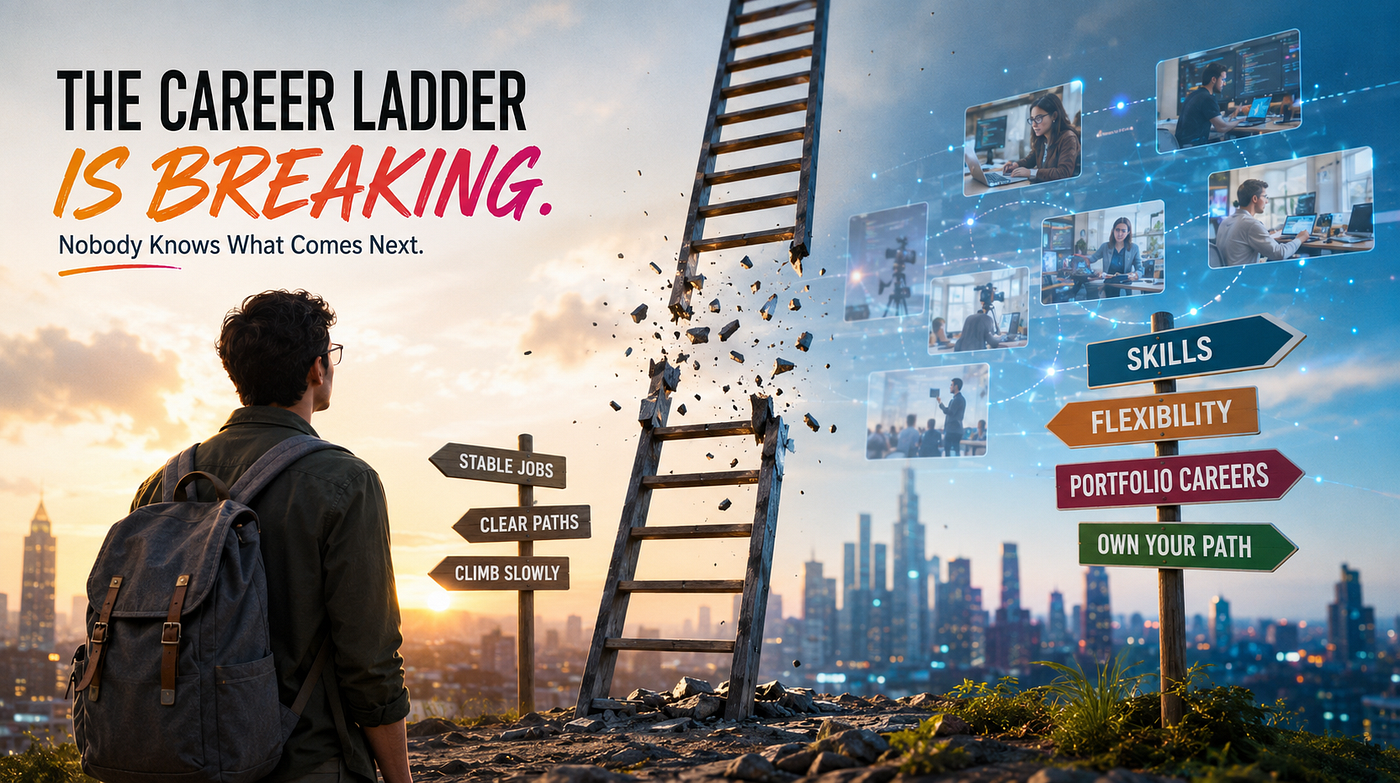
Image Is Generated By AI
My parents saw life one way. A diploma came first. Then a steady job followed. Effort mattered each day. Progress meant climbing slowly.
Now, it’s tech first for many millennials. Staying flexible matters more than before. Skills need constant refreshes, that much is clear.
These days, more and more grads aren’t listening to the usual talk. Instead, fresh voices are breaking through.
“Get experience.”
These days, landing real hands-on practice feels tougher than before.
Out there in different fields, machines are slowly taking over work that people just starting used to handle. Instead of hours spent on reports, a system spins them up fast. Meetings get boiled down by software while humans step back. Research pops up without someone digging through piles. Data finds its place thanks to quiet digital helpers. Code pieces appear before coffee cools. Slides come together without late nights. First tries at writing show up almost instantly these days.
Now comes a problem most groups aren’t set up to face.
Without beginner jobs around, gaining real-world skills gets tricky. When starting roles vanish, stepping into expertise feels like climbing a ladder missing its base rungs. Experience grows through doing — yet where is the first step if those paths fade away?
The Hidden Reason Behind Entry-Level Jobs
Most people misunderstand the purpose of entry-level jobs.
What mattered wasn’t found in the task. Instead, it hid behind the effort’s shadow.
Back then, most entry-level roles meant doing the same thing again. Spreadsheets came together one cell at a time under the analyst's hands. Data trickled in slowly, gathered by new marketers each morning. Paperwork stacked up before assistants shaped it into order. Small coding errors disappeared thanks to fresh developer eyes.
Hard tasks filled the days. Not one moment sparkled as stories promise.
Yet these jobs held a quiet value.
Out in the open, folks saw how choices got made. People watched decisions unfold up close.
They taught context.
Out came the truth about real business practices.
Hours of report prep opened one young analyst’s eyes to executive thinking. Software design clicked for a junior coder after endless bug fixes. Assembling research slides slowly revealed decision patterns to the rookie consultant.
Out of practice sessions came no real skill.
Close by, learning happened without trying. Being near made things clear over time.
Close by like that hardly happens anymore.
The New Workplace Reality
Pressure pushes companies to work smarter. Efficiency becomes a target when demands rise. Focused changes often follow tight deadlines. Results matter more when resources shrink. Speed gains value in tense moments.
Working smarter shows up when budgets shrink. Yet results still matter, even under pressure. Speed becomes normal, though support does not always follow. Expectations climb while help stays flat.
Because machines handle repetitive jobs fast, companies see clear reasons to adopt them.
What if one tool could handle tasks that might otherwise need three new hires? Speed changes everything, after all.
Looking ahead just a bit, it makes sense on the surface.
Looking ahead, this creates a risky situation. Still, the issue grows worse over time. Trouble builds slowly, yet surely. In the years that follow, consequences appear. Eventually, what seemed small becomes serious. Time magnifies the flaw. A quiet threat turns sharp.
Future specialists might vanish when firms cut the path that leads to them.
Today’s senior leaders were once inexperienced employees.
Back then, every expert started out knowing almost nothing. Now they handle things with ease because time has changed that.
Most experts were once beginners. A first step always comes before mastery. Someone had to try before they knew how.
Most days, work pushes for quick results instead of letting skills grow slowly through practice. Skill needs time, yet speed usually wins. Growing mastery takes patience, something busy schedules rarely allow.
Mistakes like that might cost a lot later.
The Experience Gap Everyone Ignores
Some groups now face a strange problem they didn’t expect. A few have started noticing odd shifts in how things operate lately.
Most of the time, they look for people who’ve done it before.
Yet fewer chances exist now for folks to gain real know-how. Still, learning by doing slips away slowly over time.
This is when economists point to something they name a pipeline issue.
Right away, changes rarely show up.
Years could pass before any real change shows up. Productivity might rise slowly during that stretch.
Costs may decrease.
Output may increase.
A problem shows up next.
Fewer people with middle experience stand prepared for bigger roles. Still, some steps forward when needed. Responsibility waits for those who grow into it. Not everyone reaches for more at the same pace.
Fewer people are available now. Still, some show interest. Yet options feel smaller every month. Not everyone stays long enough to matter.
Fierce battles emerge over skilled staff. Employers scramble when seasoned hands become scarce.
Fees go up when bringing on new people. Costs rise during recruitment.
When leaders step down, finding someone new grows harder.
Slowly come the consequences — this delay lets people overlook them until avoidance is no longer an option.
Graduates Face Growing Doubt
Something feels different now, say a lot of younger workers.
These days, the old way of building a job doesn’t hold the same steady promise. A clear ladder up seems fuzzier now. Routes twist where they used to go straight. People expect shifts more often than stability. Movement matters more than staying put. Long-term plans bend under constant change. Fewer roles follow set timelines anymore.
These days, holding a diploma won’t open doors by itself.
Internships are more competitive.
Most first jobs pull in hundreds, sometimes thousands, of people wanting in.
Even so, showing up without hands-on know-how might leave a gap. Arriving prepared means having done real work before stepping through the door.
A strange twist shows up here instead.
Getting hired often depends on having done it before.
Yet without work, how do they build skills?
Computers learning on their own? That’s just one piece here. This problem runs deeper than that idea alone.
Hard times, world trade shifts, one thing leads to another. Machines are doing jobs once handled by people, which plays a role, too. Big changes in how things are made and sold, they add up.
Still, artificial intelligence speeds up change by cutting the need for standard mental work — work that used to help beginners learn the job. Yet fewer openings appear now where practice mattered most.
The Rise of Portfolio Careers
Finding old job ladders harder to climb, some workers now build their own way up. Instead of waiting, they shape new directions that fit changing times.
Finding their footing across different paths, they gather skills from various places.
Freelance projects.
Independent consulting.
Online businesses.
Content creation.
Open-source contributions.
Community leadership.
A change like this pushes more people into juggling different jobs at once.
Out there beyond big companies, people now gather know-how just as often.
More often than not, a mix of projects shapes it, tied together through teamwork alongside online tasks.
Flexibility shows up here in a quiet way. A different path opens without force.
People carry a bigger share of the load now.
Building skills now comes from those doing the jobs. People shape how they grow at work, step by step.
Skills That Gain Value Over Time?
With machines handling daily chores, people find worth in different places.
Technical skills remain important.
Yet alone, these things just do not cut it anymore.
What stands out now is how bosses want skills machines can’t easily copy.
Critical thinking.
Communication.
Judgment.
Adaptability.
Relationship building.
Leadership.
Success over time tends to hinge on these skills, even though they’re tougher to quantify compared to hard technical abilities.
Artificial intelligence can generate information.
What counts comes down to people. Still.
One difference could shape what matters most in the years ahead.
A Different Definition of Career Success
Maybe tomorrow's jobs won’t look like what folks once pictured.
Climbing the career ladder feels shakier these days. Still, people keep trying anyway.
A different setup now takes shape, yet it carries more layers than before.
Across fields, movement could become common. Sometimes folks shift where they work. Job changes might happen faster now. Moving between areas seems likely to increase.
Some people mix different ways to earn money.
Change follows them, each time machines learn something new.
Fear rises when things change.
Chance shows up, too.
Looking back, times of tech shifts usually seem messy in the moment.
It takes time before different shapes start to show up.
What workers confront now goes beyond just picking up AI skills.
Building meaningful careers now means adapting as old routes shift beneath our feet. Ways that once worked fade, making space for new steps forward. Learning happens through trying, not just following. Paths twist unexpectedly, demanding fresh thinking each day. Old rules blur when change comes fast. What matters grows clearer even as methods disappear. Staying open shapes what comes next.
The greatest danger isn’t found in smarter machines. Instead, it hides in how people respond when tools change too fast.
Tomorrow rarely follows today’s playbook. The greatest danger lies in thinking old paths stay true. Rules fade when nobody looks. Careers shift while habits hold steady. What worked before might not work now.
Should the ladder start failing, expecting another person to fix it might just sit there doing nothing. Instead of relying on others, standing by could mean nothing changes.
Left behind could stem from this one thing.
메타데이터
- post_id
- 76b06e82fe17
- slug
- the-career-ladder-is-breaking-nobody-knows-what-comes-next-76b06e82fe17
- url
- https://medium.com/reflections-and-realities/the-career-ladder-is-breaking-nobody-knows-what-comes-next-76b06e82fe17
- canonical_url
- https://medium.com/reflections-and-realities/the-career-ladder-is-breaking-nobody-knows-what-comes-next-76b06e82fe17
- author_url
- https://medium.com/@shaurya.9seth31
- status
- ok
- fetched_at
- 2026-06-15 20:49:13