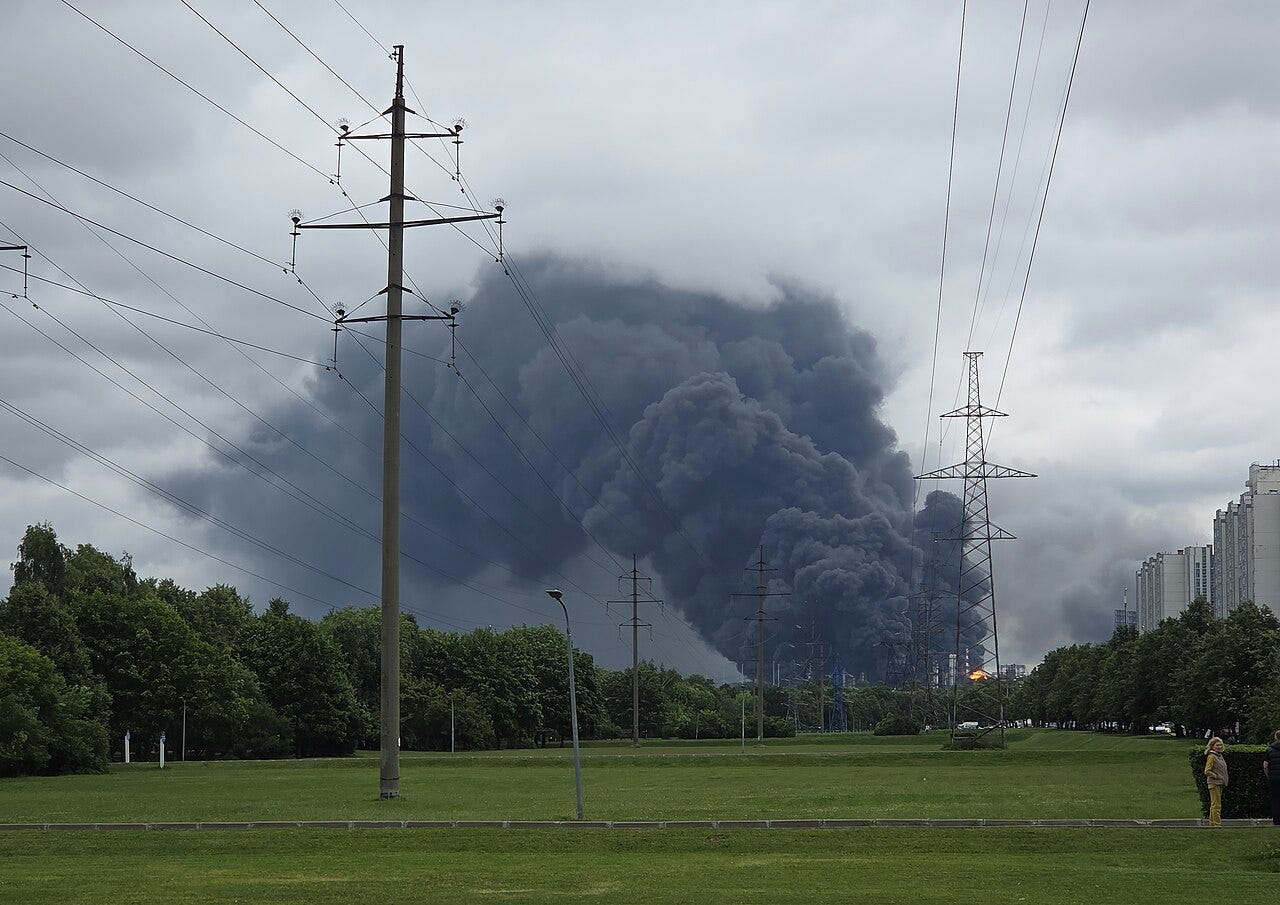
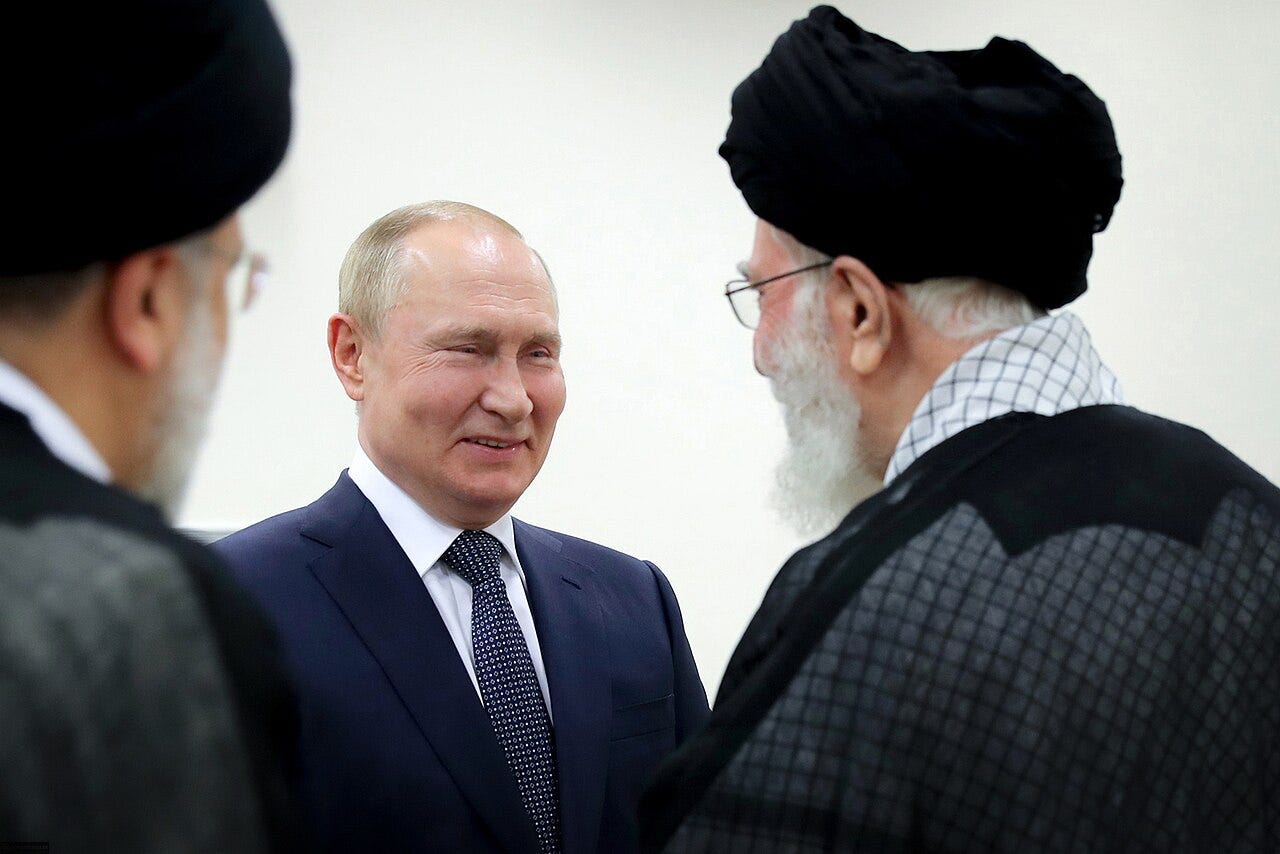
Six Words in a Ceasefire, One Region on Fire
A vague clause in June’s U.S.-Iran memorandum let Tehran claim control of Hormuz — and triggered 310 American strikes in a single week
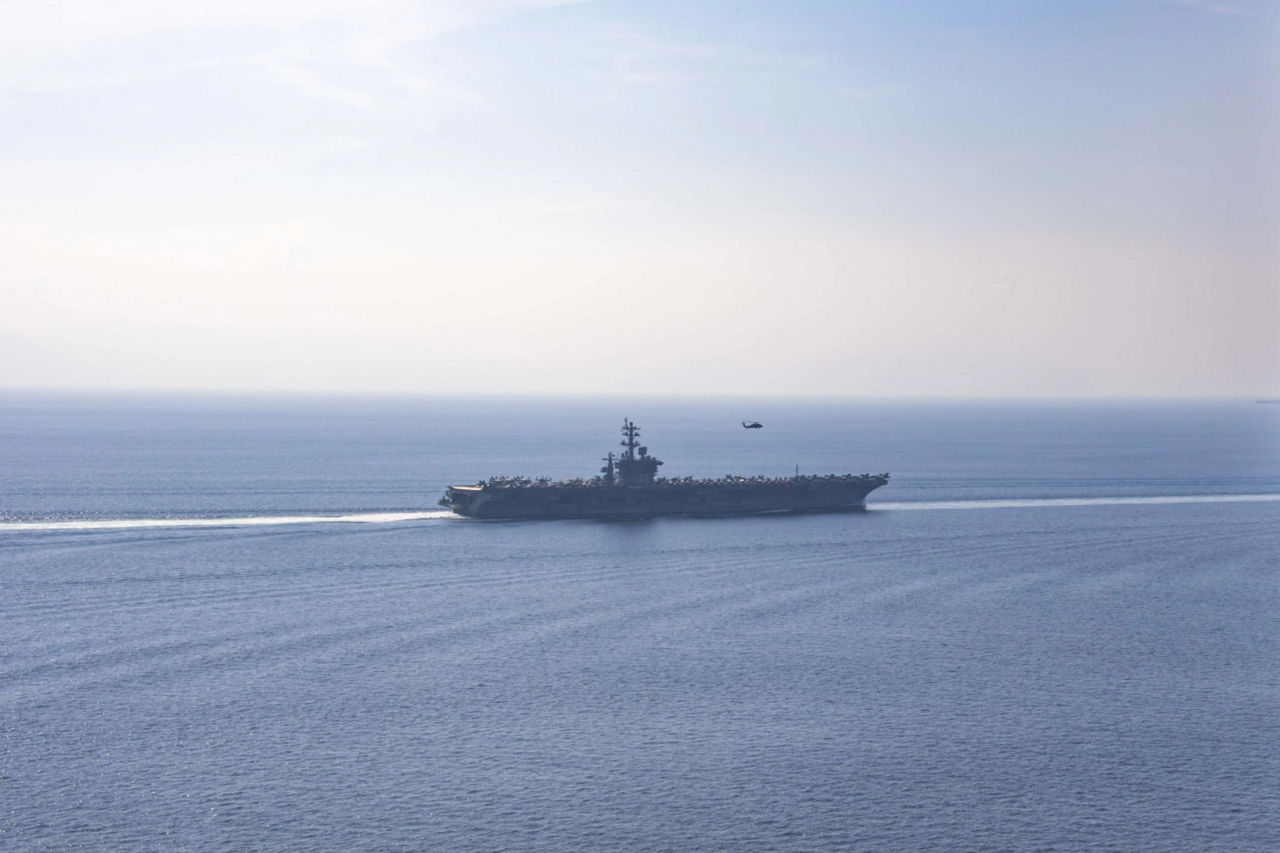
Dwight D. Eisenhower (CVN-69) in the Strait of Hormuz
Six Words in a Ceasefire, One Region on Fire
A vague clause in June’s U.S.-Iran memorandum let Tehran claim control of Hormuz — and triggered 310 American strikes in a single week
The conflict between the United States and Iran, which first erupted at the end of February, has spent the summer lurching between fragile calm and renewed violence, and by the middle of July it had once again pulled the wider Gulf region into a cycle of strikes and retaliation centered on the Strait of Hormuz.
A war over Iran’s nuclear program and regional posture has become, in its later phase, a struggle over who actually controls one of the world’s most important shipping lanes — and the ambiguity built into the ceasefire agreement signed in June has proven to be the fault line along which the truce kept cracking.
The most recent flare-up traces back to an earlier round of violence in June, when a U.S. Army Apache helicopter was shot down near the Strait of Hormuz and Washington blamed Iran.
President Trump announced on social media that retaliation was necessary, and hours later U.S. Central Command confirmed it had carried out what it called proportionate strikes in response to unjustified Iranian aggression, hitting Iranian air-defense positions and surveillance radar near the strait using precision munitions fired from Air Force and Navy jets. Iranian state media reported explosions in the town of Sirik and on Qeshm Island, as well as around the city of Bandar Abbas; Iran’s Tasnim news agency said two water tanks in a district of Sirik were hit, cutting off drinking water to the area.
Tehran responded almost immediately with threats of retaliation, and Iran’s Revolutionary Guard Corps was soon reported to have launched drone attacks on the U.S. Navy’s regional headquarters in Bahrain, while a base in Jordan was also targeted with missiles that Jordanian forces said they intercepted. Kuwait’s military reported its air defenses had also been activated. Notably, this round of fighting came just hours after Trump had told reporters that a deal to end the war was within reach, saying negotiations were in their final stages — a claim that echoed several previous predictions of imminent agreement that had not materialized.
That earlier flare-up gave way, in mid-June, to the memorandum of understanding that Trump signed with Iran on June 14, an agreement he celebrated publicly by declaring that the strait was reopening and telling the world’s ships to start their engines. But critics, including retired U.S. diplomats and regional analysts, warned from the outset that the document’s language was dangerously vague, particularly a clause stating that Iran would use its best efforts to ensure the safe passage of commercial vessels through the strait.
Iranian officials quickly interpreted that wording as formal, lasting authority over the waterway, and they began pressuring shipping companies to travel a northern route closer to the Iranian coast rather than the safer southern route nearer Oman that the U.S. Navy had been guiding vessels along since early May. Former U.S. officials and Middle East policy veterans argued that the deal had essentially formalized a reality Iran had been asserting throughout the war — that Tehran, not international maritime law, would determine how ships moved through Hormuz.
One retired career diplomat who had served as the last U.S. ambassador to Saudi Arabia said it was unsurprising that Iran read the memorandum as granting it an enduring role over passage through the strait, and warned that Tehran seemed willing to risk a return to conflict to preserve that advantage. A former longtime U.S. Middle East negotiator put it similarly, arguing that the opening of the strait had effectively been conditioned on Iran retaining full control and blocking any alternative routes.
The roots of the dispute run back decades. For nearly sixty years, merchant ships had used a route through Hormuz established under a United Nations framework that Iran itself endorsed in 1968, even though the route passed through Iranian territorial waters, and Tehran only occasionally disrupted that traffic in the years since the 1979 revolution despite rejecting the idea that it was bound by the earlier arrangement.
That changed after the war’s opening strikes by the U.S. and Israel on February 28, when Iranian forces began attacking commercial vessels and laying mines, effectively freezing shipping traffic unless shippers were willing to pay Iran substantial sums for safe passage along its coastline — sums that in some cases reportedly reached as much as two million dollars per ship. Iran said in May that any vessel transiting the strait needed permission from a body it had created that same month, an authority it described as overseeing the Persian Gulf strait.
Critics have characterized the fee structure as an attempt to dress up what amounts to an illegal toll under the cover of the U.N. Convention on the Law of the Sea, which permits certain fees only under specific conditions; neither Iran nor the U.S. has ratified that convention, though it is broadly treated as customary international maritime law.
Washington’s own effort to reopen the strait by force collapsed almost as soon as it began. On May 4, the U.S. military launched an operation dubbed Project Freedom aimed at escorting stranded commercial vessels through the waterway, but Trump abandoned it within roughly 48 hours after Saudi Arabia’s crown prince, wary of Iranian retaliation, refused to allow the U.S. to use Saudi airspace for the mission. The Pentagon then shifted to a quieter approach, providing radio guidance to shipping along a southern corridor near Oman that was itself designated by the International Maritime Organization after consultations with Muscat, aimed at evacuating roughly 600 long-stranded vessels.
By the account of a U.S. Central Command spokesperson, American forces had by mid-summer provided routing guidance to more than 800 merchant vessels carrying some 400 million barrels of crude along that Omani corridor, even as officials acknowledged there was no guarantee that guidance alone could protect commercial ships from attack. For a period during the informal and then formal ceasefire, traffic through the strait recovered substantially: in the seven days beginning June 20, nearly 400 ships crossed the strait, according to shipping-data firm Kpler, the highest weekly total since the war began. A behind-the-scenes arrangement between commercial oil tankers and the U.S. Navy even had some vessels switching off their transponders to avoid Iranian detection while military aircraft offered informal cover and naval officers guided ships by radio to hug the Omani coastline, allowing a steady rise in traffic through May and June during the provisional truce.
That recovery proved short-lived.
Iranian units attacked three commercial vessels traveling the southern route the week before the latest crisis, prompting Trump to order fresh airstrikes on Iran, and tensions escalated further when Iran’s navy said it had fired on another ship in the strait and would close the waterway again until American interference in the region ceased. U.S. Central Command said it had struck about 140 Iranian military targets in response, bringing the total number of American strikes over the preceding week to 310.
Traffic collapsed again as a result — by the following Thursday only 22 ships crossed the strait, a stark drop from the nearly 400 that had transited a similar period weeks earlier, and by the following Sunday only six ships made the crossing, the lowest weekly figure in five weeks. Oil prices climbed steadily through this period, with Brent crude eventually reaching roughly $87 a barrel, its highest level since mid-June though still well below the nearly $120 peak reached earlier in the war.
By the second week of July the fighting had escalated into what analysts described as the third round of tit-for-tat strikes between the U.S. and Iran in a single week. Iran’s Revolutionary Guard Corps said it had struck U.S. military facilities in Bahrain, claimed to have destroyed radar installations in Oman, and hit targets in both Jordan and Kuwait.
Bahrain’s Interior Ministry sounded sirens and urged residents to remain calm, while the Guard said it had targeted the Sheikh Isa Air Base along with installations linked to what it called the aggressive American military presence in the country. Jordan’s armed forces said they intercepted four missiles that entered the country’s airspace from Iranian territory, after the Guard said it had targeted the Prince Hassan Air Base with missiles and drones and had ignited fuel depots and ammunition stores. In Kuwait, the Guard said it had hit a surface-to-surface missile base and set fire to HIMARS rocket launchers and adjoining warehouses, while Kuwait’s military reported its air defenses were engaging hostile aerial targets and asked the public to follow safety guidance. U.S. Central Command, for its part, said it had struck dozens of Iranian targets — air-defense systems, coastal radar sites, missile and drone capabilities, and small boats — using fighter aircraft, naval vessels, and, for the first time in the conflict, one-way attack drones operating both in the air and at sea.
A regional Iranian security official said U.S. forces had hit at least eight locations in the western province of Khuzestan overnight, with one person killed and four injured when a projectile struck an agricultural water-pumping station in Mahshahr. Iranian media also reported that a U.S.-made drone had been shot down near Bandar Abbas.
Amid this intensity, President Trump made the unusual decision to alter his own travel arrangements. Returning from a NATO summit in Ankara, Trump switched from the new Qatari-donated jet that the Air Force has been overhauling to serve as Air Force One back to an older version of the presidential aircraft, flying first to the United Kingdom before switching planes again to complete the journey to Washington.
According to U.S. officials, the decision followed Israeli intelligence suggesting a possible plot against the president’s life — intelligence that some officials considered not entirely credible on its own but that, combined with Trump’s proximity to Iran as hostilities resumed, was enough to convince the Secret Service, the White House military office and national-security staff that the newer jet was not yet adequate for the return flight.
Trump publicly denied there had been any security concern behind the switch, saying instead that the newer jet had been sent to the U.K. so that American troops stationed there could see it, and when asked about any credible Iranian threat against Air Force One he said only that he faces threats constantly and considers himself a top target. The White House communications director said the newer aircraft has been fitted with high-level security protocols to protect the president. Some U.S. officials, according to reporting on the episode, suspected that Israel may have shared the threat intelligence partly to push Washington toward a fuller return to war with Iran, noting that isolated pieces of intelligence often present only a fragmentary picture and that Israeli military planners have continued to prepare additional targets inside Iran even as Trump has favored a diplomatic track.
An Israeli embassy spokeswoman said intelligence sharing reflects the closeness of the U.S.-Israel relationship rather than any hidden agenda favoring war. Aviation and defense experts have separately noted just how difficult it is to convert a civilian jet into a fully secure presidential aircraft: a former U.S. Air Force secretary who served in the previous administration estimated it should take three to four years to retrofit a Boeing 747 with the complete suite of defensive systems required for the president, noting the enormous cost difference between an ordinary aircraft and the ultimate price tag of turning one into Air Force One. Officials have suggested Trump may now use the Qatari jet more sparingly on overseas trips, with one former defense official saying he had been surprised the aircraft was taken to Turkey at all given the security considerations involved.
Trump’s own public statements have added further volatility to the situation. On Monday, July 13, he announced that the United States would resume its naval blockade of Iranian ports and declared that the U.S. would act as what he called the guardian of the Strait of Hormuz, proposing a 20 percent reimbursement fee on cargo shipped through the waterway to offset the cost of providing security in an unstable part of the world.
That proposal marked a reversal from the U.S. position as recently as late June, when the secretary of state had said no country has the right to charge for the use of international waterways and that such fees would never be part of any agreement; Trump, however, had previously floated the idea of tolls if the deal with Iran collapsed, and with the ceasefire effectively in tatters he revived it. The proposal drew swift pushback from the shipping industry and international bodies.
Germany’s marine transport association warned that charging fees in the strait would violate the principle of free passage through international waters and asked pointedly where such a precedent might end, while a major German container shipping line said it would be fundamentally wrong to levy fees for passage through international waters, though it acknowledged that fees could be justified for funding infrastructure like the Panama or Suez canals in a way that does not apply to a naturally occurring strait. The International Maritime Organization, the U.N. shipping body, rejected the legal basis for such a toll altogether.
Barely a day later, Trump abruptly reversed himself again, announcing that the proposed fee would be replaced by trade and investment deals with Gulf Arab states.
Meeting with Iraq’s prime minister at the White House, Trump said he had been contacted by numerous regional leaders — kings, emirs, and other officials — who suggested investing in the United States instead of paying a toll, and he said this would generate substantial new investment and additional American jobs. He added that he did not believe anyone should be able to charge a fee for use of the strait, even while maintaining that it was not fair for the United States to bear the cost of protecting it for the whole world. He also clarified that the reinstated blockade would apply specifically to vessels traveling to or from Iranian ports or carrying Iranian-linked cargo, rather than to shipping broadly.
The dispute over what the original memorandum actually promises has become one of the central drivers of the conflict: from Iran’s perspective, language committing Tehran to using its best efforts to ensure safe passage effectively acknowledged its authority over the strait, and Iranian officials have said they want vessels to coordinate with them and travel close to the Iranian shoreline, targeting ships that try to use the Omani route without permission; Washington, in contrast, has maintained that the same language meant only that Iran should not use force to obstruct traffic, not that it possesses a formal claim to manage the corridor.
The latest wave of hostilities produced additional casualties and property damage across the Gulf. The United Arab Emirates said at least two tankers came under Iranian fire in the strait, with an Indian crew member killed and ten other Indian nationals injured, two of them seriously, prompting India’s foreign ministry to lodge a formal protest with Tehran and summon Iran’s deputy ambassador. A Norwegian-flagged chemical tanker, the Stolt Magnesium, caught fire in the Arabian Sea off Oman after what its operator described as an explosion caused by an unidentified external device, though the crew was reported safe and fighting the blaze.
Explosions were also reported on Iran’s Qeshm and Kish islands, and in the port cities of Bushehr and Bandar Abbas, part of a five-hour U.S. military operation described as aimed at degrading Iran’s capacity to threaten commercial shipping. The European Union’s aviation safety agency issued an advisory telling airlines to avoid the airspace over Bahrain, Kuwait, Qatar, the UAE and the waters of the Gulf of Oman, citing unpredictable military developments and the risk posed by missiles, drones, combat aircraft and air-defense systems to civilian flights at all altitudes, an advisory set to remain in effect through the end of July.
Israeli Prime Minister Benjamin Netanyahu, speaking at a conference in Dimona, warned Iran against striking Israel directly, saying the era of Israel absorbing attacks without a harsh response was over — remarks made even though the current round of fighting has so far been confined to exchanges between the U.S., Iran and Gulf states rather than direct Iran-Israel confrontation. Analysts have also begun warning that Iran could open a further front by encouraging its Yemeni allies, the Houthis, to close the Bab el-Mandeb strait linking the Red Sea to the Gulf of Aden — a chokepoint through which a large share of global shipping and Saudi oil exports pass.
A senior Yemeni official was reported to have said the country’s forces were prepared to shut that waterway, a move he said could send oil prices toward $200 a barrel, if Saudi Arabia continued military action in Yemen; one Middle East scholar described the shift as evidence that Iran is now escalating pressure on two fronts simultaneously, treating Hormuz as its strongest lever and the Bab el-Mandeb as a last major reserve, pointing back to the disruption the Houthis caused to global shipping after the Gaza war began in 2023.
The economic fallout has been substantial even if less catastrophic than initially feared. Analysts have noted that global oil markets absorbed the broader war better than expected, with alternative pipeline exports from the Gulf region rising sharply and the United States exporting more oil and refined products than usual while Chinese imports fell, allowing global reserves to continue being drawn down to cushion the impact.
Still, gasoline prices in developing Asian economies have risen by roughly 30 percent because of the war, and by about 15 percent in Latin America, with the International Monetary Fund estimating that almost half of the resulting shortfall in oil supply has been offset by reduced consumption forced by higher prices. The International Energy Agency has said global supplies of gasoline and diesel remain tight, with the initial problem of constrained crude flows now compounded by limited refining capacity, itself a product of damage in the Gulf region alongside difficulties facing major exporter Russia amid Ukrainian strikes.
Commentary from financial analysts has suggested that as the war grows more frustrating for Trump, he may increasingly look for solutions closer to home, particularly around persistently high domestic fuel prices, an issue his administration has repeatedly tied to criticism of major American oil producers; with those companies due to report second-quarter earnings in late July, and profits expected to be high, further political friction over that issue seems likely.
Observers have argued that only a comprehensive peace settlement — one that firmly guarantees free passage through Hormuz and is backed by a network of mutual commitments — can resolve the underlying dispute, rather than piecemeal fixes, and have expressed alarm that the U.S. allowed Iran to negotiate directly with Oman over the strait’s future governance, comparing it to letting two other nations negotiate control of an unrelated international waterway entirely on their own.
Public opinion in the United States has grown markedly more pessimistic about the war’s trajectory. A Reuters/Ipsos poll conducted as the fighting escalated in mid-July found that 79 percent of American respondents expect the conflict to drag on for an extended period, up sharply from 65 percent in a similar poll taken in late March, while only 18 percent thought the war would end within a matter of weeks. Only 37 percent of respondents said they approved of the U.S. military strikes against Iran that resumed on June 26 in response to what Washington described as Iranian attacks on commercial shipping in the strait.
Sixty percent expected gasoline prices to worsen over the coming year, and half said they believed the war has not been worth its costs. Trump’s approval rating has hovered near the lowest point of his political career since the conflict began, and Republican strategists have warned that rising living costs tied to the war have undercut the political benefits the party hoped to gain from earlier tax cuts, a dynamic that could weigh heavily on the party’s prospects in the November midterm elections, where control of both the House and Senate is in question.
The war’s regional reverberations have extended into a related but distinct diplomatic track concerning Lebanon and Israel, which had become entangled with the broader Iran negotiations because Tehran had insisted, as part of the June memorandum, on an end to fighting in Lebanon, where Hezbollah and Israel returned to open conflict in early March amid the wider regional war. Israeli and Lebanese delegations resumed U.S.-mediated talks in Rome in mid-July, with Lebanon seeking an Israeli withdrawal from more than 600 square kilometers of Lebanese territory that Israel’s military has continued to occupy as what it describes as a buffer zone protecting northern Israeli communities from Hezbollah attacks.
The two sides had announced a framework agreement the previous month under which Israeli forces would withdraw from designated pilot areas in southern Lebanon, to be followed by the Lebanese army moving in and committing to prevent Hezbollah’s return while continuing efforts to dismantle the group’s military infrastructure there. Israel’s foreign minister said his government was prepared to move forward on implementing the two pilot zones and described the framework as the only viable path forward, while Lebanon’s president had instructed his country’s delegation to demand an immediate start to Israeli withdrawal before any further discussions proceed.
A U.S. military delegation visited Lebanon over the preceding weekend to discuss details of the pilot-zone plan, though Hezbollah, which is not a party to the negotiations, has continued to denounce the direct talks between the Lebanese government and Israel as a form of surrender, leaving open questions about how any resulting agreement could be implemented on the ground without the group’s cooperation.
Taken together, the events of early and mid-July mark one of the most volatile stretches since the war’s outbreak in February, driven less by a single decisive battle than by the accumulated ambiguity of an interim ceasefire whose central compromise — over who controls passage through the Strait of Hormuz — was never actually resolved.
Roughly halfway through the 60-day window set by the June memorandum for the two sides to negotiate a durable settlement, little progress has been made on the core disputes: the governance of the strait, Iran’s nuclear program, and the broader regional file that includes Lebanon. With oil markets on edge, airlines rerouting around Gulf airspace, a possible new front opening at Bab el-Mandeb, and American public opinion souring on a war many now expect to persist for months or longer, the coming weeks of the negotiating window are likely to determine whether the current cycle of strikes and counter-strikes can still be contained within the framework Trump signed in June, or whether that framework has effectively already collapsed under the weight of its own unresolved contradictions.
Sources and Further Readings
https://www.wsj.com/politics/national-security/trump-air-force-one-israel-iran-intelligence-7b51d456
메타데이터
- post_id
- 76c02befd6e3
- slug
- six-words-in-a-ceasefire-one-region-on-fire-76c02befd6e3
- url
- https://medium.com/the-geopolitics-report/six-words-in-a-ceasefire-one-region-on-fire-76c02befd6e3
- canonical_url
- https://medium.com/the-geopolitics-report/six-words-in-a-ceasefire-one-region-on-fire-76c02befd6e3
- author_url
- https://medium.com/@jens_sorensen_geopol.
- status
- ok
- fetched_at
- 2026-07-17 01:21:55