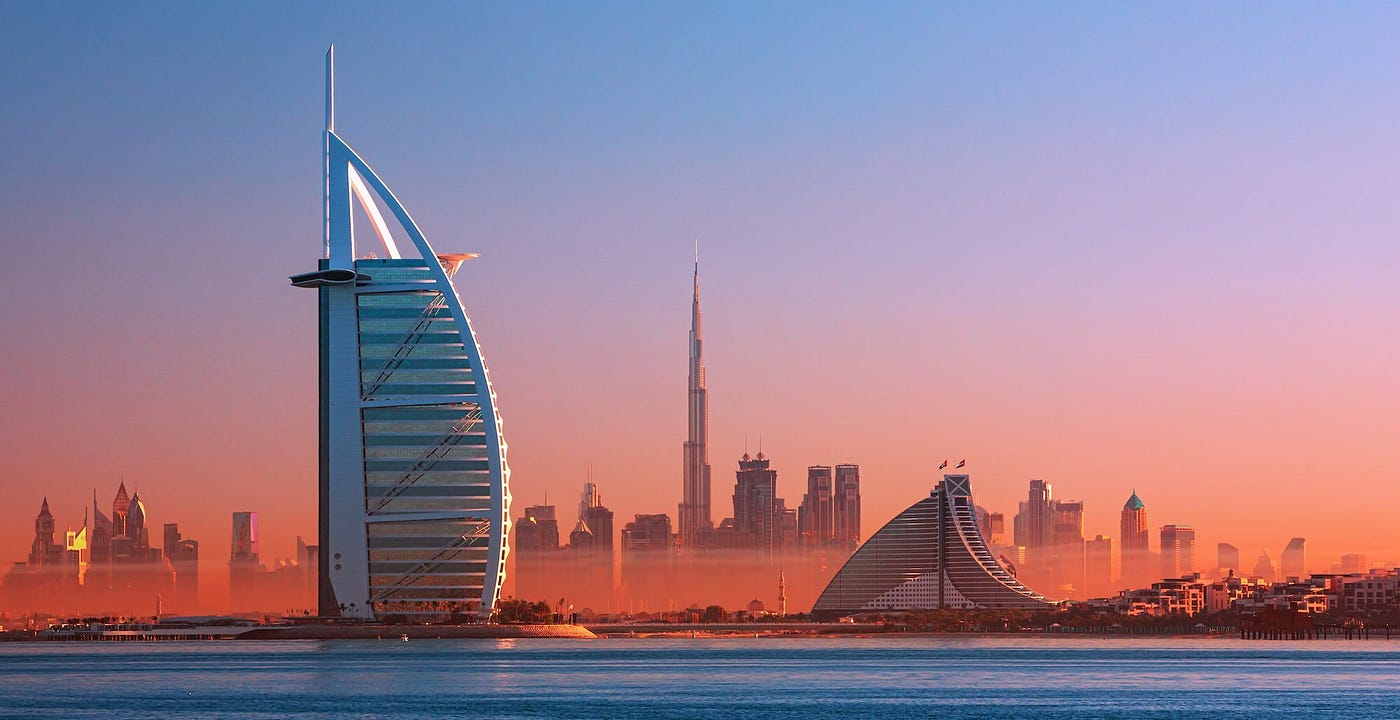
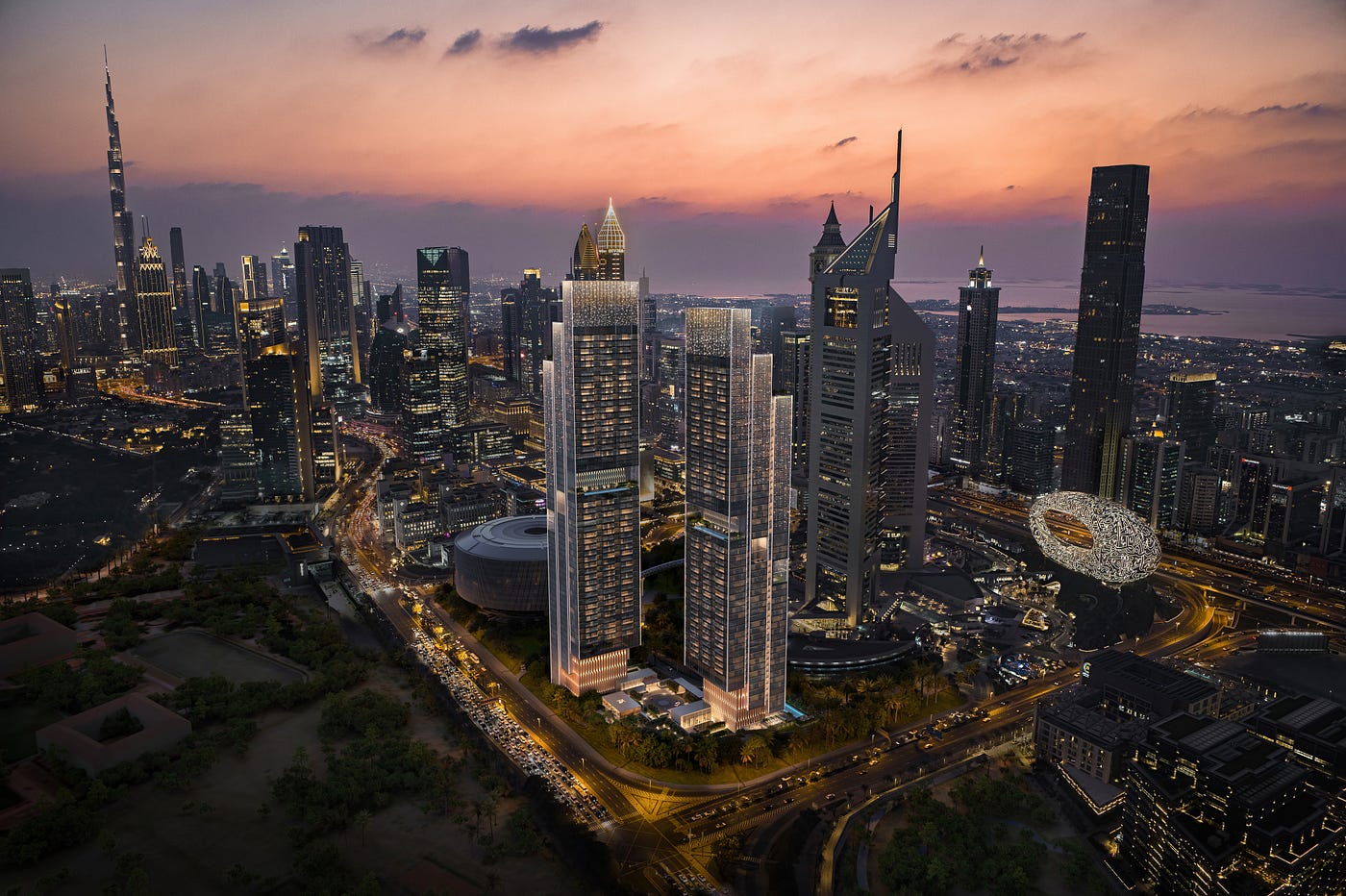
The Dubai Real Estate Question Most Investors Never Ask
A client came to me with a spreadsheet once.
The Dubai Real Estate Question Most Investors Never Ask
A client came to me with a spreadsheet once.
Seventeen projects. Color-coded by district. Price per square foot in one column. Projected yield in the next. Three weeks of research living inside a single Excel file.
She was proud of it. She should have been. Most people don’t even get that far.
I looked at it for maybe thirty seconds.
Then I said something that made her pause.
“We’re looking at the wrong thing.”
She smiled the way people do when they think you might be wrong but haven’t decided yet.
So I closed the laptop.
Not because the research was bad.
Because the question behind it was.
Dubai is a difficult city to understand if you arrive with the assumptions of older markets.
In London or Paris, neighborhoods accumulate slowly. Reputation forms the way patina forms on old bronze: through time, through layers, through things you can’t rush.
Dubai doesn’t wait for that.
It invents districts.

What was empty land five years ago becomes a neighborhood with coffee shops, international schools, and residents from forty different countries. Entire environments appear almost fully formed, like a city being drafted at architectural scale in real time.
The speed is intoxicating.
It also produces an extraordinary amount of noise.
Every launch is historic. Every brochure is the beginning of a legend. Every render promises a skyline that has never existed before.
After a while it all blurs.
Investors respond by doing what investors always do.
They open spreadsheets.
But here is the strange thing about Dubai.
Two apartments can look almost identical on paper. Same price per square foot. Same floor plan. Same completion year.
Five years later, they can be completely different assets.
One becomes a building people actively seek out. The other becomes a building people settle for.
The difference almost always traces back to the same place.
The developer.
After spending real time in this market, studying it, living in it, advising people through it, you start to notice something.
Developers in Dubai behave less like contractors and more like authors.
Each one writes the city in a slightly different style.
Some write epics. Others write short stories. A few produce something closer to sculpture.
Emaar Properties is the most obvious place to start.
What they built in Downtown Dubai is usually described as a development. That description is technically accurate and entirely misses the point.
It is closer to urban composition.
People talk about Burj Khalifa as if it was the achievement. It is not.
The real achievement is what happens around it.
Walk through Downtown on any evening. Residents, tourists, families, office workers. Retail alive. Restaurants full. Public space functioning the way public space is supposed to, like it was always meant to be there.
Nothing about it is accidental.
That kind of gravity takes years to construct.
The same thinking appears in Dubai Marina. In Dubai Hills Estate.
Emaar doesn’t build towers.
They build the conditions under which towers become valuable.
That distinction is worth more than most investors realize.
Nakheel understood something different.
When Palm Jumeirah was proposed, it sounded borderline absurd. An artificial island shaped like a palm tree, built in the sea, in a desert city that was a fishing village within living memory.
But they understood something about real estate that spreadsheets can’t fully capture.
Sometimes it isn’t about buildings.
Sometimes it’s about mythology.
The Palm stopped being a project the moment the world started recognizing it from the air. Prestige works in strange ways. Once an address becomes a symbol, it operates by a different set of rules entirely.
Symbols appreciate differently than buildings.
Then there is a tier of developer that I think about differently from everyone else.
Not better executed. Not more premium. Just operating in a completely separate conversation.
Omniyat and H&H Development.
Omniyat builds the way certain fashion houses design: not for everyone, and entirely on purpose. The Opus, designed by Zaha Hadid, looks less like a building and more like a question someone asked about gravity. It doesn’t compete on yield projections or amenity lists.

The Opus by Zaha Hadid
It competes on irreplaceability.
Zaha Hadid died in 2016. She will not design another building in Dubai. That fact is now permanently embedded in that asset in a way no amount of money can replicate.
H&H operates with the same logic but through a different lens. Spend time around their projects like Four Seasons Private Residences or Eden House The Canal and something becomes clear. The architecture is quieter. The materials are more deliberate. The scale feels considered rather than maximized.

Four Seasons Private Residences at DIFC by H&H
These are not buildings designed to impress the largest possible audience.
They are designed for people who already know what they are looking at.
There is a concept in art collecting called provenance, the documented history of an object that adds to its value beyond the object itself. Certain buildings carry provenance. Most buildings don’t.
Knowing the difference is one of the sharper tools an investor can carry.
The developers I find myself respecting in a different but equally genuine way are the quiet craftsmen.
Ellington Properties. Select Group.
They rarely make headlines. They don’t promise the most transformative living experience in the history of human civilization.
What they do instead is build well. Consistently. Year after year.
Ellington built its reputation on a question most developers only pretend to ask: what does it actually feel like to come home to this apartment every day? That question shows up in the materials, the layouts, the way light moves through a room. The things that photographs don’t fully capture but residents notice immediately.
Reputation in this industry compounds slowly and almost invisibly. Until one day a building holds its value through a market correction while everything around it quietly doesn’t, and you understand you were buying something different all along.
Not every investment needs to be a story, of course.
Some of them are just arithmetic.
Damac. Binghatti. Developers whose projects in JVC and Arjan offer rental yields that genuinely compare well with almost any other global city right now.
For investors who want income first and aren’t expecting the building to end up in an architecture magazine, this segment is frequently underrated.
The key word being well-chosen.
Where it gets harder, and this is usually where money is lost, not dramatically but slowly, is in the category that competes primarily on marketing.
Beautiful launches. Frictionless payment plans. Renders that look like the future.
None of that is inherently wrong.
But there is a concept in psychology called the focusing illusion: the tendency to overweight whatever you are currently paying attention to. At a launch event, surrounded by confidence and beautiful materials, it is very easy to lose sight of the only question that actually matters.
Will people want to live here in eight years?
The cheapest apartment on launch day has a way of not being the cheapest apartment five years later, once you factor in vacancy rates, resale liquidity, and what kind of building it has quietly become.
Launch price is a starting point.
It is not a conclusion.
Eventually, my client and I reopened the spreadsheet.
But the conversation had changed.
Instead of comparing units, we started looking at the people behind them. What they had built before. How those buildings had aged. Whether residents were still genuinely happy living there years later.
Seventeen projects became four.
She bought one of them.
Time will decide if it was the right one. Markets always get the final word.
But at least we were asking the right question.
Dubai is still one of the most fascinating real estate stories being written anywhere in the world.
The growth is real. The infrastructure investment is real. The calibre of people moving here, genuinely relocating, not just visiting, that is real too.
But a city growing this fast also produces a lot of noise.
The signal, in my experience, is much simpler than most people expect.
Apartments tell you what you are buying today.
Developers tell you what that asset might actually become.
In a city moving this fast, that difference can quietly decide everything.
I write about Dubai’s property market: the developers, the patterns, the decisions that tend to look obvious only in hindsight.
메타데이터
- post_id
- 76ccd75ee72b
- slug
- the-dubai-real-estate-question-most-investors-never-ask-76ccd75ee72b
- url
- https://medium.com/@aimereyx/the-dubai-real-estate-question-most-investors-never-ask-76ccd75ee72b
- canonical_url
- https://medium.com/@aimereyx/the-dubai-real-estate-question-most-investors-never-ask-76ccd75ee72b
- author_url
- https://medium.com/@aimereyx
- status
- ok
- fetched_at
- 2026-06-17 08:20:12