The Cambrian Explosion: When Complexity Met Complexity
A Runaway Proposal
The Cambrian Explosion: When Complexity Met Complexity
A Runaway Proposal
Abstract: Under evolutionary pressure, Ashby’s law of requisite variety becomes a ceiling on organismal complexity: life need not exceed the complexity it must answer. The Precambrian delay ended when life, rather than geology, became the dominant complexity confronting life. https://doi.org/10.5281/zenodo.20682905
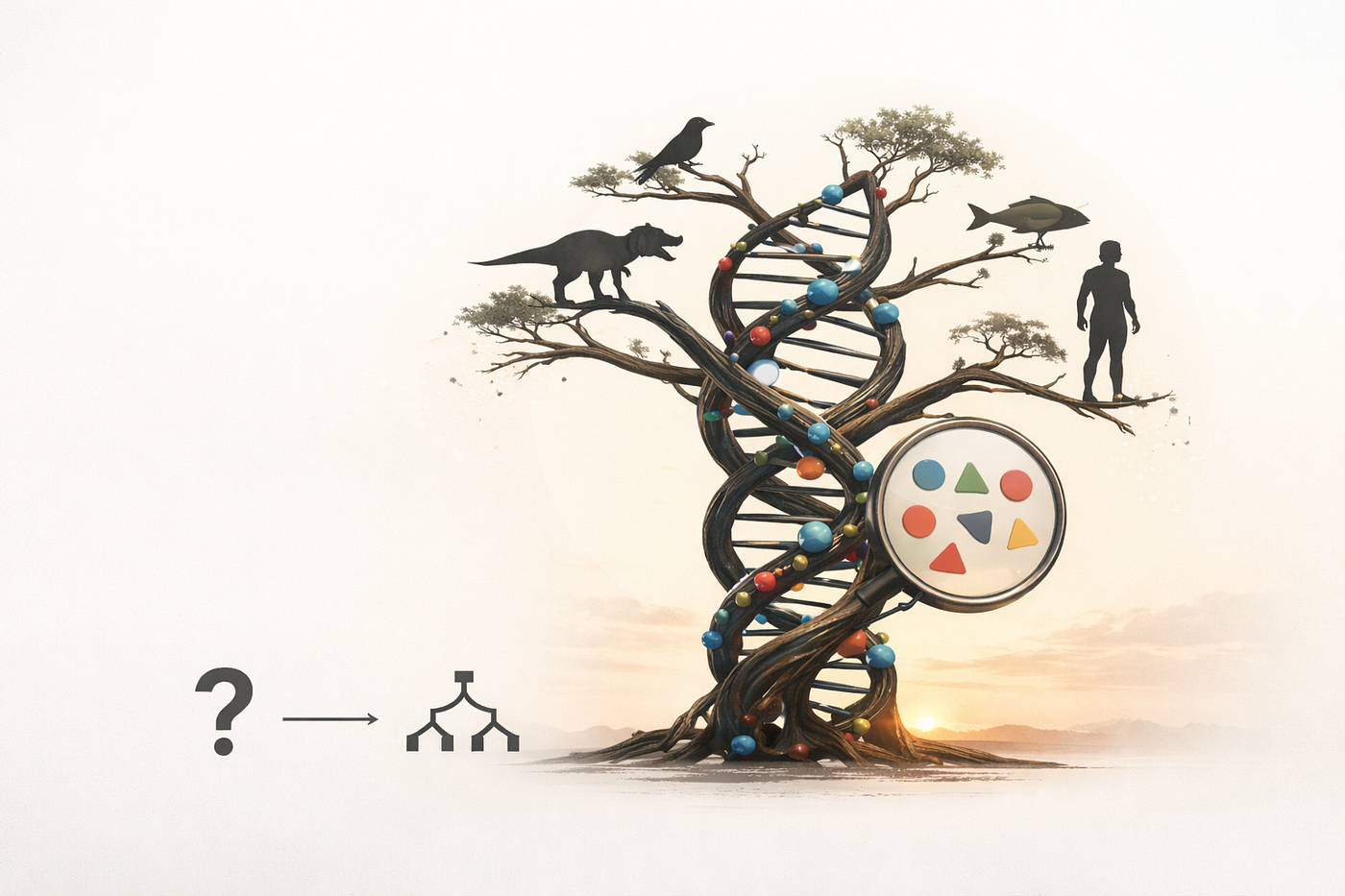
Earth’s history is dominated by simple life. The Cambrian explosion describes the interval when, after an extremely long period of stability, life rapidly increased in complexity and variety. Since Earth was populated by simple organisms for most of its history and the complexity we see is recent, the Cambrian explosion demands explanation.
A common intuition in biology is that impoverished environments produce simple organisms (e.g. archaea in geothermal vents) and that complex environments produce complexity. The apparent weakness of this intuition arises because physical setting and adaptive environment are not identical. The experienced environment of an organism also includes other organisms and ecology. This insight makes the intuition accurate. A virus in a human body does not respond to the whole body. It is either outside a cell or actively infecting one, so the environment it encounters is much simpler than the human body. We can expect an organism to roughly match the complexity of its experienced environment.
This has been formalized in Ashby’s Law of Requisite Variety, which states that a system’s internal variety must be sufficient to address the variety of its environment. Put simply, in terms of complexity, an organism must be roughly as complex as the environment it responds to.
In its original formulation, the law of requisite variety functions as a lower bound, so a system must be at least as complex as its effective environment. In biology, evolutionary pressure tends to make it an upper bound as well, because excess complexity is costly and selected against. Thus, Ashby’s law implies that an organism’s internal complexity will not exceed the complexity of its effective environment.
As an upper bound, requisite variety becomes consequential. When life initially evolves, organism complexity would match the limited complexity of a geological environment. Life remains simple until life begins adapting to life, producing a dynamic feedback loop of evolutionary escalation. Once a threshold is crossed, and environmental complexity is dominated by other organisms instead of geology, organisms will adapt to the complexity challenge they face in each other. Escalation is met by escalation until they collide with external limits.
The Precambrian: The first life was, of necessity, simple specialists in narrow niches that did not present enough complexity to one another to dominate the environment itself. As long as the abiotic environment prevailed, it would take an extremely long time for these organisms to accumulate and diversify to the degree that they presented substantial environmental complexity for each other.
Once organisms themselves become the dominant source of environmental complexity, adaptive escalation becomes recursive. Organisms no longer adapt to a relatively static geological environment, but instead become the environment to which others adapt. When complexity becomes primarily biologically generated, the threshold is crossed, so complexity and diversity explode.
This structural account of the Cambrian explosion does not contradict other accounts, but rather describes an underlying mechanism. For example, it is supported by evidence of escalating predation near the transition, which would produce feedback loops through interaction. Predation is an example of strong pressure for complex behavior, and an arms race is often the biological result, escalating complexity to address complexity.
In contrast to the Precambrian, after subsequent global mass extinctions, diversity returns relatively quickly. This suggests that the long Precambrian was not merely a delay due to resource starvation, so a structural explanation appeals.
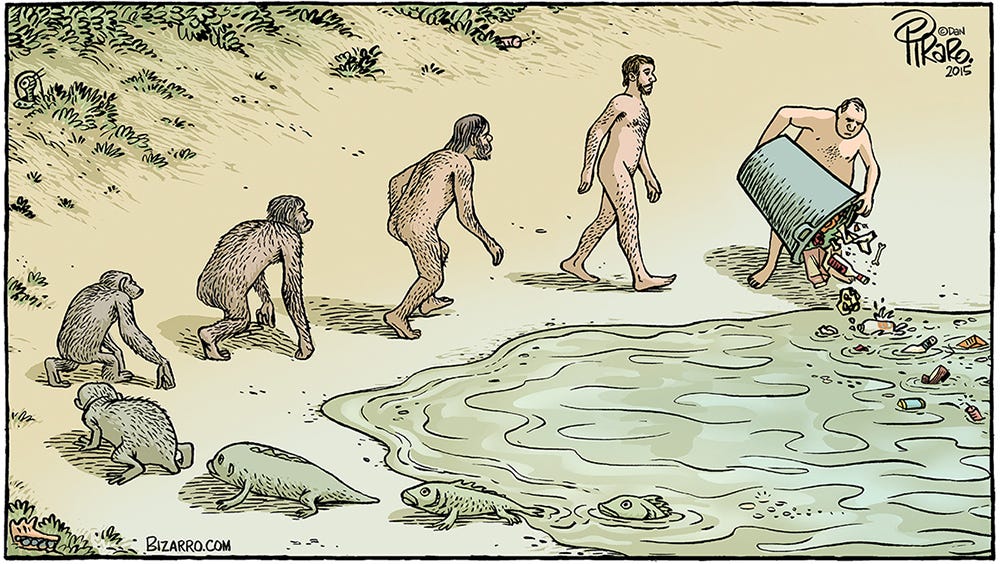
Early life emerged into an environment where the complexity it met was geological. Our present experience of environmental complexity is overwhelmingly biological. This demands a transition from geological environment as the complexity challenge, to the present regime where biological complexity dominates. A recursive escalation of complexity took place, a tremendous runaway feedback loop of increasing complexity and diversity. We should see it in the fossil record. Perhaps we do.
Epilogue: Artificial Life’s Own Precambrian
Artificial life, also called A-Life, refers to software modeling of the emergence and evolution of living systems to illuminate life and its origins.
In A-Life research, demonstrations of emergence have been frustratingly limited. Deficits in environmental richness have been recognized, and these can be interpreted and partially quantified under the law of requisite variety. Experimental environments are tractable by design and tend to be controlled, minimal, and not diverse. Under requisite variety, this would limit emergent complexity. A-Life entities should be expected to match the complexity of their environment until their mutual interactions dominate environmental complexity. Diversity is essential: monocultures have minimal impact as they contribute minimal complexity. More of the same is not complexity.
Unfortunately, the length of the Precambrian period looks like a long road for A-Life regardless.
Footnotes
Here, complexity is used in Ashby’s sense of variety relevant to regulation, adaptation, and selection.
I call this “Converse Ashby”: a simple converse to Ashby’s law of requisite variety, recognizing that Ashby’s law is expressed as a lower bound while evolution drives it towards an upper bound. It is not an alternative to Ashby, but an evolutionary consequence of cost minimization under selection pressure.
Cambrian literature commonly treats predation and predator-prey escalation as major ecological components of the radiation. Conway Morris describes the motor of the Cambrian explosion as largely ecological, notably involving the rise of macroscopic predation and defense. Sperling et al. describe escalatory predator-prey “arms races” as an ecological trigger that can explain the evolutionary pattern of the Cambrian radiation, though not necessarily its timing. Erwin et al. similarly emphasize ecological feedbacks, new ecological linkages, and the advent of metazoan predation in the Cambrian radiation.
References:
Ashby, W. Ross. 1956. An Introduction to Cybernetics.
Conway Morris, S. 2000. “The Cambrian ‘explosion’: Slow-fuse or megatonnage?” Proceedings of the National Academy of Sciences 97(9): 4426–4429.
Sperling, E. A., Frieder, C. A., Raman, A. V., Girguis, P. R., Levin, L. A., and Knoll, A. H. 2013. “Oxygen, ecology, and the Cambrian radiation of animals.” Proceedings of the National Academy of Sciences 110(33): 13446–13451.
Erwin, D. H., Laflamme, M., Tweedt, S. M., Sperling, E. A., Pisani, D., and Peterson, K. J. 2011. “The Cambrian Conundrum: Early Divergence and Later Ecological Success in the Early History of Animals.” Science 334(6059): 1091–1097.
메타데이터
- post_id
- 76d56f0f2d83
- slug
- the-cambrian-explosion-when-complexity-met-complexity-76d56f0f2d83
- url
- https://medium.com/@rbridges_40571/the-cambrian-explosion-when-complexity-met-complexity-76d56f0f2d83
- canonical_url
- https://medium.com/@rbridges_40571/the-cambrian-explosion-when-complexity-met-complexity-76d56f0f2d83
- author_url
- https://medium.com/@rbridges_40571
- status
- ok
- fetched_at
- 2026-06-15 20:49:13