# How Selling Digital Products With AI Changed My Life (My Exact System)
Three years ago, creating a digital product felt like climbing a mountain with a backpack full of bricks.
# How Selling Digital Products With AI Changed My Life (My Exact System)

Three years ago, creating a digital product felt like climbing a mountain with a backpack full of bricks.
Research took weeks.
Writing took months.
Design felt expensive.
Marketing felt overwhelming.
And by the time I finally launched something, I was already exhausted.
Today, my process looks completely different.
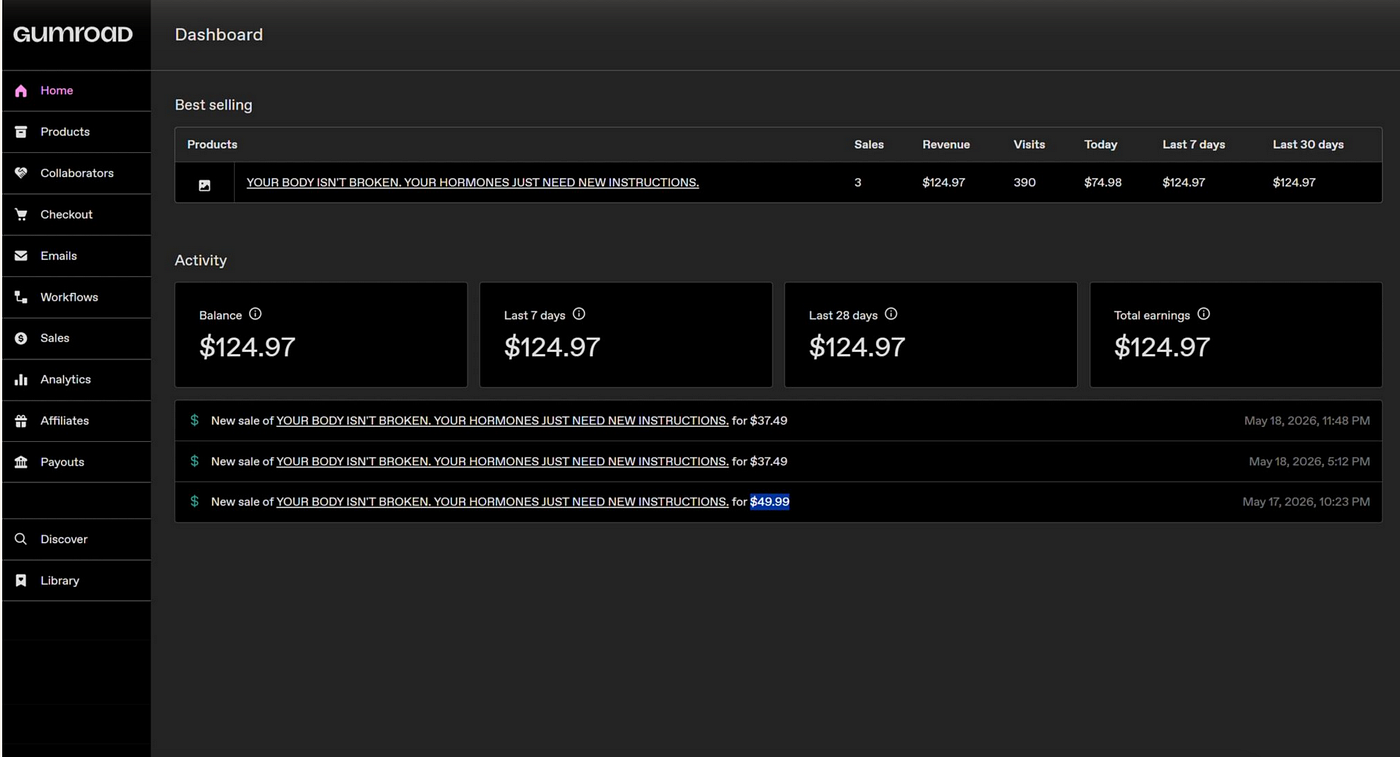
A few months ago, I created a digital guide in less than two days. The product generated its first sales during the first week and eventually grew into a small portfolio of products that continue selling while I work on new projects.
The biggest difference wasn’t that I suddenly became smarter, more creative, or more experienced.
The difference was AI.
Not as a magic button.
Not as a replacement for skill.
But as leverage.
This article is the exact system I use today to identify profitable opportunities, create products quickly, and market them efficiently using AI tools.
If I had known this process years earlier, I would have saved myself countless hours and thousands of dollars.
Before AI: The Endless Creation Trap
Like many people entering online business, I made the same mistake repeatedly.
I built products I thought people wanted.
I spent weeks creating ebooks nobody asked for.
I designed courses nobody needed.
I polished logos, websites, and branding while ignoring the only thing that actually mattered:
Demand.
I believed effort guaranteed results.
The market disagreed.
The harsh truth was simple:
People do not buy information.
People buy solutions.
They buy outcomes.
They buy speed.
They buy relief.
Once I understood that, everything changed.
The goal wasn’t creating products.
The goal was solving problems people were already trying to solve.
AI simply made that process dramatically faster.
The Shift: From Creator-First to Market-First
Most creators follow this formula:
Idea → Product → Audience → Sales
My system reversed it:
Audience → Problem → Solution → Product
This single change eliminated most of the risk.
Instead of guessing what people wanted, I looked for evidence that demand already existed.
Only then did I create the product.
AI became the engine that accelerated every step.
Step 1: Finding Problems Worth Solving
This is where most people fail.
They search for niches.
I search for pain.
Pain creates urgency.
Urgency creates purchases.
My favorite places for finding pain points are:
- Reddit communities
- YouTube comments
- Amazon reviews
- Facebook groups
- Quora questions
I look for repeated frustrations.
When dozens of people complain about the same issue, that’s usually a business opportunity.
Example
Instead of:
“Weight loss”
I found:
“I’m vegan and gaining weight even though everyone says plant-based diets make you lose weight.”
Instead of:
“Productivity”
I found:
“I’m overwhelmed by AI tools and don’t know which ones are worth learning.”
Those are products.
Those are customers.
Those are businesses.
The AI Prompt I Use
I paste comments and reviews into ChatGPT and ask:
”Analyze these comments and identify the top recurring frustrations, desired outcomes, emotional triggers, and language patterns customers use when describing their problems.”
The output gives me:
- Product ideas
- Headlines
- Sales copy
- Marketing angles
- Content ideas
One hour of research often produces enough material for several products.
Step 2: Validating Demand Before Building Anything
This step alone probably saved me hundreds of hours.
I refuse to create products without validation.
My rule is simple:
If people aren’t already spending money to solve the problem, I move on.
I look for:
- Existing ebooks
- Online courses
- Coaching programs
- Amazon books
- Gumroad products
- Digital templates
Competition isn’t a warning sign.
Competition is evidence.
The question isn’t:
“Is there competition?”
The question is:
“Can I solve the problem faster, simpler, or for a specific audience?”
AI helps here too.
I ask:
”Analyze the following products and identify weaknesses, missing features, underserved audiences, and opportunities for differentiation.”
The answers are often surprisingly useful.
Sometimes the opportunity is:
- Better design
- Simpler explanations
- Faster implementation
- A narrower audience
- A different format
The best businesses aren’t invented.
They’re improved.
Step 3: Creating the Product Using AI
This is where AI completely changed my business.
What once required weeks now takes hours.
My workflow looks like this:
Tool #1: ChatGPT
I use ChatGPT as a research assistant, writer, editor, and strategist.
A typical prompt looks like this:
”You are an expert in plant-based nutrition. Create a practical 10-page guide for vegans struggling with weight gain. Focus on actionable steps, meal examples, common mistakes, and weekly implementation.”
The first draft is never perfect.
That’s not the goal.
The goal is speed.
AI gives me an 80% draft.
I provide the final 20%.
That final 20% creates differentiation.
Tool #2: Claude
Claude is excellent for long-form editing.
I often ask:
”Improve clarity, remove repetition, strengthen transitions, and make the content more actionable without changing the core message.”
The result feels much more polished.
Tool #3: Canva
Canva handles:
- Covers
- Product mockups
- Social graphics
- Promotional images
- Pinterest pins
Good design used to cost money.
Now it mostly costs creativity.
Tool #4: PDF Export
Most of my products start as:
- Guides
- Checklists
- Frameworks
- Templates
- Worksheets
Simple products often outperform complicated ones.
Many successful products are less than twenty pages long.
Customers want solutions.
Not homework.
Step 4: Building Distribution With AI Content
Creating products is easy.
Getting attention is difficult.
AI transformed this part too.
I focus heavily on short-form content.
Every product becomes:
- 30 TikToks
- 30 Reels
- 30 Shorts
- 10 Pinterest pins
- 5 blog articles
- 1 lead magnet
One idea becomes an entire content ecosystem.
Example Workflow
Digital product:
“AI Product Arbitrage Blueprint”
Content ideas:
- “Stop creating products nobody wants.”
- “The market-first strategy nobody teaches.”
- “How I validate ideas before building them.”
- “The 5-minute research trick using Reddit.”
- “Why competition is actually good news.”
ChatGPT helps generate dozens of variations instantly.
Prompt Example
”Generate 20 short-form content hooks targeting people who want to sell digital products but don’t know where to start.”
Within seconds I have weeks of content.
Step 5: Using AI for Sales Copy
Writing sales pages used to intimidate me.
AI made it much easier.
I collect:
- Customer reviews
- Comments
- Testimonials
- Questions
Then I ask:
”Using the exact language customers use, create a sales page emphasizing emotional pain, desired outcomes, objections, and transformation.”
Customers don’t buy products.
They buy a better version of themselves.
Good sales copy reflects that reality.
Step 6: Automating Repetitive Work
This was the biggest surprise.
The real value of AI wasn’t creation.
It was elimination.
Tasks AI now handles:
- Email drafts
- Product descriptions
- Blog outlines
- SEO titles
- Pinterest descriptions
- Video scripts
- Customer support replies
- Research summaries
Tasks that once consumed entire days now take minutes.
The result wasn’t just more revenue.
It was more freedom.
The Results
The changes happened gradually.
Then suddenly.
The biggest improvements weren’t financial at first.
They were operational.
Time Savings
Research time:
20 hours → 2 hours
Writing time:
40 hours → 6 hours
Content production:
10 posts per month → 100+ pieces per month
Design costs:
Hundreds of dollars → almost zero
Revenue Impact
The first few products generated only small sales.
But every product became an asset.
One product became three.
Three became seven.
Seven became a portfolio.
The compounding effect surprised me.
A single sale feels exciting.
Multiple products selling every week feels transformational.
What Surprised Me Most
I expected AI to make me faster.
I didn’t expect it to make me more confident.
When creating becomes easier:
You experiment more.
You launch faster.
You test more ideas.
You become less emotionally attached to outcomes.
Failure becomes data.
Not disaster.
That mindset shift alone changed my business.
Mistakes I Made
Mistake #1: Trusting AI Too Much
Raw AI output feels generic.
People can spot it immediately.
Editing matters.
Personality matters.
Examples matter.
Your experience matters.
AI should amplify your voice.
Not replace it.
Mistake #2: Building Before Validating
I still occasionally create before researching.
Those products almost always underperform.
Demand first.
Creation second.
Always.
Mistake #3: Trying Too Many Tools
For a while I chased every new AI platform.
Eventually I simplified.
Today my core stack is:
- ChatGPT
- Claude
- Canva
- Gumroad
That’s enough.
Simplicity scales.
What I’d Do If I Were Starting Again Today
If I lost everything tomorrow and had to start over, my plan would be:
- Find 50 customer complaints.
- Identify recurring problems.
- Validate demand.
- Create a simple solution.
- Launch quickly.
- Collect feedback.
- Improve.
- Repeat.
That’s it.
No complicated funnels.
No expensive software.
No perfect branding.
Just solving real problems repeatedly.
Final Thoughts
AI didn’t build my business.
People did.
Customers did.
Problems did.
AI simply allowed me to move faster between those points.
The creators who thrive over the next decade won’t necessarily be the smartest or the most technical.
They’ll be the ones who learn how to combine human insight with artificial intelligence.
The opportunity has never been bigger.
The barrier to entry has never been lower.
The only real question is whether you’ll use these tools as consumers or creators.
If you’re thinking about starting, start small.
Find one problem.
Create one solution.
Help one person.
Then do it again.
That’s exactly how I started.
And it changed my life.
If you’d like to see the exact frameworks, prompts, and templates I use to research, validate, create, and sell digital products with AI,
👉***check out my complete system and start building your own digital product portfolio today.***
메타데이터
- post_id
- 76ef68b0a37c
- slug
- how-selling-digital-products-with-ai-changed-my-life-my-exact-system-76ef68b0a37c
- url
- https://medium.com/@yoou89h/how-selling-digital-products-with-ai-changed-my-life-my-exact-system-76ef68b0a37c
- canonical_url
- https://medium.com/@yoou89h/how-selling-digital-products-with-ai-changed-my-life-my-exact-system-76ef68b0a37c
- author_url
- https://medium.com/@yoou89h
- status
- ok
- fetched_at
- 2026-07-09 13:13:48