The Fault Line of Immanence
The Body After the Sentence
The Fault Line of Immanence
The Body After the Sentence
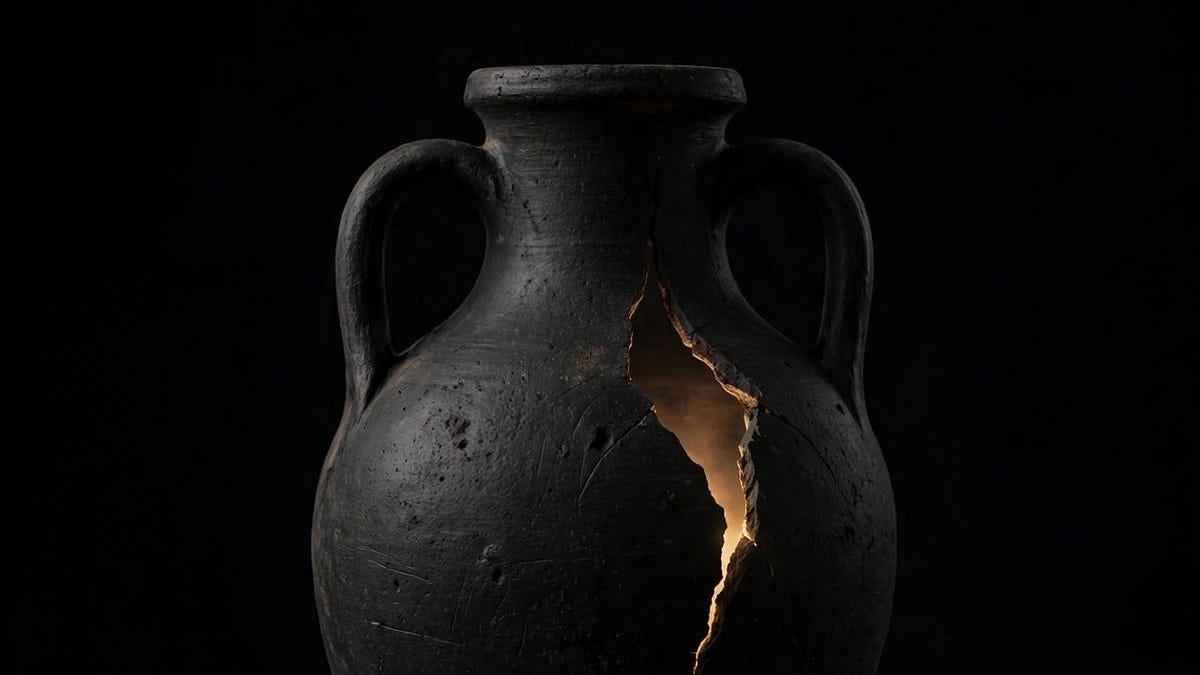
Photo by Ashkan Sadeghi on Unsplash
1. A Conspiracy Without Identity
Deleuze places Spinoza and Nietzsche beside one another as if they had met in secret. Their shared enemy is the tribunal: every height from which life is judged before it is lived, every Law that arrives before the body speaks. In this sense, the conspiracy is real. Both refuse the courtroom. Both return judgment to the plane of life itself.
But conspirators do not have to resemble one another. They may share an enemy and still carry different weapons, different rhythms, different suspicions about what life is doing when it persists.
This fault line matters most where a body has exceeded the sentence placed upon it: in medicine, in philosophy, and in every practice that must meet a life no longer legible to the signs that once measured it. What is at stake is not a tidy opposition between two thinkers, but a way of perceiving persistence itself. Is survival only the extension of a line already drawn, or can it become the appearance of a form for which there was no prior grammar? I call this condition Constellational Persistence: the persistence of an affective individual whose capacities have departed from an old norm and whose difference cannot be absorbed by the system that announced its end.
To think this individual, Spinoza and Nietzsche must be kept near one another without being made the same. One teaches us to follow increases of power; the other teaches us to ask what kind of life those increases compose. Their proximity is useful only if the tension remains alive.
Their first agreement is dramatic. Both shift the site of evaluation. Judgment no longer descends from above to decide whether existence is worthy; life must be read on its own plane, in the forces and affects through which it expresses itself. The axis turns from vertical command to immanent intensity.
For Spinoza, the shift is precise. Good and evil are replaced by joy and sadness. Joy is any affect that signifies an increase in a body’s potentia agendi, its power of acting. Sadness signifies a decrease. The question is never whether a desire is moral. Instead, it is whether it expands or contracts what a body can do. A body is defined by its longitude, the relationships of motion and rest that compose it, and its latitude, its intensive capacity to affect and be affected. Ethics becomes ethology.
Nietzsche performs a related demolition by another rhythm. Active force expends itself, creates values, and overflows without asking permission. Reactive force begins elsewhere: in negation, resentment, and the need to diminish what it cannot affirm. Here too the vertical tribunal is gone. Life is judged by life, from within the play of forces.
The severity remains. Transcendent morality has been dismissed, but evaluation has not softened. A mode of existence can still be diagnosed; a style of life can still be affirmed or refused, not because it violates a law, but because it contracts or enlarges the field of life.
The resemblance is seductive. Deleuze’s readers often arrive here, at the shared victory over transcendence, and feel the two names begin to merge. But resemblance is not identity. Once we ask how immanent evaluation works, the ground changes texture. Increase answers one question; the kind of life that bears the increase answers another. The body after prognosis will need both questions, but not as one.
2. The Arithmetic of Joy
Spinoza’s immanence is an art of attention. It measures the shifts in a body’s power without appealing to an outside court. The unit is not the commandment, the norm, or the divine decree, but the affect. Joy names a passage into greater power of acting; sadness names a passage into diminution. The question is internal to the composition itself: has the body been made more capable, or less?
For this reason, Spinoza’s distinction between action and passion is not a moral rebuke. It describes causality. An action is an affect whose adequate cause lies in the nature of the body itself; a passion is an affect whose cause arrives from elsewhere. The difference admits degrees. A body may become, slowly and unevenly, more the cause of what passes through it.
This gradation matters. Even a passive joy remains joy. If an encounter from outside expands the body’s capacity to act, the increase is real. Spinoza does not despise the gift because it did not originate within the subject; he asks what the gift makes possible. Passive joys can become thresholds. They are not the destination, but neither are they enemies. Sad passions are the true obstruction, because they contract power wherever they come from.
Under this logic, the conatus is scalar, representing the striving of each thing to persevere in its being, with magnitude varying from more power to less power, greater to lesser reality. The body doesn’t aim for an external state but rather seeks to sustain and intensify its own pattern of motion and rest. Longitude maps this pattern, while latitude represents the intensive range of what the body can affect and be affected by. Together, they describe a body without reference to a norm. Health isn’t conformity to a type; it’s the scope of a body’s affective capacity, present and immediate.
Thresholds exist on this gradient, and they are real. The transition from passion to action is a qualitative difference, achieved through quantitative increase. You don’t leap into adequate causation through an act of will; instead, encounters, ideas, and disciplines accumulate power until the body crosses a line and begins to produce its affects from its inherent nature. Quality emerges from quantity, just as a phase change arises from heat.
The medical implication is immediate. A clinical frame often compares the ill body to a normative healthy body and reads deviation as loss. Spinoza’s geometer asks otherwise: what can this body do, here, in this altered composition of motion and rest? The body after illness is not simply a diminished copy of what came before. It is a new arrangement with its own latitude. Its joys should be counted, even when they depend on treatment, prosthesis, care, or borrowed strength. A joy that sustains composition and opens new capacities is already an increase.
The arithmetic of joy does not promise arrival. It teaches attention: notice where a body opens, where it narrows, which encounters lend it range and which return it to contraction. No final form waits at the end of this counting. There is only the slow apprenticeship of composition, the gradual passage from being moved by what happens to becoming, more and more, the cause of what one can do.
But increase has its own innocence. It can register a widening without knowing what kind of life has widened. A body may become capable of more and still organize its new strength around fear, resentment, or obedience. Joy can rise without yet becoming affirmation.
3. The Refusal of Equivalence
Nietzsche enters where counting begins to falter. Not because counting is false, but because a life may grow without becoming free. Power may accumulate around refusal. It may build habits, institutions, even strategies of survival, while remaining secretly organized by negation.
Active and reactive forces are not two points on a scale. They are styles of existence. A reactive force can become vast. It can dominate, legislate, and surround itself with systems, yet its first movement remains a no. It needs an enemy in order to recognize itself. Active force begins differently: in expenditure, in creation, in a yes that does not wait for permission. It may meet resistance, but it is not born from resistance.
This is why Nietzsche criticizes Spinoza’s conatus. Self-preservation, for Nietzsche, is already a diminished project. It’s the instinct of the reactive animal that guards itself because it fears loss. The will to power isn’t the will to persist. It’s the will to overcome, to discharge strength, and to become more even at the risk of the form that currently holds it. Preservation is a byproduct of expenditure, not its goal. Placing perseverance at the center is to mistake a consequence for an essence.
Here quality refuses reduction to quantity. No heap of resentment becomes creation by growing larger. No accumulation of caution becomes risk. A small active force remains active in kind; a vast reactive apparatus remains reactive in character. The distinction is diagnostic: it reads a life by the way it relates to its own power. Does it spend, or only preserve? Does it affirm difference, or reduce the different to the same?
From this diagnosis comes amor fati. Nietzschean affirmation is not grounded first in understood necessity. Spinoza affirms because adequate ideas reveal the order of things; understanding produces joy. Nietzsche asks for another test: can the will take the whole of what has happened, including the wound, without bargaining? Can it say yes without subtracting the unbearable? The reactive type haggles. It wants the pleasant remainder and the erased scar.
Suffering therefore holds a different place. Spinoza’s path moves away from sad passions through knowledge. Suffering isn’t affirmed as suffering. It’s transformed by cognitive adequacy and dissolved when the external cause is understood. Nietzsche keeps the wound open. Amor fati doesn’t redeem pain by explaining it. It takes pain into the affirmation without converting it into good. The affirming will doesn’t say suffering was necessary for a higher end. It says this suffering, with everything else, and again.
So the knife falls. On Nietzsche’s plane, evaluation is typological from the start. From a Nietzschean perspective, passive joy cannot easily function as a transitional category, since dependence upon external determination already bears the marks of reactivity. An affect caused from outside belongs to a mode of life that separates force from what it can do. To become active isn’t to increase a magnitude. It’s to change the kind of will that organizes power.
This is the fault line: increase does not guarantee affirmation. A body can gain capacity and still arrange that capacity around a no. The question, then, is not how to collapse the two immanences into one doctrine, but how to let their difference become useful for a body that persists after its sentence.
4. Four Ways of Not Resembling
The conspiracy holds only until we ask how evaluation moves. Then the shared plane divides. The division is not a quarrel over facts but a difference in rhythm, pressure, and diagnostic aim. Four fractures make the non-resemblance visible.
1. Increase and Type
Spinoza gives us a continuous line of variation. Power rises and falls; bodies move through actions and passions by degrees. Thresholds exist, but they are crossed through accumulation. A body gathers encounters, ideas, disciplines, and slowly becomes more capable of causing what it undergoes.
Nietzsche interrupts the line with a question of kind. The issue is not only whether power has increased, but what form of life has taken possession of that increase. Resentment does not become creation by growing stronger. A gain in capacity still has to be read for the style of willing that organizes it.
2. What Passivity Cannot Do
For Spinoza, passions are transitional. A passive joy is still a joy. If an external encounter expands your power of acting, the arithmetic is positive. The body utilizes the gift to compose further, moving toward adequate causation. Passivity is a phase, not a verdict.
For Nietzsche, passivity is less a phase than a symptom. To be organized by what comes from outside is already to be separated from what one can do. The question is not how intense the affect feels, but what kind of life receives it. A reactive body can accumulate pleasures and remain reactive in form.
3. Necessity Seeks Proof; Will Makes Selection
Spinozist affirmation is cognitive. You affirm because adequate ideas demonstrate that things couldn’t be otherwise. Understanding necessity brings joy. The path is through reason, and the assurance is epistemic. You love the order of things once you perceive it.
Nietzsche’s amor fati refuses that assurance. The test is not whether the past can be explained, but whether it can be willed again, whole, without diminishing pain or loss. Selection replaces proof. One affirmation proceeds through knowing; the other through willing.
4. Keeping the Wound Open
Spinoza moves away from sad passions. Suffering isn’t affirmed as suffering. It dissolves when the external cause is understood and the body becomes the adequate cause of its emotions. The intellectual love of God transcends the condition that produced it and doesn’t cherish the wound.
Nietzsche keeps the wound open. Amor fati affirms suffering without transforming it into good or promising that it served a purpose. The affirmation includes the break, the loss, the senseless event, and doesn’t resolve them into meaning. The wound is not resolved through explanation. It remains part of what affirmation must bear.
These are not four debates but four shapes of the plane itself. Deleuze does not collapse them; he holds them together as a disjunctive synthesis, two immanences that touch without resembling. That non-resemblance becomes the tool we need for the body that persists after the sentence.
5. A Body After the Sentence
A body is told it will die in six months. It doesn’t. The sentence fails, but it doesn’t vanish. It lingers as a frame, a semiotic machine that organized time, desire, and care around an assigned end. The body that remains is illegible inside that frame. It persists, yet the grammar that was supposed to capture it has already run its course.
This is the site of Constellational Persistence. The subject who remains is not the pre-illness subject restored, and not the dying subject merely postponed. It is a new affective individual, one for whom the clinical and social languages arrive too late. To think it, we need a philosophy that can count new powers without reducing them to recovery, and that can name difference without turning it into miracle.
Three layers come into view.
Layer 1: Pre-illness baseline. This is not a norm to return to. It is a prior configuration of latitude and longitude. The body could do certain things and receive certain affects. That configuration sets a memory, not a telos.
Layer 2: Prognostic contraction. The prognosis is not merely information; it is an affective intervention. It reorganizes the field. It installs a temporal horizon that makes certain futures incoherent and certain desires unavailable. Planning becomes indecent. Anticipation contracts. The body is not only measured; it is remade by the measure. The sign of impending death becomes a cause in the Spinozist sense, and the body’s latitude narrows.
Layer 3: Post-prognostic expansion. The body outlives the terminus. New affects arrive with no place in the contracted field. Ordinary time changes texture; a morning can hold more than it used to. Prior affects return altered. New capacities for affecting others appear: testimony, witnessing, a different biological normativity in Canguilhem’s sense. The body does not go back. It composes outward into a sign profile that did not exist before.
This is where Christopher Bollas matters. The post-prognostic body carries an unthought known: affective knowledge of its own capacity, accumulated through illness and survival, before it has been translated into concept. The body knows it can do things the frame cannot say. That knowledge appears in changed relations of motion and rest, in encounters that now increase power where they once registered as threat. The clinic sees anomaly. The body lives intelligence.
The NOW operator marks this break. NOW ⊨ ∧G·P(δᵢ≠0) ∧ ¬Gφ says: in the present, it is the case that for all past times, there was persisting difference, and it is not the case that the body returns to a prior global form φ. The formula refuses reduction. It is Spinozist in its attention to differential power, to the δ that did not go to zero. It is Nietzschean in its insistence on qualitative irreducibility, on the ¬Gφ that blocks any return to a prior type.
The body’s newness cannot be read by quantity alone. It gains power through encounters the old frame could not value, but increase by itself does not make it new. Its novelty appears in the changed style of willing: not merely persistence beyond the sentence, but a different relation to life after it.
Keep the fault line open, and the post-prognostic body becomes thinkable. Collapse it, and the body becomes either a miracle outside causality or a mistake inside the old measure. Held in tension, the two immanences offer a method: follow the increases, then ask what kind of life has begun to speak through them.
6. Keeping the Fault Line Open
If Spinoza and Nietzsche are forced into sameness, something essential is lost. Persistence becomes either a count of days added to a failed prediction, or a miracle suspended outside causality. But the body after the sentence is neither arithmetic alone nor revelation. It has mechanics. It has style. Above all, it has a history of encounters and a manner of saying yes.
Spinoza gives us the patience to track the increases: the new latitude, the borrowed strength, the passive joy that becomes a threshold, the degree by which the body becomes more the cause of what it undergoes. Without that counting, the clinic can reclaim the survivor as anomaly, error, or exception without meaning.
Nietzsche gives us the severity to ask what kind of life this increase has formed. Does the yes include the wound? Does the new body merely continue, or does it affirm the contingency through which it came to be? Without that test, increase can still circle a no.
Constellational Persistence lives in this held-open difference. It is not a synthesis that smooths the break, but a practice that uses it. Measure the increases. Read the style. Keep the two immanences from resembling too quickly, so that the body that outlives its sentence can be thought without reduction and lived without apology. Measure the increases. Read the style. Only then does the survivor cease to appear as an anomaly within an exhausted frame and become visible as a new affective individual.
메타데이터
- post_id
- 771c14848b87
- slug
- othe-fault-line-of-immanence-771c14848b87
- url
- https://medium.com/phenomenal-field/othe-fault-line-of-immanence-771c14848b87
- canonical_url
- https://medium.com/phenomenal-field/othe-fault-line-of-immanence-771c14848b87
- author_url
- https://medium.com/@tricksteratheart
- status
- ok
- fetched_at
- 2026-07-14 10:34:41