ERC-404: Unlocking NFT Liquidity
Solves NFT Liquidity Issues Through Dynamic Supply.
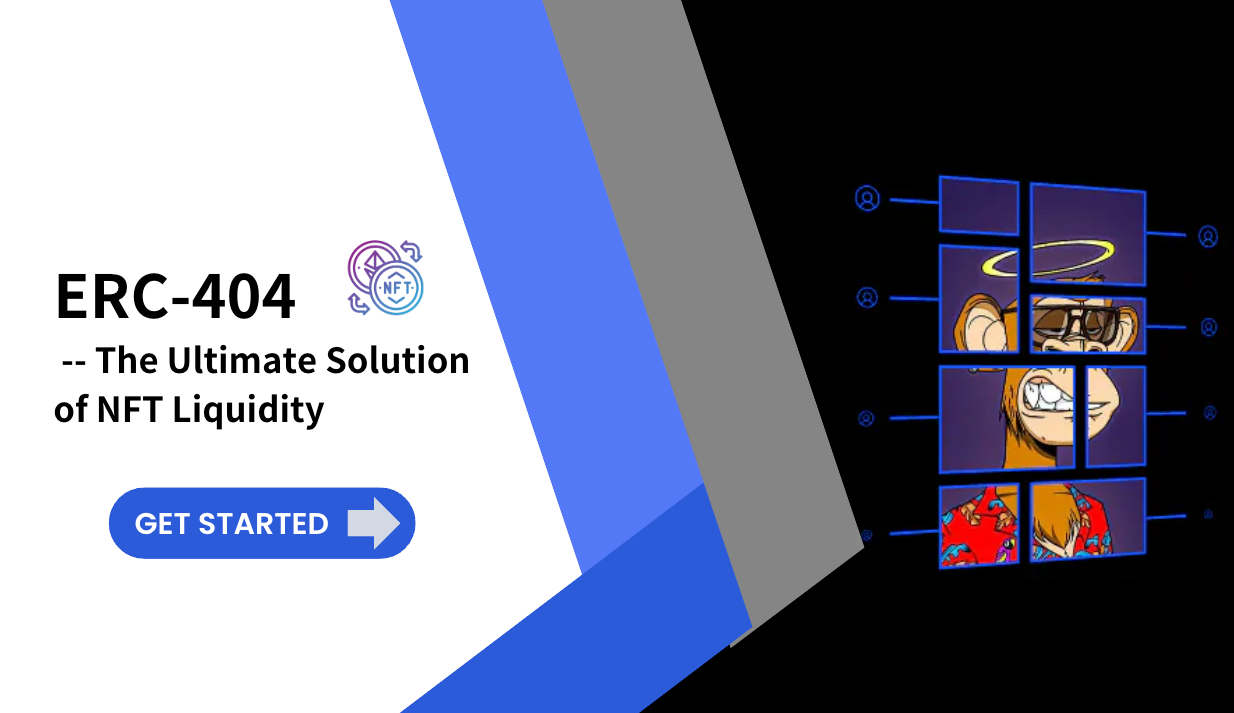
ERC-404: Unlocking NFT Liquidity
Solves NFT Liquidity Issues Through Dynamic Supply.
NFTs (Non-Fungible Tokens) have exploded in popularity, creating a new frontier for digital art, collectibles, and even virtual real estate. However, a critical challenge has emerged: liquidity. Holding an NFT is exciting, but how can owners trade them quickly? ERC-404, a new Ethereum standard, aims to solve this problem through dynamic minting and burning mechanisms, bringing more flexibility and accessibility to the NFT market.
NFTs vs. Fungible Tokens: What’s the Difference?
If you’re familiar with cryptocurrencies, you’ve likely come across fungible tokens (FT), such as Bitcoin or Ethereum. These are interchangeable assets where each unit holds the same value — one Bitcoin is identical to another.
In contrast, NFTs are unique and cannot be swapped on a one-to-one basis. They often represent digital artwork, collectibles, or virtual properties. The value of NFTs comes from their scarcity and uniqueness, but this also creates liquidity challenges.
The Liquidity Problem with NFTs: Why Are They Hard to Trade?
While NFTs have brought a digital revolution, they’ve also exposed liquidity issues that make trading them difficult.
- Uniqueness: Each NFT is one-of-a-kind, meaning there’s no standard market price, making it harder for buyers and sellers to quickly agree on a trade.
- High Price Barrier: Many NFTs, especially high-profile ones, are priced beyond the reach of average investors, limiting their market accessibility.
- Fractional Ownership: To address these issues, Fractional NFTs (F-NFTs) have emerged, allowing NFTs to be split into smaller, tradable portions. This improves liquidity by making it easier for more people to own a piece of an NFT.
ERC-404: The New Standard for Solving NFT Liquidity
ERC-404 is a new Ethereum standard designed specifically to address NFT liquidity issues. It doesn’t rely on breaking existing NFTs into pieces like F-NFTs but introduces a dynamic system where NFTs are automatically minted or burned based on the user’s fungible token balance.
- Automatic Minting and Burning: When a user’s fungible token balance reaches a specific threshold (usually in multiples), the system automatically mints new NFTs. Conversely, when the token balance falls below this threshold, the corresponding NFTs are automatically burned.
- Flexible Supply Control: This token-driven model allows the NFT market to be more flexible, dynamically adjusting the supply of NFTs based on user demand and token holdings, thus addressing the liquidity problem at its core.
Comparison: Fractional NFTs vs. ERC-404
Fractional NFTs (F-NFTs) split existing NFTs into smaller units, allowing more people to own a fraction of a high-value NFT. This method is ideal for improving liquidity for legacy NFTs.
ERC-404, however, approaches the problem differently. Instead of fragmenting NFTs, it adjusts NFT supply based on fungible tokens, creating a dynamic, responsive system. This makes ERC-404 more suited to new platforms that need flexible and automatic supply management.
- F-NFTs are best for existing high-value NFT assets, making them more accessible to a broader audience.
- ERC-404 provides a dynamic market solution, better suited for platforms that want to automatically manage NFT supply and demand.
The Prospects and Challenges of ERC-404
Prospects:
- Improved Liquidity: ERC-404 addresses liquidity by dynamically adjusting the supply of NFTs, making it easier to trade and transact.
- Scalability: Its design is especially useful in markets where NFTs and fungible tokens are deeply integrated, such as gaming and DeFi.
- New Use Cases: ERC-404 opens up new possibilities for decentralized finance (DeFi) applications, such as lending and borrowing, with dynamic ownership structures.
Challenges:
- Regulatory Concerns: Fractional and token-based NFTs may face legal challenges, particularly around securities laws.
- Market Adoption: As a new standard, ERC-404 will need time for the market to understand its benefits and adopt it over existing models.
- Technical Complexity: The automatic minting and burning mechanism is technically complex, which could limit its adoption among non-technical users or simple applications.
Conclusion: Two Paths to NFT Liquidity
Both Fractional NFTs and ERC-404 offer different solutions to improve NFT liquidity. While Fractional NFTs fragment existing assets to make them more tradable, ERC-404 introduces a more advanced, token-driven model that dynamically adjusts the supply of NFTs.
These innovations will shape the future of the NFT market, ensuring that NFTs remain accessible and tradable, no matter how the market evolves.
메타데이터
- post_id
- 771f2e2e324b
- slug
- erc-404-unlocking-nft-liquidity-771f2e2e324b
- url
- https://medium.com/xuedao-team/erc-404-unlocking-nft-liquidity-771f2e2e324b
- canonical_url
- https://medium.com/xuedao-team/erc-404-unlocking-nft-liquidity-771f2e2e324b
- author_url
- https://medium.com/@amidoggy
- status
- ok
- fetched_at
- 2026-06-27 07:40:21