Premium Gate Barrier Systems Engineered for Bahrain’s Commercial Hubs
Bahrain’s infrastructure boom, growing urban population, and commitment to smart city governance have made robust Gate Barrier System…
Premium Gate Barrier Systems Engineered for Bahrain’s Commercial Hubs
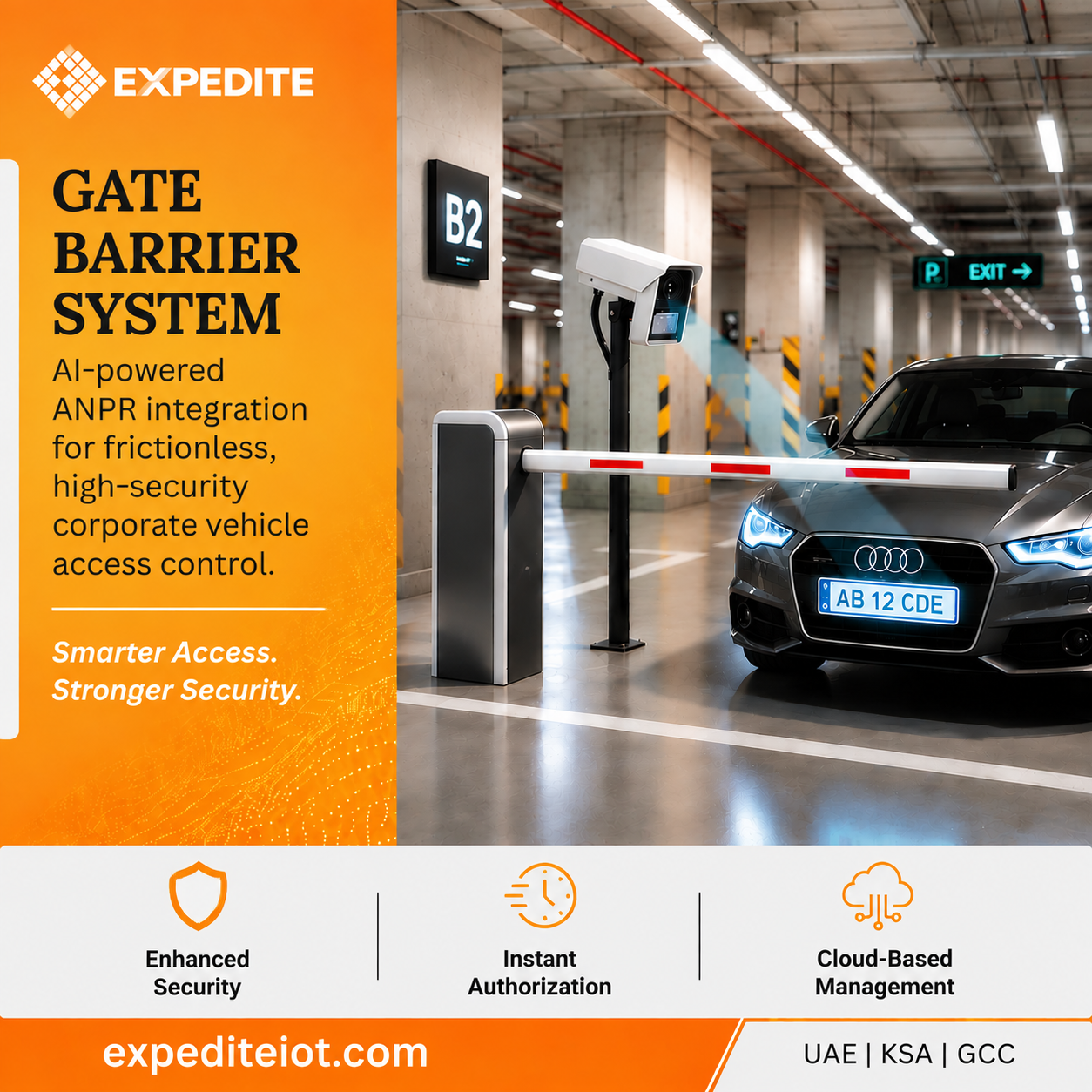
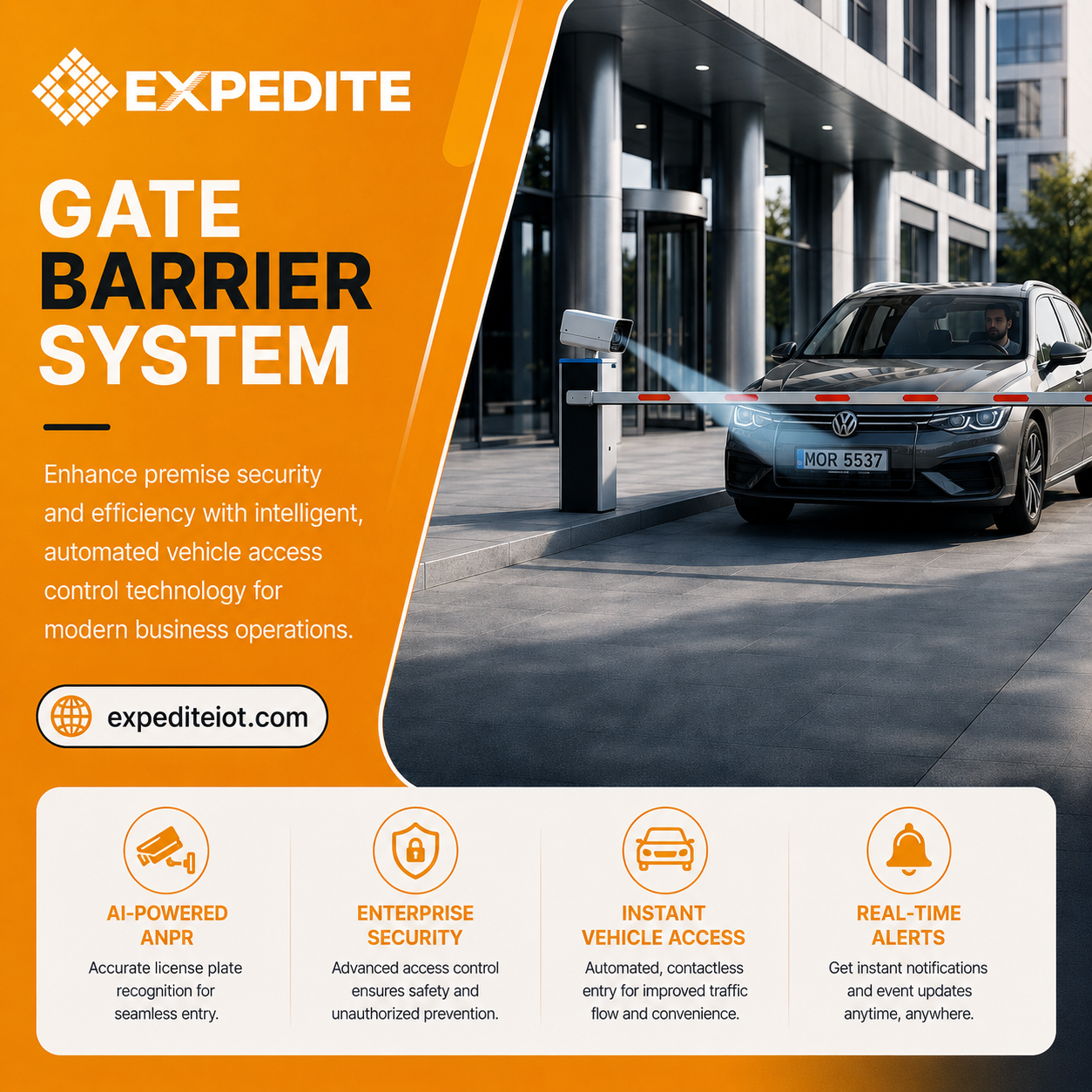
Bahrain’s infrastructure boom, growing urban population, and commitment to smart city governance have made robust **Gate Barrier System deployment a strategic priority across the Kingdom. From the gleaming commercial towers of Manama’s Diplomatic Area to the industrial logistics hubs of Khalifa Bin Salman Port, every high-traffic facility faces the same operational challenge: controlling who enters, tracking when they leave, and doing so at speed without creating congestion at the gate. Modern gate barrier and vehicle access control solutions** answer that challenge with intelligent automation, real-time data, and the mechanical reliability needed to withstand the Gulf’s extreme operating conditions — day after day, year after year.
Why Bahrain’s Access Control Landscape Is Evolving
Bahrain’s Vision 2030 economic diversification strategy is driving unprecedented investment in commercial real estate, mixed-use developments, government facility upgrades, and logistics infrastructure. The Bahrain Economic Development Board (EDB) continues to attract multinational corporations establishing regional headquarters, each requiring enterprise-grade perimeter security to protect personnel, assets, and sensitive operations. Simultaneously, Bahrain’s Ministry of Interior and the National Security apparatus are raising standards for physical security at critical national infrastructure sites — power stations, water treatment facilities, telecommunications hubs, and port facilities.
Traditional security gate approaches — manually operated barriers, security guards checking printed visitor lists, paper-based vehicle logs — are simply unable to meet the throughput, accuracy, and auditability demands of these environments. A single-entry point serving a commercial tower with 2,000 daily employees cannot function efficiently if each vehicle requires a guard to manually verify credentials and raise a barrier by hand. Automated, intelligent access systems are no longer a premium upgrade; they are the operational baseline for any serious facility management programme in Bahrain today.
Understanding the Boom Barrier System: Engineering Built for Gulf Conditions
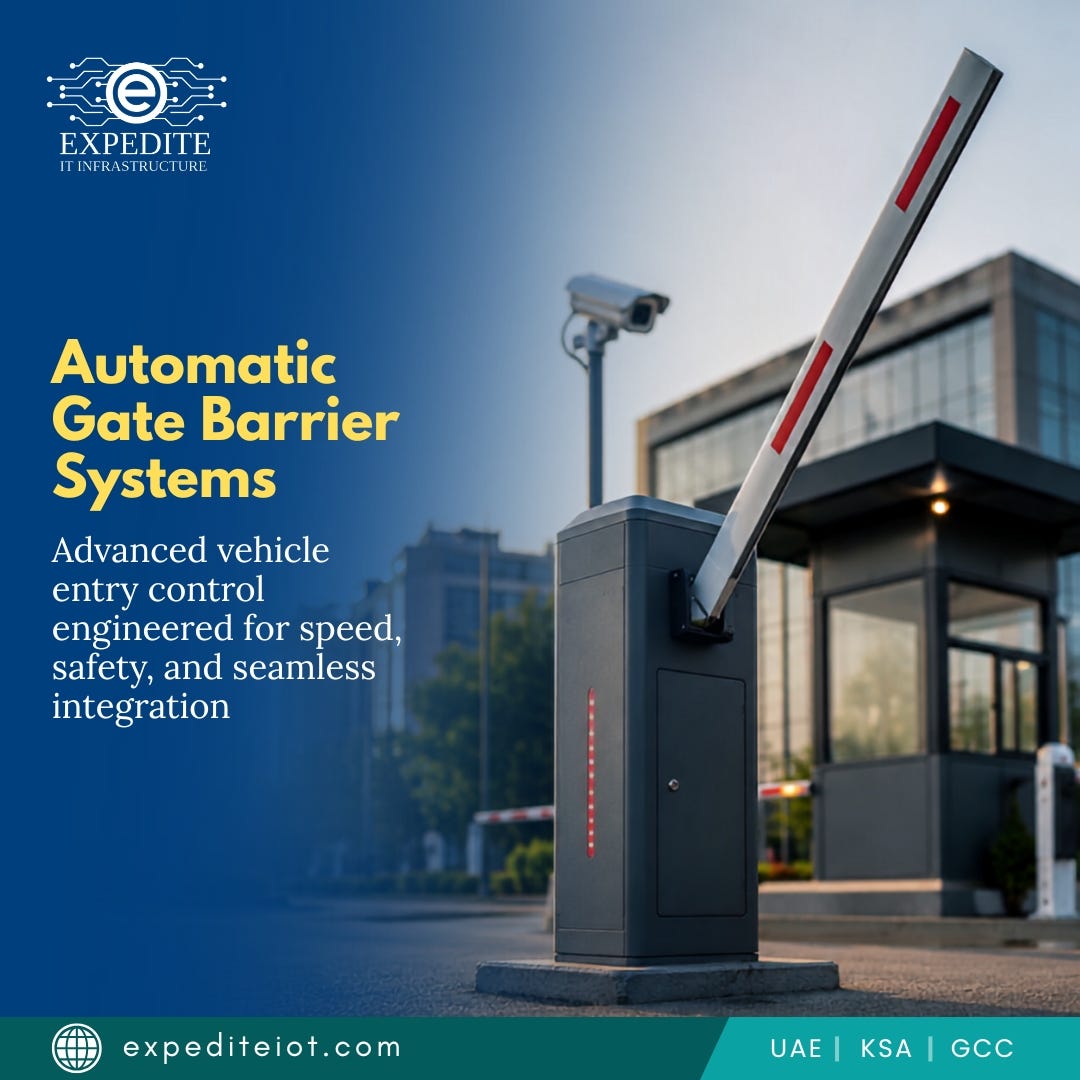
The Boom Barrier System is the most widely deployed vehicle access control technology in Bahrain, combining simplicity of operation with exceptional durability and throughput capacity. At its core, a boom barrier consists of a counterbalanced arm — typically between three and nine metres in length — driven by an electric motor with integrated obstacle detection and safety braking. When a valid access credential is presented, the arm rises to allow vehicle passage and descends automatically after the vehicle clears the detection loop embedded in the road surface.
For Bahrain’s climate — where summer temperatures regularly exceed 42°C and humidity can reach saturation point during coastal weather events — thermal management and corrosion resistance are non-negotiable hardware specifications. Industrial-grade boom barriers rated for continuous duty cycles use die-cast aluminium housings with powder-coated finishes, stainless steel mechanical components, and motor controllers with active thermal protection that prevent overheating during peak-traffic periods. Cycle speeds of under one second for three-metre arms, and under three seconds for six-metre arms, ensure that even the busiest facility entrance maintains smooth traffic flow without queue build-up.
Securing Entry Point Barriers: From Perimeter Design to Daily Operations
Effective Entry Point Barriers do far more than physically block or permit vehicle passage. In a comprehensive access control architecture, each barrier node is an intelligent data collection point, capturing the time, direction, and credential of every vehicle transit and feeding that information into a centralised security management platform. This creates a real-time operational picture — how many vehicles are currently on site, which access zones have been visited, whether any credential has been used at a frequency or location pattern that warrants investigation — that manual guard-based systems cannot replicate.
Entry point design must also account for threat mitigation. High-security sites such as data centres, embassy compounds, and government ministries in Bahrain supplement barrier arms with hostile vehicle mitigation (HVM) measures including PAS 68 and IWA 14-certified bollards, surface-mounted blockers, and anti-ram kerb systems that prevent a determined vehicle-borne threat from bypassing the barrier arm. Integrating these passive and active elements into a coherent entry point design requires experienced system architects who understand both the physical security domain and the traffic flow optimisation requirements of a functioning facility.
Entry Point Configuration Options for Bahraini Facilities
• Single-lane entry/exit with one barrier arm and embedded induction loop
• Dual-lane segregated entry and exit with directional traffic management signage
• Anti-tailgating configurations using treadle plates and secondary barrier arms
• Pedestrian integration with turnstiles and biometric readers at adjacent entry points
• Emergency override systems compliant with Bahrain Civil Defence fast-access requirements
Parking Access Barriers: Driving Revenue and User Experience in Commercial Facilities
Parking Access Barriers represent one of the most commercially significant applications of barrier technology in Bahrain’s urban environment. Multi-storey car parks, shopping mall surface lots, hotel valet facilities, and airport long-stay car parks all depend on reliable, intelligent parking management infrastructure to maximise revenue per bay, minimise operational staff costs, and deliver a frictionless experience to users who expect contactless, app-integrated payment and access.
Modern parking management systems built around intelligent barrier nodes offer dynamic pricing capability — adjusting rates based on current occupancy, time of day, and event-driven demand spikes — alongside pre-booking integration, season ticket management, and real-time space availability signage that guides drivers directly to available bays. For Bahrain’s major retail and mixed-use destinations such as City Centre Bahrain, The Avenues, and Seef Mall, parking efficiency is directly linked to dwell time and per-visit spending, making the barrier system a genuine revenue management tool rather than simply a security measure.
Vehicle Access Control: The Intelligence Layer Behind the Barrier
Vehicle Access Control encompasses the full suite of credential management, authentication, and authorisation technologies that determine whether a specific vehicle should be permitted through a specific barrier at a specific time. The barrier arm is the physical output of a decision made by the access control platform — a decision that can be informed by RFID credentials, licence plate recognition data, mobile app tokens, intercom-based guard authorisation, or a combination of several factors for high-security applications.
Enterprise vehicle access platforms in Bahrain integrate directly with HR systems, visitor management applications, and contract management databases, ensuring that access rights are automatically updated when an employee leaves the organisation, a contractor’s site permit expires, or a vehicle is registered as stolen. This dynamic, policy-driven approach to access management eliminates the human errors inherent in manually maintained whitelist spreadsheets and ensures that only currently authorised vehicles can enter — without requiring guard intervention for routine traffic.
Automatic Road Barrier: Speed, Safety, and Fail-Safe Operation
An **Automatic Road Barrier** must perform reliably across tens of thousands of operating cycles per month without mechanical fatigue, calibration drift, or electronic failure. The reliability standard for commercial-grade automatic barriers is defined by EN 13241 and IEC 60068 environmental testing protocols, which specify minimum cycle life ratings, impact resistance requirements, and electromagnetic compatibility standards that ensure stable operation in electrically noisy industrial environments.
Safety is equally critical. Obstacle detection systems — using pressure-sensitive edges, active infrared curtains, or radar-based vehicle presence detection — must prevent the barrier arm from descending onto a vehicle, cyclist, or pedestrian that remains in the travel path. Fail-safe design philosophy requires that in the event of a power failure or controller fault, the barrier defaults to a defined safe state: typically, open for facilities where traffic disruption is the priority risk, or closed for high-security perimeters where unauthorised access is the priority risk. Battery-backed UPS modules ensure continued operation through mains power interruptions without requiring manual intervention.
RFID Barrier System: Seamless, Contactless Vehicle Authentication
The RFID Barrier System is the workhorse technology for high-throughput vehicle access in Bahrain’s corporate campuses, industrial estates, and government facilities. UHF RFID readers mounted above or beside the approach lane detect passive transponder tags affixed to the windscreen of registered vehicles at distances of up to ten metres, triggering barrier opening before the vehicle even reaches the stop line. This eliminates the need to slow down, lower a window, or present a card to a reader — enabling continuous traffic flow at speeds of up to 30 km/h without any driver interaction.
Modern UHF RFID systems operating on the 865–868 MHz (EU/GCC) or 902–928 MHz (Americas) bands offer read ranges, anti-collision protocols, and encryption standards far superior to legacy 125 kHz proximity card technologies. MIFARE DESFire EV3 and ISO 18000–6C compliant tags provide cryptographic credential security that prevents cloning attacks — a meaningful vulnerability in older systems where a credential could be duplicated with a commercially available card reader purchased online. For fleet management applications, RFID integration with telematics platforms enables real-time vehicle tracking overlaid on site access event data.
LPR Boom Barrier: Credential-Free Access Through Licence Plate Intelligence
The LPR Boom Barrier — combining Licence Plate Recognition (LPR) camera technology with automatic barrier control — delivers the ultimate in frictionless vehicle access by eliminating the need for any physical credential whatsoever. High-resolution cameras with active infrared illumination capture licence plate images as vehicles approach, and on-board optical character recognition (OCR) engines extract the plate number and submit it to the access control platform for authorisation — all within 200 to 500 milliseconds.
LPR systems offer significant operational advantages for Bahrain’s fleet-intensive environments. Logistics companies managing dozens of delivery vehicles across multiple sites, government agencies maintaining large departmental fleets, and property developers operating visitor parking facilities all benefit from a system where the vehicle itself is the credential — no tags to procure, no cards to issue, no transponders to replace when a vehicle changes hands. Modern deep-learning LPR engines achieve read accuracy rates exceeding 98% on Bahraini, GCC, and international licence plate formats, maintaining performance in challenging conditions including direct sunlight, rain, and vehicles approaching at angles of up to 30 degrees from perpendicular.
Security Gate Barrier System: Protecting Bahrain’s Critical Infrastructure
At the highest end of the performance and security spectrum, the Security Gate Barrier System integrates multiple complementary technologies into a unified perimeter protection solution. Critical infrastructure operators in Bahrain — including Alba (Aluminium Bahrain), BAPCO (Bahrain Petroleum Company), Bahrain Telecommunications Company (Batelco), and major port operators — require access control infrastructure that meets international security standards while accommodating the high vehicle volumes and diverse credential types present in complex industrial environments.
Security-grade barrier systems at these sites combine UHF RFID for registered fleet vehicles, LPR as a secondary verification layer, intercom and CCTV integration for unregistered or visitor vehicles, and guard override consoles with full event logging for manual interventions. Anti-passback logic prevents a single credential from being used to enter a zone without a corresponding exit event, closing the tailgating loophole where an authorised vehicle is followed by an unauthorised one through the same barrier cycle. Integration with Bahrain’s national security notification frameworks ensures that access events at critical sites can be flagged to relevant authorities in real time when predefined trigger conditions are met.
Gate Barrier System Bahrain: Sector-by-Sector Deployment Overview
Gate Barrier System Bahrain deployments serve every major economic sector in the Kingdom, each presenting distinct performance, integration, and regulatory requirements.
Government and Diplomatic Facilities
Ministries, embassies, and royal estate facilities require the highest security classifications, typically combining SIL-2 rated automatic barriers with anti-ram bollards, biometric pedestrian access, and integration with national security monitoring infrastructure. All equipment must meet internationally recognised security standards and be supplied through approved procurement channels.
Commercial Real Estate and Mixed-Use Developments
Office towers, retail centres, and hotel properties in Manama’s Seef District, Bahrain Bay, and the Financial Harbour prioritise visitor experience alongside security. Cloud-managed barrier systems with mobile app integration, pre-booking capability, and dynamic occupancy management deliver both objectives, while providing building managers with the analytics data needed to optimise parking revenues and security staffing.
Industrial Estates and Free Zones
Bahrain International Investment Park (BIIP) and Bahrain Logistics Zone (BLZ) tenants manage complex multi-vehicle, multi-contractor access scenarios across extended operating hours. RFID-based fleet management integrated with electronic gatehouse systems automates delivery logging, container movement tracking, and contractor credential management at scale, replacing paper-based manual processes that introduce both security gaps and operational inefficiencies.
Healthcare and Educational Campuses
The Royal College of Surgeons in Ireland — Medical University of Bahrain (RCSI-MUB), Arabian Gulf University, and the major private hospital campuses manage diverse populations of staff, students, patients, and visitors across large multi-building sites. Zoned access control — where different vehicle categories have access to different areas based on credential level — is essential for maintaining safety and operational order across these complex environments.
The Value of a Proven GCC Integration Partner
Selecting a gate barrier technology vendor is straightforward. Selecting a systems integration partner with genuine regional expertise, established supplier relationships, proven project delivery experience, and responsive post-installation support is far more consequential. Google’s E-E-A-T framework — Experience, Expertise, Authoritativeness, Trustworthiness — is as applicable to vendor selection as it is to content ranking: the credentials and track record of the organisation deploying your security infrastructure matter enormously.
Expedite IoT brings deep, hands-on experience deploying intelligent access control and barrier management solutions across GCC markets, with a portfolio spanning corporate campuses, government facilities, logistics hubs, and retail destinations. Their gate barrier systems for the GCC region are engineered for the region’s climate, regulatory environment, and operational demands — backed by local technical support that ensures rapid response when it matters most.
Deployment Methodology: From Site Survey to Handover
Phase 1 — Site Survey & Threat Assessment: Evaluate traffic volumes, vehicle types, lane configurations, existing infrastructure, power availability, network connectivity, and security classification requirements. Identify integration points with existing CCTV, access control, and building management systems.
Phase 2 — System Design & Specification: Produce a detailed design document covering hardware selection, credential technology, software platform, network architecture, integration schematics, and failover strategy. Submit for client approval and authority review where required.
Phase 3 — Civil Works & Installation: Install induction loops, power supplies, network cabling, and foundation works for barrier housings. Mount cameras, readers, intercoms, and signage. Configure software platform, load credential databases, and establish integration connections.
Phase 4 — Testing & Commissioning: Conduct full functional testing across all operating scenarios including normal access, denied access, anti-passback, emergency override, fail-safe states, and communication loss. Produce a signed test acceptance certificate.
Phase 5 — Training & Handover: Train security operations staff, facility managers, and IT administrators on system operation, credential management, reporting, and first-line maintenance procedures. Provide full documentation package and establish ongoing support agreement.
Conclusion
As Bahrain continues its transformation into a regional business, logistics, and innovation hub, the demand for intelligent, reliable, and scalable Gate Barrier System infrastructure will only intensify. Whether the requirement is a high-throughput **Boom Barrier System for a corporate campus, intelligent Parking Access Barriers for a major retail destination, credential-free LPR Boom Barrier technology for a logistics fleet, or a fully integrated Security Gate Barrier System for a critical national infrastructure site, the technology foundations are the same: precise Vehicle Access Control, robust Automatic Road Barrier engineering, seamless RFID Barrier System integration, and comprehensive Entry Point Barriers** designed for the Gulf’s operational realities.
Organisations across Bahrain looking to upgrade their perimeter security, modernise ageing manual systems, or deploy access control infrastructure for a new development will find in Expedite IoT a partner with the regional expertise, technology portfolio, and project delivery capability to make it happen.
FAQs
1. What is the typical lifespan of a commercial boom barrier installed in Bahrain?
High-quality industrial-grade boom barriers from leading manufacturers are rated for a minimum of five million operating cycles, which translates to approximately eight to twelve years of service life in a high-traffic Bahraini commercial facility operating around the clock. Actual service life depends on maintenance discipline, environmental conditions, and traffic volumes. Preventive maintenance contracts covering quarterly lubrication, annual electrical inspection, and sensor calibration significantly extend operational life and reduce the likelihood of unplanned failures during peak traffic periods.
2. Can a gate barrier system integrate with our existing CCTV and building management system?
Yes. Modern barrier management platforms are designed with open integration architecture, supporting standard protocols including ONVIF for CCTV integration, OPC-UA and BACnet for building management system connectivity, REST and SOAP APIs for enterprise software integration, and Wiegand, OSDP, and RS-485 interfaces for legacy access control hardware. Integration depth ranges from basic alarm relay connections to fully synchronised event-driven workflows where a tailgating detection event in the CCTV system simultaneously locks the barrier and triggers a security alert on the monitoring dashboard.
3. How does an LPR boom barrier perform with GCC licence plates, including Bahraini plates?
Contemporary deep-learning LPR engines are trained on extensive datasets covering Bahraini, Saudi, Emirati, Kuwaiti, Qatari, Omani, and international licence plate formats, achieving read accuracy rates of 98% or higher under normal operating conditions. Performance is maintained across a range of challenging scenarios including reflective plate surfaces, partial obscuration by mud or damage, low-light or high-contrast lighting conditions, and vehicles approaching at angles. Systems are regularly updated with new plate format training data as regional authorities introduce new designs, ensuring accuracy is maintained throughout the system’s operational life.
4. What happens to the barrier system during a power outage?
All professionally specified barrier systems include an uninterruptible power supply (UPS) module that maintains operation during mains power failures. Depending on the UPS capacity and traffic volume, battery-backed operation typically sustains two to eight hours of normal barrier cycling. The system also has a configurable fail-state behaviour: fail-open (barrier arm rises and remains up, permitting free traffic flow) for facilities where access continuity is the priority, or fail-secure (barrier arm closes and locks) for high-security perimeters. Manual release mechanisms allow security staff to operate barriers manually during extended power outages, and emergency vehicle override inputs ensure that first responders can always gain rapid access.
5. Is planning approval required to install a gate barrier system at a commercial property in Bahrain?
Requirements vary depending on the nature of the installation and the property category. Modifications to road layouts, kerb lines, or public footpaths typically require approval from the Ministry of Works or the relevant municipality. Installations within private property boundaries that do not affect public infrastructure generally proceed under the property owner’s authority, subject to the facility’s lease or ownership conditions. High-security installations at sites classified as critical national infrastructure require coordination with the Ministry of Interior and relevant sector regulators. An experienced integration partner will conduct a regulatory assessment as part of the site survey phase and guide clients through the applicable approval process.
메타데이터
- post_id
- 772e99fda920
- slug
- premium-gate-barrier-systems-engineered-for-bahrains-commercial-hubs-772e99fda920
- url
- https://medium.com/@expzeba/premium-gate-barrier-systems-engineered-for-bahrains-commercial-hubs-772e99fda920
- canonical_url
- https://medium.com/@expzeba/premium-gate-barrier-systems-engineered-for-bahrains-commercial-hubs-772e99fda920
- author_url
- https://medium.com/@expzeba
- status
- ok
- fetched_at
- 2026-08-06 03:46:33