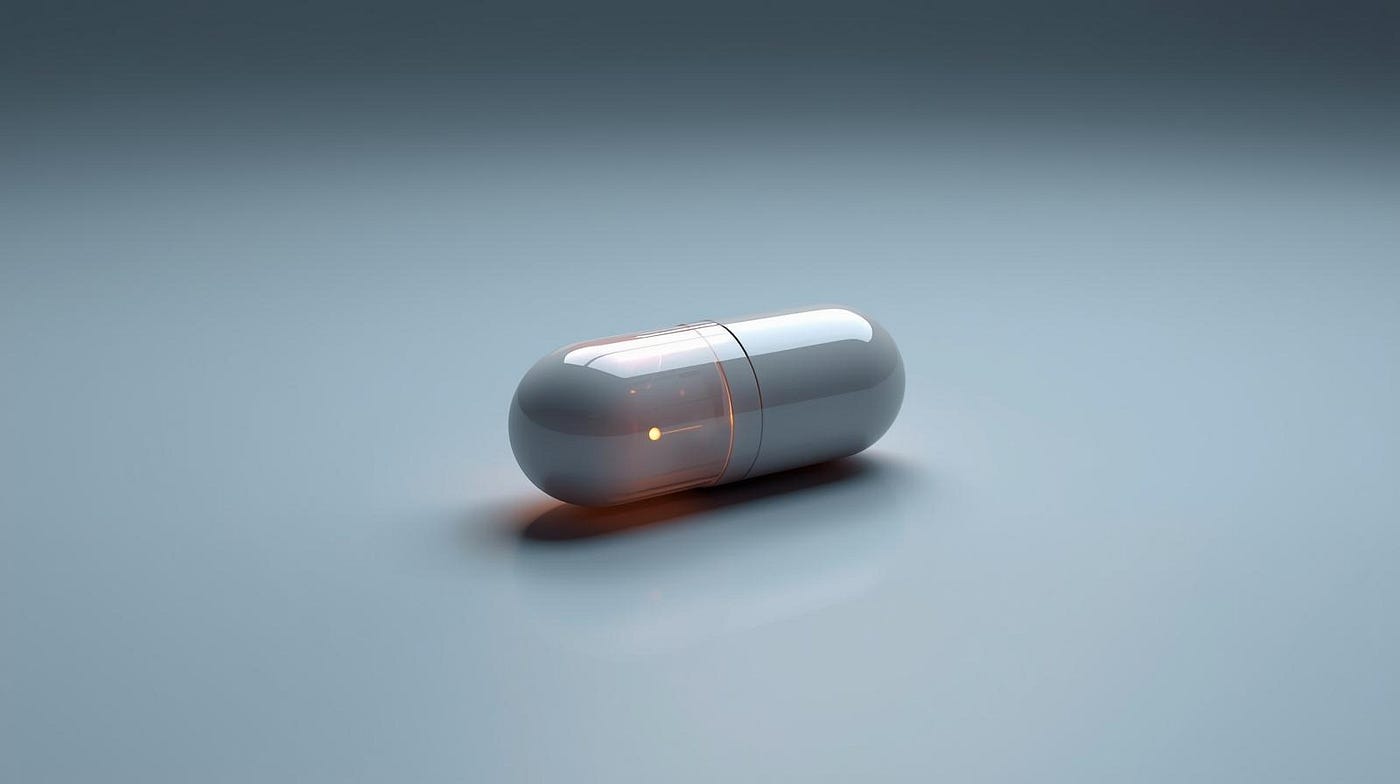
How Capsule Robots Are Patrolling Your Gut
Why Do We Need to Swallow a Robot?
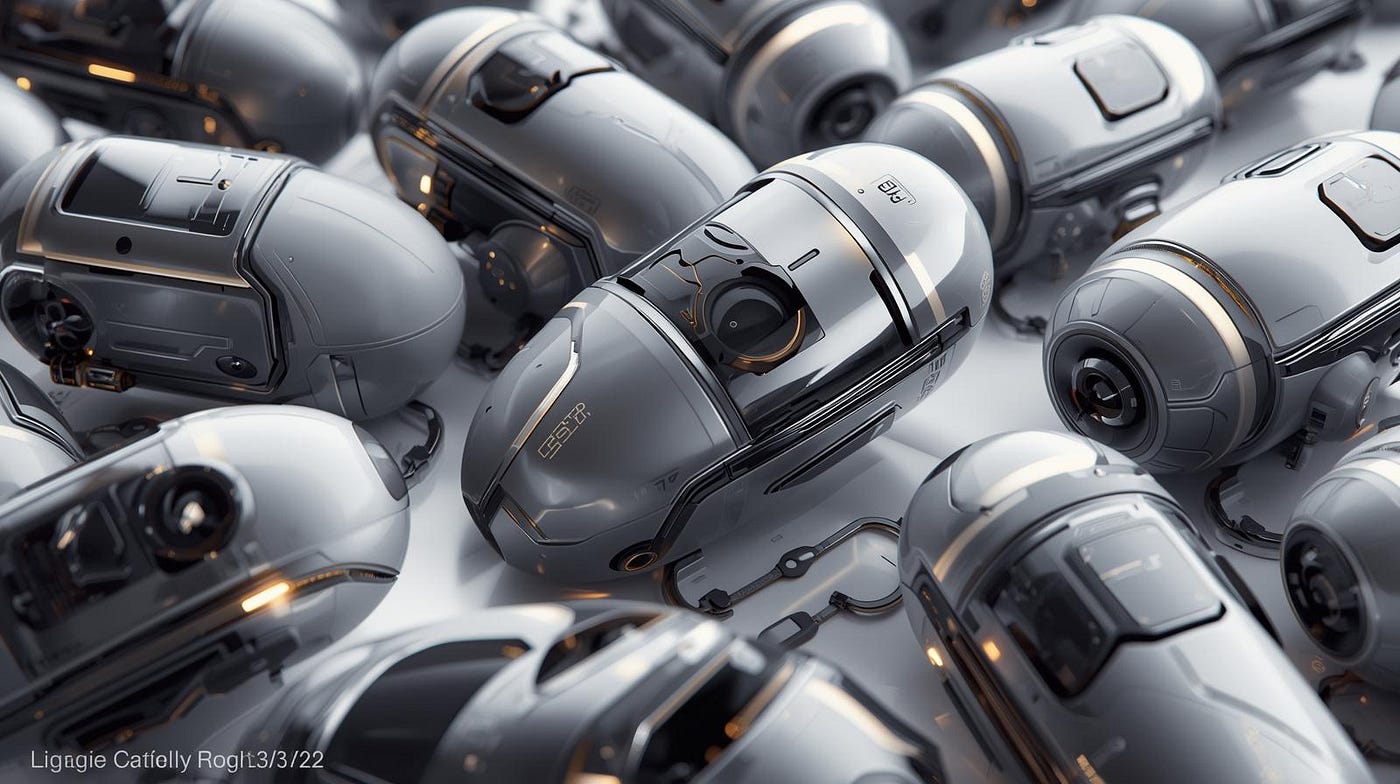
How Capsule Robots Are Patrolling Your Gut
Why Do We Need to Swallow a Robot?
You’ve probably heard the phrase “the gut is the second brain”. That’s not just a saying. Our intestine isn’t only for digestion and absorption ; it’s also the body’s largest immune organ , housing 70% of our immune cells.
The trillions of microbes in our gut are deeply linked to our immunity, digestion, and even mental health. When the gut is unhealthy, it can affect the entire body.
Historically, to check the deep intestine, we’ve relied on endoscopy (like upper endoscopies and colonoscopies). But traditional scopes have limitations.
First, they carry risks, including the potential for perforation. Second, they are uncomfortable, often requiring sedation and a clinical team. Most importantly, they struggle to navigate the entire length of the winding, hard-to-reach small intestine.
This is exactly why scientists have spent the last 20 years developing “capsule robots”.
Think of it as a “smart pill” you can swallow. It acts like a tiny submarine, traveling through your GI tract to monitor, diagnose, and one day, even treat diseases directly from the inside.
The “Smart Pill” Secret: Deconstructing the Capsule Robot
This tiny capsule is actually a densely packed piece of high technology. It’s like a mini-spacecraft with all the essential systems.
- The Shell (Materials): First, the housing must be “biocompatible” — safe, non-toxic, and robust enough to survive harsh stomach acid. Scientists are even working on biodegradable, “edible” electronics.
- Vision System (The Camera): The core is a miniature camera and LED lights. It snaps 2–7 pictures per second as it travels, generating over 60,000 images during its journey.
- You might be thinking: Who has time to look at 60,000 photos? This is where AI (Artificial Intelligence) steps in. AI algorithms can rapidly sift through the video, flagging potential issues like bleeding or polyps for the doctor.
- Communication (How it “talks”): How does it send data from inside you? It uses radio frequency (RF) transmission. Even cooler, some new tech uses “Intrabody Communication” (IBC), which uses the human body itself as a medium to transmit the signal.
- Localization (The “GPS”): A photo is useless if the doctor doesn’t know where it was taken. This is the challenge of “localization”.
- It’s like GPS for your gut, but much harder. The most promising methods use magnetic fields. Doctors can use external magnetic sensors to precisely track the capsule’s position.
- Locomotion (How it “moves”): The first capsules (like the 2001 PillCam ) were “passive,” just floating along with natural gut contractions. The problem? They might miss key areas.
- New “active” capsules can be controlled! Using external magnets, a doctor can “drive” the capsule like an RC car, stopping it, spinning it 360 degrees, or holding it steady for a better look.
- Sensors (The “Nose” and “Skin”): Besides its “eyes” (the camera), it has other senses. It can be equipped with various sensors to detect pressure , core body temperature , specific gases (like hydrogen or methane) , or pH levels. This data is incredibly valuable for diagnosis.
- Power (The “Battery”): All this tech needs energy. In such a small package, power is a huge challenge. Most use tiny batteries , but researchers are developing wireless power transfer and even capsules that can draw power from stomach acid.
More Than Just Photos: The Amazing Missions of a Capsule Robot
The most exciting part of this technology isn’t just replacing endoscopy; it’s about doing things traditional scopes can’t do.
1. Diagnosis Capsule robots are ideal for diagnosing issues like GI bleeding , Crohn’s disease, or celiac disease. For high-risk patients (like those with cardiopulmonary disease) who cannot undergo sedated endoscopy, the capsule is a much safer alternative.
2. Drug Delivery This is the real game-changer. Many oral drugs are destroyed by stomach acid. A capsule robot can act like a “smart bomb,” delivering medication precisely to a diseased spot in the small or large intestine.
Even more advanced capsules (like the RaniPill) travel to the small intestine, inflate a tiny balloon, and push a “dissolvable microneedle” into the intestinal wall. This allows for the painless injection of biologic drugs like insulin, with massive improvements in absorption.
Another device, the RoboCap, is designed to spin and “clear away” the mucus layer in the intestine, allowing drugs to be absorbed much more effectively.
3. Drug Monitoring Do you (or a loved one) sometimes forget to take medication? The FDA has already approved “Digital Pills”.
The Proteus system, for example, includes a sensor in the pill. When it dissolves in the stomach, it sends a signal to a patch on your skin, which then relays a message to your phone, confirming to your doctor that the medication was taken.
4. Non-Drug Treatment Capsules can also be the treatment.
- Obesity: Ingestible Intragastric Balloons (IGBs). You swallow a capsule, which then inflates into a balloon in your stomach. This takes up space, makes you feel full faster, and helps with weight loss.
- Constipation: Vibratory capsules. Studies show these capsules, which vibrate at scheduled intervals, can effectively stimulate intestinal contractions and relieve chronic constipation.
5. Sampling When we talk about the gut microbiome, we’re usually testing stool samples. But the bacteria in your stool is very different from the bacteria living on your intestinal lining.
New capsule robots can perform targeted “micro-biopsies” or collect fluid samples from specific locations, giving us a true picture of what’s happening deep inside.
The Next Step for This Dream Tech: Challenges and Future
This all sounds amazing, so what’s the catch? Why isn’t this technology everywhere yet?
- Challenge 1: Anchoring The intestine is constantly moving. Getting a capsule to “park” at a specific spot for treatment or a detailed look is incredibly difficult. It’s like trying to hold a small boat steady in a storm.
- Challenge 2: Storage Capacity The capsule is tiny. Once you pack in the camera, battery, and sensors, there is very little room left for medicine, often less than 1 mL.
- Challenge 3: Cost and Environment Right now, a standard PillCam (just for photos) costs around $500. Furthermore, these capsules are single-use and are excreted, creating significant electronic waste. We desperately need biodegradable materials to make this sustainable.
Conclusion Capsule robots are still in their early stages. But they have opened an entirely new door for the monitoring, diagnosis, and treatment of intestinal diseases.
The future of this technology depends on multidisciplinary collaboration between doctors, engineers, material scientists, and AI experts.
One day, when you have a digestive issue, your doctor might not hand you a prescription for pills, but rather prescribe a tiny, swallowable doctor to patrol and repair your gut from the inside out.
Ref:
Wei, X., Xi, P., Chen, M., Wen, Y., Wu, H., Wang, L., Zhu, Y., Ren, Y., & Gu, Z. (2024). Capsule robots for the monitoring, diagnosis, and treatment of intestinal diseases. Materials Today Bio, 29, 101294. https://doi.org/10.1016/j.mtbio.2024.101294
메타데이터
- post_id
- 7756fc532bea
- slug
- how-capsule-robots-are-patrolling-your-gut-7756fc532bea
- url
- https://medium.com/@dsyen/how-capsule-robots-are-patrolling-your-gut-7756fc532bea
- canonical_url
- https://medium.com/@dsyen/how-capsule-robots-are-patrolling-your-gut-7756fc532bea
- author_url
- https://medium.com/@dsyen
- status
- ok
- fetched_at
- 2026-06-11 18:57:12