Navigating the Critical Path: Safety and Efficiency in Annual Maintenance Shutdowns
Engineering Reliability: Balancing Technical Precision with High-Stakes Safety Protocols.
Navigating the Critical Path: Safety and Efficiency in Annual Maintenance Shutdowns
Engineering Reliability: Balancing Technical Precision with High-Stakes Safety Protocols.
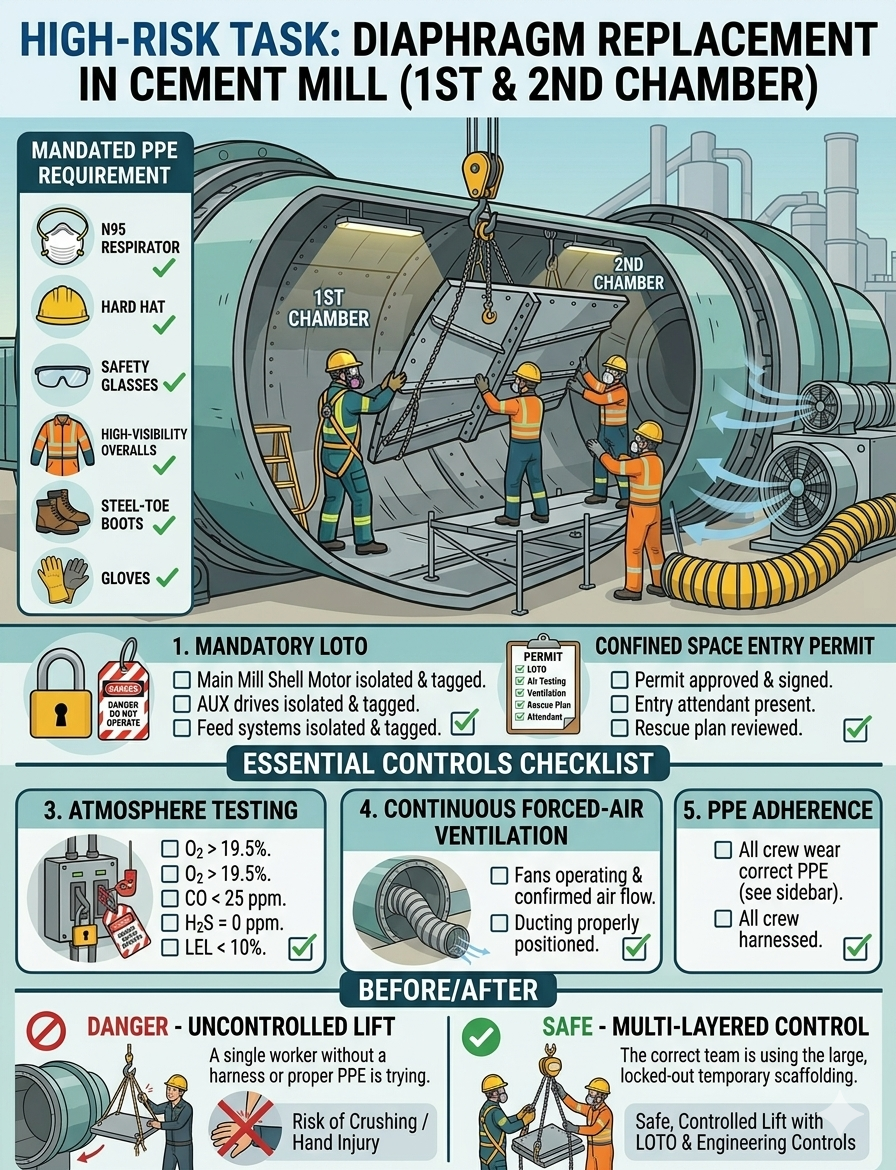
The “Zero Harm” Blueprint: A visual guide to the mandatory safety protocols, including continuous ventilation and rigorous Lock-Out Tag-Out (LOTO) adherence.
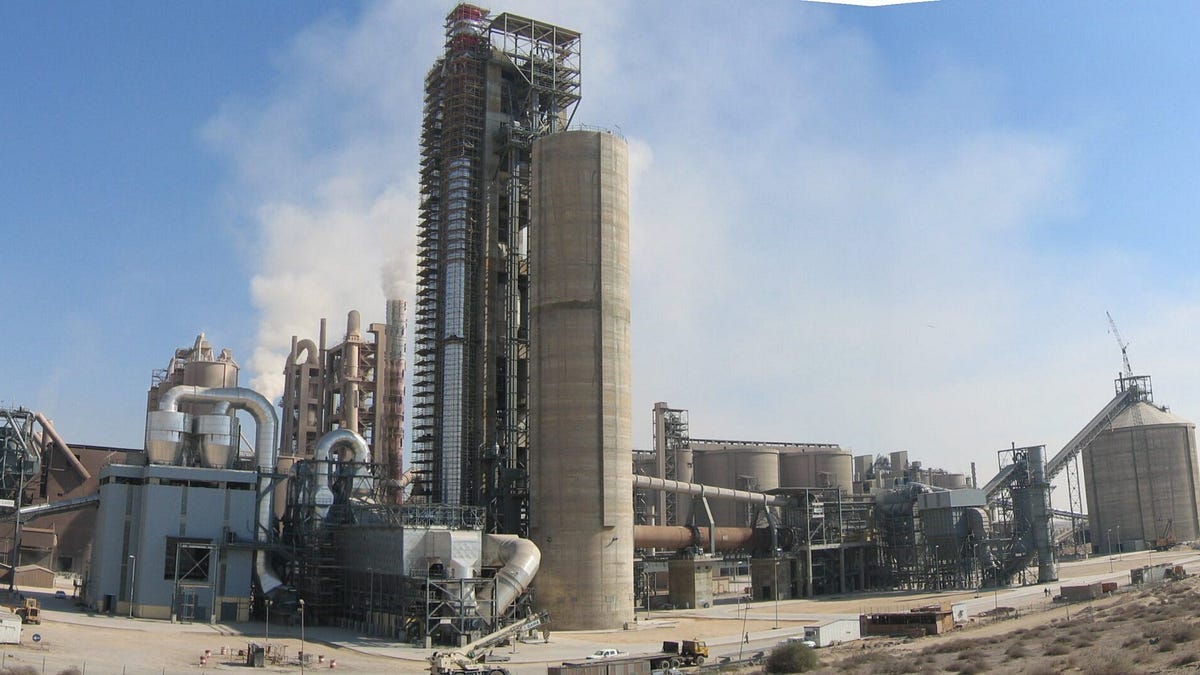
The annual shutdown is the most high-stakes period for any industrial facility, particularly in heavy industries like cement production or power generation. It is a race against time where the dual pressures of operational uptime and absolute safety collide. While shutdowns are designed to prevent long-term equipment failure, the process itself introduces a concentrated window of high-risk activities.
Based on recent maintenance observations, let’s look at the critical challenges and the safety-first solutions required to navigate a successful turnaround.
1. The Challenge: Heavy Component Handling in Confined Spaces.

Precision under pressure: A technician performs critical torque checks on lifter plate bolts to ensure structural integrity before the mill is re-energized.
One of the most physically demanding tasks during a shutdown is the replacement of internal mill components, such as diaphragms or lifter plates, within a cement mill. These tasks occur in “Confined Spaces,” which are inherently dangerous due to limited egress and potential atmospheric hazards.
The Problem: As seen in the initial field images, technicians often work in cramped, dimly lit environments. A common pitfall is the attempt to manually maneuver heavy plates or use improper leverage with hand tools. This leads to:
- Crush Injuries: Unsecured plates shifting during installation.
- Ergonomic Strain: Over-exertion while using manual torque wrenches in awkward positions.
- Atmospheric Risks: Accumulation of dust or lack of oxygen within the mill shell.
The Solution: Multi-Layered Engineering Controls To move from a “high-risk” to a “controlled” environment, facilities must mandate a rigorous Confined Space Entry Permit system. This includes:
- Forced-Air Ventilation: Continuous air exchange using flexible ducting to ensure oxygen levels remain above 19.5%.
- Mechanical Assistance: Using chain hoists and certified lifting lugs for all plates to eliminate manual lifting.
- Rigid PPE Adherence: Beyond the basics, N95 respirators are essential for protecting against residual dust particles in the mill chambers.

Engineering Controls in Action: Utilizing mechanical lifting aids and multi-person coordination reduces the risk of crush injuries during heavy liner replacements.
2. The Electrical Component: Precision vs. Pressure

The Digital Audit: Advanced diagnostic tools allow electrical teams to identify thermal anomalies and phase imbalances that are invisible to the naked eye.
While the mechanical teams are inside the mills, the electrical teams are managing the “nervous system” of the plant. The annual shutdown is often the only time High Voltage (HV) Switchgear and Motor Control Centers (MCC) can be de-energized for deep inspection.
The Problem: Testing electrical integrity under the time pressure of a shutdown can lead to “short-cutting.” A single missed reading on a power quality analyzer or a poorly tightened terminal can lead to a catastrophic Arc Flash event once the plant is re-energized.
The Strategy:
- LOTO (Lock-Out, Tag-Out): This is non-negotiable. Every energy source — mechanical, electrical, and pneumatic — must be physically locked.
- Advanced Diagnostics: Technicians should use calibrated thermal imagers and power analyzers to identify “invisible” faults before they become failures.
- The Right Tool for the Torque: Ensuring that electrical connections are torqued to exact manufacturer specifications prevents the heat-cycling failures that plague plants post-shutdown.
3. Safety Checklist: The “Zero Harm” Framework
To ensure every worker returns home safely, the following checklist serves as the baseline for any annual maintenance activity:

4. Conclusion: Culture Over Compliance
The most sophisticated safety infographic is useless if the culture on the shop floor prioritizes speed over life. The goal of an annual shutdown isn’t just to fix the machines — it’s to improve the system. By integrating mechanical precision (proper torque and lifting) with electrical diligence (rigorous testing and LOTO), a facility can ensure that the “restart” button is pushed with confidence, not hope.
Remember: A successful shutdown is measured not by how fast it was completed, but by the absence of injuries and the reliability of the equipment in the year to follow.
Call to Action:
What is the biggest safety challenge your team faces during an annual shutdown? Share your experiences in the comments below or join our forum to discuss the latest in industrial maintenance technology.

메타데이터
- post_id
- 775f01baa46d
- slug
- navigating-the-critical-path-safety-and-efficiency-in-annual-maintenance-shutdowns-775f01baa46d
- url
- https://medium.com/@industrialcommander/navigating-the-critical-path-safety-and-efficiency-in-annual-maintenance-shutdowns-775f01baa46d
- canonical_url
- https://medium.com/@industrialcommander/navigating-the-critical-path-safety-and-efficiency-in-annual-maintenance-shutdowns-775f01baa46d
- author_url
- https://medium.com/@industrialcommander
- status
- ok
- fetched_at
- 2026-06-21 07:44:09