They Built Us on Comparison. Now They Tell Us to Stop.
The “stop comparing yourself” advice is everywhere. But nobody is asking the more honest question — who taught us to compare in the first…
They Built Us on Comparison. Now They Tell Us to Stop.
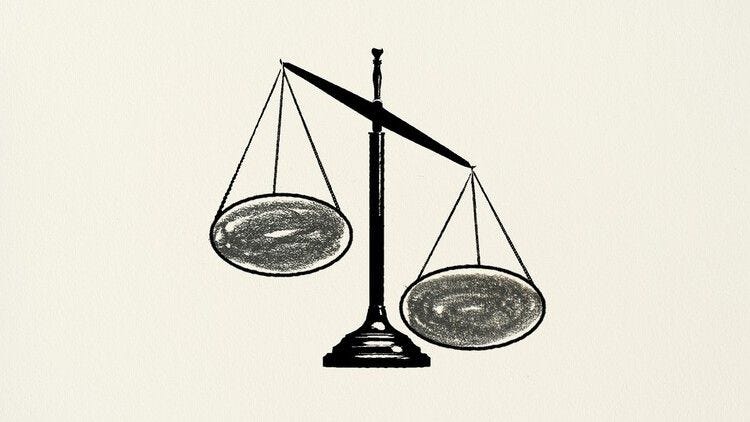
The “stop comparing yourself” advice is everywhere. But nobody is asking the more honest question — who taught us to compare in the first place?’
There is a sentence you have probably heard a hundred times. In self-help books, in Instagram captions, in TED talks, from well-meaning relatives. It goes something like this: stop comparing yourself to others. Everyone has their own path. Your journey is your own.
And every time I hear it, something in me resists. Not because the advice is wrong exactly — but because it conveniently skips the most important question. Who taught us to compare ourselves in the first place?
Because here is what I remember. I remember being told, from the very beginning, that my marks mattered relative to someone else’s marks. My rank in class. My position on a leaderboard. My score on a standardised test that sorted thousands of children into a hierarchy. I remember parents — loving parents, parents doing their best — pointing to someone else’s child and saying, look how well she did in maths, learn from her.
That was not an accident. That was a system. And it ran for years.
The system was built on comparison. Then it blamed you for comparing.
Think about how we are educated. From the age of five or six, performance is communicated through ranking. Grades exist not just to tell you what you know — they tell you where you stand relative to everyone else. Sports involve winners and losers. Entrance exams are designed to filter, to sort, to exclude. Every seat in a prestigious institution represents someone who did not get in.
Height was compared. Colour was noticed. The child who was better at singing, at dancing, at speaking English fluently — they became a reference point. Not always maliciously. Often with affection, with the genuine hope that you would be inspired. But the message that landed, again and again, was the same: your value is relative.
This ran for twelve, fifteen, eighteen years. It was reinforced by schools, by relatives, by competitive exam culture, by the very structure of how success was defined and communicated to you.
“You did not build this habit. It was installed in you — repeatedly, by people and systems that had authority over your life.”
And then, somewhere in your early twenties, the world pivots. Suddenly the advice shifts. Suddenly you are supposed to be an adult who has figured out that comparison is the thief of joy. You are supposed to have developed an inner compass, a stable sense of self-worth that is not dependent on external metrics. You are supposed to just know that you are enough.
Nobody tells you how to get from there to here. The system that built you does not include that lesson. It simply stops comparing you officially — and then quietly judges you for not having stopped comparing yourself.
That is not personal growth advice. That is gaslighting at a societal scale.
The timeline nobody voted for
Somewhere in the last decade, the internet invented a life script. Own something before 25. Hit a certain salary before 30. Have the career sorted, the skill stack complete, the personal brand established, the investment portfolio started — all on a timeline that nobody actually agreed to, but that now feels as binding as gravity.
The generation before ours did not have this. Your parents did not have a feed showing them everything their peers had accomplished by 28. Your grandparents did not have a metric for whether their life was on schedule. They had their lives, moving at the speed of their own circumstances.
This pressure — the “before you’re 25, before you’re 30” culture — is not ancient wisdom about how humans develop. It is a recent phenomenon, manufactured in the attention economy, and distributed through platforms that profit from your sense of inadequacy.
It kills something. It kills the texture of an actual life. The exploration, the slow becoming, the work that does not photograph well but matters enormously. The world, as someone once put it, has lost its colours with the name of aesthetics.
What actually helps — an honest answer
The answer is not to simply stop comparing. You cannot un-wire years of conditioning through willpower alone. Telling someone conditioned by a ranking-based education system to stop valuing external metrics is like telling someone who has always breathed polluted air to just take a deep breath. The intention is kind. The instruction is useless without changing the environment.
Notice the trigger before you fight the feeling. When a scroll session makes you spiral, the goal is not to feel nothing. The goal is to notice — I just lost my own story again. Name it. Then deliberately bring one real, specific thing back. Not a list of achievements. One moment. The specific moment you held yourself together when something was hard.
Your timeline is made of actual things. Real experience does not disappear because someone else’s post appeared on a feed. But comparison makes your experience invisible to you — so you have to actively keep your own story in view. Write it down if you have to. Remind yourself what the work actually looked like from the inside
Curate without guilt. Unfollow. Mute. Limit. You are not weak for needing a boundary with a platform designed by teams of engineers to maximise the time you spend feeling inadequate. Knowing how the machine works and choosing not to feed it is not avoidance. It is clarity.
Return to the granular. The antidote to a life of aesthetics and performance is specificity. The particular tree in your garden. The exact feeling when a number in a model finally made sense. A meal. A conversation. The uninstagrammable texture of a Tuesday that was quietly yours. The world does not need more beautiful content. It needs more people who remember what it feels like to be fully present in their own experience.
The comparison instinct will not disappear overnight. It was built over too many years by too many structures to simply stop. But understanding where it came from — that it was not a flaw in you but a feature of the system you grew up in — changes the relationship you have with it.
You are not failing at self-acceptance. You are deprogramming. And that is slower, quieter, and far more real than any advice that tells you to just stop comparing and live your own life.
You already have one. It just got harder to see for a moment.
메타데이터
- post_id
- 778f7f1377aa
- slug
- they-built-us-on-comparison-now-they-tell-us-to-stop-778f7f1377aa
- url
- https://medium.com/@pujithareddy450/they-built-us-on-comparison-now-they-tell-us-to-stop-778f7f1377aa
- canonical_url
- https://medium.com/@pujithareddy450/they-built-us-on-comparison-now-they-tell-us-to-stop-778f7f1377aa
- author_url
- https://medium.com/@pujithareddy450
- status
- ok
- fetched_at
- 2026-06-09 15:37:30