The Hidden Cost of Building Your Own Amazon Category Scraper (And What I Use Instead)
By Pangolin Research Team | 12 min read
The Hidden Cost of Building Your Own Amazon Category Scraper (And What I Use Instead)
By Pangolin Research Team | 12 min read

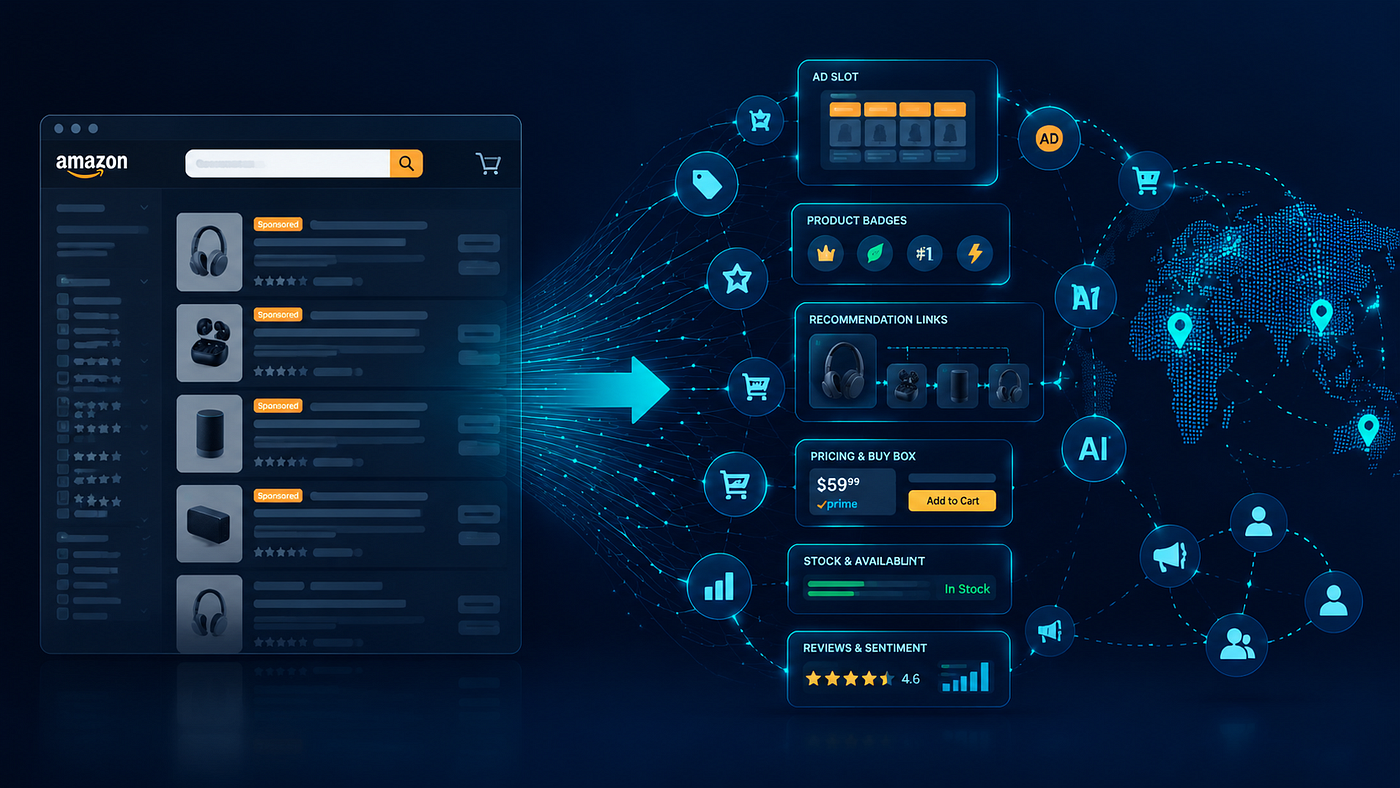
Real-time Amazon category bestseller data pipeline — from bestseller list to structured analysis
Eighteen months ago, I watched a talented data engineer spend three weeks building what she called “a simple Amazon scraper.” By the end of the third week, she had a working prototype. By the end of the fourth week, Amazon had changed its page structure and the scraper returned empty fields for half of its target categories. By the end of the second month, maintaining the scraper had become a part-time job nobody wanted.
This story is not unusual. It’s the default outcome for teams that underestimate what “scraping Amazon category data” actually involves in 2026. And it’s why I want to walk through the full picture — what makes Amazon bestseller category data genuinely valuable, why collecting it at scale is harder than it looks, and what a sustainable data collection architecture actually looks like.
Why Amazon Category Top 100 Data Is Worth the Trouble

The Best Sellers list for any Amazon category is, in a narrow technical sense, just a ranked list of products. But in a broader strategic sense, it’s one of the most accurate real-time signals of consumer demand available to anyone on the internet — because it’s based on actual purchases, not surveys, not ad clicks, not social media mentions.
What makes the data even more powerful is what happens when you collect it over time. A single snapshot tells you who’s currently winning in a category. A time series — daily or hourly snapshots over weeks — tells you the trajectory of the competitive landscape. Which products are accelerating? Which are stalling despite strong review counts? Which price ranges are seeing new entrants successfully break into the top 30?
I’ve seen teams use this data in ways that go well beyond “finding trending products.” One fashion accessories brand uses weekly Top 100 rank velocity data to identify which subcategories are entering a consolidation phase — where brand concentration is increasing and new entrants consistently fail to hold top-30 positions — and systematically avoids entering those subcategories with new products. Another team uses price band distribution analysis from Top 100 data to identify the specific price points where purchase volume concentrates but brand differentiation is weakest.
According to Jungle Scout’s 2025 State of the Amazon Seller report, sellers using real-time category data achieve profitability within 90 days of new product launch at a rate 43% higher than those relying on manual research. The information edge is real, and it compounds over time.
The Part Nobody Tells You About Building an Amazon Scraper
Here’s the experience curve that most engineering teams go through when they decide to build their own Amazon top 100 category scraper:
Week 1: Write a Python script with requests and BeautifulSoup. It works perfectly in local testing. Ship it.
Week 3: The scraper starts returning blank pages intermittently. Investigation reveals IP rate limiting. Integrate a proxy pool.
Week 6: CAPTCHA errors are increasing. The residential proxy pool triggers CAPTCHA 60–70% of the time at the required collection frequency. Evaluate headless browser alternatives.
Month 3: Amazon updates its Best Sellers page structure. Selectors stop working. Data pipeline silently fails for 18 hours before anyone notices. Emergency fix required.
Month 6: The scraper is “stable” but requires one engineer spending roughly 30% of their time on maintenance. The real monthly cost — proxy fees plus that engineering time — has exceeded $15,000.
The problem isn’t that building a scraper is impossible. It’s that maintaining one that works reliably at scale against a moving target is a continuous operational commitment, not a one-time project.
What Changed When We Switched to an API Approach
The core insight behind using Pangolinfo Scrape API is that the hardest part of Amazon data collection — managing anti-bot infrastructure, maintaining parsing templates, handling A/B test page variants — is a solved problem that shouldn’t need to be solved again by every team that needs this data.
The practical difference is significant. With a self-built scraper, every Amazon page structure change is our problem. With an API service, Pangolinfo’s engineering team handles it — their monitoring detects structural changes within 30 minutes, and templates are updated within 2–4 hours. During those 2–4 hours, API users experience a seamless degradation (older cached parse for affected fields) rather than a complete outage.
Data freshness is genuinely real-time: every API call triggers a live request to Amazon, not a return from a shared cache. This matters more than it sounds — during Prime Day 2025, Electronics category Top 100 turnover exceeded 70% within 48 hours. Teams relying on 24-hour cached data were making decisions based on a market snapshot that was already obsolete.
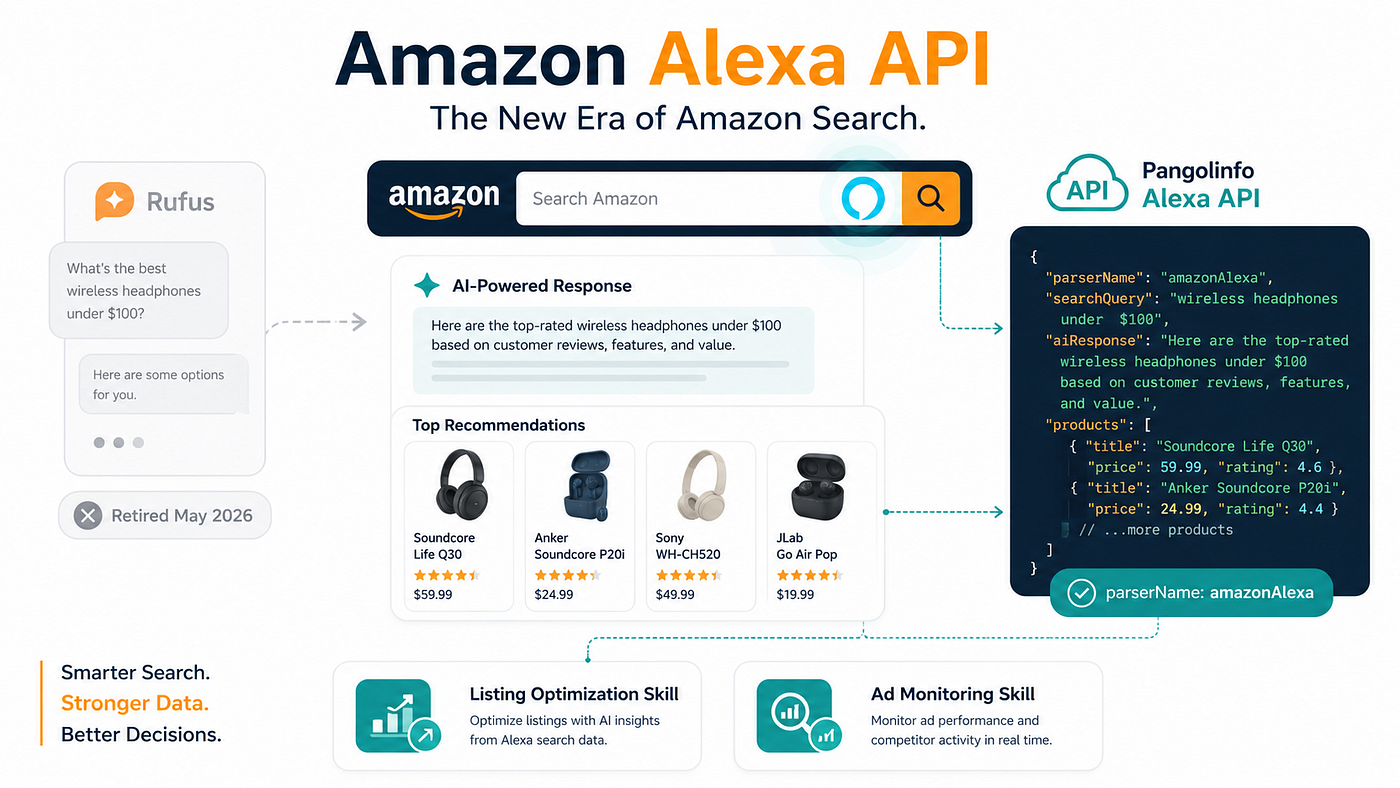
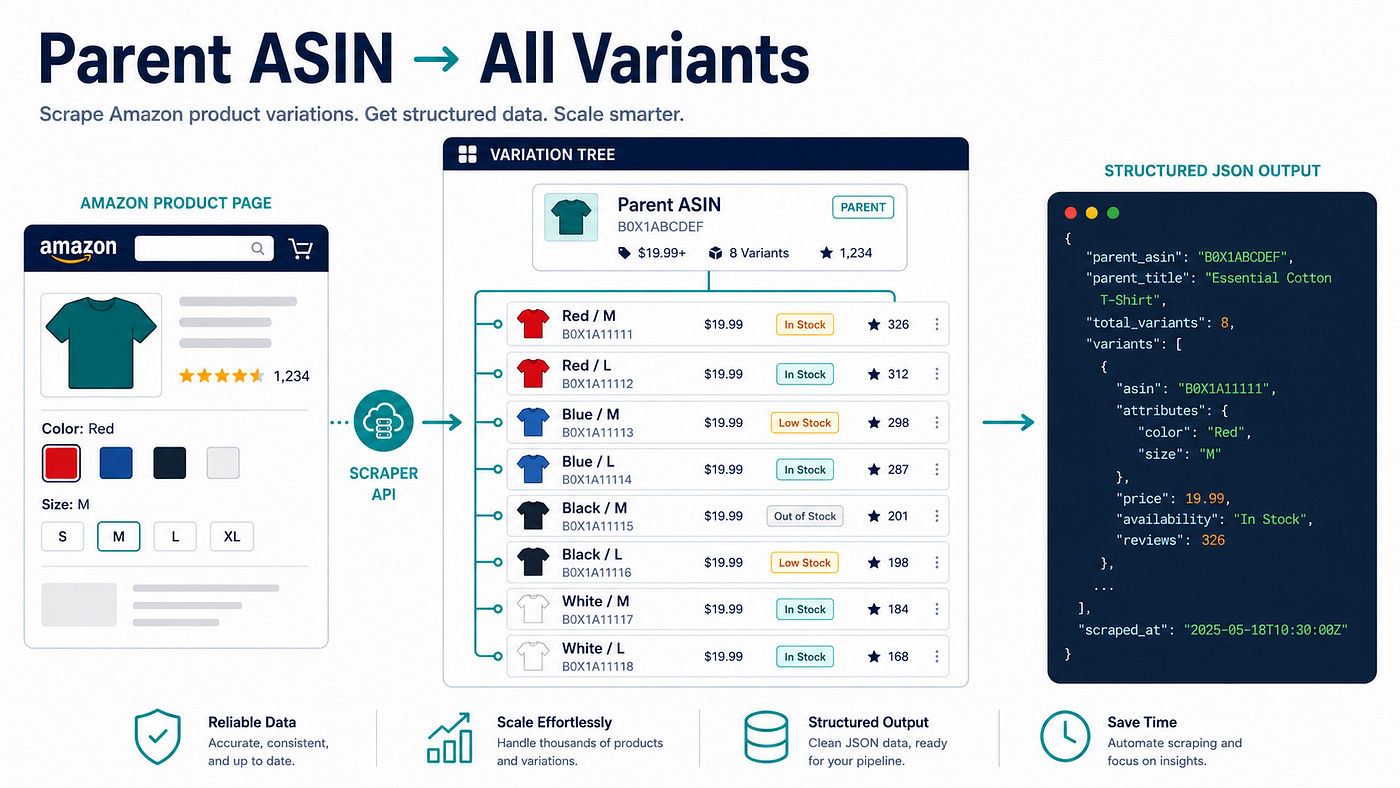
The field depth is also richer than what most self-built scrapers capture. Beyond the standard rank/ASIN/price/rating fields, Pangolinfo parses Customer Says summaries (Amazon’s AI-generated review aggregation, introduced in 2024), complete subcategory breadcrumb paths, fulfillment type, variant counts, and Sponsored Product ad slot positions with a 98% collection rate — higher than any other solution I’ve tested.
A Real Outcome to Ground This
A kitchen appliance brand — annual revenue around $2.8M on Amazon US — switched from manual Best Sellers monitoring plus Jungle Scout to an automated pipeline built on Pangolinfo’s API. They monitored 8 subcategories at 8-hour intervals.
Four months in, their data surfaced a signal in the Air Fryers subcategory: seven new products entered the Top 50 over four consecutive weeks, three of which stabilized in the Top 20 within three weeks of first appearing. This pattern — rapid new product entry with high stabilization rates — indicated growing consumer demand with low incumbent lock-in. They launched a product in that price band, and it reached subcategory Top 30 within three months of launch.
Over the first half of 2025: product launch success rate climbed from 42% to 78%. Stranded inventory value dropped 82%. The data pipeline cost less per month than what they were spending on Jungle Scout’s API tier alone.
The Practical Setup
Integration looks like this — a standard REST call that any developer can implement in under an hour:
import requestsresponse = requests.post(
"https://api.pangolinfo.com/scrape",
headers={"Authorization": "Bearer YOUR_API_KEY"},
json={
"url": "https://www.amazon.com/Best-Sellers-Electronics/zgbs/electronics/",
"marketplace": "US",
"output_format": "json",
"parse_template": "amazon_bestsellers"
}
)products = response.json()["products"]
# Returns: rank, asin, title, price, rating, review_count,
# brand, is_prime, badge, subcategory_path, customer_says, sp_ad_slotFrom there, you store results in whatever database your team uses, schedule collection at whatever frequency your monitoring needs require, and build analysis on top. The complexity of the collection layer disappears.
Final Thought
The question of whether to build or buy your Amazon category data collection infrastructure is ultimately a question about where your engineering team’s time is most valuable. If you’re a small team where every engineer hour matters, spending 30% of a data engineer’s time on scraper maintenance is a significant opportunity cost. If you’re scaling to hundreds of categories, the cost structure of self-built proxies becomes prohibitive faster than most initial estimates account for.
The Amazon category Best Sellers data itself is worth collecting systematically — the signal it provides for product selection, competitive monitoring, and pricing strategy is genuinely underutilized by most teams. The collection infrastructure question has a cleaner answer than it did two or three years ago. Start there: Pangolinfo Scrape API.
About Pangolin: Pangolinfo provides real-time e-commerce data APIs for Amazon sellers, SaaS tool builders, and data teams. Core products include the Scrape API (real-time Amazon data collection), AMZ Data Tracker (no-code category monitoring), and Amazon Scraper Skill (MCP-compatible AI Agent integration). Learn more at pangolinfo.com.
메타데이터
- post_id
- 779e488fedc8
- slug
- the-hidden-cost-of-building-your-own-amazon-category-scraper-and-what-i-use-instead-779e488fedc8
- url
- https://medium.com/@pangolinfo/the-hidden-cost-of-building-your-own-amazon-category-scraper-and-what-i-use-instead-779e488fedc8
- canonical_url
- https://medium.com/@pangolinfo/the-hidden-cost-of-building-your-own-amazon-category-scraper-and-what-i-use-instead-779e488fedc8
- author_url
- https://medium.com/@pangolinfo
- status
- ok
- fetched_at
- 2026-06-09 15:37:30