False-Flag Attacks! They’re Real, and They Happen!
When many people see the term false-flag, they take it to mean that the events in question didn’t really happen — that they were a hoax, or…
False-Flag Attacks! They’re Real, and They Happen!
When many people see the term false-flag, they take it to mean that the events in question didn’t really happen — that they were a hoax, or staged. The sad fact of the matter is, though, these atrocities do happen. The suffering, misery, and death are very real. However, the question is: who is really behind them? Whether it is through direct involvement or merely by allowing something to unfold, false flag attacks are a cold reality of how the intelligence arms of the world’s governments work, at least on occasion.
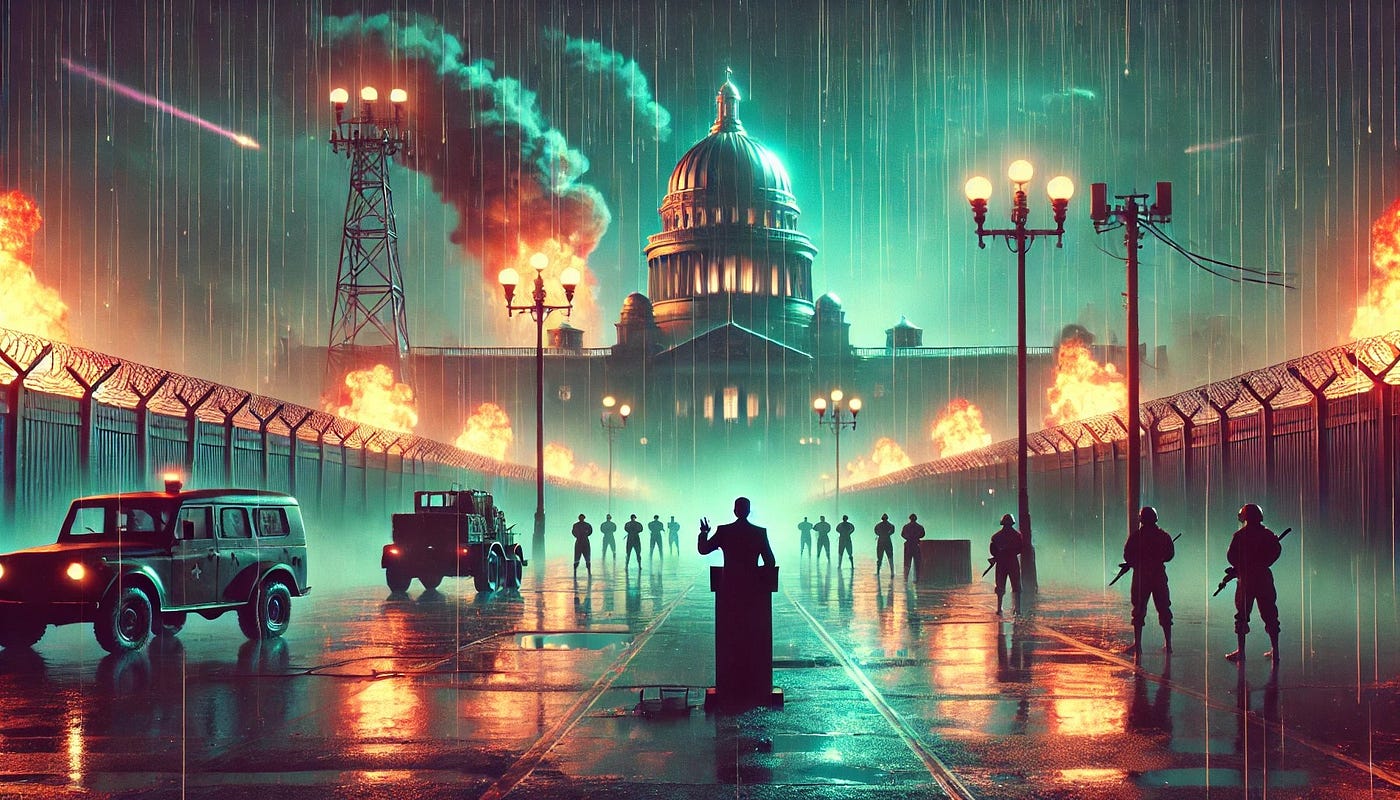
Despite what many people think, false-flag attacks do happen!
Perhaps even more worrying is that, increasingly, anyone who dares mention the possibility of an event being a false-flag attack risks the wrath of the masses. As understandable as it might be that some feel it disrespectful to the very real victims of such attacks, those who carry out these atrocities rely as much on that lack of questioning by the public as they do on the events themselves having whatever desired effect they are looking for. Indeed, false-flag attacks are more a part of our collective reality than most of us would wish to imagine.
False-Flag Events of the Second World War
In the run-up to and during the Second World War, many false flag attacks took place on all sides. One of the most famous of these occurred in Germany on the evening of February 27th, 1933. A German parliament building, known as the Reichstag, would burn to the ground. A “radical communist”, Marinus van der Lubbe, would soon be in custody for the fire. According to the regime, he admitted to the charge shortly after. The incident gave the Third Reich ample reason to “crack down” on the “communist threat”. It also stoked national and patriotic support for their actions.
In reality, the fire began on the orders of Hermann Goring. At the Nuremberg trials, General Franz Hadler testified with no uncertainty that Goring was responsible for it, and the reason was to rally the country behind them against the perceived “threat” from communist radicals. The regime would stage similar attacks on government buildings years later. This time blaming Polish militants in order to “justify” their eventual invasion of the country.

The fire at the Reichstag building in February 1933 is a perfect example of a false-flag operation
Interestingly, a quote of Hitler’s reads:
“Terrorism is the best political weapon, for nothing drives people harder than a fear of sudden death!”
Hitler was certainly not alone in this way of thinking. Josef Stalin is on record as saying:
“The easiest way to gain control of a population is to carry out acts of terror! The public will clamor for such laws if their personal security is threatened!”
Russia (then the Soviet Union) has its own history of false flags. Perhaps most notably, the massacre of over 20,000 Polish residents in 1940. The orders came from Stalin, and the deaths were blamed on Hitler’s regime. Interestingly, in the years that followed the war, Poland would fall under Soviet control for some time.
Dragging Countries Towards War?
Although there is no absolute proof, many have argued that both of the incidents that led the United States into both the First and Second World Wars were false flag attacks. Their purpose? To convince the American public that it was in their interests for America to enter the conflicts in Europe. This was particularly the case with the events that led to American involvement in World War Two. Franklin Roosevelt won his presidency on the promise that he would not take America into the battlefields of Europe.
So what changed America’s collective mind? The events of December 7th, 1941, a surprise attack on Pearl Harbor, achieved such a purpose. Remember Hitler’s comments concerning “people’s fear of sudden death!”
The surprise attack by Japanese fighters on the US docks in Hawaii would result in 68 deaths and thirty-five wounded. It wasn’t that anyone denied the Japanese carried out the attack — they did — but the American intelligence services, at least according to some, received ample warnings of such an attack. They would choose to dismiss (or ignore?) these warnings. In fact, there are many reasons to be suspicious about the attacks that day.
Orchestration or Opportunism?
Although the details are a little sketchy, to say the least, it has been the conclusion of some researchers that in the weeks leading up to the Pearl Harbor attacks, Adolf Hitler, through his Foreign Minister, Joachim von Ribbentrop, was giving the impression to the Japanese that the Germans were on the verge of taking Moscow and so, in turn, encouraged the Japanese to launch their attack on the United States.
Whatever the truth, as soon as news reached the Third Reich of the attacks on Pearl Harbor, they immediately declared war on the United States, despite the fact that their assault on the Eastern Front against the Soviet Union was in complete disarray. Many German troops were retreating, with some having abandoned their positions altogether.
Some researchers have speculated that it was Hitler’s desire to have the Russians fighting the war on two fronts, fighting the Allies in Europe and then the Japanese in Asia, with some suggestions that there was a hope that the Soviet Union would refuse to side with the Americans and instead would make peace with Germany and join forces with them against the Allies. Of course, this didn’t happen.

The Pearl Harbor attack, ultimately, brought the United States into the Second World War
It is also interesting to note the actions of Winston Churchill in light of the Pearl Harbor attacks. In his diary, he wrote that he was “saturated and satiated with emotion and sensation”, adding that he “went to bed and slept the sleep of the saved and thankful” that the United States was entering the war in Europe.
Whether there is any truth to the conspiracies that circulated in the decades following the war that Churchill used the attacks to his advantage, at best, or that he had some kind of prior warning of them remains very much open to debate. Some people, however, have pointed to intercepted intelligence by the British in the months leading up to the attacks, with some even suggesting that this information was intentionally withheld from the United States in the hope that a surprise attack would drag them into the war. It might be easy to dismiss such claims as nothing but nonsense if it weren’t for the fact that the content of that intercepted intelligence remains classified still today.
The Lusitania Conspiracy
Interestingly, another suspected false flag event may have brought the United States into the First World War in 1915 with the sinking of the RMS Lusitania. On May 7th, as it approached the Irish south coast, a huge explosion ripped a gaping hole in the ocean liner’s side. It sank rapidly and took 1,201 people to their deaths. Of those, 128 were American citizens.
The Germans would accept responsibility for the sinking, and condemnation came internationally. The targeting of passenger liners is outside the “rules of war!”
Although the United States would refrain from joining the war outright for another two years, the anti-German sentiment in America was high during that period. When they began targeting innocent civilian ships again in 1917, the American public collectively agreed that action should go ahead. Interestingly or not, the transcripts of the radio exchange between the doomed liner and the Admiralty on the day of the sinking remain strictly classified to this day — over a century later!

Some researchers have suggested that the RMS Lusitania was left purposely vulnerable to attack
While both of these incidents are very much open to debate as to how “planned” they might have been, events that would follow concerning the Americans’ foreign policy over the coming decades do little to deter this way of thinking.
It is also worth noting the potential involvement of the previously mentioned Winston Churchill in the tragic events that day. At the time, Churchill was the First Lord of the Admiralty and, ultimately, the political leader of the Royal Navy. While they are dismissed by many, it is the claims of some researchers that Churchill intentionally left the Lusitania vulnerable to attack from German submarines in order to pull the United States into the war. It is at least a little eyebrow-raising that the same person is connected to two such suspicious events.
Long History of Continued Discreetly Planned Events
As far back as the 1950s, American intelligence also played a crucial role in how other countries around the world developed. And false flag operations were key to achieving this. In 1953, for example, Iran’s own people would overthrow their democratically elected government following a succession of bombings by “communist radicals!” The radicals in question, it later turned out, were on the payroll of the CIA.
The following decade, after the heavily suspicious assassination of President Kennedy, no less, the US military would again play “fast and loose” with the truth. The Tonkin Gulf Incident took place on August 5th, 1964. The official story reported by the New York Times was that North Vietnam had launched unprovoked attacks on American Destroyers. Seeing how well this worked, the formula became a CIA standard. The government would feed the distorted truths to a rabid media, which would, in turn, run with it without question.
It is the Tonkin Gulf incident of 1964, and the way the media reported it to American citizens, that paved the way for American forces to enter Vietnam, and, in turn, the long, drawn-out conflict that followed. The American public, now sure from their news reports that “communists were the bad guys”, also knew that North Vietnam was responsible for escalating the stand-off to hostile levels.
Equally Questionable British Activity?
In the 2011 book MI6: The History of the Secret Intelligence Service 1909–1949, declassified files clearly show that British secret services planted several bombs on ships carrying refugees in the late 1940s. They wished to “stem the flow” of migration into the Middle East, and invented a terrorist organization to take the blame for the attacks — The Defenders of Arab Palestine.
It is certainly not the only time that the British intelligence and military services have taken part in such activity. As recently as 2005 in Iraq, Iraqi police arrested a group of British soldiers “dressed as Arabs” and carrying explosives and bombs. They denied carrying out attacks, but would not disclose their activities. Stranger still, they were “broken out of jail” by a special task force in events resembling a Hollywood blockbuster.

Many countries discreetly orchestrate events elsewhere
Keep in mind the Iraqi Police and the British were working together at this point, at least officially! It appeared to many that the unit was there to carry out a false-flag mission — hence the heavy-handed retrieval.
Perhaps one of the most interesting planned false flag operations — particularly when you look at this region of the world today — is the agreed-upon 1957 plan by United Kingdom Prime Minister, Harold Macmillan, and President of the United States, Dwight Eisenhower. Their plan would consist of carrying out “terrorist activities” in and around the Syrian border, and then placing the blame for these attacks at the Syrian government’s feet. This would allow an invasion of the country and ultimately, regime change! Sound familiar?
We Must Question!
Given that so many of these incidents are clearly false-flag events to advance military action or even regime change, is it not strange then that a lot of society, in many countries, fails to question the validity of “official” events? And those that do, face calls of “disrespect” or even of being “unpatriotic!”
Remember, we are not talking of governments per se here! These desires are those of the military and banking machines that operate in the shadows of the world’s governments.
Perhaps the following words from Hermann Goering explain all anyone needs to know about why false flags and claims of them should receive a little more seriousness:
“Why of course the people don’t want war! But after all, it is the leaders of the country who determine the policy, and it is always a simple matter to drag the people along, whether it is a democracy, or a fascist dictatorship, or a parliament, or a communist dictatorship. Voice or no voice, the people can always be brought to the bidding of the leaders. That is easy. All you have to do is tell them they are being attacked, and denounce the pacifists for lack of patriotism and exposing the country to danger. It works the same in any country.”
Just think about those words for a moment!
메타데이터
- post_id
- 77eb316dce4e
- slug
- false-flag-attacks-theyre-real-and-they-happen-77eb316dce4e
- url
- https://medium.com/@marcus.l_79775/false-flag-attacks-theyre-real-and-they-happen-77eb316dce4e
- canonical_url
- https://medium.com/@marcus.l_79775/false-flag-attacks-theyre-real-and-they-happen-77eb316dce4e
- author_url
- https://medium.com/@marcus.l_79775
- status
- ok
- fetched_at
- 2026-06-09 14:34:10