Raye; A glimmer of Hope.
Now, there are nights when the lights feel endless.
Raye; A glimmer of Hope.
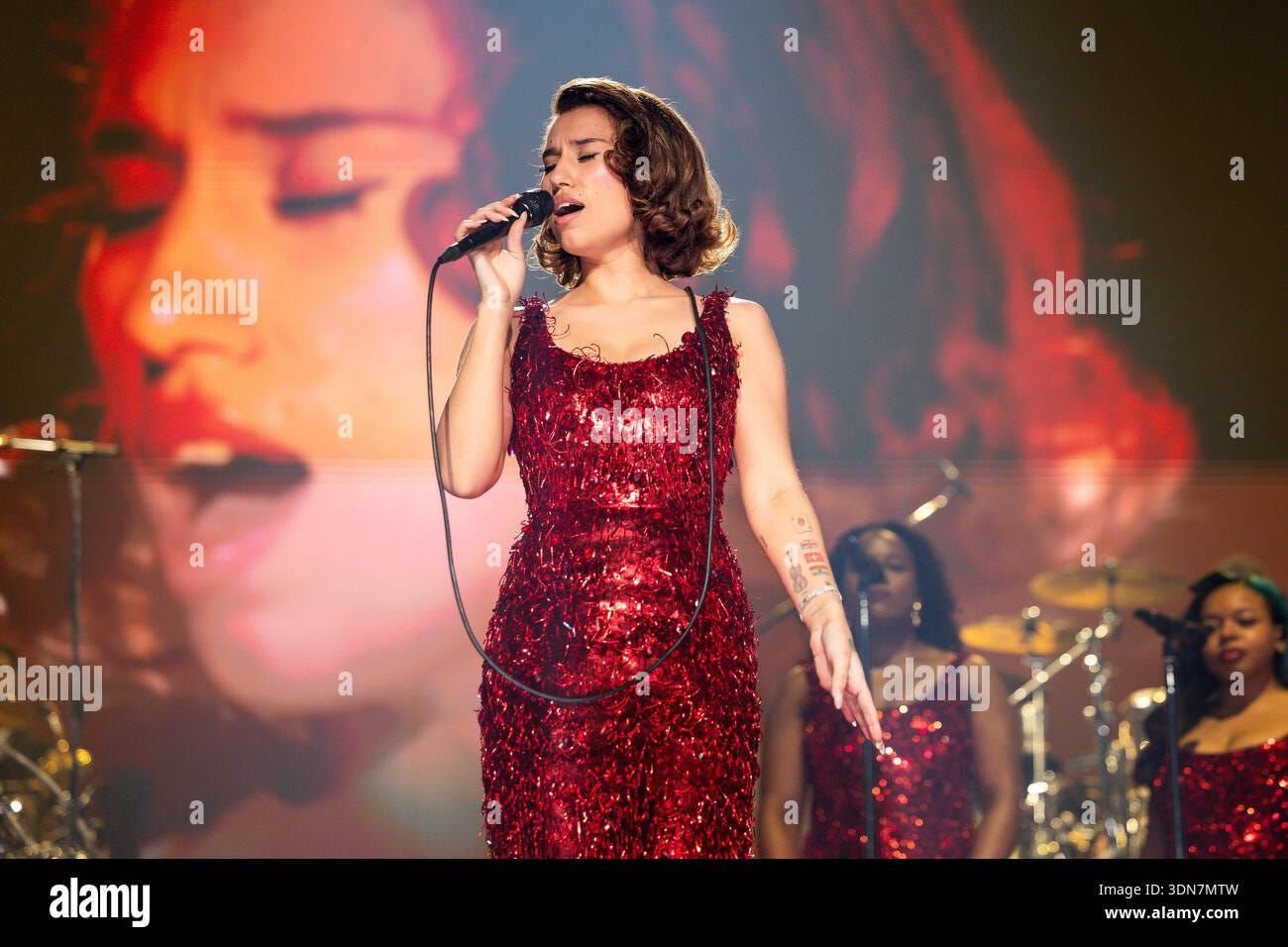
Now, there are nights when the lights feel endless.
The stage glows like a universe unfolding. The crowd roars, not just in recognition of a star, but in devotion. And there, in the centre of it all, stands Rachel Agatha Keen. Radiant, commanding, a woman whose voice fills an arena and silences it at the same time. The applause rolls over her like waves, and for a moment, it looks like destiny was always this generous.
But triumph rarely begins where we first see it.
Before the glamour, before the streaming numbers, before the red carpets and the acceptance speeches, there was a long, quiet season of waiting, and then waiting some more. Years spent in rooms where men nodded politely while her dreams sat folded on the table. Years where she gave away her best work, her brilliance poured into songs that made other people famous, while she herself remained the voice in the background, the pen behind the hit, the artist without an album.
She had signed to Polydor Records when she was still young enough to believe that talent alone could force doors open. She trusted the promise: that if she worked hard, if she wrote the songs, if she kept delivering hits, her moment would come.
She nearly became the patient, thin dog ever hopeful for a fat bone.
Time moved.
Her twenties began slipping past her. The label released singles, but the album she kept begging to make, the one that would let her be seen fully, stayed trapped behind corporate silence. Meetings came and went. Plans were drafted and dissolved. And with each passing year, a slow, invisible erosion began. Not of her talent, but of her certainty.
Being an artist is about living in a state of tension between vulnerability and survival. Being a woman in the music industry often means living with a second layer of tension: the weight of being underestimated, minimised, and reshaped into what is profitable rather than what is true.
She watched her songs climb the charts when others sang them. She stood in the background of her own life, watching her lyrics carry the dreams of people who did not always know her name.
And still, she kept going.
But endurance has a cost.

Behind the scenes, she is battling more than industry politics. She carried grief, trauma, and exhaustion. The kind of emotional fatigue that settles in your bones and makes even breathing feel like a negotiation. She has spoken publicly about pain that many women recognise instantly, the kind that comes from being silenced, dismissed, or harmed in spaces where protection should have existed.
For years, she swallowed the frustration. She smiled when asked to wait. She delivered when asked to create. But something in her eventually refused to remain quiet.
One day, she stopped protecting the industry and chose to protect herself.
She spoke openly, not in coded phrases, not wrapped in diplomacy, but plainly. Almost painfully. She told the truth about being signed for years without being allowed to release her own album. She spoke about being trapped in a system that profits from talent while holding the artist’s identity hostage.
And that moment, that refusal to remain quiet, changed everything.
Because when a woman finally speaks after years of swallowing her pain, it echoes.
She left the label. She chose independence. And in that fragile, frightening freedom, she began again, not as a product, not as someone’s investment, but as herself.
What emerged from that liberation was not just music, but testimony.
Her album, My 21st Century Blues, did not sound like an attempt to please the industry. It sounded like a woman reclaiming her own voice. The songs did not hide behind glossy production. They sat in discomfort. They admitted shame, anger, desire, confusion, and healing. They did not ask for approval; they demanded space.

People listened. Not just because the songs were good, but because they were honest. They felt like someone was finally naming the things so many people have lived through quietly.
Her journey now stands as something larger than success. It stands as proof.
Proof that silence is not strength when it costs you yourself. Proof that survival can look like breaking. Proof that rebuilding is possible even after years of feeling invisible. Proof that the story does not end where the world tells you to stop.
There are women everywhere who will recognise themselves in her story. Women who have been told to wait, to endure, to be grateful for whatever crumbs are offered. Women who have carried invisible grief while still showing up. Women who have been praised for their resilience while quietly wondering how much longer they can endure.
To them, her story says something simple but radical:
You are not wrong for wanting more. You are not ungrateful for demanding better. You are not too late to begin again.
Even when the world refuses to make room for you, it does not mean you do not belong. It only means the room was too small for what you were meant to become.
And sometimes, the moment everything changes is not the moment you finally succeed, but the moment you decide you are done shrinking.

That is the making of Raye as you have come to know her, where her story becomes not just music, but a map. And for anyone standing in the dark, wondering if light will ever come. It is a reminder that even when the path feels closed, the door is not always locked.
Sometimes, it is waiting for you to refuse to stay silent.
메타데이터
- post_id
- 7816629fb5da
- slug
- raye-a-glimmer-of-hope-7816629fb5da
- url
- https://medium.com/@jephthau/raye-a-glimmer-of-hope-7816629fb5da
- canonical_url
- https://medium.com/@jephthau/raye-a-glimmer-of-hope-7816629fb5da
- author_url
- https://medium.com/@jephthau
- status
- ok
- fetched_at
- 2026-06-21 07:44:09