Rolls Royce Phantom VII: Only the best create legacy
Rolls Royce have an incredible legacy. But to extend that legacy, you need to modernise and innovate. Step forward the Phantom VII.
Rolls Royce Phantom VII: Only the best create legacy
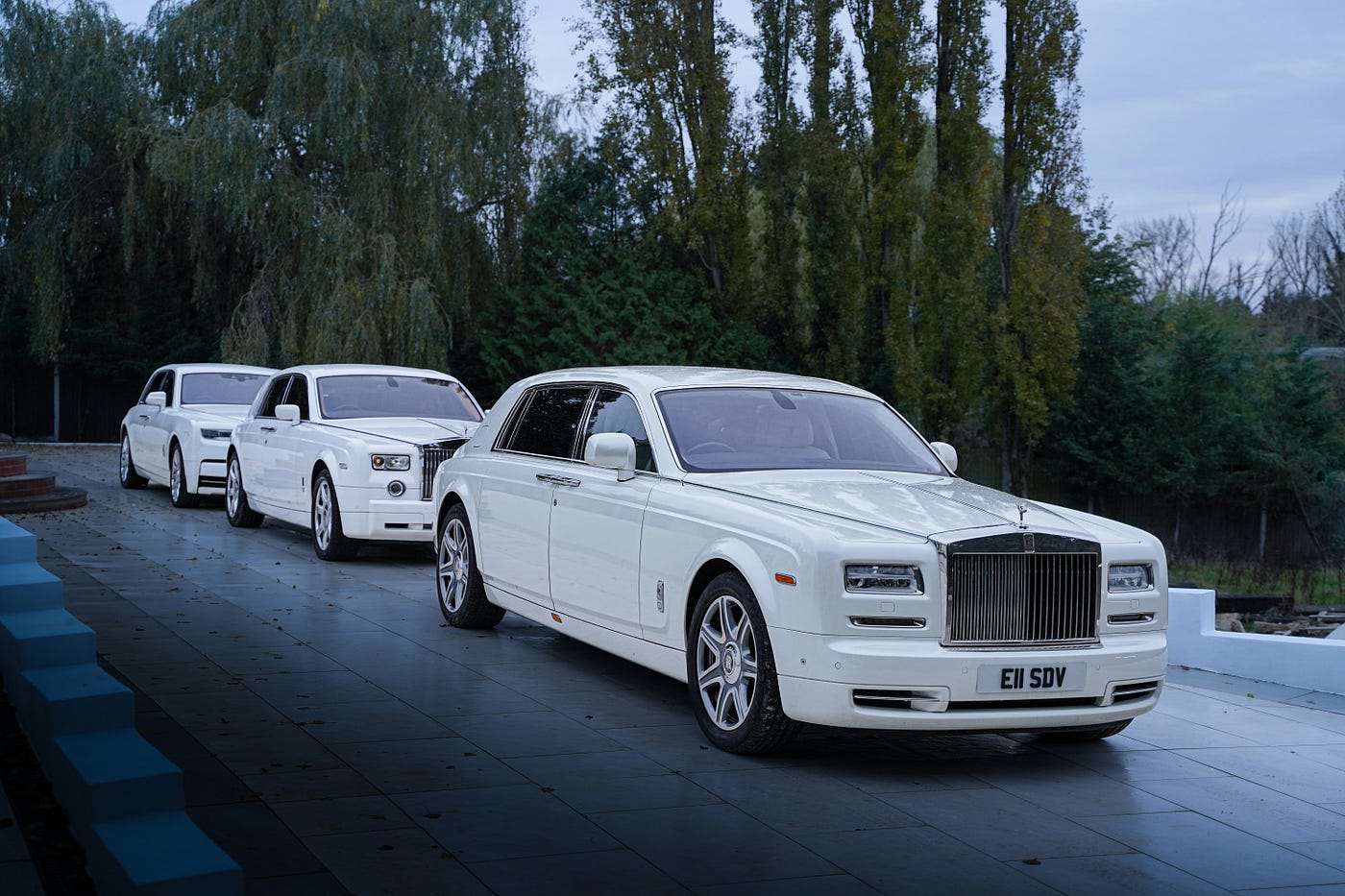
Photo by Grand Luxury Chauffeur on Unsplash
Many people have their ‘era’. A few-year period where they are on top of the world, where it seems every person has their name at the front of their mind.
Naturally, as new people emerge, and the novelty wears off, they fade into obscurity, and their impact on the world is small-town tours or niche pub quiz answers.
Right, back to cars. My point is that even the most talented, the ones who experience the highs of fame and success, often don’t create a legacy. They don’t sustain a period long enough, or a high enough level of excellence, to have a lasting impact on the world.
The key to this, at least in my opinion, is the ability to adapt.
For 92 years, Rolls-Royce had been the yardstick for luxury automobiles. But even they had to change, adapt, and modernise themselves to maintain their historic legacy.
A brand that needs no introduction
Probably a new record for a Prologue Menus contradiction, but I am in fact going to give you an introduction on the brand that I claim to not need one.
Both a manufacturer of cars and aeroplane engines, Rolls-Royce had its intentions set from the start.
This was not a brand for mass production. This was not a brand for the many. Rolls-Royce was an exclusive status symbol for the ultra-wealthy.
Whether it be the 40/50 Silver Ghost of 1906, the Silver Dawn of 1949, the Carmague of 1975, or the Silver Spirit of 1980, Rolls-Royce’s consistency in manufacturing the ‘most upper’ of upper echelon cars was unquestionable.
But by the 1990s, it wasn’t all smooth sailing. While there were no doubts about the brand’s heritage, rivals such as Mercedes and Lexus were miles ahead in production efficiency, introducing new technology, and reliability.
In this period, the German behemoth BMW was supplying engines and electrics to Rolls-Royce, and it just so happened that Rolls-Royce were looking for a buyer around this time. How convenient.
Fending off competition from Volkswagen, which happened to purchase Bentley at around the same time, BMW landed Rolls-Royce. Arguably, the most prestigious manufacturer of them all was in the hands of the most well-rounded. What a pairing.
I can only imagine how high expectations were for Rolls-Royce’s first new model under BMW’s tenure, with absolutely no room for failure; they had to deliver.
They did.
Rolls-Royce Phantom
The Phantom name had been associated with Rolls-Royce since 1925. But it was in 2003, the 7th generation model, where Rolls-Royce’s modern era under BMW kicked off.
It was a total overhaul. From the ground up, the Phantom VII was all new. An aluminium space frame chassis, self-levelling air suspension, and a 6.75L V12 engine under the bonnet.
But inside the cabin, things were business as usual. Step inside, and the soft closing doors protect you from the harshness of the elements. Once you sit down, you are coated in a sea of soft leather, lacquered veneer wood, and a gallery-designed dashboard. Sink your feet into the thick lambswool carpet, and let your driver pull off in discreet fashion.
From the outside, this halfway house between Rolls-Royce elegance and modern presence was clear. The large grill, the Spirit of Ecstasy blessing the front end, the suicide doors, and the splashes of chrome make it a true Rolls-Royce.
But this time, sharper lines, a colossal road presence, and a silhouette that was suited to the millennium.
This is exactly what Rolls-Royce needed.
Without trying to use too many corporate buzzwords, when a business, sports team, or car manufacturer is taken over by a new organisation, one of the biggest worries is that the soul, the culture, or the history is going to be erased in turn for a new structure aimed at cost-cutting and shareholder dividends.
But just as we ask brands not to kill the past, we also ask not to keep the brand the same.
Change is needed.
Creating history in the present
We always think of legacy as events created in the past.
But if all we do is focus on the past, then the legacy will end.
Rolls-Royce had 90+ years of automotive heritage. But the industry was moving faster than the cars they were releasing.
I’m sure many feared that the essence of Rolls-Royce would be extracted and chucked in the bin, but that was far from it.
The Phantom VII was a true Rolls-Royce. Draped in luxury and class, while going above and beyond technologically to keep up with the rapidly evolving limousines released by Mercedes-Benz and Lexus.
Since then, Rolls-Royce’s modern era has seen models such as the Ghost, Wraith, Cullinan, and Spectre all released.
The Phantom VII provided the platform to expand on Rolls-Royce’s target audience, without losing those who added to their illustrious perception since 1906.
It couldn’t have been a better car if it tried.
It couldn’t have spearheaded Rolls-Royce into the future any better if it tried.
It couldn’t have done a better job of adding to Rolls-Royce’s legacy if it tried.
Pure automotive perfection.
메타데이터
- post_id
- 7816f95a077d
- slug
- rolls-royce-phantom-vii-only-the-best-create-legacy-7816f95a077d
- url
- https://medium.com/prologue-menus/rolls-royce-phantom-vii-only-the-best-create-legacy-7816f95a077d
- canonical_url
- https://medium.com/prologue-menus/rolls-royce-phantom-vii-only-the-best-create-legacy-7816f95a077d
- author_url
- https://medium.com/@jamesdunn3072
- status
- ok
- fetched_at
- 2026-07-19 09:26:45