The RuAF’s Quiet Crisis: Desertions, Shortages, and a Fading Air War
As we close the book on 2025 and stare into the abyss of 2026, a grim reality has settled over the skies of Ukraine. The thunderous air war…
The RuAF’s Quiet Crisis: Desertions, Shortages, and a Fading Air War
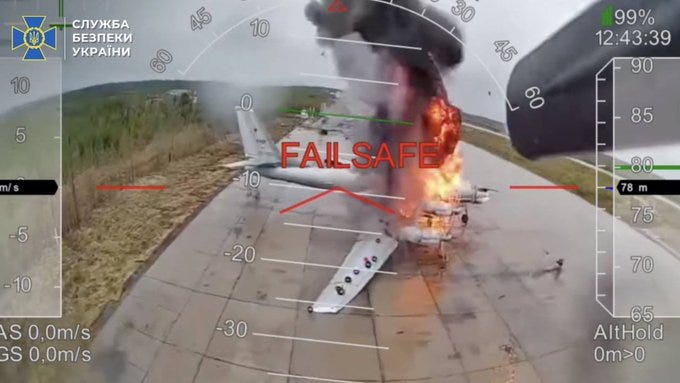
As we close the book on 2025 and stare into the abyss of 2026, a grim reality has settled over the skies of Ukraine. The thunderous air war that many predicted would define this conflict has, instead, faded into a strained, sporadic, and deeply troubled campaign. From where you and I sit, analyzing the satellite imagery and the scattered reports, a clear picture emerges: the Russian Air Force (RuAF) is not the monolithic, overwhelming armada we once feared. It is an institution facing a quiet, corrosive crisis — one of deserting personnel, critical shortages, and a force structure slowly crumbling under the weight of a war it was never designed to fight.
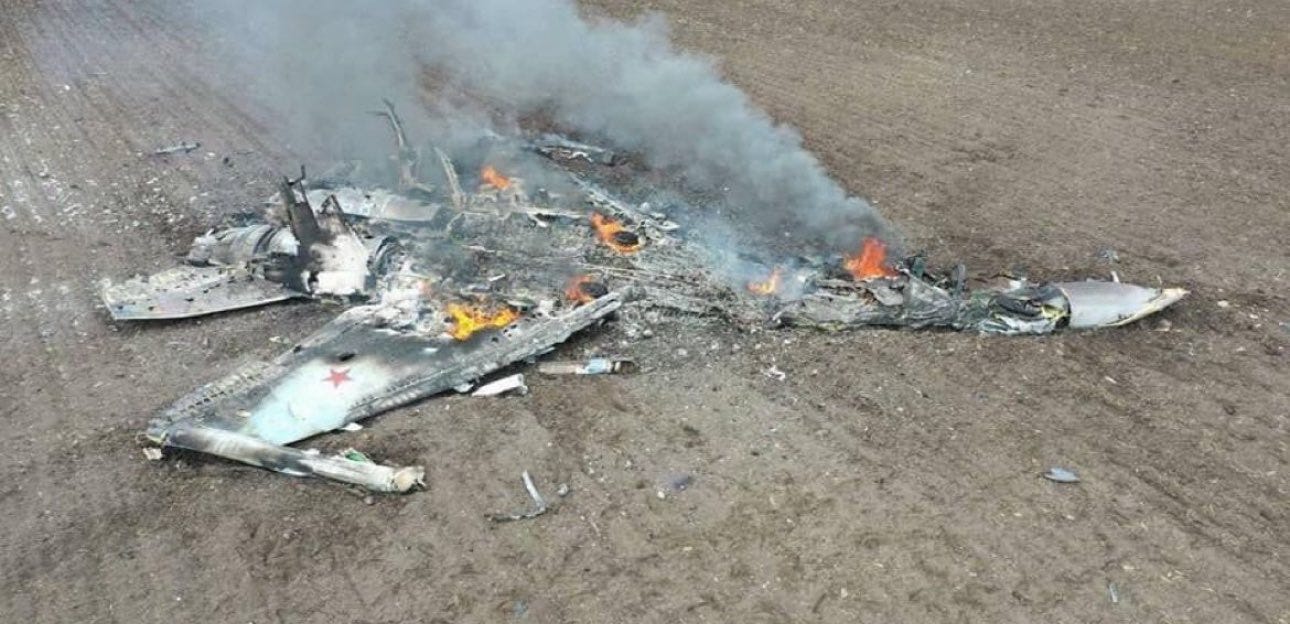
I want you to look beyond the headline numbers of aircraft losses and production surges. Those figures, which we dissected in our previous analysis, tell only part of the story. They are the visible symptoms. The disease runs deeper, in the morale of the pilots, in the empty slots in maintenance hangars, and in a doctrinal failure that has left the world’s second-largest air force largely sidelined in a peer conflict.
The Unseen Exodus: Pilots and Ground Crew Voting with Their Feet
Let’s start with the human element, the factor no production line can instantly replace. Throughout 2025, a persistent trickle of reports — from intercepted communications, Russian social media, and intelligence leaks — has pointed to a growing morale and personnel crisis within the RuAF’s combat units.
You have to understand the psychological toll this war has taken. Russian pilots were taught they would face a demoralized, post-Soviet air force in a lightning campaign. Instead, they flew into the most dense and sophisticated integrated air defense network (IADS) ever encountered in modern warfare. Early, catastrophic losses of high-value assets like Su-34s, Su-35s, and even the rare A-50U Mainstay AWACS aircraft created a trauma from which the force has never recovered. For a pilot, the calculus became terrifyingly simple: every combat sortie over Ukrainian-held territory is a high-risk lottery where the price of a losing ticket is not just death, but likely death by a Western missile you cannot outmaneuver.
The result? A culture of extreme risk aversion. Sortie rates over enemy territory remain astonishingly low. But beyond that, we are seeing signs of what can only be described as a silent strike. There are credible reports of pilots seeking medical grounding, citing “psychological fatigue.” Others are leveraging family connections to secure transfers to remote training units in the depths of Siberia or to test pilot facilities, as far from the Ukrainian border as possible. The term “desertion” in a strict military sense is hard to prove, but an exodus of talent and experience is undeniably underway. When your most valuable human assets — combat-experienced pilots and the master technicians who keep complex jets flying — are actively seeking any exit, your force is in deep trouble.
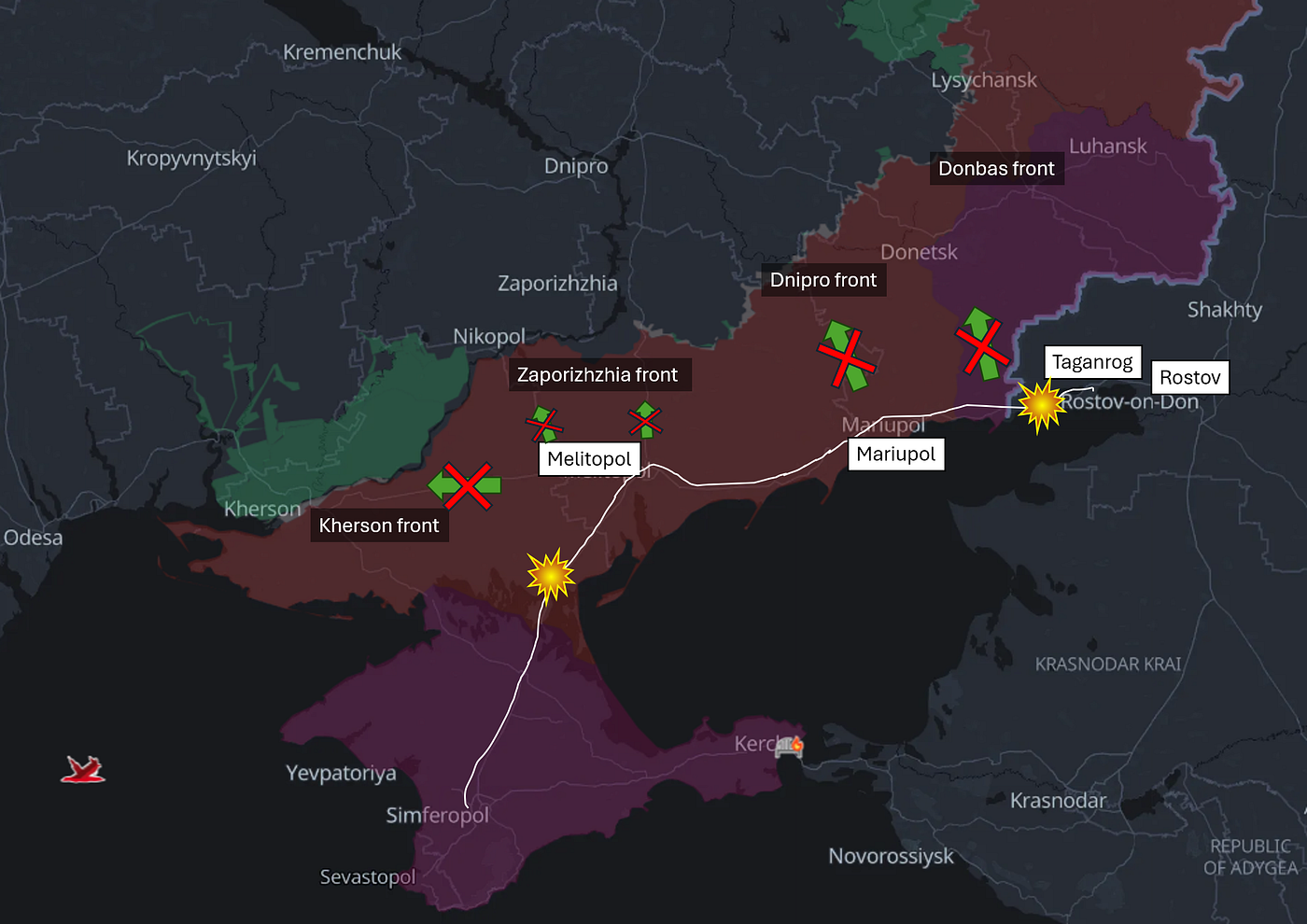
This is compounded by a catastrophic shortage of qualified ground crew. The Russian military system has always relied on a large pool of conscripts for basic servicing. But a modern fighter jet like the Su-35 or Su-57 is not maintained by draftees with a few months of training. The war has drained these specialists. Many have been killed or wounded in Ukrainian strikes on forward airbases like Taganrog, Morozovsk, and Yeysk. Others have seen their contracts forcibly extended indefinitely. The skilled labour pool in civilian aviation, already raided early in the war, is now dry. What this means for you, as a pilot, is terrifying: you are flying a jet that may not have been maintained to its previous standards. The confidence in your machine, a fundamental pillar of a fighter pilot’s psyche, is eroding.
The Hollowed-Out Force: The “Ghost Squadron” Phenomenon
This brings me to the structural rot. The Rand think tank’s 2024 assessment that the RuAF was at 75% of its pre-war strength was likely optimistic, and the situation has only degraded. Let’s talk about what I call the “Ghost Squadron” phenomenon.
On paper, a Russian air regiment may still have its complement of 24 or 36 aircraft. But let’s peel back the layers.
- Active & Serviceable: These are the jets that can fly a combat mission tomorrow. This number has shrunk drastically due to combat losses, wear and tear, and cannibalization.
- Hangar Queens: Aircraft stripped of parts — avionics modules, radar components, hydraulic systems — to keep a handful of others flying. They are airframes, not weapons systems.
- Long-Term Maintenance: Jets stuck in depot-level overhaul, waiting for parts that may never come due to sanctions. The much-touted production of 55 new fighters in 2025 sounds impressive until you realize that a significant portion of the industrial effort is simply rebuilding written-off airframes or completing jets that were already in the pipeline for export before being redirected. It is not pure, additive capacity.
The critical shortfall is in the deep maintenance and modernization pipeline. The Sanctions Wall has been devastating. A modern combat aircraft is a global product. Its performance depends on high-quality Western-sourced microelectronics, precision machine tools, and specialized materials. Russia’s defense industry, for all its resilience, cannot replicate all of this domestically at scale or at the required quality. We see evidence of this in the downgraded avionics reported in newly produced Su-35s, and in the glacial, almost hand-built pace of Su-57 production.
So when you see a statistic that Russia has “replaced” its 2025 fighter losses, you must be deeply skeptical. They may have placed a similar number of airframes onto the flight line. But are they as capable as the aircraft lost? Often, no. Do they have the same depth of support and sustainability? Absolutely not. It is a quantitative shell game hiding qualitative decline.
The Strategic Bomber Blow and the Unfillable Void
Our last report highlighted the devastating success of Ukraine’s “Operation Spiderweb” against Russia’s strategic bomber force. The loss of roughly 20% of the operational Tu-95MS and Tu-22M3 fleet in 2025 is not just a statistic; it is a strategic earthquake that echoes into the next decade.
Think about this from the Kremlin’s perspective. These bombers are the cornerstone of Russia’s conventional strategic strike capability and a key pillar of its nuclear triad. They are not just tools for launching missiles at Ukrainian cities; they are symbols of great power status. And they are irreplaceable in any meaningful timeframe.
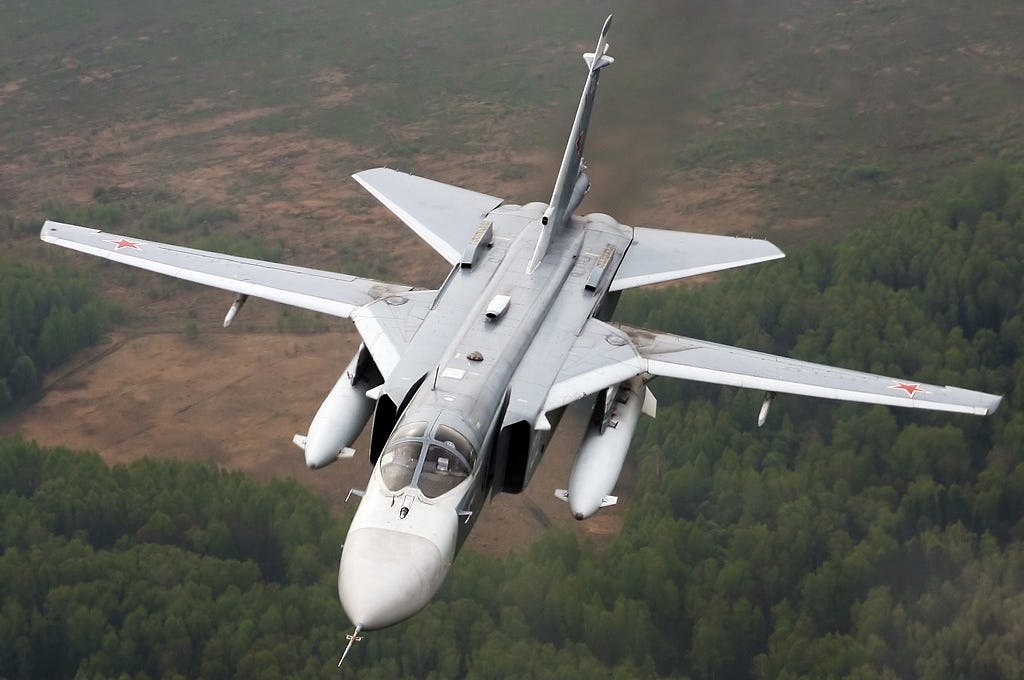
The Tu-160 production line at Kazan was restarted with immense fanfare. But the reality is a trickle. The program is plagued by the same sanction-induced shortages as the fighter lines, but magnified due to the aircraft’s complexity. A rate of 0–2 new Tu-160Ms per year is a national embarrassment, not a recovery plan. It means the bomber fleet will continue to age and shrink. Every Bear or Backfire shot down is a permanent reduction in Russian strategic reach. This loss casts a long, dark shadow over the RuAF’s future capabilities far beyond the Ukrainian battlefield.
Doctrine in Disarray: An Air Force That Cannot Be an Air Force
Perhaps the most profound element of this crisis is doctrinal. The Russian Air Force has utterly failed to execute its own playbook. The concept of “aerial blitzkrieg” — seizing air dominance through a crushing initial blow — died in the first weeks of the war. What replaced it was a posture of paralytic caution.
The RuAF has devolved into three primary, and limited, roles:
- Stand-Off Missile Carrier: Launching cruise missiles from the safety of Russian airspace, a tactic of diminishing returns as stocks deplete and Ukrainian air defense adapts.
- Tactical Bombardier: Using guided glide bombs (like the FAB-1500 with UMPK kits) from just behind the front lines. This is their most effective current role, but it requires them to enter the range of Ukraine’s evolving front-line air defenses (like Patriot and SAMP/T) and leaves them vulnerable to Ukraine’s own growing fleet of F-16s.
- Limited Air-to-Air: Providing a defensive umbrella over occupied territory, but increasingly challenged by the introduction of Western fighters.
What you do not see is deep interdiction, contested close air support over the battlefield, or any meaningful effort to hunt and destroy Ukraine’s air defense network. They have ceded the initiative. The air war has become a war of attrition not just of machines, but of confidence and purpose.
The Ukrainian Counterpoint: A Glimmer in the West
While the RuAF festers, the Ukrainian Air Force (UAF), against all odds, is navigating its own painful transition towards a brighter future. Their 2025 was defined not by collapse, but by stubborn survival and the seeds of regeneration.
Yes, their losses have been severe. Their remaining Soviet-era fleets of MiG-29s, Su-27s, and Su-25s are being flown into the ground. But the infusion of F-16s and Mirage 2000s throughout the year, while slow and limited, provided something priceless: a qualitative edge and a pathway forward. The bottleneck, as we noted, is pilots. Training a competent fighter pilot on a fourth-generation Western jet takes years, not months. Ukraine’s desperate negotiations for Poland’s last MiG-29s underscore this painful reality — they need capable airframes their existing pilots can fly now.
But look at the horizon. The letters of intent for 100 Rafales and 120–150 Gripen E aircraft are not just procurement announcements; they are a declaration of a post-war future. They signal a total, irrevocable break from the Russian sphere and an alignment with a high-tech, sustainable Western combat aviation ecosystem. Sweden and France are not just selling jets; they are offering a partnership in training, maintenance, and doctrine. While Russia struggles to keep its 1980s fleet flying, Ukraine is planning for a 2040s air force.
Conclusion: The Fading Thunder
As we stand at the dawn of 2026, the narrative of the air war is being rewritten. It is no longer a story of Russian might. It is a story of institutional decay.
The Russian Air Force is being hollowed out by a thousand cuts: the pilot who refuses to fly, the technician who never arrived, the French-made chip that cannot be replaced, the strategic bomber that will never be rebuilt, and the doctrine that failed on contact with reality. Their surge in fighter production is a desperate, and likely unsustainable, attempt to plug holes in a dam that is cracking everywhere.
For you, the observer, the lesson is clear. Do not be mesmerized by production numbers or the fiery spectacle of a shootdown video. Look at the patterns, the frequencies, the ranges of operation. The RuAF’s crisis is quiet. There are no mass mutinies or public collapses. Instead, there is a slow fading, a retreat from risk, a consumption of its own seed corn to survive another day. The thunder of jets over Ukraine grows fainter not because the war is ending, but because one of the great air powers of the world is, day by day, mission by mission, losing its ability to be an air power at all.
The skies of 2026 will not be dominated by Russia. They will be contested, dangerous, and fragmented — a perfect metaphor for the war itself. And in that contested space, the Ukrainian Air Force, against unimaginable odds, is patiently learning to fly anew.
메타데이터
- post_id
- 78c2a824a3d4
- slug
- the-ruafs-quiet-crisis-desertions-shortages-and-a-fading-air-war-78c2a824a3d4
- url
- https://medium.com/@Nisha2123/the-ruafs-quiet-crisis-desertions-shortages-and-a-fading-air-war-78c2a824a3d4
- canonical_url
- https://medium.com/@Nisha2123/the-ruafs-quiet-crisis-desertions-shortages-and-a-fading-air-war-78c2a824a3d4
- author_url
- https://medium.com/@Nisha2123
- status
- ok
- fetched_at
- 2026-06-21 07:44:09