I Stopped Using My Home Screen
My iPhone has 87 apps. I interact with 5 of them. The rest live behind a swipe I never take.
I Stopped Using My Home Screen
My iPhone has 87 apps. I interact with 5 of them. The rest live behind a swipe I never take.
I caught myself doing something embarrassing last week. I picked up my phone to set a timer for the rice cooker. That’s it. A timer. Thirty seconds, tops.
Twelve minutes later, I was reading a Reddit thread about the dividends in stocks.
I don’t even remember how I got there. I unlocked, saw the Home Screen, noticed a red badge on Mail, opened it, saw a newsletter link, tapped it, and somewhere between that link and the stock market thread, I completely forgot about the rice. It burned.
This happens to everyone. You unlock your phone with a purpose. The Home Screen hijacks that purpose within three seconds. Not because you’re weak. Because the Home Screen is designed to do exactly that. Every red badge, every colourful icon, every app you can see but didn’t plan to open is a tiny hook and your brain bites every single time.
I’ve spent the last few months trying to fix this, and the answer turned out to be something I’d been ignoring since iOS 18 came out.
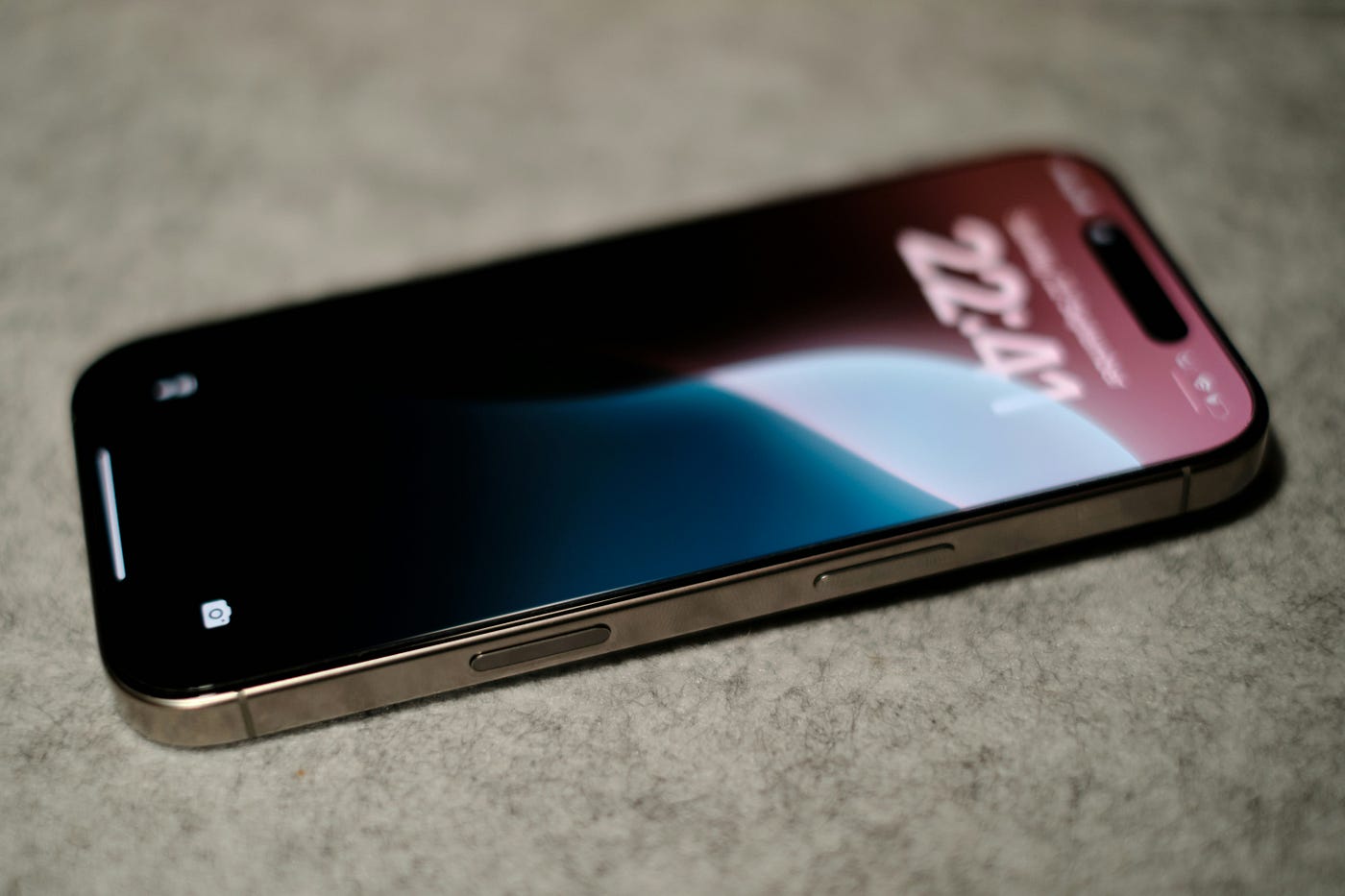
Photo by appshunter.io on Unsplash
The Control Centre is a better Home Screen than the Home Screen
I know that sounds like a weird claim. The Control Centre is the thing you swipe down from the top-right corner. Toggles for Wi-Fi, brightness, that sort of thing. Most people open it maybe twice a day and forget it exists.
But here’s what changed in iOS 18 that almost nobody talks about. You can now have multiple pages in there. You can resize tiles. You can add Shortcuts. You can add third-party app controls. And most importantly: there are no notification badges anywhere in the Control Centre.
That last part is the whole point.
When I open my Home Screen, my brain has to process a wall of information it didn’t ask for. Unread emails. Instagram. That game I downloaded three weeks ago and keep meaning to delete. Every icon is a tiny decision: open it or ignore it. Even ignoring it costs mental energy. Your brain still saw it, still registered it, still had to say “not now.”
The Control Centre has none of that. It’s just toggles and actions. There’s no feed to scroll. No badges screaming at you. No temptation. You swipe down, do the thing you came to do, and swipe back up. The phone never gets a chance to distract you because there’s nothing in there designed to distract.
I started using it as my actual starting point about two months ago, and my screen time dropped by almost a third. Not because I’m using my phone less. Because I’m spending less time lost inside it.

Photo by Dries De Schepper on Unsplash
How I actually set mine up
I’m not going to give you a rigid system because everyone’s phone is different. But I’ll tell you what I did and why, and you can steal whatever makes sense.
My first Control Centre page has only the stuff I touch constantly. Wi-Fi and Bluetooth toggles, because I’m always switching between the hotspot and home network. A big Focus mode tile in the centre, because switching between Work and Personal is probably the most important tap I make all day. Timer, alarm, flashlight, and calculator as small tiles at the bottom. That’s it. Nothing else on page one.
I was tempted to put smart home controls on this page because I use them a lot. But I moved them off because every time I saw the HomeKit tiles, I’d think “oh let me check if the living room light is still on” and that thought alone was enough to pull me out of whatever I was doing. Sounds paranoid. It’s not. Your brain really does work that way.
The second page is for doing things, not checking things. I have a Shortcut tile that opens a blank note in my writing app. Not the Notes app. A direct link to a new blank page. I don’t see my old notes, I don’t see a list of folders, I just get a cursor and I start typing. There’s a full-width Now Playing widget for music, and I added the Halide control so I can jump straight into manual camera mode without going through the regular Camera app first.
The key thing about this page: nothing on it shows me information I didn’t ask for. It’s all triggers. Tap, and it does something. No feeds, no lists, no “here’s what you missed.”
The third page is the boring stuff I need occasionally. Low Power Mode toggle is sized large so I can hit it fast. Live Captions for accessibility. Wallet for tap-to-pay. Things I use a few times a week, not a few times a day.
The Shortcut trick that changed my evenings
This is the part that might sound over-the-top but actually made the biggest difference for me.
I built a Shortcut called “Done for Today.” One tile in my Control Centre. When I tap it before bed, it logs my water intake to Health, turns on my HomeKit goodnight scene, checks my calendar for tomorrow’s first meeting, and tells me what time to set my alarm.
That used to be four separate apps. Open Health, log water. Open Home, tap the scene. Open Calendar, check tomorrow. Open Clock, set alarm. Four apps means four opportunities for my phone to pull me somewhere I didn’t intend to go. Now it’s one tap from a screen that doesn’t even require me to unlock.
I built it in maybe fifteen minutes using the Shortcuts app. The individual actions are all simple. It’s the combination that matters. One tap replaces a whole routine that used to take five minutes and usually ended with me checking Twitter “real quick” at 11:30 PM.
The rule that made it stick
For the last few weeks, I’ve been following one rule: if I can do it from the Control Centre, I’m not allowed to unlock my phone.
Need a timer? Swipe down, tap, done. Lock screen stays on. Want to play music? Swipe down, tap the widget, done. Need to switch to Personal Focus because work is over? Swipe down, tap, done.
The only time I unlock is when I genuinely need an app. Messages, Phone, Safari, Mail. That’s about it. Everything else has been moved off my Home Screen entirely and into the App Library. If I want Instagram, I have to search for it. That tiny bit of friction, having to type the name instead of seeing the icon, is enough to make me ask myself, “Do I actually want this right now, or am I just bored?”
Nine times out of ten, I’m just bored and I put the phone down.
What actually changed
I want to be careful here because I don’t want to sound like one of those “this one trick changed my life” posts. My life is the same. I still waste time sometimes. I still check my phone more than I should.
But the texture of how I use it shifted. My screen time stats show the same number of pickups but about a few percentage less time per pickup. I’m getting in and out faster. The sessions where I pick up the phone and surface twenty minutes later, wondering what just happened, those have mostly stopped.
I also noticed something I didn’t expect. Because the Focus toggle is right there in the centre of my Control Centre, I actually use it now. Before, switching Focus modes felt like a pain buried in Settings. Now I tap it multiple times a day. Work mode on. Personal mode on. Sleep mode on. And because each mode changes which notifications reach me and which apps appear on my Home Screen, the phone genuinely feels like a different device at different times of day.
That’s the thing Apple won’t say directly but keeps building toward. They don’t want you living on the Home Screen anymore. The Action Button, Lock Screen widgets, Live Activities, and now the expanded Control Centre are all pointing in the same direction: get the user in and out. Do the thing. Put the phone down.
The Home Screen, as we’ve known it since 2007, is slowly becoming a mess. The stuff you rarely need is in there somewhere, but you don’t start your day by opening the mess.
Stop rearranging your app icons. Build the dashboard instead.
If stripping back your Home Screen is step one, building a native workflow around what’s left is step two. I put together a guide on exactly that — no extra apps required. **It’s here.**
메타데이터
- post_id
- 78cd86c20a3c
- slug
- i-stopped-using-my-home-screen-78cd86c20a3c
- url
- https://medium.com/macoclock/i-stopped-using-my-home-screen-78cd86c20a3c
- canonical_url
- https://medium.com/macoclock/i-stopped-using-my-home-screen-78cd86c20a3c
- author_url
- https://medium.com/@Anilkumarbakkashetti
- status
- ok
- fetched_at
- 2026-07-11 20:15:18