Agents automate tasks. Cobots automate motion. Cyborgs augment humans.
Virtual cyborgs let you hire that augmentation as a teammate.
Agents automate tasks. Cobots automate motion. Cyborgs augment humans.
Virtual cyborgs let you hire that augmentation as a teammate.
The AI agent hype has officially peaked. OpenAI’s AgentKit dropped late last year, and half the tech world declared it a “startup killer.” Meanwhile, everyone from solo developers to Fortune 500 companies is racing to deploy autonomous agents that can handle entire workflows without human babysitting.
But here’s what the breathless commentary misses: agents are just the beginning.
What’s actually happening is far more interesting — and far more consequential — than another AI toolkit launch. We’re witnessing an evolutionary ladder emerge, one that ends not with smarter software but with a fundamentally new category of worker.
Agents → Cobots → Cyborgs → Virtual Cyborgs
Each step up this ladder represents a quantum shift in what automation means. And if you’re still thinking in terms of “tools,” you’re already behind.
Step One: Agents Are Just Brains in the Cloud
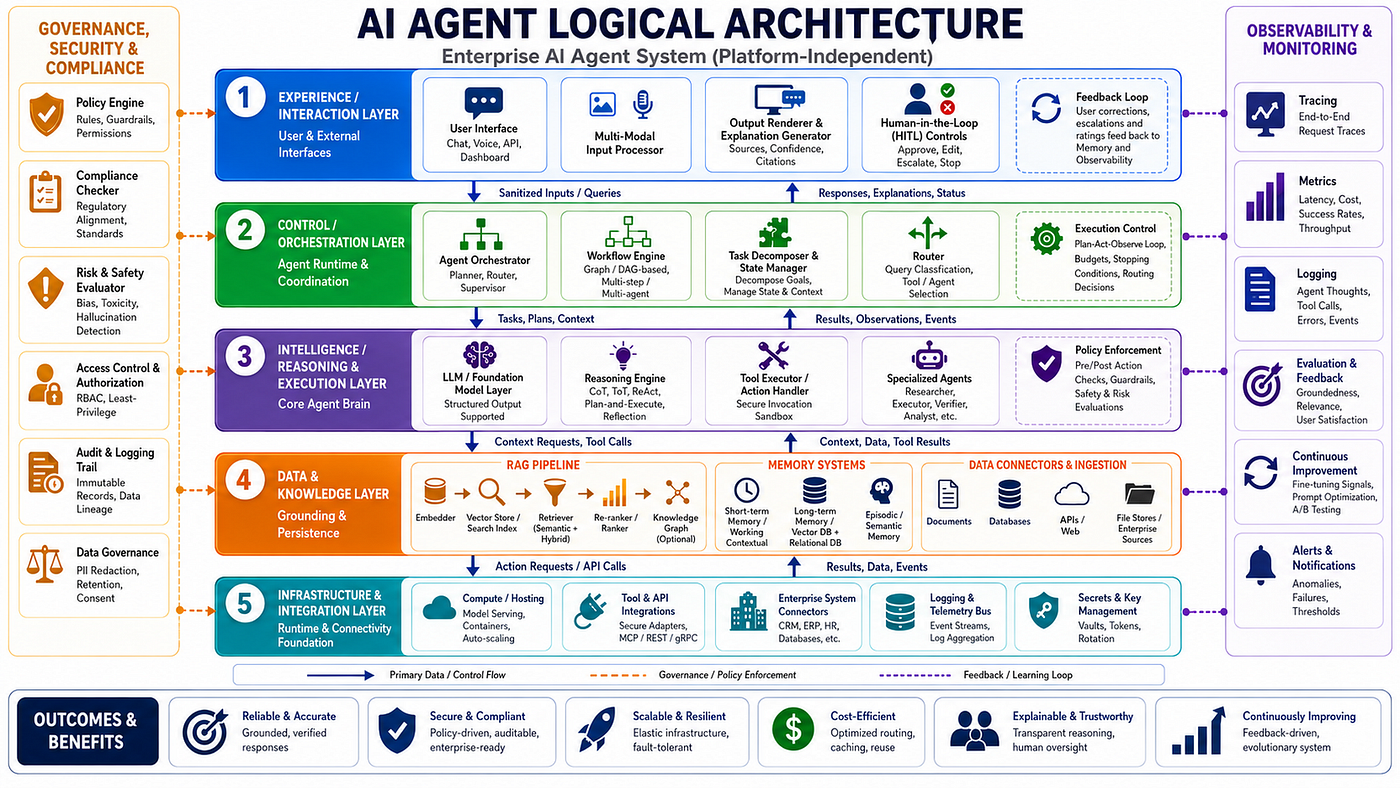
AI agents have become the baseline. They’re software-only autonomous systems that sense, decide, and act in digital environments. No physical presence. No hardware. Just cognitive horsepower running in the cloud.
The trajectory here is crystal clear. Automated scripts became tools. Tools became smart assistants. Smart assistants became fully autonomous agents coordinating entire workflows.
LangChain handles structured pipelines. CrewAI enables multi-agent collaboration. AgentKit promises AI-native orchestration. The ecosystem is exploding because agents solve a real problem: they handle the cognitive and repetitive workloads — orchestration, analysis, coordination — that humans hate doing.
But agents have a limitation that’s becoming increasingly obvious: they exist purely in the digital realm. They can think, but they can’t touch.
Step Two: Cobots Give Those Brains Bodies
Enter collaborative robots — cobots. Think of them as agents with physical presence.
Cobots are designed to safely share space and tasks with humans. They operate in factories, warehouses, hospitals, and logistics centers, adding strength, precision, and endurance to human workflows. They lift, move, assemble, and operate alongside us in real space.
The leap from agent to cobot seems obvious in retrospect. Take the agent’s autonomy and give it a physical form. Suddenly, automation isn’t just about processing data — it’s about interacting with the physical world.
But cobots still have a fundamental design assumption baked in: humans and machines remain separate entities, working side by side but never truly merging.
Step Three: Cyborgs Blur the Boundary
This is where things get philosophically interesting.
Cyborgs — cybernetic organisms — represent human/biological capability enhanced by integrated technology. Classically, we’re talking prosthetics, implants, exoskeletons, neural interfaces. But conceptually, the cyborg represents something deeper: the human-machine boundary becomes blurred. The unit of performance is the combined system.
Instead of replacing humans, cyborg technology merges with them. Humans bring what they’re good at — goals, creativity, ethics, contextual judgment. Technology brings what it’s good at — memory, speed, scale, and tireless execution.
The result is a hybrid entity that outperforms either component alone.
But traditional cyborgs have a massive friction problem: hardware. Implants require surgery. Exoskeletons require physical infrastructure. Neural interfaces require regulatory approval and years of development. The barrier to entry is enormous.
Which brings us to the final step — and the one that matters most for anyone building businesses in 2026.
Step Four: Virtual Cyborgs Are Hireable Human-AI Fusions
Virtual cyborgs take the cyborg concept and strip away the hardware barrier entirely.
They’re digitally embodied “teammates” that behave like cyborgs in practice: AI-first workers augmented by human intuition, oversight, and domain knowledge — but delivered fully virtually. They combine agentic autonomy (sense-plan-act in software), cobot-style collaboration (integrating with existing workflows, tools, CRMs, ERPs), and human-in-the-loop capabilities (configuration, escalation, ethics, judgment).
The defining characteristic? They’re hireable.
A virtual cyborg is an AI-native teammate that feels like a human-AI fusion, even though the “body” is software. No physical hardware barrier. A distributed workforce of AI entities shaped and steered by humans. They plug into your tech stack via APIs and work like remote colleagues.
This isn’t science fiction. It’s the logical endpoint of everything the AI agent ecosystem has been building toward.
Why This Matters More Than AgentKit vs. N8N
The current discourse is obsessed with framework comparisons. AgentKit versus LangChain versus CrewAI. AI-native versus integration-first. Visual builders versus code-based orchestration.
These debates matter for developers choosing tools. But they completely miss the forest for the trees.
The real question isn’t which agent framework wins. The real question is: what happens when agents stop being tools and start being teammates?
The governance discussion hints at this — RBAC (role-based access control) and TCO (total cost of ownership) are suddenly critical because agents are operating with increasing autonomy. Observability matters because you need to trace AI decision paths. Evaluation matters because you need to trust autonomous actions.
But governance frameworks designed for tools will break when applied to teammates. The mental model has to shift.
The Convergence Is Already Happening
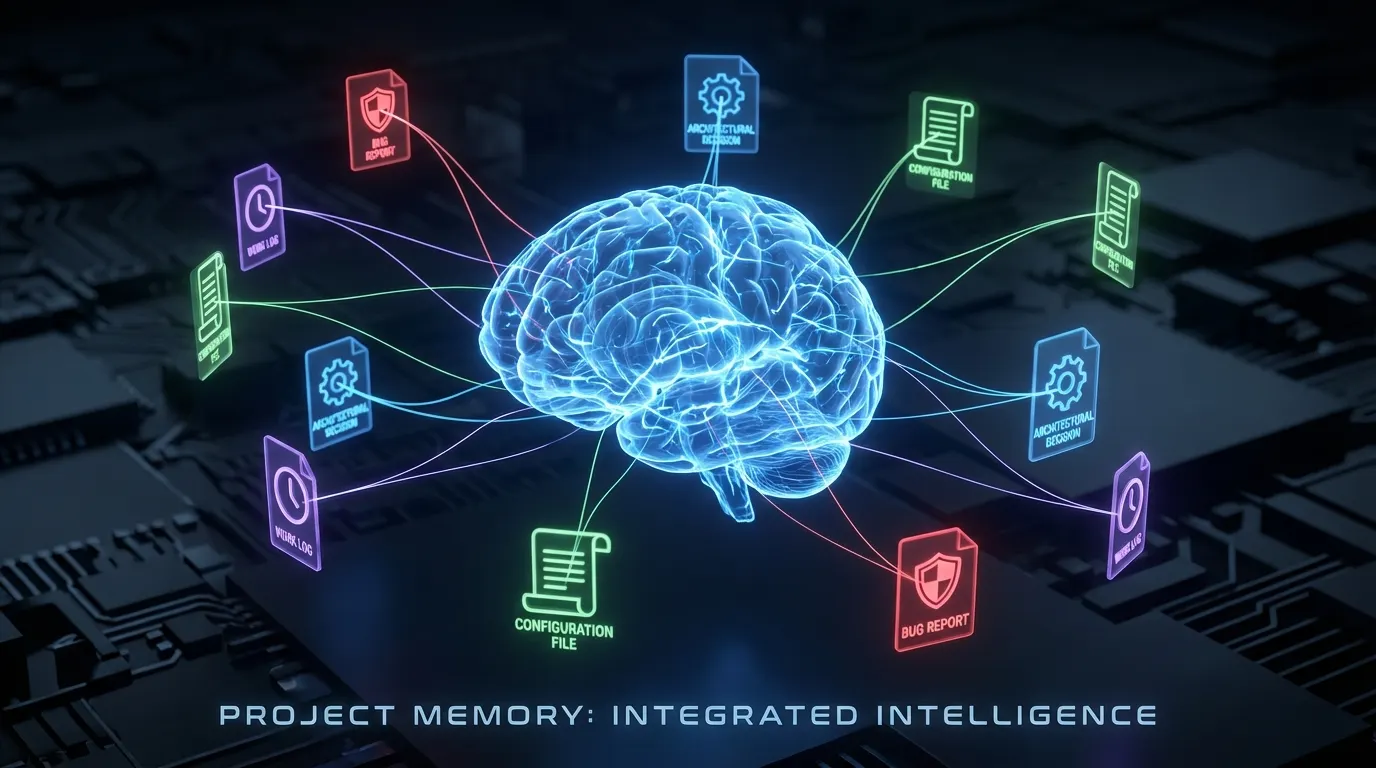
Look at the patterns emerging across the ecosystem. Neuro-symbolic AI systems that don’t need training — they come with logic and context integrated from day one. Agents with persistent memory that maintain context across sessions. Multi-step autonomous systems that run operations before anyone asks them to.
These aren’t just better agents. They’re the building blocks of virtual cyborgs.
The companies that understand this are building the AgentOps layer — handling memory, task routing, execution, and feedback at scale. They’re treating AI not as a feature but as workforce infrastructure.
The companies that don’t understand this are still debating whether to add a chatbot.
The Bottom Line
Agents automate tasks. Cobots automate motion. Cyborgs augment humans. Virtual cyborgs let you hire that augmentation as a teammate.
We’re not just building smarter software anymore. We’re building the first generation of AI-native colleagues — entities that combine the autonomy of agents, the collaborative design of cobots, and the human-AI fusion of cyborgs, delivered without any hardware friction.
The agent wars will continue. Frameworks will rise and fall. But the trajectory is clear.
The future of work isn’t human versus machine. It’s human with machine, packaged as a teammate you can onboard on Monday.
The virtual cyborg era is beginning. The only question is whether you’ll be hiring them — or competing against companies that do.
메타데이터
- post_id
- 78df4d79e759
- slug
- from-ai-agents-to-virtual-cyborgs-the-evolution-nobodys-talking-about-78df4d79e759
- url
- https://ai.plainenglish.io/from-ai-agents-to-virtual-cyborgs-the-evolution-nobodys-talking-about-78df4d79e759
- canonical_url
- https://ai.plainenglish.io/from-ai-agents-to-virtual-cyborgs-the-evolution-nobodys-talking-about-78df4d79e759
- author_url
- https://medium.com/@brankop
- status
- ok
- fetched_at
- 2026-07-31 11:13:41