A Man Rapes Another Man — Then Tells Him to Go to Court
I was a child, but the most frightening part wasn’t the crime
A Man Rapes Another Man — Then Tells Him to Go to Court
I was a child, but the most frightening part wasn’t the crime
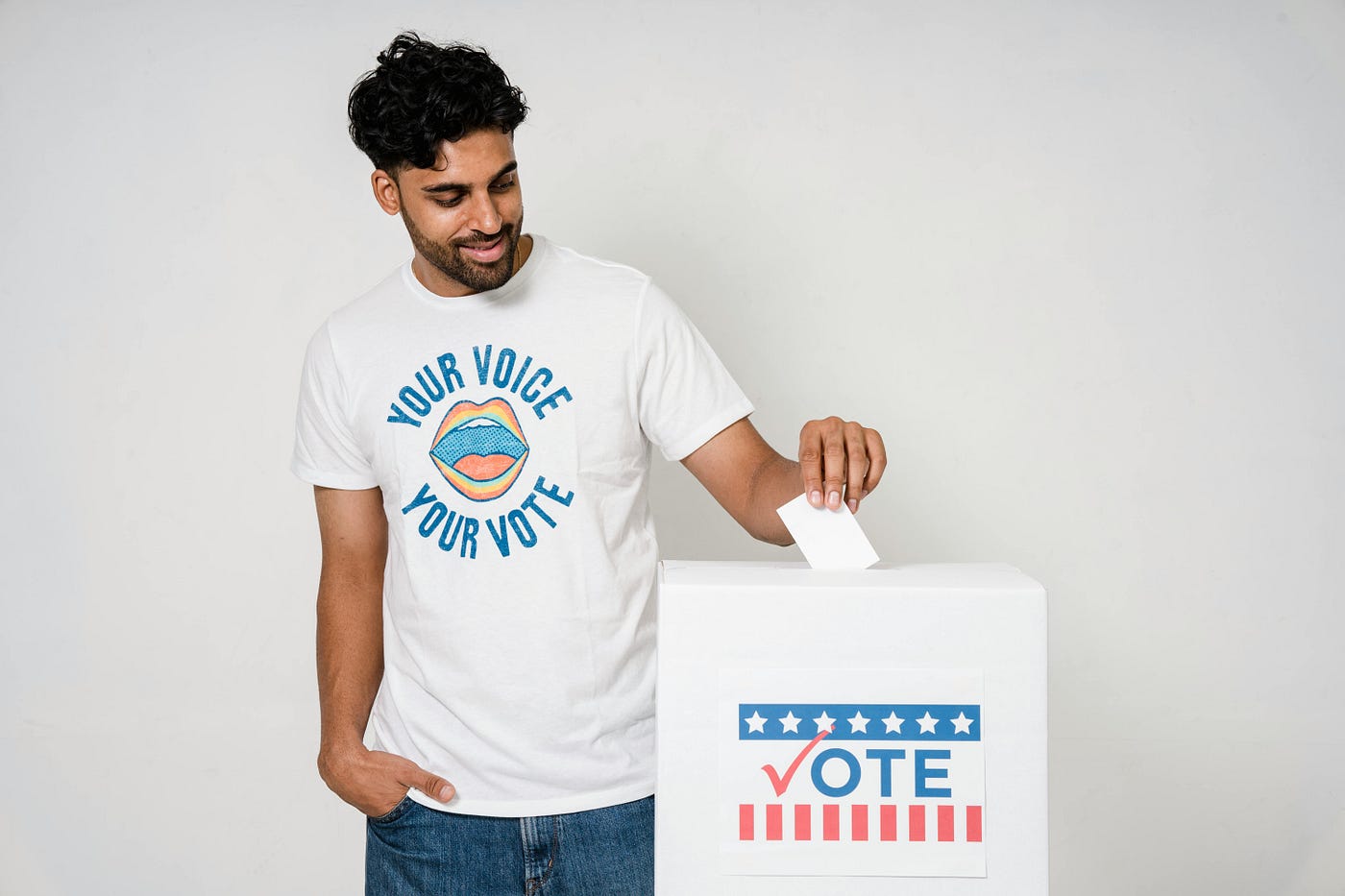
Photo by Gabriela Gomez on Unsplash
My own rape came when I was about five or six — but not from a man.
It was our landlord’s maid who had invited me into her bedroom inside their flat somewhere in Eastern Nigeria. There were others present in that room as well, the landlord’s children, perhaps, but all that is in the blur of memory now.
The other thing I remember is the punishment that followed discovery. I will never forget the image of the maid huddled under the hood of a vehicle parked downstairs, crying and whimpering. She had been beaten, her entire body rubbed with pepper.
I do not know the reason I was punished as well. I was a child. Is that why I remember the punishment more than the act itself?
This sounds insane, I know — depraved even — but sometimes I wish I could remember the act. It was abuse, considering I was too young to consent, but I wish I remembered what we actually did on that bed, what she did to me, what it felt like, whether I agreed at any point — even if I didn’t know what I was agreeing to.
I just have no memory of that. Only the punishment.
At what point does a victim stop being treated as a victim and start being treated as a suspect?
I once shared this with a lady, who confessed she had heard similar things from many men. She argued that contrary to their female counterparts, male victims tend to remember it fondly: a tendency to think lightly of rape or sexual victimization.
I have even interacted with men who said they were looking for women who would rape them. And this worldview appears not to be limited to my small circle, considering how posts have trended, time and again, on social media about towns where “men are so scarce women resort to grabbing and raping men,” only for the comments to be flooded with men asking for directions to get themselves raped.
The issue is not whether these towns are imaginary or whether these men are joking. It is just this: men’s tendency to take this matter lightly.
Is it because we are men, so we think a woman cannot actually rape us without our own agency? That even if a woman is said to be doing the raping, we would be the ones doing the penetrating, and hence somehow in charge too?
Whatever the reason, an encounter just a few days ago reminded me of a fact that had slipped from my mind: men can also be victims of other men. And not just that — how certain laws can ensure these perpetrators get away with it.
The person who hurt you may be less frightening than the system they expect to protect them.
I was waiting in a long queue with dozens of other Nigerians.
We had come to register, update, or correct our voter records ahead of the elections. Like many Nigerians, we had been battered by the current administration. Inflation, insecurity, corruption, the embarrassment of carrying a Nigerian passport — every topic eventually found its way into the conversation.
The gentleman seated to my right was so friendly that, as our conversation lengthened, my wife leaned in and teasingly whispered:
“You better introduce me now so he perishes the thought of you going home with him afterwards.”
“Don’t be so judgmental,” I whispered back. “Isn’t it the same way some people just look at me and assume I’m gay too?”
Then we laughed.
Turning and finding his brow raised, I explained that my wife was simply trying to get my attention, as though we wouldn’t have each other to ourselves once we left.
He laughed too and said, “Yeah, that’s a woman for you.”
The conversation continued, but as interesting as it was, with people around us constantly lending their voices about the hopelessness of everything, I just wanted to be done with the place and go home.
It became even worse when someone showed a disturbing video circulating online: victims kidnapped by terrorists and subjected to sexual abuse in the bush. The audacity to not just commit the atrocities but to record and upload them to social media jolted us from whatever lethargy had settled over the crowd, rekindling the resolve to get our voter cards, to vote, and to defend those votes.
We were going to change a government capable of tracking down a civilian critic, yet seemingly unable to stop terrorists who uploaded their crimes to TikTok.
“Our massive turnout on election day will shock them,” I said.
But the young man beside me disagreed, arguing that we would only be doing it “just to be at peace with ourselves,” not necessarily because we believed our votes would make any difference. He reminded us about the last election. After an elaborate rigging, the electoral authorities effectively told the disgruntled parties to “go to court.”
He added: “What if they simply did it again? What if the very people you go to for justice are in bed with the accused?”
Then he started laughing. Not ordinary laughter, no — but laughter with long shudders that passed from his arm into mine. It was disconcerting. Everyone had stopped talking, stopped laughing, yet he continued on, as though laughing at us… or perhaps at himself.
When he finally stopped and raised his head, tears had formed in his eyes.
I waited as he gathered himself, as he wiped his face with a handkerchief, spending most of the time on his eyes. Then he looked directly at me and, in an impassive tone, said:
“Would you believe it if I told you someone had once told me exactly the same thing? And not in politics, but real life.”
“I don’t understand,” I replied.
He lowered his head and stayed silent. When he looked up again, he glanced around, leaned in closer and, speaking in a voice barely above a whisper, narrated how he’d been stranded two years earlier, on his first visit to Lagos.
A former classmate took him in at last, but only to force himself into him in the middle of the night. It was the rhythmic thudding, back and forth, that had actually awoken him. Then he found his arms and legs tied to the bedstand, his body prone, the man atop him.
“I promised him he’d never get away with it, and the guy assured me he would. In fact he said, ‘I dare you to take this to court. But you wouldn’t. Or would you?’”
Then the gentleman started laughing again, though not as energetically as before. A righteous anger welled up inside me. Unable to wait for him to finish this time, I dragged him up and pulled him outside, far away from earshot.
I fired questions at him:
What did you do? And don’t tell me you didn’t take him up on it by reporting it to the authorities? What about your parents? Did you tell your friends? Did you also post it in your class WhatsApp group?
I was explaining — almost lecturing — that a crime like that was not something to ignore, when it dawned on me that the person I was talking to had been staring at me without uttering a single word. If he gave anything away, it was this: the confusion from when I dragged him out was gone. His face was now an inscrutable riddle.
Suddenly, it clicked.
This gentleman before me did not have to answer. Because he already had. What if the very people you go to for justice are in bed with the accused?
That rapist could only have said what he said because he believed the system would create more problems for his victim than for himself.
Because in a country where intimacy between men is criminalized, that confidence did not seem entirely misplaced. And at what point does a victim stop being treated as a victim and start being treated as a suspect?
Different acts. The same confidence.
The crime itself turns out not to be the most frightening part, but the confidence. And the thought would not leave me alone. As we headed back inside, my mind dug up the memory of an encounter of my own. Three men once cornered me in a room and tried to undress me, claiming their goal was not desire but “punishment.” They wanted to prove I wasn’t gay, and they were going to do this by touching me inappropriately, waiting to test if I got an erection.
The rationale was twisted, absurd. But the threat was not.
When I threatened to go to the police, they didn’t flinch. They laughed that they intended to hand me over to the authorities themselves if they didn’t kill me in the end. An added incentive for them was to video my “disgraced” self and post it online, saying the cultural stigma alone would extinguish my future, even if I survive.
I didn’t do anything at the time, and I still can’t imagine doing much even now. The law will frown more at my alleged crime of homosexuality before paying attention to whatever harm they could have done to me.
Impunity for the offender — that’s what it is. Which is why the men who cornered me were not frightened by the police. The classmate who assaulted his friend was not frightened by the police. Neither man behaved like someone who expected consequences.
The electoral official manipulates a process and says, “Go to court.” The politician abuses power and says, “Go to court.” A man rapes another man and says, “Go to court.”
Different acts. Different contexts. The same confidence.
I began this story with my own childhood abuse, whose only lasting memory is its punishment. A memory that somehow stripped the act of its true horror, while also leaving behind a strange kind of curiosity about what I cannot remember.
If not for the encounter with that gentleman, how long would I have gone on understanding it without ever really feeling it?
It was never just what was done to the victim. It was what the perpetrator expected to come afterwards. Or, shall I say, what he expected would not come at all.
Not every victim stays silent because he has nothing to say in the end. There are times when he stays silent because he already knows what will happen if he speaks.
The very person who harmed you has, after all, already looked you straight in the eye and said: “Go to court.”
메타데이터
- post_id
- 79b4e1771f98
- slug
- a-man-rapes-another-man-then-tells-him-to-go-to-court-79b4e1771f98
- url
- https://medium.com/the-memoirist/a-man-rapes-another-man-then-tells-him-to-go-to-court-79b4e1771f98
- canonical_url
- https://medium.com/the-memoirist/a-man-rapes-another-man-then-tells-him-to-go-to-court-79b4e1771f98
- author_url
- https://medium.com/@victornude
- status
- ok
- fetched_at
- 2026-06-12 10:20:10