Best Camera for Van Life Content Creators
What I Learned After 14,000 Miles on the Road
Best Camera for Van Life Content Creators
What I Learned After 14,000 Miles on the Road
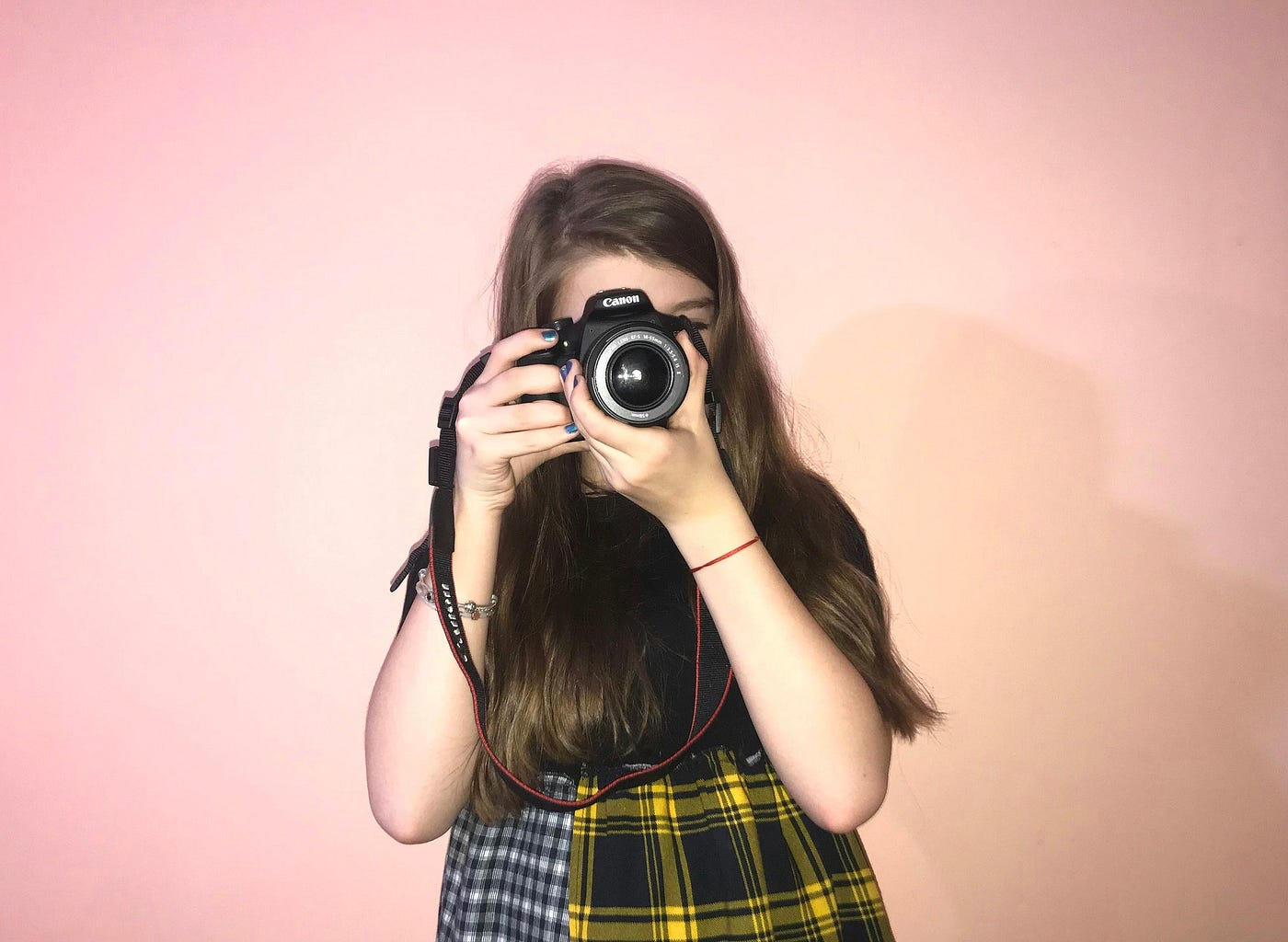
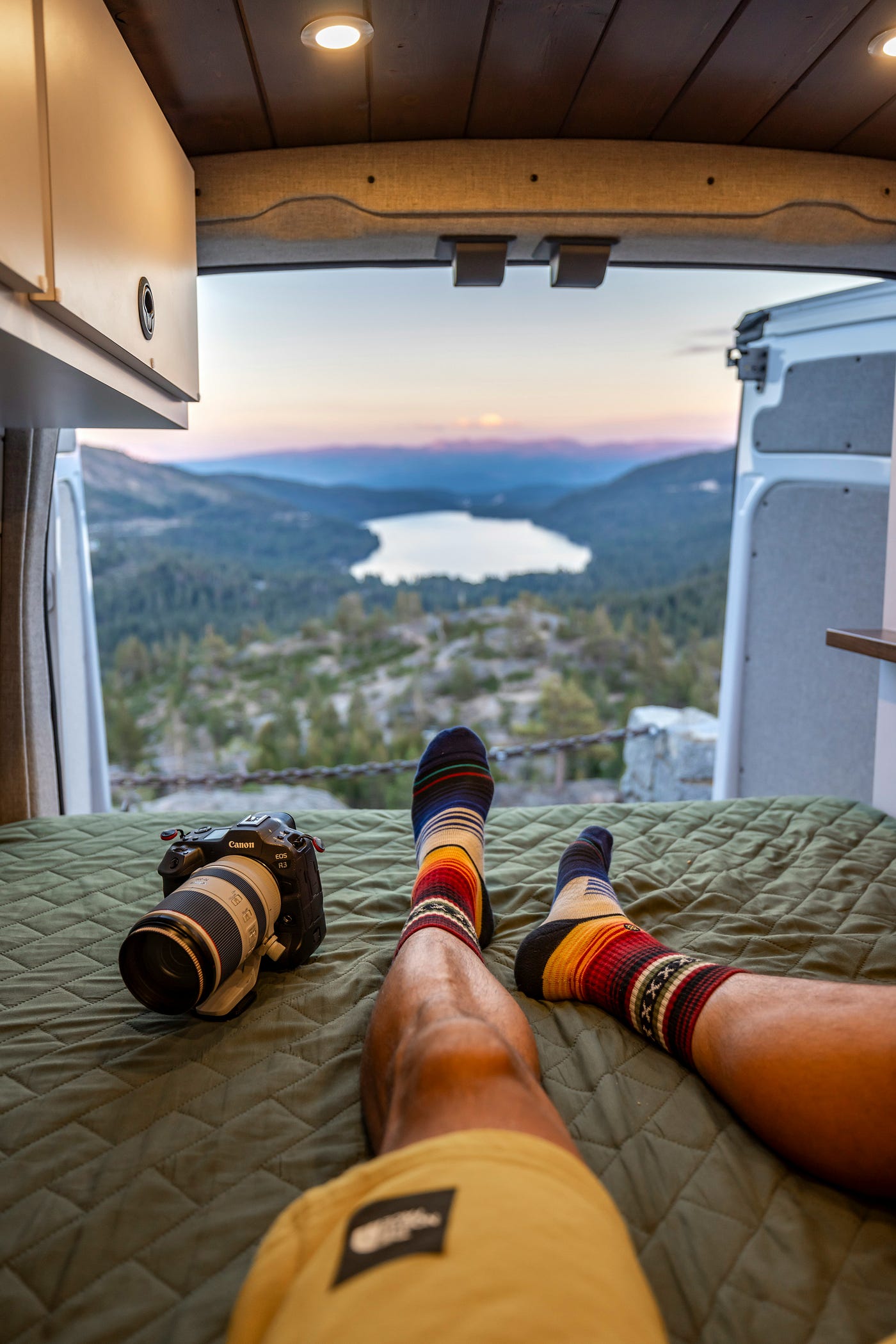
Photo by Alexander Andrews on Unsplash
I didn’t plan on becoming a van life creator. I planned on taking a three-month break.
Two years ago I sold most of what I owned, converted a 2015 Ford Transit with a friend who “definitely knew what he was doing” (he did not), and drove out of the city with a laptop, a tent as backup, and a camera I’d used maybe five times. I thought I’d document the trip loosely for family. Instead, it became my full-time work — and the camera I started with almost ended it before it began.
- Sony ZV-E10 II — *View on Amazon*
- DJI Osmo Pocket 3 — *View on Amazon*
- Fujifilm X-S20 — *View on Amazon*
- **GoPro Hero 13 Black — **View on Amazon
Affiliate note: This post has affiliate links. If you buy through them, I might earn a small commission (at no extra cost).
The Camera That Nearly Made Me Quit
My first setup was a DSLR I’d bought years earlier for a wedding I was asked to shoot as a favor. It was heavy, it hated humidity, and worst of all — I couldn’t see myself in the screen. Van life content is solo content. You are the driver, the subject, the crew, and the editor. If you can’t flip your screen around and see your own framing while you’re parked on a cliff edge in New Mexico trying to catch golden hour before your propane runs out, you lose the shot. I lost a lot of shots. Looking back, I was making the exact mistake I later wrote about in my guide to interchangeable lens compact cameras — carrying a body built for a studio, not a life lived out of a van.
I remember one morning outside Moab, fog rolling low over red rock, absolutely perfect light — and I found out later my mic wasn’t even picking up audio because I couldn’t monitor it without a second person. That was the day I decided the camera had to change, not the plan.
What Actually Matters When Your Studio Has Wheels
After going through four different setups (and one camera that genuinely died from dust ingestion outside Moab — sand is not your friend), here’s what I’ve learned actually separates a good van life camera from a frustrating one:
A flip screen you can actually see in daylight. Van life shooting happens outside, in bright sun, half the time. A dim screen means guessing your framing.
Real in-body stabilization. You’re often shooting handheld while walking, cooking, or narrating — a gimbal isn’t always practical when you’re also trying to hold your coffee and not fall off a rock.
Battery life that survives off-grid days. No wall outlets. If you’re running solar, every watt matters, and swapping batteries five times a day gets old fast.
Weather and dust resistance. Dirt roads, coastal air, sudden rain — your gear needs to handle conditions a studio camera never sees.
A form factor small enough to grab one-handed while driving is not an excuse to grab it while driving — but small enough that it lives on your dash, ready in seconds, matters.
The Cameras That Actually Held Up
Sony ZV-E10 II — My daily driver now.
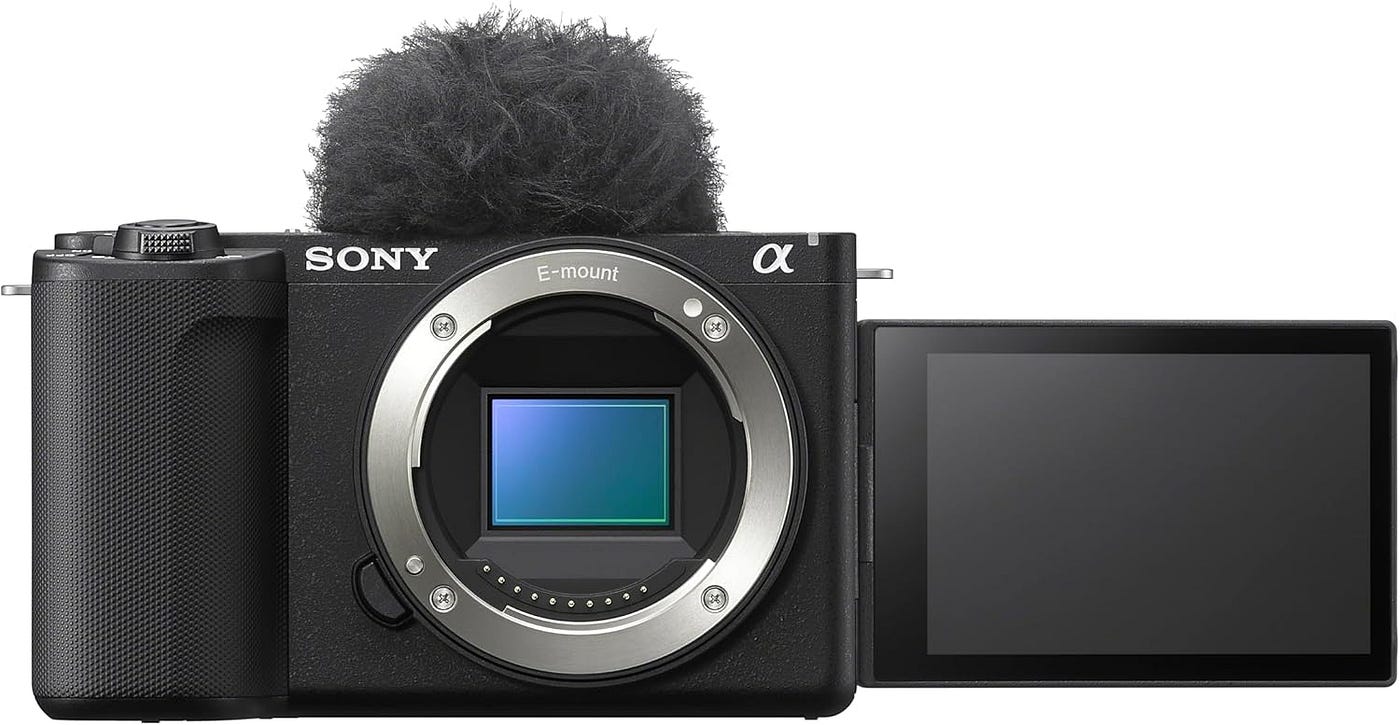
This is the camera I switched to after my second setup failed me, and it’s stayed in the van ever since. The flip screen is bright enough to read in direct sun, the autofocus tracks my face reliably even when I’m walking backward narrating (which happens more than I’d like to admit), and the body is light enough that I genuinely forget it’s around my neck on hikes. Battery life gets me through a solid shooting day if I’m not running 4K constantly.
Sony ZV-E10 II — *View on Amazon*
DJI Osmo Pocket 3 — The one that lives in my cup holder.
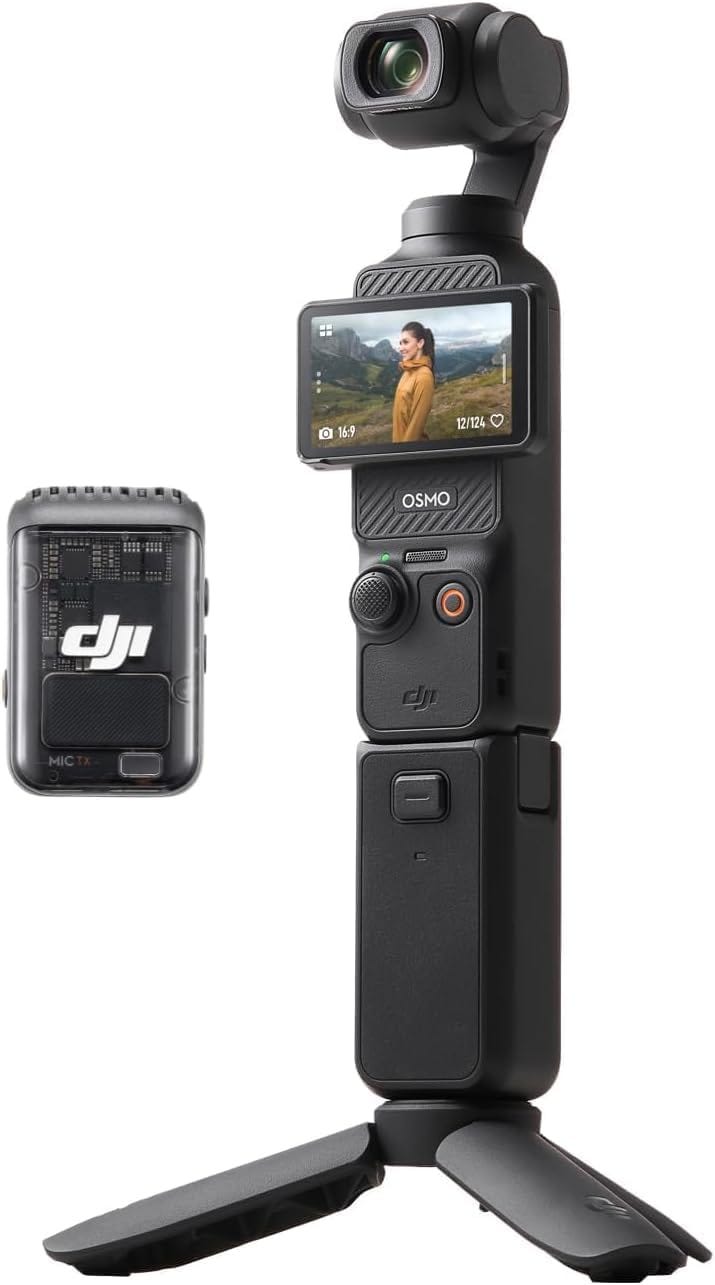
For quick moments — cooking dinner on the tailgate, a sunrise I almost missed, capturing the drive itself — this is what actually gets used. It’s stabilized without a gimbal rig, the screen flips for selfie mode, and it survived a rainstorm in the Pacific Northwest that would have ended a lesser camera’s career. It’s not my main camera, but it’s the one I reach for most often, which tells you something.
DJI Osmo Pocket 3 — *View on Amazon*
Fujifilm X-S20 — For the days I want it to look like film, not footage.
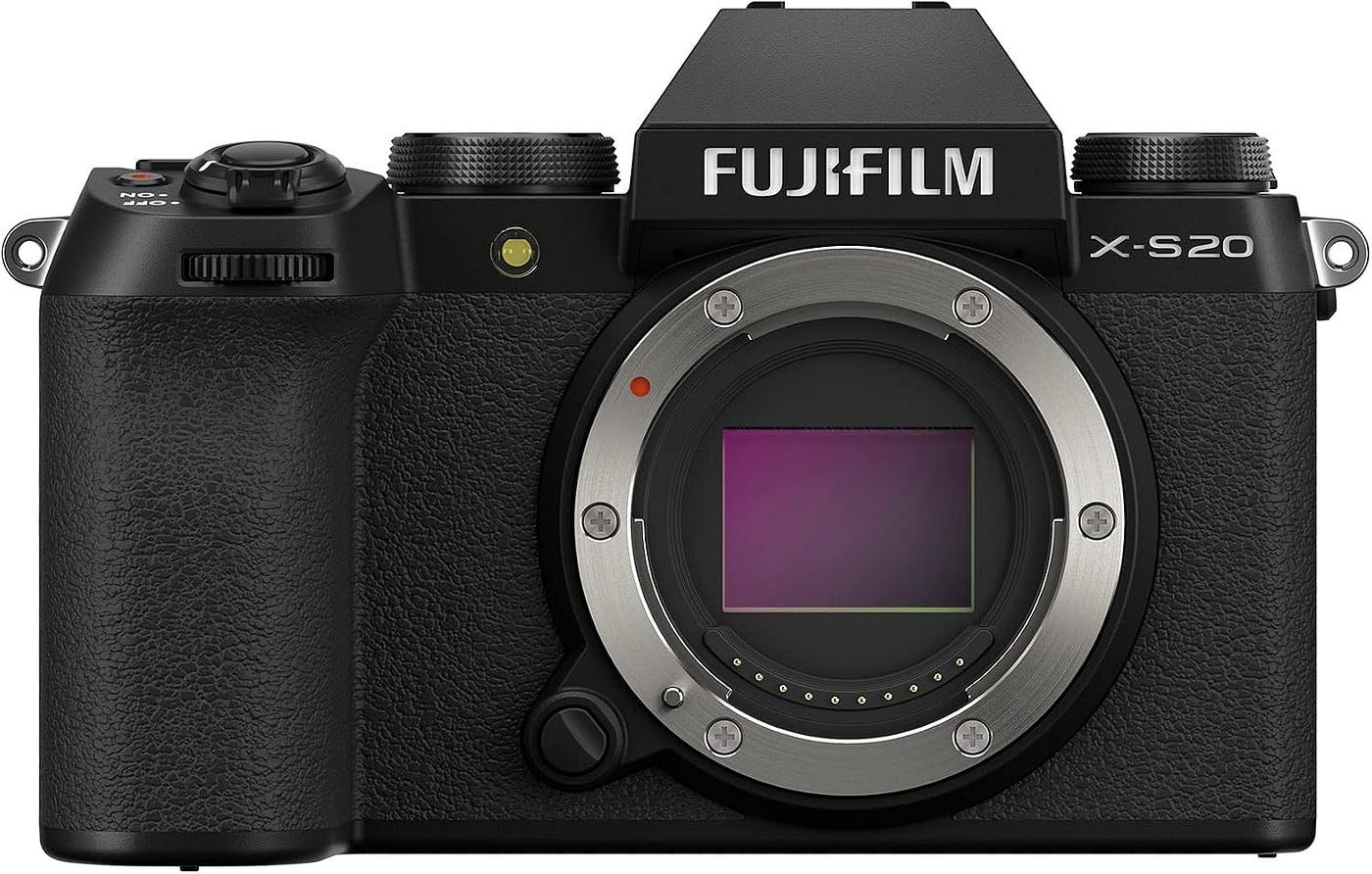
When I’m doing a slower, more cinematic segment — a longer stay somewhere beautiful, a story-driven edit — this is what comes out. The color science means less time color grading at a picnic table with questionable Wi-Fi, which as any van lifer knows, is precious.
Fujifilm X-S20 — View on Amazon
GoPro Hero 13 Black — Mounted, forgotten, essential. Suction-mounted to the dash for driving shots, strapped to gear for river crossings, dropped in a bag with sand and dust and somehow still working. It’s not a primary camera for me, but it fills gaps nothing else can.
The Honest Trade-Off Nobody Tells You
Every van life creator will tell you gear matters less than story. They’re right — and also, when your studio is a moving vehicle with no backup crew, no reshoots, and no controlled lighting, the margin for a camera that fails you is much smaller than it is for someone shooting in a fixed location. I don’t say this to make you buy more gear. I say it because I wasted three months trying to make the wrong camera work out of stubbornness, and those are three months of footage I don’t have anymore.
My Actual Recommendation
If you’re starting van life content creation today and want one camera that won’t fight you: get the **Sony ZV-E10 II. It’s the one piece of gear in my van that has never once made me miss a moment because I was fighting with it instead of filming with it. Add the [DJI Osmo Pocket 3](https://amzn.to/4h7A4AA)** the moment your budget allows — it will end up capturing more of your actual life than your “real” camera does, and that footage is usually the footage people connect with most.
Do I need a full-frame camera for van life content?
Not really. Full-frame bodies are heavier, more power-hungry, and often overkill for content that’s primarily watched on phone screens. APS-C cameras like the ones above balance quality and practicality far better for life on the road.
How do I charge camera batteries off-grid?
A small portable power station or a solar setup wired into your van’s battery bank works well. USB-C charging cameras (like the ZV-E10 II) make this much easier than older battery-only systems.
What’s the biggest mistake new van life creators make with gear?
Buying too much of it. I started with one camera and ended up needing three lenses, a tripod, a gimbal, and an audio recorder I never used. Start minimal. Add only what you find yourself missing.
Photo by Leo_Visions on Unsplash
Photo by Daniel J. Schwarz on Unsplash
메타데이터
- post_id
- 79c867dcf3c2
- slug
- best-camera-for-van-life-content-creators-79c867dcf3c2
- url
- https://medium.com/@bestoflens.com/best-camera-for-van-life-content-creators-79c867dcf3c2
- canonical_url
- https://medium.com/@bestoflens.com/best-camera-for-van-life-content-creators-79c867dcf3c2
- author_url
- https://medium.com/@bestoflens.com
- status
- ok
- fetched_at
- 2026-07-29 23:05:25