Why “Eat the Frog” never worked for me
And What I Do Instead
Why “Eat the Frog” never worked for me
And What I Do Instead

In my psychology classes, I hear a lot about how the brain works. But when I tried to follow that popular advice “eat the frog,” meaning do your hardest task first thing in the morning, it backfired. My frog was never a simple chore. It was designing something, writing an essay, or coming up with a creative idea. Every time I forced myself to start with it, my brain shut down, and the rest of the day felt heavy and blank.
Here is what I have figured out from my studies and from simply listening to my own mind.
The Fear Alarm and the Thinking Brain
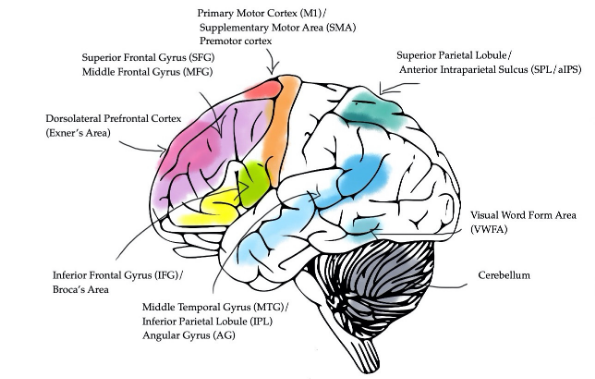
In one of my first neuropsychology lectures, I learned about a tiny almond-shaped part of the brain called the amygdala. It acts like a smoke detector. When it senses something stressful, it triggers an alarm and floods your body with stress hormones. The problem is that those same chemicals quiet down the front part of your brain, the part that helps you come up with new ideas and connect different thoughts.
So if your first task of the morning is something creative and high-pressure, you set off the fear alarm. Your thinking brain goes offline. I noticed this happening to me. On mornings when I tried to draft a research plan right after waking, my thoughts never became smooth or playful. They got stuck in a tight loop of self-doubt. Instead of feeling open and curious, I just pushed out words while my brain quietly linked creativity with stress. Over time, that connection stuck.
Small Wins Before Big Tasks
In a class on motivation, we discussed the concept of activation energy. Big tasks have a high hump to get over. If you start cold, you have to climb that hump all at once. It feels awful, and often you just give up.
Sports coaches never ask a sprinter to run full speed the second they wake up. They warm up first. Your creative brain needs a warm-up, too. The researcher Mihaly Csikszentmihalyi, who spent his life studying flow states, showed that you cannot just jump into deep focus. You have to ease in.
So now I start every morning with something tiny and easy. It might be a five-minute free write, a quick doodle, or rereading a paragraph I loved from a paper. There is no pressure, and nobody will ever see it. That small action gives my brain a tiny hit of dopamine, the chemical that makes you feel good and want to keep going. It lowers the jump for the harder work later. I call it my small win warm-up. It lets me build speed slowly.
Why Your Brain Stays Stuck on the Last Task
One of the most useful things I have ever read came from a researcher named Sophie Leroy. She studied something called attention residue. Her work showed that when you stop a difficult task before it feels finished, a chunk of your attention stays glued to it. It is like having a browser tab open in your mind that you cannot close.
If my frog is a logical task, like cleaning up data or sorting through forms, and then I switch to something creative, like designing a layout, that residue pollutes my thinking. Part of my brain is still chewing on the data while I am trying to play with visuals. The creative work feels shallow and forced because I am not fully there. The leftover frog from the morning ruins the afternoon.
Working With My Body Clock Instead of Fighting It
The biggest shift I made was to stop seeing my day as a list of things to crush and instead see it as a rhythm to follow. Our brains have natural peaks and dips during the day. This is called a circadian rhythm. In the mid-morning, my focus is sharp and linear. That is when I now do tasks that need logic and attention to detail, like answering straightforward emails or checking my data. This is the frog I can actually eat.
But for creative work, I wait until my brain is a little softer. There is a surprising finding from the University of Michigan that I love. It shows that when we are a bit tired, our mental filters loosen. The inner voice that says “that is a stupid idea” gets quieter. In that state, strange and interesting connections float up more easily. So I save my deep creative work for late morning or early afternoon, when my inner critic is too sleepy to block me. I call this my soft focus time.
Protect the Morning for Priming, Not Punishment
Now my rule is simple: protect the morning. The goal is not to destroy the hardest task before my brain is ready. The goal is to prime the pump gently. Some days that means sitting quietly and letting my thoughts wander. That is not laziness. It is my brain’s background network weaving new threads. Other days, it means playing with a mood board or sketching something loose before I write a single word.
I no longer touch stressful emails or admin work right after I wake up. That was the old frog, and it always left me feeling frazzled. Instead, I start with a small act that reminds me who I am and what I care about. A quick journal note. A visual twist on yesterday’s work. A playful scribble. This is not running away from hard things. It is understanding how my brain actually works.
The frog can wait until later. My creative morning deserves a quiet hum, not a loud alarm.
메타데이터
- post_id
- 79e35f8d640e
- slug
- why-eat-the-frog-never-worked-for-me-79e35f8d640e
- url
- https://medium.com/productivityspot/why-eat-the-frog-never-worked-for-me-79e35f8d640e
- canonical_url
- https://medium.com/productivityspot/why-eat-the-frog-never-worked-for-me-79e35f8d640e
- author_url
- https://medium.com/@harshitaaaa
- status
- ok
- fetched_at
- 2026-06-13 12:55:53