Environmental Exposure and Spray Foam Performance — Interior vs Roofing Conditions
Spray foam performance is directly influenced by the conditions present at the time of application.
Environmental Exposure and Spray Foam Performance — Interior vs Roofing Conditions
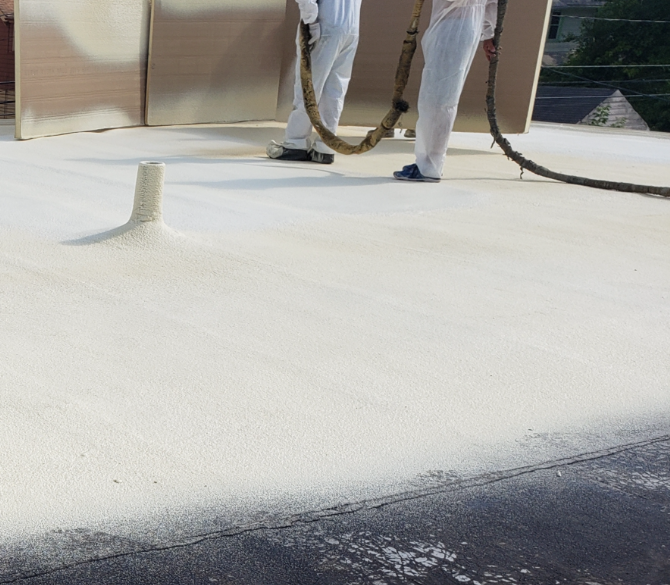
Spray foam roofing application illustrating exposure to environmental conditions such as sunlight, temperature variation, and open air.
Spray foam performance is directly influenced by the conditions present at the time of application.
These conditions are not uniform across all applications. Interior environments and exterior roofing environments present fundamentally different variables, which affect how the system operates and how the foam ultimately performs.
Understanding these differences requires evaluating the system within its environmental context.
Interior Application Conditions

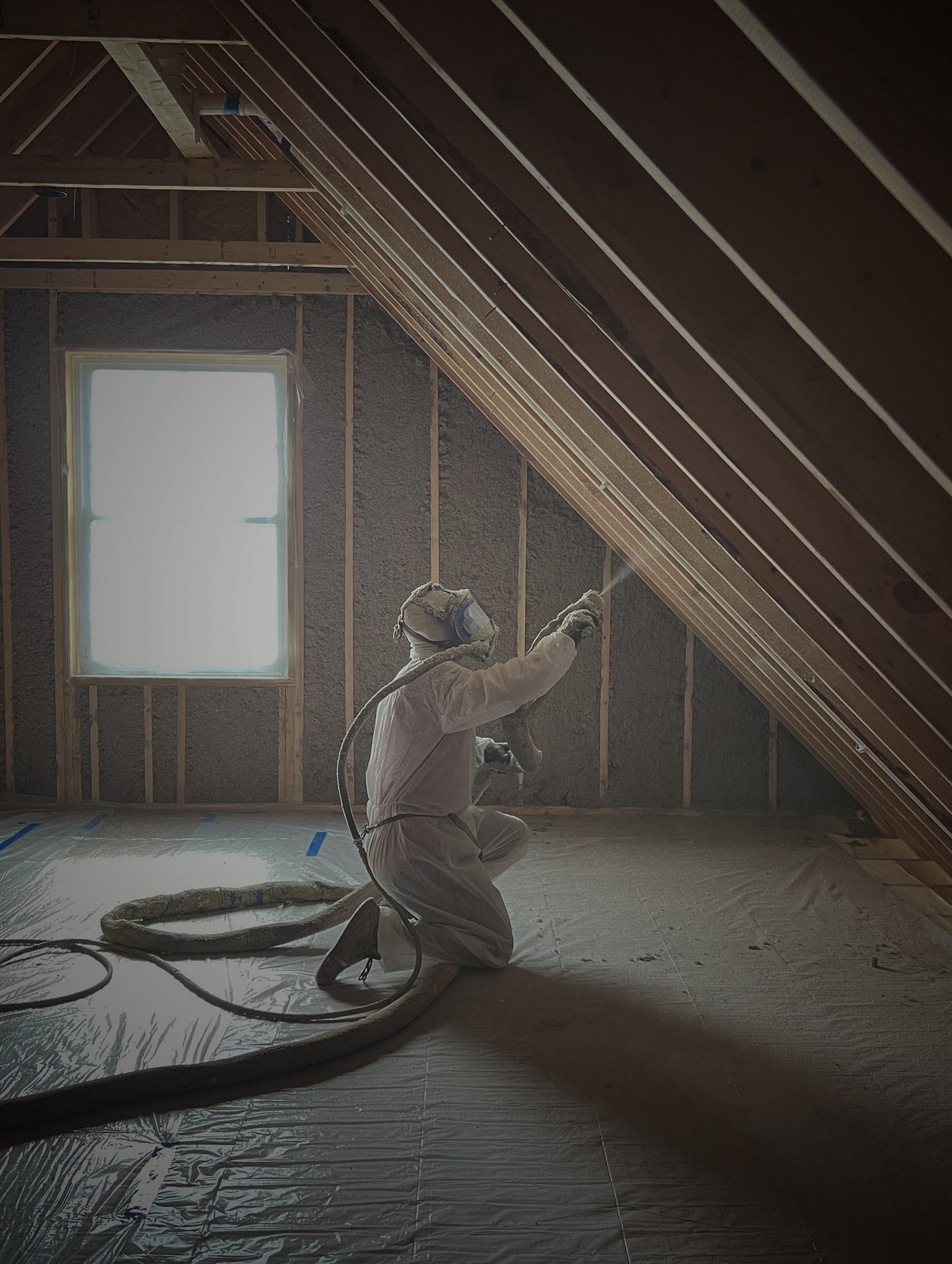
Interior spray foam applications typically occur within controlled or semi-controlled environments.
These conditions may include:
- limited exposure to wind
- reduced solar influence
- more stable substrate temperatures
- relatively consistent ambient air conditions
Because of this, system variables such as:
- material temperature
- pressure balance
- flow consistency
tend to remain more stable during application.
This stability allows the system to operate within a narrower range of variation, contributing to more predictable foam behavior.
A detailed breakdown of how material conditions influence foam formation can be found here: Applied SPF Interiors
Roofing Application Conditions
Exterior spray foam roofing applications operate under significantly different conditions.
These may include:
- direct solar radiation
- elevated substrate temperatures
- wind exposure
- rapid surface temperature changes due to cloud movement
- ambient moisture variability
Unlike interior environments, these conditions can shift continuously during application.
As a result, the system must respond dynamically to maintain stable processing conditions.
A system that performs consistently in a controlled interior environment may behave differently when exposed to these variables.
A deeper system-level perspective on roofing applications and environmental exposure can be explored here: Roofing Technical Library — AppliedSPF Roofing
System Response to Environmental Change
Environmental conditions influence multiple aspects of system behavior, including:
- heat transfer through the hose system
- material viscosity at the point of processing
- pressure balance across A-side and B-side components
- reaction rate at the moment of mixing
For example, elevated substrate temperatures can accelerate reaction speed, while cooler material temperatures can increase viscosity and alter flow characteristics.
These changes do not occur in isolation. They interact across the system, influencing overall stability.
Thermal and Pressure Interaction
Temperature and pressure are closely linked within spray foam systems.
As environmental conditions shift:
- heater demand may increase or decrease
- pressure requirements may change to maintain flow
- hose systems may experience varying levels of heat loss or gain
If the system is not balanced to accommodate these changes, conditions at the spray gun will deviate from intended processing parameters.
This deviation directly affects foam formation and performance.
Environmental Influence on Long-Term Performance
Environmental exposure does not only affect application conditions. It also influences long-term system performance.
In roofing applications, foam is exposed to:
- ultraviolet radiation
- thermal expansion and contraction
- moisture cycling
These factors contribute to aging, surface degradation, and changes in material properties over time.
Interior applications, by contrast, are typically shielded from these forms of exposure, resulting in different long-term performance characteristics.
System Design Considerations
Because environmental conditions vary, system design must account for the intended application.
This includes:
- selecting appropriate heater capacity
- matching hose length to system capability
- ensuring sufficient power supply
- maintaining proper material conditioning
Systems designed with these considerations in mind are better able to maintain stable operation across varying conditions.
Examples of how system configurations are matched to application demands can be reviewed here: DigitallyMonitoredRig | SprayWorks Pro Guide
메타데이터
- post_id
- 79f822f4bd14
- slug
- environmental-exposure-and-spray-foam-performance-interior-vs-roofing-conditions-79f822f4bd14
- url
- https://medium.com/@appliedspf/environmental-exposure-and-spray-foam-performance-interior-vs-roofing-conditions-79f822f4bd14
- canonical_url
- https://medium.com/@appliedspf/environmental-exposure-and-spray-foam-performance-interior-vs-roofing-conditions-79f822f4bd14
- author_url
- https://medium.com/@appliedspf
- status
- ok
- fetched_at
- 2026-07-25 07:36:07