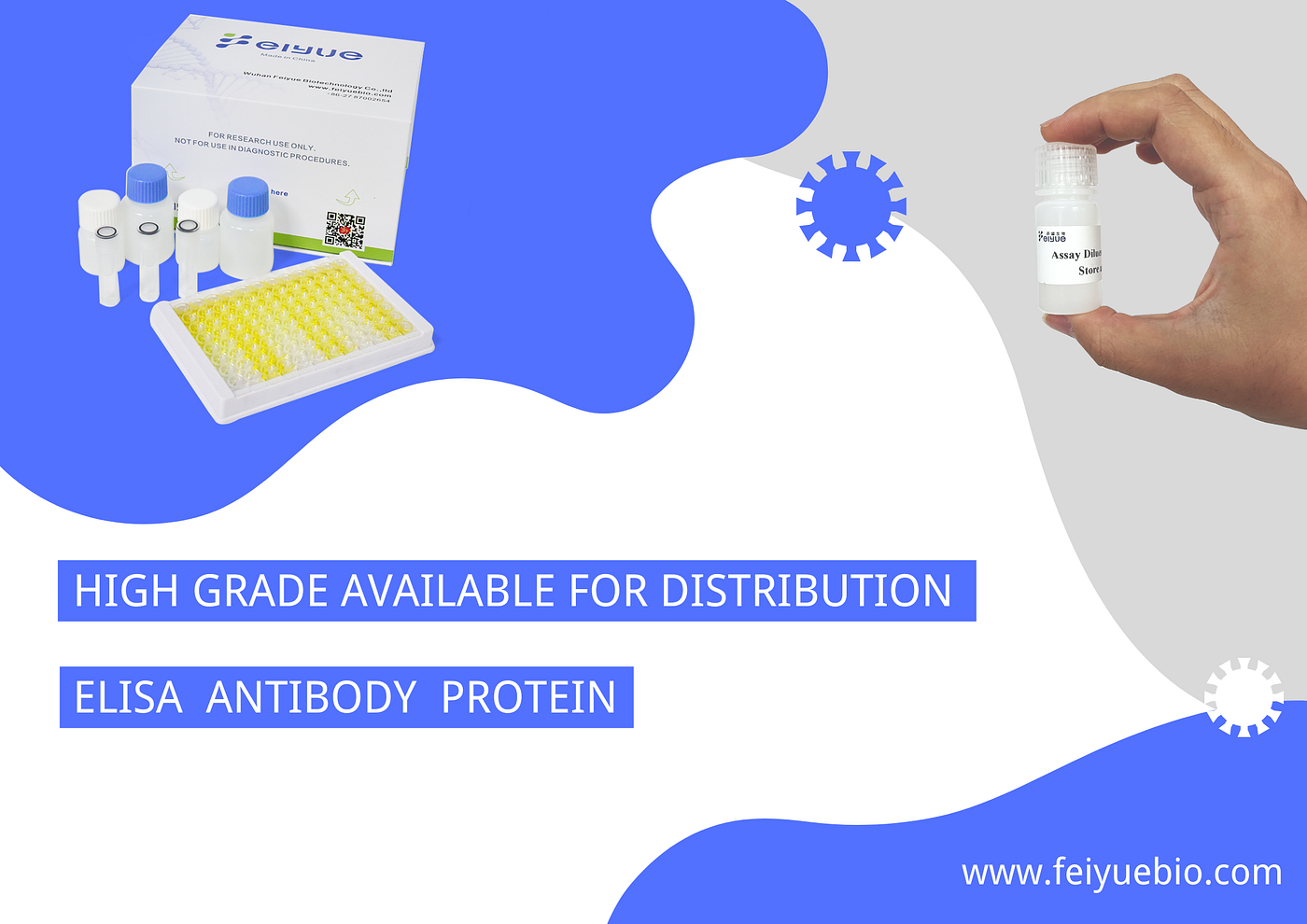
Chicken Total Bile Acid (TBA) ELISA kit
Catalog No: FY-ECH4770
Chicken Total Bile Acid (TBA) ELISA kit
Catalog No: FY-ECH4770
Size: 96T
(FOR RESEARCH USE ONLY. DO NOT USE IT IN CLINICAL DIAGNOSTICS !)
TBA (Total Bile Acid) Introduction
Bile Acids (BA) make up 67% of the total composition of bile. They are 24-carbon steroids generated during cholesterol metabolism. They form conjugates with either glycine or taurine to form bile salts. Five of the bile acids account for more than 99% of the total population found in biofluids. The average composition in healthy individuals includes conjugates of cholic, chenodeoxycholic, deoxycholic and lithocholic acids. Bile acids are critical due to their ability to solubilize lipids by forming micelles with cholesterol, and fatty acids. Their synthesis is not only critical for the removal of cholesterol from the body but they are also needed for proper uptake of dietary lipids into the small intestine. The measurement of circulatory Total Bile Acids (TBA) therefore provides information about hepatic functions and liver diseases such as jaundice, and hepatocellular injury. TBA estimation can detect liver damage during early stages and permits patients to get treatment before hepatic damages become irreversible. In addition, bile acids participate as signaling molecules interacting with G-protein coupled receptors (GPCR), TGR5, and nuclear receptor farnesoid X receptor (FXR).
This manual must be read attentively and completely before using this product.
Intended use
The ELISA kit is a competitive enzyme immunoassay technique for the in vitro quantitative determination of TBA
concentrations in serum, plasma, tissue homogenates, cell lysates, cell culture supernates and other biological
fluids.
Specification
●Sensitivity: 0.5μmoL/L.
●Detection Range: 1–16μmoL/L.
●Specificity: This kit recognizes TBA in samples.
No significant cross-reactivity or interference between TBA and analogues was observed.
●Repeatability: Coefficient of variation is < 10%.
Test principle
This assay employs the competitive inhibition enzyme immunoassay technique. Coating antigen(BSA-TBA) has
been pre-coated onto a microplate. A competitive inhibition reaction is launched between BSA-TBA and free TBA
(Standards or samples) with HRP labeled antibody specific to TBA. After incubation the unbound conjugate is
washed off. The amount of bound HRP conjugate is reverse proportional to the concentration of TBA in the sample.
Other supplies required
Microplate reader with 450nm wavelength filter
High-precision transfer pipette, EP tubes and disposable pipette tips
Incubator capable of maintaining 37℃
Deionized or distilled water
Absorbent paper
Loading slot for Wash Buffer
Note for assay
- Please wear lab coats, eye protection and latex gloves for protection. Please perform the experiment following
the national security protocols of biological laboratories, especially when detecting blood samples or other
bodily fluids.
- A freshly opened ELISA Plate may appear to have a water-like substance, which is normal and will not have any
impact on the experimental results.
- The microplate reader should have a 450nm filter installed and a detector that can detect the wavelength. The
optical density should be within 0~3.5.
-
Do not mix or use components from other lots.
-
Change pipette tips in between adding standards, in between sample additions, and in between reagent additions.
Also, use separate reservoirs for each reagent.
Sample collection
Serum: Allow samples to clot for 2 hours at room temperature or overnight at 4℃ before centrifugation for 15 min at 1000×g at 2~8℃. Collect the supernatant to carry out the assay. Blood collection tubes should be disposable and be non-endotoxin.
Plasma: Collect plasma using EDTA or heparin as an anticoagulant. Centrifuge samples for 15 min at 1000×g at 2~8℃ within 30 min of collection. Collect the supernatant to carry out the assay. Hemolysed samples are not suitable for ELISA assay!
Cell lysates: For TBAerent cells, gently wash the cells with moderate amount of pre-cooled PBS and dissociate the cells using trypsin. Collect the cell suspension into a centrifuge tube and centrifuge for 5 min at 1000×g. Discard the medium and wash the cells 3 times with pre-cooled PBS. For each 1×10⁶ cells, add 150–250 μL of pre-cooled PBS to keep the cells suspended. Repeat the freeze-thaw process several times until the cells are fully lysed. Centrifuge for 10min at 1500×g at 4℃. Remove the cell fragments, collect the supernatant to carry out the assay.Avoid repeated freeze-thaw cycles.
Tissue homogenates: It is recommended to get detailed references from the literature before analyzing different tissue types. For general information, hemolysed blood may affect the results, so the tissues should be minced into small pieces and rinsed in ice-cold PBS (0.01M, pH=7.4) to remove excess blood thoroughly. Tissue pieces should be weighed and then homogenized in PBS (tissue weight (g): PBS (mL) volume=1:9) with a glass homogenizer on ice. To further break down the cells, you can sonicate the suspension with an ultrasonic cell disrupter or subject it to freeze-thaw cycles. The homogenates are then centrifuged for 5 min at 5000×g to get the supernatant.
Cell culture supernatant or other biological fluids: Centrifuge samples for 20 minutes at 1000xg at 2–8℃. Collect the supernatant to carry out the assay.
Note for sample
- Samples should be used within 7 days when stored at 4℃, otherwise samples must be divided up and stored at
-20℃ (≤1month) or -80℃ (≤3months). Avoid repeated freeze-thaw cycles.
-
Please predict the concentration before assaying. If the sample concentration is not within the range of the standard curve, users must determine the optimal sample dilutions for their particular experiments.
-
If the sample type is not included in the manual, a preliminary experiment is suggested to verify the validity.
-
If a lysis buffer is used to prepare tissue homogenates or cell culture supernatant, there is a possibility to cause a deviation due to the introduced chemical substance.
-
Some recombinant protein may not be detected due to a mismatching with the coated antibody or detection antibody.
Reagent preparation
-
Bring all reagents to room temperature (18~25℃) before use. Follow the Microplate reader manual for set-up and preheat it for 15 min before OD measurement.
-
Wash Buffer: Dilute 25mL of Concentrated Wash Buffer with 475 mL of deionized or distilled water to prepare 500 mL of Wash Buffer.
Assay procedure
-
Determine wells for diluted standard, blank wells separately (blank comparison wells don’t add sample and HRP-Conjugate reagent, other each step operation is same). testing sample well. Prepare 5 wells for standard points, 1 well for blank, Add 50μL of standard solution to standard well. Add 40μL of Sample dilution to testing sample well, then add 10μL of testing sample (sample final dilution is 5-fold), add sample to wells, respectively.
-
Add 100μL of HRP-Conjugate reagent to each well, except blank well, closing plate with Closure plate membran, incubate for 60 min at 37℃.
-
Uncover Closure plate membrane, discard Liquid, add washing buffer to all wells, still for 30s then drain, repeat 5 times, dry by pat.
-
Add 50μL of the mixture of Chromogen Solution A and Chromogen Solution B to each well, evade the light preservation for 15 min at 37℃
-
Add 50μL of Stop Solution to each well, Stop the reaction(the blue color change to yellow color).
-
Read absorbance at 450nm within 15min.
Calculation of results
Average the duplicate readings for each standard and samples, then subtract the average zero standard optical density. Plot a four parameter logistic curve on log-log graph paper, with standard concentration on the x-axis and OD values on the y-axis.
If the samples have been diluted, the concentration calculated from the standard curve must be multiplied by the dilution factor. If the OD of the sample surpasses the upper limit of the standard curve, you should re-test it with an appropriate dilution. The actual concentration is the calculated concentration multiplied by the dilution factor.
Typical data
As the OD values of the standard curve may vary according to the conditions of the actual assay performance (e.g. operator, pipetting technique, washing technique or temperature effects), the operator should establish a standard curve for each test. Typical standard curve and data is provided below for reference only.

Chicken Total Bile Acid (TBA) ELISA kit
Declaration
-
Limited by current conditions and scientific technology, we can’t conduct comprehensive identification and analysis on all the raw material provided. So there might be some qualitative and technical risks for users using the kit.
-
The final experimental results will be closely related to the validity of products, operational skills of the operators and the experimental environments. Please make sure that sufficient samples are available.
-
To get the best results, please only use the reagents supplied by the manufacturer and strictly comply with the instructions!
-
Incorrect results may occur because of incorrect operations during the reagents preparation and loading, as well as incorrect parameter settings of the Micro-plate reader. Please read the instruction carefully and adjust the instrument prior to the experiment.
-
Even the same operator might get different results in two separate experiments. In order to get reproducible results, the operation of every step in the assay should be controlled.
메타데이터
- post_id
- 7a49ffcc8ff5
- slug
- chicken-total-bile-acid-tba-elisa-kit-7a49ffcc8ff5
- url
- https://medium.com/@czy15701/chicken-total-bile-acid-tba-elisa-kit-7a49ffcc8ff5
- canonical_url
- https://medium.com/@czy15701/chicken-total-bile-acid-tba-elisa-kit-7a49ffcc8ff5
- author_url
- https://medium.com/@czy15701
- status
- ok
- fetched_at
- 2026-07-15 13:48:23