Zero for 23: How Russia’s Ballistic Missiles Are Breaking Kyiv’s Defences
A single night’s toll — 28 dead, no interceptors left to stop a single ballistic missile — reveals the shortage now driving Zelensky’s…
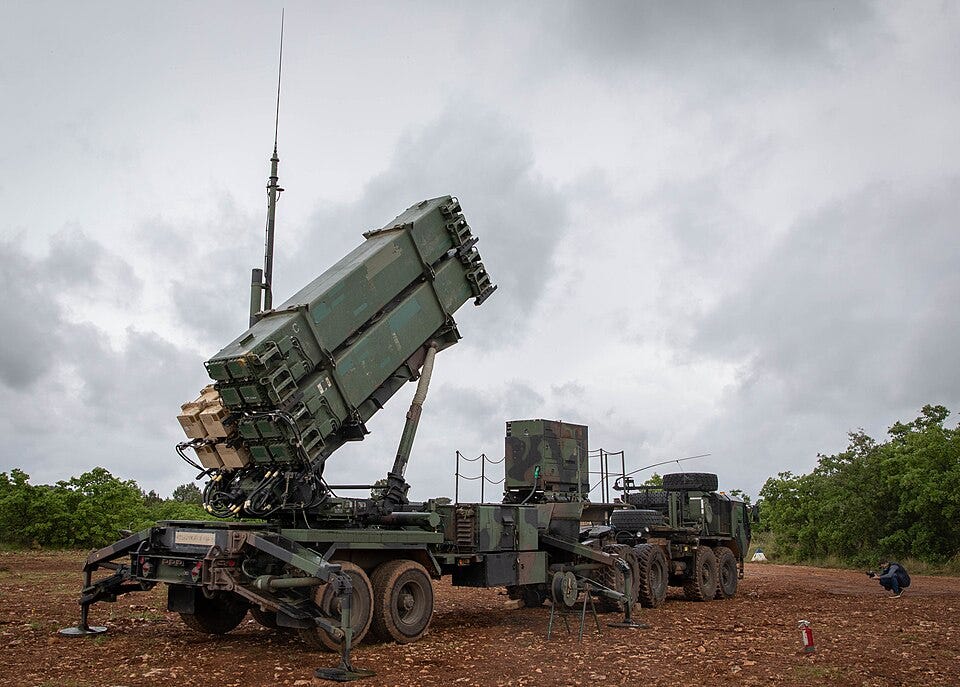
U.S. Army Patriot Missile System
Zero for 23: How Russia’s Ballistic Missiles Are Breaking Kyiv’s Defences
A single night’s toll — 28 dead, no interceptors left to stop a single ballistic missile — reveals the shortage now driving Zelensky’s demands at the NATO summit
Russia opened the first week of July 2026 with one of the heaviest bombardments of Kyiv in months, and closed it by drawing the North Atlantic alliance into a direct, if brief, confrontation over the Norwegian Sea.
Together the two episodes captured the dual character of the war as it entered its fifth year: a grinding campaign of missiles and drones against Ukrainian cities and infrastructure, and a slower-burning contest of nerve between Moscow and NATO along the alliance’s northern and maritime flanks.
Both were unfolding as leaders gathered in Ankara for a NATO summit that many officials hoped would produce, in the words repeated by Kyiv all week, “strong decisions” on air defence.
The bombardment that struck Kyiv and its surrounding region in the early hours of Monday, 6 July, killed at least 28 people, according to Ukrainian officials, with tolls reported slightly differently across outlets as rescue operations continued through the day. City authorities put the number of dead in the capital itself at between 15 and 18, with a further six to ten killed in the wider Kyiv region, and dozens more injured.
Emergency workers spent the day combing through the wreckage of apartment blocks in the Podilskyi district, where a nine-storey building had been torn open from roughly its fifth floor upward. A ladder truck was used to reach residents trapped on upper floors as firefighters continued dousing lingering flames.
Rescue teams recovered the bodies of an entire family — two parents and a child — from one collapsed structure, according to Ukraine’s foreign minister, Andrii Sybiha. Nearly 30 buildings across the capital were significantly damaged, the interior minister said.
Among those waiting outside the ruins was Alyona, 22, who had come looking for news of her friend Vika, a 19-year-old who was missing after the strike. She told reporters she was waiting for rescuers to reach her friend, describing her simply as an unfailingly kind young woman, as she watched the search from a nearby playground. Television footage from the scene showed what appeared to be human remains still trapped under concrete on an upper floor.
Ukraine’s air force said the attack combined ballistic missiles, cruise missiles, hypersonic Zircon anti-ship missiles, and hundreds of drones — 351 by one count — deployed together in an effort to overwhelm the country’s layered defences. The results exposed just how thin those defences have become.
Ukrainian crews shot down the overwhelming majority of the drones and cruise missiles involved — more than 90% of the drones and all but a handful of the cruise missiles — but the ballistic missiles were a different story entirely. Kyiv’s air force reported that its batteries failed to intercept a single one of the roughly 23 ballistic missiles fired at the capital region that night; other tallies for the month put the failure rate nearly as stark, with only four of 49 ballistic missiles downed in July to that point. Several Zircon missiles and a portion of the drone swarm also slipped through.
The reason is a scarcity of Patriot interceptors, the only weapon in Ukraine’s arsenal capable of shooting down ballistic projectiles, whose steep, high-speed trajectories make them extraordinarily difficult to stop with anything else. President Volodymyr Zelensky used his nightly address to vent frustration that global production of the interceptors still lags so far behind what is needed to protect civilians from what he called ballistic terror. He argued that Ukraine has the technical know-how to build the systems itself and that, with a U.S. licence to manufacture Patriots domestically, its output would be enough not only to defend its own cities but to help supply allies as well. In a social media post the same day, he suggested that so long as allied Patriot stockpiles sit unused in storage, Moscow will keep being encouraged to target residential buildings, and said the United States and Europe have the capacity to stop it if they choose to.
The attack came only days after the deadliest strike on Kyiv so far this year, which killed 31 people the previous Thursday, underscoring an intensifying pattern rather than an isolated event. Russia’s defence ministry described Monday’s assault as a “massive” strike using long-range, high-precision weapons launched from air, land and sea platforms, and said it had targeted military and energy facilities in and around Kyiv along with military airfields in several other regions. Beyond the capital, a drone strike on a fuel station in the southeastern Zaporizhzhia region killed two people, and two more died in separate drone strikes in the northern Sumy region, near the Russian border, an area Moscow has said it wants to turn into a broader buffer zone.
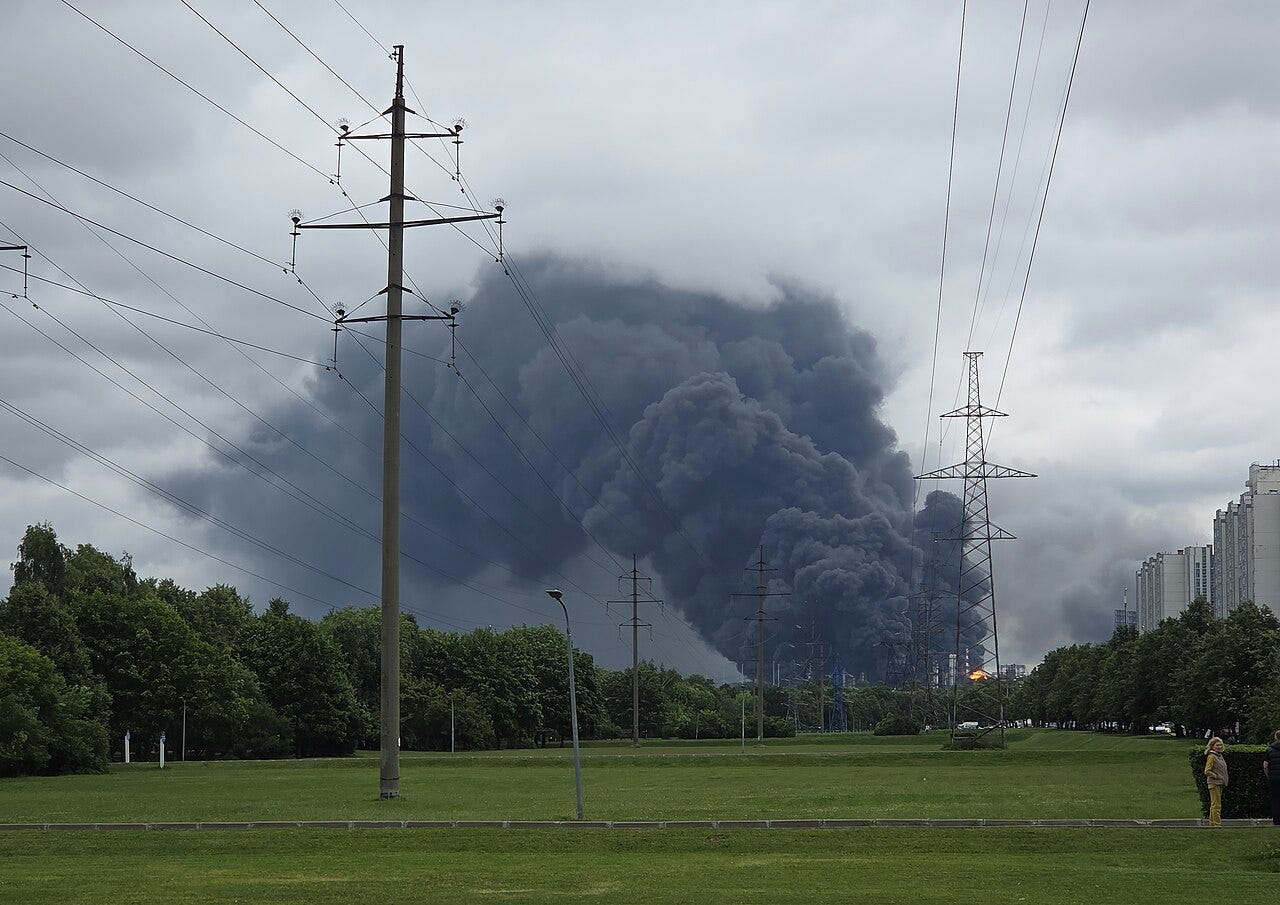
Ukraine did not merely absorb the attack; it answered with its own long-range campaign against Russian energy infrastructure. On the same day as the Kyiv strikes, Ukrainian forces said they had hit three Russian oil refineries, including the country’s largest facility at Omsk, more than 2,400 kilometres from the Ukrainian border, along with two vessels from Russia’s “shadow fleet” in the Sea of Azov. Officials in Kyiv say the Omsk strike also damaged production of chemicals used in Russian refining, adding to fuel shortages that have already produced long queues at petrol stations and, in occupied Crimea, an official state of emergency over shortages of fuel and food. Ukraine’s General Staff has estimated that Russian capacity to process crude oil has fallen by more than 40% as a result of the campaign, which has also included strikes on an oil terminal in St Petersburg — timed to coincide with a showpiece economic forum there in June — and on refineries in Moscow itself, producing viral footage of explosions. Kyiv describes the campaign as a deliberate effort to put pressure on the Kremlin; Moscow has responded by accusing Ukraine of terrorism for hitting its refineries.
The strikes and counter-strikes formed the backdrop to the NATO summit that opened in Ankara on Tuesday, 7 July, which Zelensky used to press allies directly for more air defence systems. Addressing the gathering, he said Ukraine was capable of handling most of the war’s other demands itself, but that on air defence it needed the determination of its partners to actually deliver what has been promised. His appeal carried extra weight given that Russian missiles had hit the Ukrainian capital twice within the space of less than a week, killing more than 50 civilians combined in the two attacks. The summit was also expected to produce a significant one-on-one meeting between Zelensky and U.S. President Donald Trump, at which the Ukrainian leader planned to argue that Russia’s escalating strikes reflect weakness rather than strength, and to press for pressure on Vladimir Putin to accept a “dignified” peace.
NATO’s Secretary General, Mark Rutte, opened the summit by urging member states to increase their contributions and ensure Ukraine receives what it needs to defend its sovereignty, noting that Kyiv’s recent successes — particularly its long-range drone campaign and its efforts to stall Russian ground advances in the east — were changing the dynamics of the conflict. Officials in Ankara spoke of a “window of opportunity” created by the pressure Ukraine’s strikes were placing on Russia. Even Moscow appeared rattled: the city’s mayor, Sergei Sobyanin, said Russian air defences intercepted most of a 430-drone Ukrainian barrage aimed at the Russian capital overnight, though the full extent of any damage was not immediately clear. Russian social media has meanwhile been filled with footage of long queues and altercations at petrol stations as fuel rationing bites.
Zelensky’s broader argument to NATO was that Russia is now betting on ballistic weapons precisely because it senses a shortage of interceptors on the Ukrainian side, and that anyone serious about peace needs to invest in protection against exactly that kind of attack. He has repeatedly called on European governments to hand over Patriot systems sitting in their own stockpiles, arguing they do nothing for anyone in storage while civilians are dying in Ukraine now. But Patriot batteries are scarce worldwide, and it remains unclear how many would even be sufficient if Russia continues to escalate its ballistic missile campaign — one reason Zelensky has also pushed for NATO backing to help Ukraine build its own production capacity rather than relying solely on donations.
Away from the summit’s diplomacy, the war’s grinding infantry battle continued largely unchanged along a roughly 1,200-kilometre frontline. The most contested single point was Kostiantynivka, a industrial city in the eastern Donetsk region that Russia claimed to have captured on Friday, 3 July — an assertion Zelensky flatly denied, at one point sardonically proposing that Putin meet him there to negotiate an end to the war, on the theory that if Moscow really controlled the city such a meeting would pose no difficulty. The Kremlin’s spokesman, Dmitry Peskov, responded by reiterating an unacceptable counter-proposal that the two leaders instead meet in Moscow, while Russia’s general staff floated a temporary ceasefire around Kostiantynivka solely to allow both sides to recover soldiers’ bodies. Fighting continued regardless.
On the ground, the picture is one of fragmented, house-by-house control rather than any clean battle line. A Ukrainian military spokesman, Major Andriy Kovalov, said troops had repelled eleven separate Russian assaults in a single day and described the situation as difficult but under the control of Ukraine’s defence forces. Brigadier General Oleksandr Bakulin, commanding the corps defending the city, said Russian soldiers had been infiltrating not in units or even pairs but one at a time, exploiting the destruction of buildings to move unseen; he estimated more than 100 had entered the city at one point, though some Ukrainian journalists put the figure closer to 250. There is no continuous front, he said, only individual buildings under enemy control that Ukrainian forces are fighting to retake. Ukrainian commanders have acknowledged making tactical withdrawals rather than attempting to hold every position at the cost of heavy casualties.
The same pattern — Russian aerial-guided bombs devastating towns in the path of a slow advance — has hit a cluster of nearby cities including Sloviansk, Kramatorsk and Druzhkivka in addition to Kostiantynivka, driving thousands of civilians to flee in recent months. In Sumy, in Ukraine’s northeast, Russian aircraft dropped six guided bombs on 3 July, one of which killed four people in the city centre, including a five-year-old girl and her mother. Further south, Russian forces have turned drone swarms against farmland, according to farmer Viktor Hordiienko, who said his fields once faced a few dozen drone attacks across an entire sowing season but are now hit by up to 100 drones a day, an intensity he says makes any prospect of harvesting his wheat crop doubtful.
A separate strand of pressure on Moscow surfaced in a European intelligence assessment reported in early July, which warned that Russia’s banking sector faces a risk of what the report called an “explosive” crisis as lenders increasingly absorb the financial strain of the war economy. The two-page document, compiled in recent weeks to brief European officials ahead of a fresh package of EU sanctions, argued that state-backed credit programmes, loan restructurings and government support have created what it described as the illusion of a dynamic economy while concealing underlying fragility. According to the assessment, roughly a tenth of corporate loans in Russia are now doubtful, up sharply since 2024, while some major banks reported retail non-performing loan ratios as high as 15% in 2025. More than half a million Russians declared bankruptcy last year, almost a third more than the year before, even as state programmes encouraged more than 13 million citizens to take out at least three loans simultaneously. Russia’s Economy Ministry has separately cut its growth forecasts, to 0.4% for 2026 and 1.4% for 2027, down from earlier projections of 1.3% and 2.8%.
Russia’s central bank has pushed back on the assessment, declining to comment directly on the report but maintaining publicly that no critical vulnerabilities exist in the financial sector; a deputy governor pointed to bank capital reserves at their highest level in three years and said corporate bad-loan rates had barely moved. Independent analysts are divided: some note that Asian buyers largely ignore Western sanctions, making the idea that a fresh EU package would suddenly tip Russia into crisis look like wishful thinking, particularly given that defence spending is keeping unemployment low and wages high. Others point to harder evidence of strain, including a more than 17% year-on-year rise in cash held outside the banking system, now exceeding 19 trillion roubles, which puts pressure on lenders that depend on deposits to fund loans. Russia’s second-largest bank, VTB, has said it plans to build up reserves to guard against higher fuel prices and potential loan losses, while the chief financial officer of Sberbank, the country’s largest lender, has argued that after four years under sanctions, many ordinary customers of blacklisted banks are not even aware the restrictions exist. The EU is nonetheless preparing what would be its 21st sanctions package, aimed in part at banks and cryptocurrency networks, that could add roughly 90 more Russian banks to the blacklist, bringing the total past 100 — more than half the country’s internationally connected lenders. Complicating European enforcement, the Trump administration has eased some U.S. sanctions on Russia, including a since-expired temporary waiver permitting sales of Russian oil.
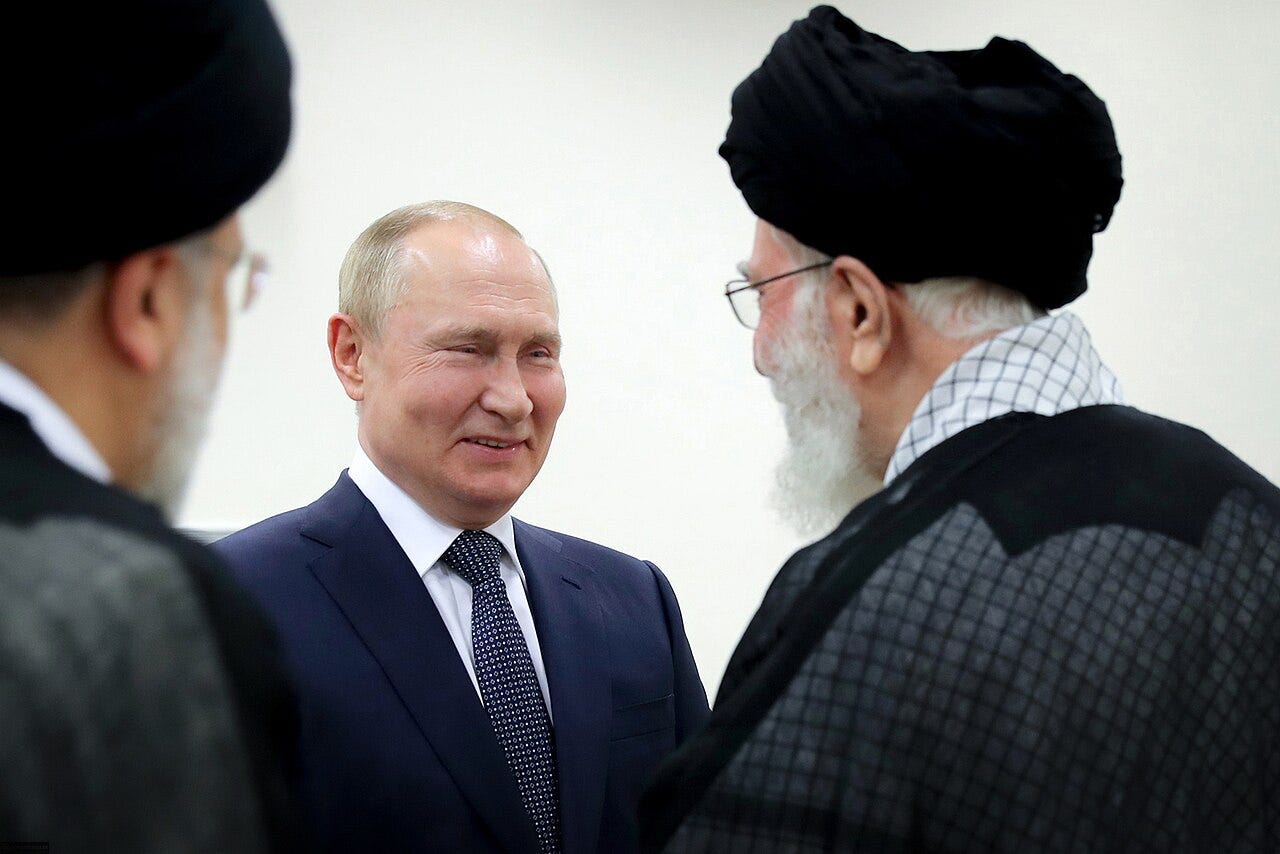
Putin himself has shown little public inclination toward compromise. In what the Kremlin described as a front-line visit on 3 July, he reiterated Russia’s determination to press ahead with capturing four Ukrainian regions in full, and even suggested Moscow could expand its territorial ambitions beyond the Donbas if Ukrainian strikes on Russian territory continue. He has separately said Russia expects a resumption of U.S.-brokered diplomacy once the “hot phase” of the U.S.-Israeli conflict with Iran subsides. Trump and Putin spoke by phone for around ninety minutes over the weekend before the summit, with Kremlin aide Yuri Ushakov saying Putin used the call chiefly to brief Trump on recent Russian battlefield gains; Zelensky, who also spoke with Trump the same weekend and agreed to meet him in person at the summit, described the prospect of renewed negotiations as real but dependent on American resolve. A Financial Times report citing a Moscow source suggested Russia’s continued attachment to maximalist war aims makes substantive negotiations unlikely before February of next year.
Anxiety about where a Russian escalation might lead next is not confined to Ukraine’s own front lines. On Sweden’s Baltic island of Gotland, a rapid remilitarisation effort has been under way for several years and has accelerated further amid the broader European rearmament drive. The island, positioned roughly 275 kilometres from the Russian exclave of Kaliningrad, is considered strategically vital because control of it would allow control of air and sea approaches across much of the Baltic. Sweden shut down its last full regiment there in 2005, leaving only a reduced Home Guard presence, but has since rebuilt a garrison from scratch, a process that sped up further after Russia’s full invasion of Ukraine and Sweden’s subsequent accession to NATO. Conscripts as young as 19, among them a young woman named Ella Adman who had never held a weapon before starting her service, now undergo 15-month terms of compulsory training on the island. Swedish defence officials say Gotland is not thought to face an imminent risk of conventional attack — sabotage and espionage are considered more likely near-term threats — but caution that the island could become significantly more vulnerable if a ceasefire or peace deal in Ukraine frees up Russian forces for redeployment toward Finland and the Baltic states, since pressure and desperation, officials there argue, tend to move together.
Alongside the military build-up, Gotland has become a testing ground for civilian resilience measures aimed at keeping the island as self-sufficient as possible if supply lines were ever cut, including local neighbourhood preparedness groups that inventory water, power and communications resources, and plans for community hubs offering heat, food and shelter in an emergency. Sweden’s civil defence agency is using lessons drawn from Ukraine’s experience — particularly around handling mass casualties, unexploded ordnance, and search-and-rescue in damaged buildings — to prepare emergency services elsewhere in the country, with Gotland serving as an early template given its geographic exposure.
That same undercurrent of vigilance surfaced in the North Atlantic in early July, when Royal Air Force jets from Britain’s carrier strike group intercepted a Russian maritime patrol aircraft that the Ministry of Defence said had “repeatedly approached” the group in the Norwegian Sea. The Russian Bear-F aircraft flew at low altitude and, in the MoD’s description, unnecessarily close to the carrier HMS Prince of Wales, and is believed to have dropped ten sonobuoys — floating devices that use sonar to detect submarines — into the water. British personnel tried to reach the aircraft on international radio frequencies without success before two F-35 jets launched from the carrier to escort it away; the ministry characterised the Russian activity in the area as unsafe and unprofessional. The carrier strike group, deployed off Iceland under NATO command with some 1,500 British personnel aboard, also includes the destroyer HMS Duncan, F-35 jets, Merlin and Wildcat helicopters, and the support tanker RFA Tidespring, and is conducting the first air policing operations NATO has run from a European aircraft carrier.
The incident came only weeks after Royal Marines boarded a Russian shadow-fleet oil tanker in the English Channel, and as Britain’s most senior military officer has warned that the risks facing the UK are now greater than at any point since the Cold War. Defence Secretary Dan Jarvis, visiting the carrier over the weekend, said deployments of this kind, backed by allies including Iceland, help strengthen deterrence within NATO, and argued that the Russian threat now spans every domain — undersea, on the water, on land, in the air, in space and in cyberspace. Chief of the Defence Staff Sir Richard Knighton said in June that Russia has been testing and probing Western defences in a way that is deliberately raising the stakes and risking a serious miscalculation. NATO has separately warned that Russia could be prepared to use military force against the alliance by 2030.
The intercept also landed amid a domestic British argument over defence funding. The government recently published its long-delayed plan to increase military investment, with outgoing Prime Minister Sir Keir Starmer announcing an additional £15bn in spending, partly financed through cuts elsewhere in government. Critics, including opposition MPs and military figures, argue the sums fall well short of what the scale of the Russian threat demands; two ministers, John Healey and Al Carns, resigned in June over an earlier version of the plan, contributing to pressure that eventually led to Starmer’s own political downfall. Shadow defence secretary James Cartlidge said the latest Russian actions only reinforce the need for the government to explain how it intends to fund what he called a chaotic defence investment plan, arguing that funding forces adequately will require prioritising defence spending over expanding the welfare state. Separately, the government announced sanctions against seven individuals and two organisations for their roles in developing the chemical weapon used in the 2018 Novichok poisoning that killed Dawn Sturgess in Salisbury, and in the killing of Russian opposition leader Alexei Navalny in 2024 — a reminder that, alongside the war in Ukraine and manoeuvring in the Baltic and North Atlantic, London continues to treat Russian state activity on British and European soil as an unresolved and ongoing threat in its own right.
Sources and Further Readings
https://www.nytimes.com/2026/07/05/world/europe/ukraine-russia-donetsk-front.html
메타데이터
- post_id
- 7a8d99adf809
- slug
- zero-for-23-how-russias-ballistic-missiles-are-breaking-kyiv-s-defences-7a8d99adf809
- url
- https://medium.com/the-geopolitics-report/zero-for-23-how-russias-ballistic-missiles-are-breaking-kyiv-s-defences-7a8d99adf809
- canonical_url
- https://medium.com/the-geopolitics-report/zero-for-23-how-russias-ballistic-missiles-are-breaking-kyiv-s-defences-7a8d99adf809
- author_url
- https://medium.com/@jens_sorensen_geopol.
- status
- ok
- fetched_at
- 2026-07-10 01:40:30