Blood Sugar After 2 Hours of Eating: What’s Normal?
Discover normal blood sugar levels 2 hours after eating, what affects your results, healthy habits, and practical tips to support daily bloo
Blood Sugar After 2 Hours of Eating: What’s Normal and Why It Matters
After you eat a meal, your body begins breaking down carbohydrates into glucose, which enters your bloodstream and provides energy to your cells. As blood sugar rises, your pancreas releases insulin to help move glucose from your blood into your cells. In most healthy people, blood sugar rises after eating and then gradually returns toward normal within a few hours.
Checking your blood sugar 2 hours after eating (also called a post-meal or postprandial blood sugar test) can provide valuable information about how your body is processing food. Healthcare providers often use this measurement to help monitor diabetes management and understand how well blood sugar is being controlled.
In this guide, you’ll learn what a normal blood sugar level looks like 2 hours after eating, what factors can affect the results, how to test correctly, and practical habits that support healthy blood sugar over time.
Why Does Blood Sugar Rise After Eating?
Whenever you eat foods that contain carbohydrates, your digestive system breaks them down into glucose. This glucose enters your bloodstream, causing your blood sugar level to rise.
To keep blood sugar within a healthy range, the pancreas releases insulin. Insulin acts like a key, allowing glucose to enter your body’s cells, where it is used for energy or stored for later use.
Several factors influence how much your blood sugar rises after a meal, including:
- The amount of carbohydrates you eat
- The type of carbohydrates (simple vs. complex)
- The balance of protein, fiber, and healthy fats in your meal
- Physical activity
- Stress levels
- Sleep quality
- Certain medications
- Individual health conditions, including diabetes
What Is a Normal Blood Sugar Level 2 Hours After Eating?
The target blood sugar level 2 hours after eating can vary depending on a person’s overall health, age, pregnancy status, and whether they have diabetes. Your healthcare provider can tell you what range is appropriate for you.
Many healthcare professionals use the following general guidelines:
For People Without Diabetes
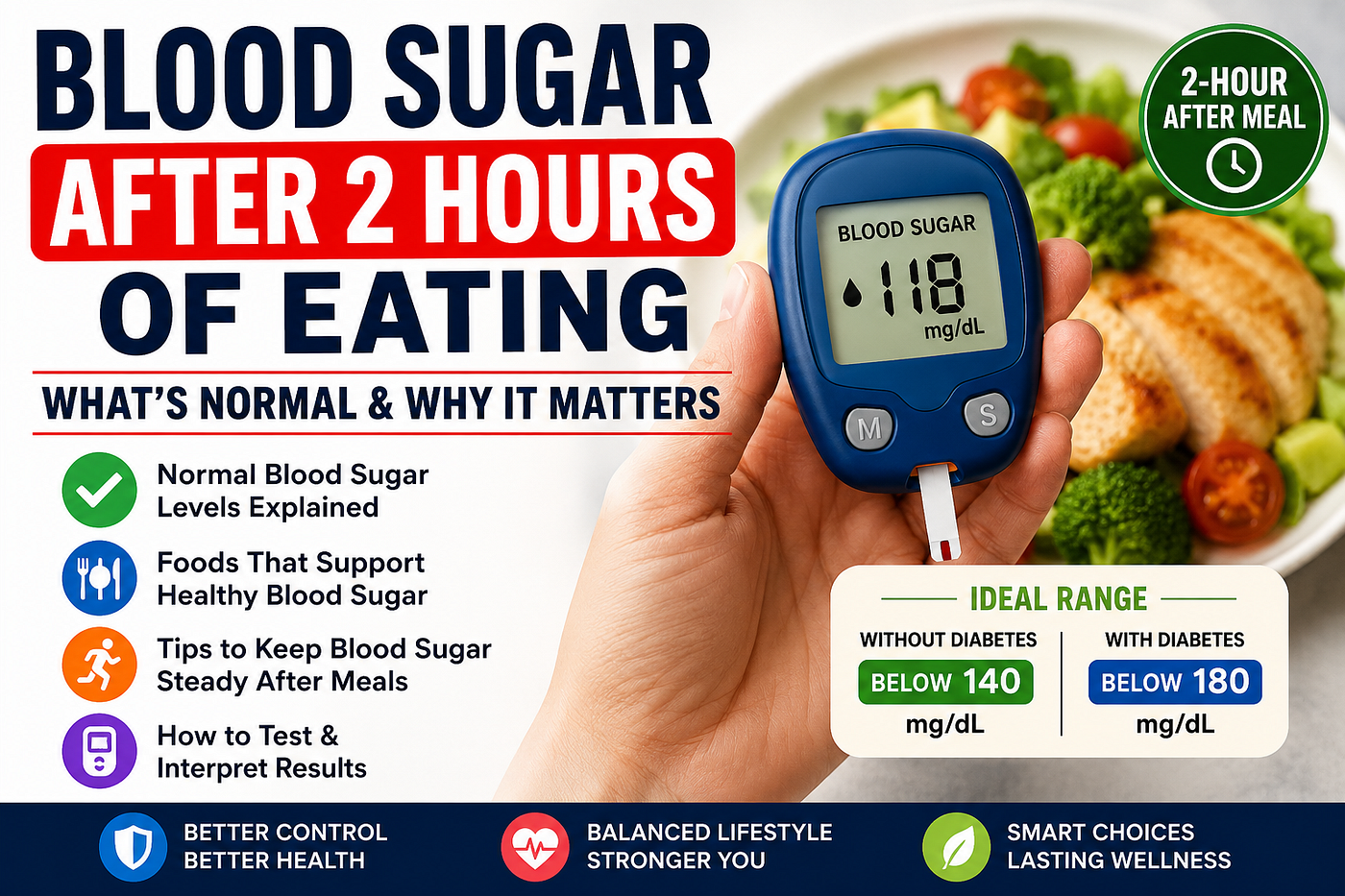
Two hours after eating, blood sugar is often below 140 mg/dL.
For Many Adults With Diabetes
Individual targets vary, but many diabetes care plans aim for less than 180 mg/dL two hours after the start of a meal. Your healthcare provider may recommend a different target based on your personal situation.
Remember that a single reading does not tell the whole story. Patterns over time are generally more helpful than one isolated result.
Why the 2-Hour Reading Is Important
Measuring blood sugar two hours after eating can help you:
- Understand how your body responds to different meals.
- See how lifestyle habits affect blood sugar.
- Monitor the effectiveness of your diabetes management plan.
- Identify patterns that you can discuss with your healthcare provider.
- Make informed decisions about meals, activity, and medication with professional guidance.
Tracking post-meal blood sugar over time can provide valuable insights that fasting blood sugar alone may not reveal.
Factors That Can Affect Blood Sugar After Eating
Many everyday factors can influence your blood sugar level after a meal.
Carbohydrate Intake
Meals that contain large amounts of refined carbohydrates or sugary beverages may cause blood sugar to rise more quickly than meals that include whole grains, vegetables, lean protein, and healthy fats.
Portion Size
Even nutritious foods can lead to higher blood sugar if eaten in very large portions.
Fiber
Fiber slows digestion and helps reduce rapid spikes in blood sugar after meals.
Protein and Healthy Fats
Including lean protein and healthy fats with carbohydrates may help slow the absorption of glucose and support steadier blood sugar levels.
Physical Activity
A short walk after eating can help your muscles use glucose for energy, which may improve post-meal blood sugar for some people.
Stress
Physical or emotional stress can affect hormones that influence blood sugar levels.
Illness
During illness, blood sugar may rise even if your eating habits remain the same.
How to Check Blood Sugar Correctly
If your healthcare provider recommends monitoring your blood sugar, it’s important to test correctly.
General tips include:
- Wash and dry your hands before testing.
- Use a clean testing strip if using a glucose meter.
- Follow the manufacturer’s instructions.
- Measure your blood sugar at the time recommended by your healthcare provider, such as two hours after the start of a meal.
- Record your results to help identify patterns.
Some people also use continuous glucose monitors (CGMs), which provide ongoing blood sugar readings throughout the day and night.
What Can Cause High Blood Sugar After Meals?
Occasionally having a higher-than-expected reading does not necessarily mean something is wrong. However, consistently elevated post-meal blood sugar may warrant a conversation with your healthcare provider.
Possible reasons include:
- Eating more carbohydrates than usual
- Large meal portions
- Missing diabetes medication
- Reduced physical activity
- Stress or illness
- Individual differences in insulin production or insulin sensitivity
If you notice repeated high readings, your healthcare provider can help determine the cause and recommend appropriate next steps.
Can Blood Sugar Drop Too Low After Eating?
Although less common, some people may experience reactive hypoglycemia, where blood sugar drops several hours after eating. Symptoms may include:
- Shakiness
- Sweating
- Hunger
- Dizziness
- Difficulty concentrating
- Feeling weak
These symptoms can have several causes, so it’s important to discuss them with a healthcare professional rather than self-diagnose.
Foods That May Support Healthy Blood Sugar
While no single food can guarantee healthy blood sugar levels, a balanced eating pattern may help support overall glucose management.
Nutritious choices include:
- Non-starchy vegetables
- Whole grains
- Beans and lentils
- Lean poultry
- Fish
- Eggs
- Nuts and seeds
- Plain Greek yogurt
- Berries
- Apples
- Healthy fats such as olive oil and avocado
Choosing a variety of nutrient-dense foods and limiting highly processed, sugar-sweetened foods can support overall health.
Healthy Habits That Support Blood Sugar Management
Daily habits play an important role in maintaining healthy blood sugar.
Helpful strategies include:
- Eat balanced meals.
- Include fiber-rich foods.
- Stay physically active.
- Drink enough water.
- Get adequate sleep.
- Manage stress through relaxation techniques.
- Follow your healthcare provider’s treatment plan if you have diabetes.
- Attend regular medical checkups.
Small, consistent lifestyle changes often have a greater long-term impact than short-term diets or quick fixes.
Maintaining healthy blood sugar involves balanced nutrition, regular exercise, quality sleep, and following your healthcare provider’s advice. If you’re interested in learning about dietary supplements for everyday wellness, you can visit the **Sugar Defender Official Website** for additional information.
메타데이터
- post_id
- 7aaeff021484
- slug
- blood-sugar-after-2-hours-of-eating-whats-normal-7aaeff021484
- url
- https://medium.com/@nawazmemon0503/blood-sugar-after-2-hours-of-eating-whats-normal-7aaeff021484
- canonical_url
- https://medium.com/@nawazmemon0503/blood-sugar-after-2-hours-of-eating-whats-normal-7aaeff021484
- author_url
- https://medium.com/@nawazmemon0503
- status
- ok
- fetched_at
- 2026-08-12 03:53:31