Self-Induction: The Invisible Force That Resists Change in Electric Current
Why does a coil oppose changes in its own current? Discover the fascinating physics behind self-induction and its role in modern electrical…
Self-Induction: The Invisible Force That Resists Change in Electric Current
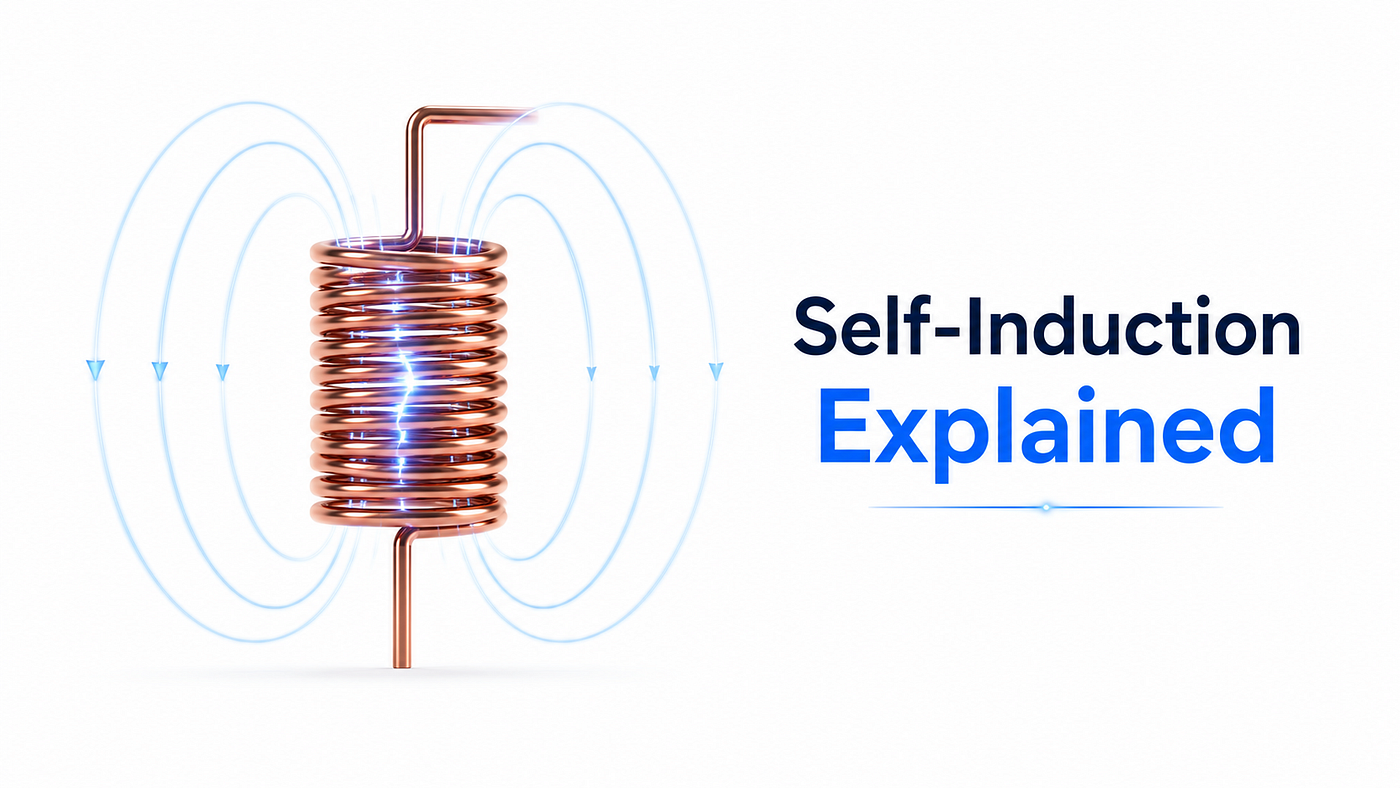
Imagine This...
You switch on an electrical circuit expecting current to flow instantly.
But inside the coil, something interesting happens.
Before the current can change freely, the coil briefly produces its own induced voltage that opposes that change.
It's almost as if the coil says,
"Wait a moment—I don't like sudden changes."
This fascinating behaviour is called self-induction, and it is one of the fundamental principles behind transformers, motors, relays, and many other electrical devices.

The Core Idea
Unlike mutual induction, which involves two separate coils, self-induction happens within a single coil.
Whenever the current flowing through that coil changes, its magnetic field also changes.
That changing magnetic field induces a voltage in the same coil.
This induced voltage always opposes the original change in current.
Scientists call this Lenz's Law, which explains why induced effects always resist the change that creates them.

Think About a Moving Bicycle
Imagine riding a bicycle at high speed.
If you suddenly apply the brakes, the bicycle doesn't stop immediately.
It resists the sudden change in motion.
Electric current behaves in a surprisingly similar way.
A coil resists sudden increases or decreases in current, making electrical systems smoother and more stable.
This comparison helps explain why self-induction is sometimes described as the electrical equivalent of inertia.

Where Do We Use Self-Induction?
Although invisible, self-induction is working around us every day.
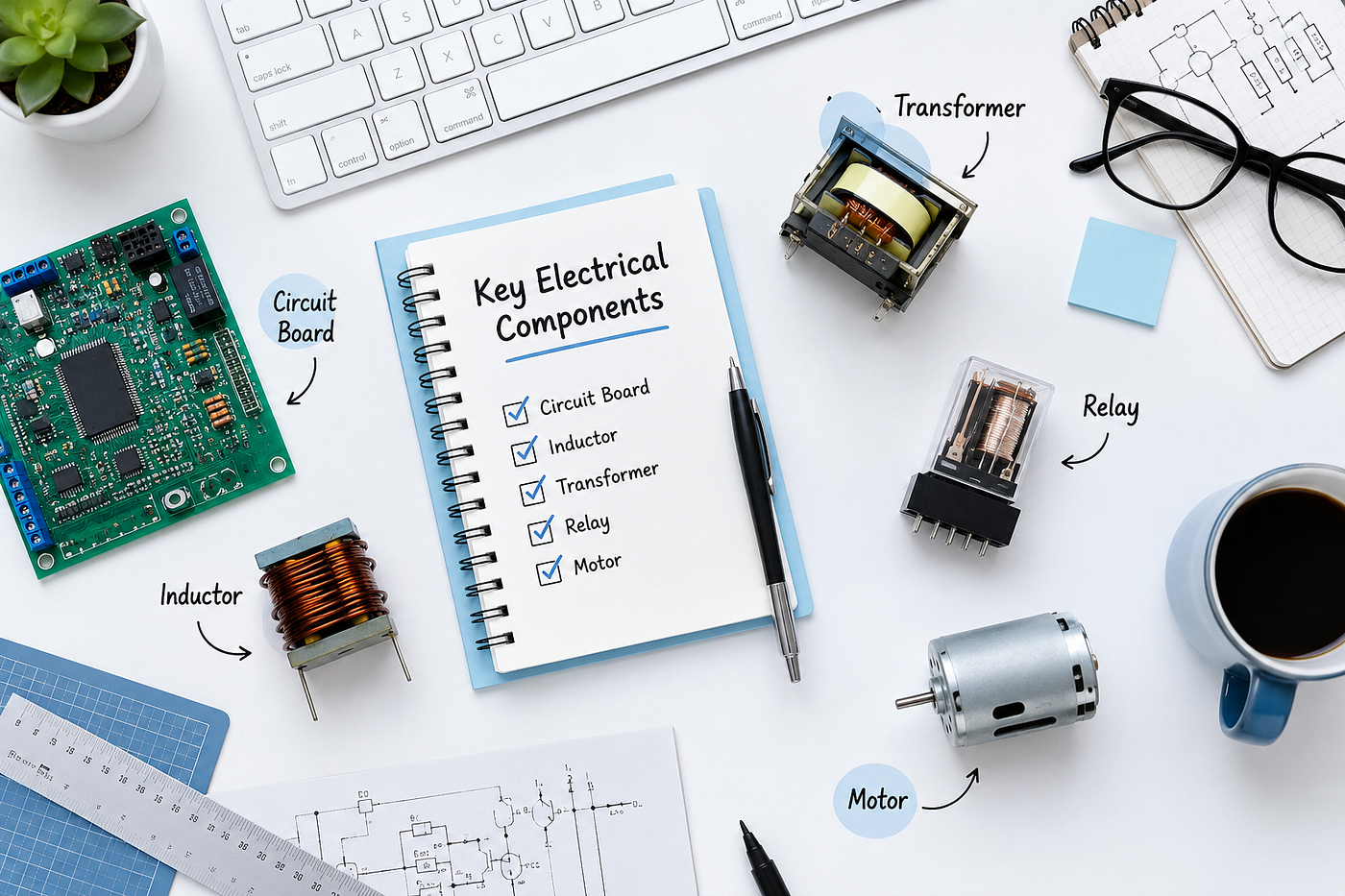
It plays an important role in:
- Electric motors
- Inductors
- Relays
- Transformers
- Power supplies
- Radio circuits
- Electronic filters
Without self-induction, many modern electronic devices would operate far less efficiently.
Why Engineers Value Self-Induction
Engineers don't see self-induction as a problem—they use it as a powerful tool.
It helps control current, protects sensitive electronic components, stores energy temporarily, and improves the performance of electrical circuits.
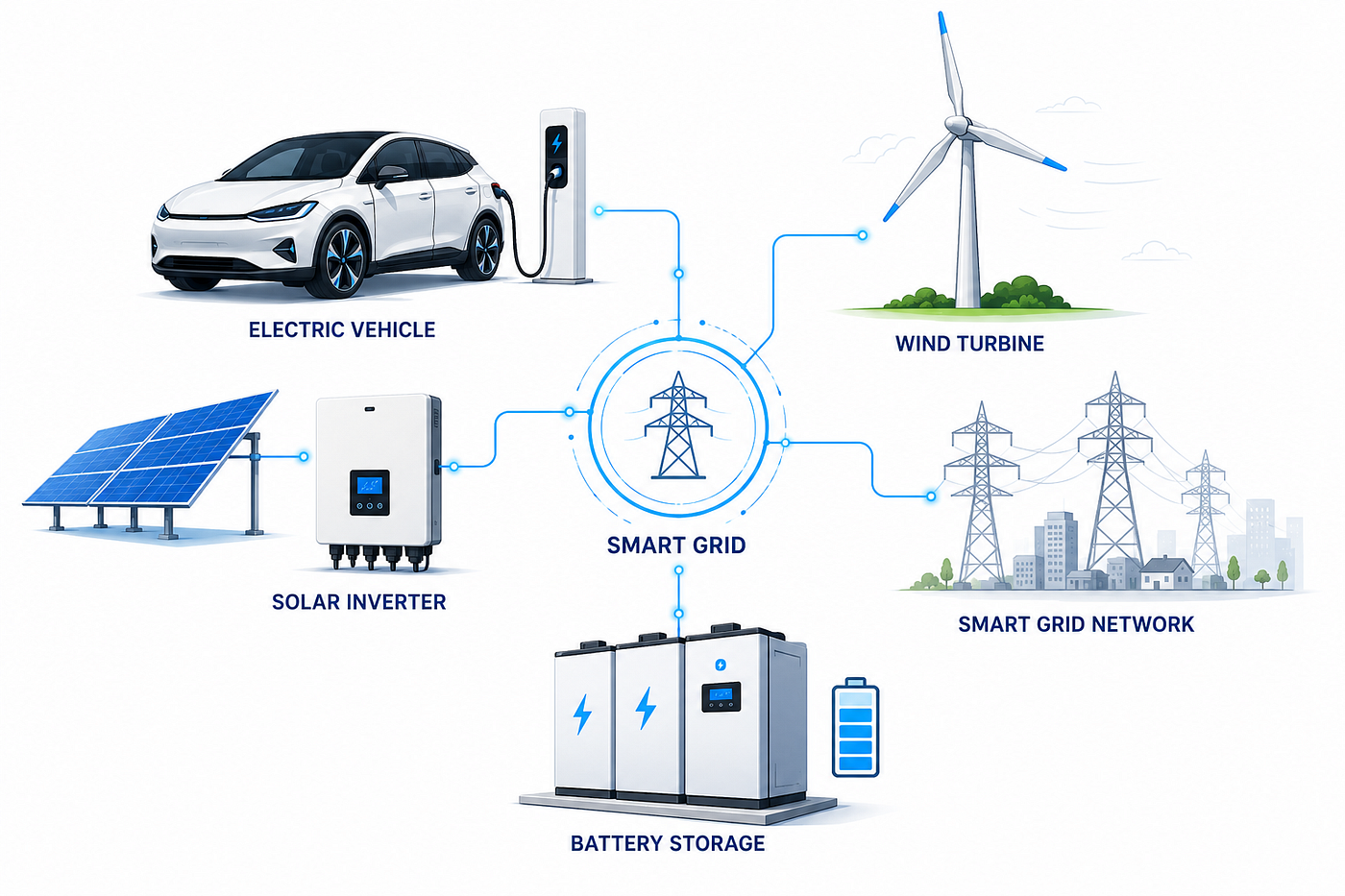
From renewable energy systems to consumer electronics, self-induction quietly supports technologies we rely on every day.
Quick Revision Box
Remember these three points:
✔ Self-induction involves one coil.
✔ A changing current creates a changing magnetic field.
✔ The induced voltage always opposes the change in current.
If you remember these three ideas, you'll understand the foundation of self-induction.
Final Thoughts
Self-induction may not be visible, but its effects are found in almost every electrical system around us.
It prevents sudden changes in current, protects circuits, and makes electrical devices more reliable. Once you understand this concept, many topics in electromagnetism become much easier to grasp.
The next time you use an electronic device, remember that a tiny electromagnetic effect may be quietly helping it work safely and efficiently.
📥 Continue Learning
If you're revising electromagnetism, printable study sheets can make complex concepts much easier to remember.
👉 https://gumroad.com/discover?a=74167907
Follow Luminous Physics for clear explanations, modern illustrations, and student-friendly physics articles.
메타데이터
- post_id
- 7ac0cc95f0dd
- slug
- self-induction-the-invisible-force-that-resists-change-in-electric-current-7ac0cc95f0dd
- url
- https://medium.com/@Luphy512145/self-induction-the-invisible-force-that-resists-change-in-electric-current-7ac0cc95f0dd
- canonical_url
- https://medium.com/@Luphy512145/self-induction-the-invisible-force-that-resists-change-in-electric-current-7ac0cc95f0dd
- author_url
- https://medium.com/@Luphy512145
- status
- ok
- fetched_at
- 2026-08-02 09:08:29



