[1990] Me So Horny: Music Censorship and the Parental Advisory Sticker
Back when a music album was declared legally “OBSCENE” by a US judge
[1990] Me So Horny: Music Censorship and the Parental Advisory Sticker
Back when a music album was declared legally “OBSCENE” by a US judge
By Jesse Karjalainen (Non-member? Join me on all your favourite social platforms: **YouTube | [TikTok](https://www.tiktok.com/@retrotechshow?source=user_about----------------------1aa8cfb4ab15----------------------) | [Substack](https://substack.com/@retrotechshow?source=user_about----------------------1aa8cfb4ab15----------------------) | [Bluesky](https://bsky.app/profile/retrotechshow.bsky.social?source=user_about----------------------1aa8cfb4ab15----------------------) | [Gumroad](https://jessebooks.gumroad.com/?source=user_about----------------------1aa8cfb4ab15----------------------)**.)
…
Be warned. I don’t normally write explicit words in my articles, but today will be an exception. I should also say ahead of time that today’s topic has been a bone of contention for me for the past four decades.
Generation Z loves cancel culture and getting in your face about all the things you supposedly can’t say. There’s a whole list of things. Say the wrong thing around Gen Z — you get your ass cancelled.
How the world has turned.
In 1990, the economy was nose-diving, there were no jobs for young people, and we were angry at the system. The social contract (like it is once again today) was broken. So we got angry.
I don’t think I can even convey the feelings of betrayal we felt on a generational level. So we made rap music and grunge. We listened to the likes of Public Enemy, Geto Boys, Nirvana and Offspring.
The Boomer politicians used the power of the state to come after our music. Our music became the focal point of an explosive political climate. It started with warning labels and ended with outright bans.
Collectively, as young people, my generation was forced to fight for the RIGHT to use the words we wanted to. We did not ban them!
I don’t think Generation Z has any idea how hard we fought for identity rights, personal freedoms and the right to say whatever the fuck we wanted.
Lost generation
The 1980s had started with economic malaise and had witnessed a great boom that gave rise to Yuppies and Miami Vice. But the 1987 Wall Street crash, the end of the Cold War, the Gulf War and the oil-price shock had all led to the new decade experiencing a severe downturn.
For many kids of my generation, politics suddenly had new meaning. We were a lost generation, and we vented our frustrations by creating and listening to anti-establishmentarian music like Grunge and Rap.
Two things happened in the summer of 1990. The album As Nasty as They Wanna Be by The 2 Live Crew was declared legally OBSCENE by a judge in the US. Much of the controversy centred on the song, Me So Horny.
This was the first and only time a record received this classification in American history. State authorities arrested record-store owners for SELLING the record, and musicians were pulled off stage mid-concert and arrested for using explicit words in front of a paying audience.
It wasn’t just The 2 Live Crew. Police have also arrested Ice-T, Bobby Brown and LL Cool J while performing on stage. And for other artists, the politicians and the media used their immense power to put pressure on record labels to either clean up or withdraw certain albums from sale.
This led to the second thing that happened in the summer of 1990. It was in July that the first album was released with the new mandatory Parental Advisory Sticker on it. Appropriately enough, that album was by Luke Skywalker, leader of The 2 Live Crew. That album was Banned in the USA, which sampled Bruce Springsteen’s Born in the USA.

Banned in the USA came out in 1990. Image copyright Jesse Karjalainen.
In defiance of the official order, the logo was hidden in a dark corner of the album cover and featured no white background. Blink, and you could miss it!
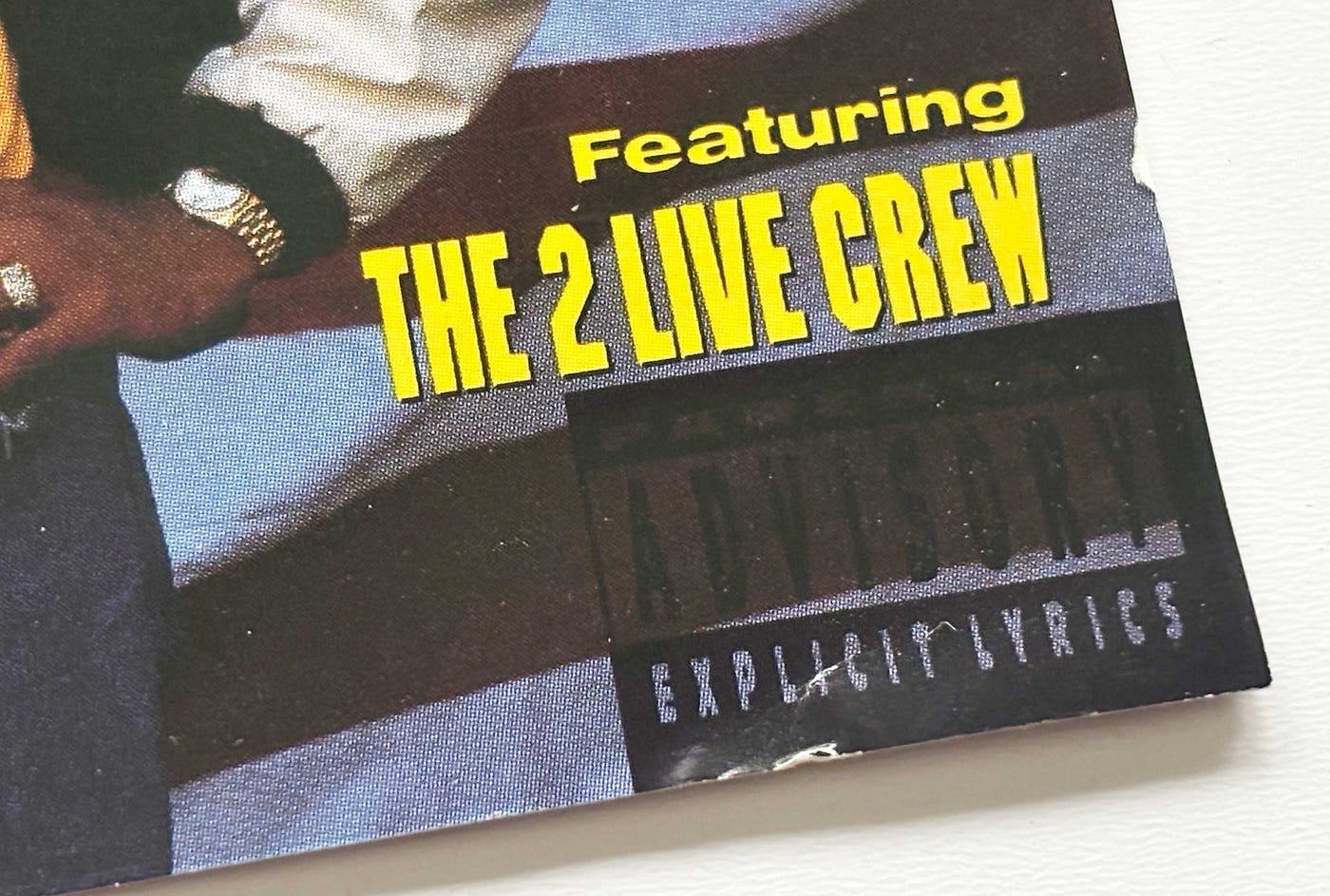
The very first Parental Guidance label on an album. Image copyright Jesse Karjalainen.
On the left side of the album cover, Luke Skywalker included the full text of the US First Amendment.
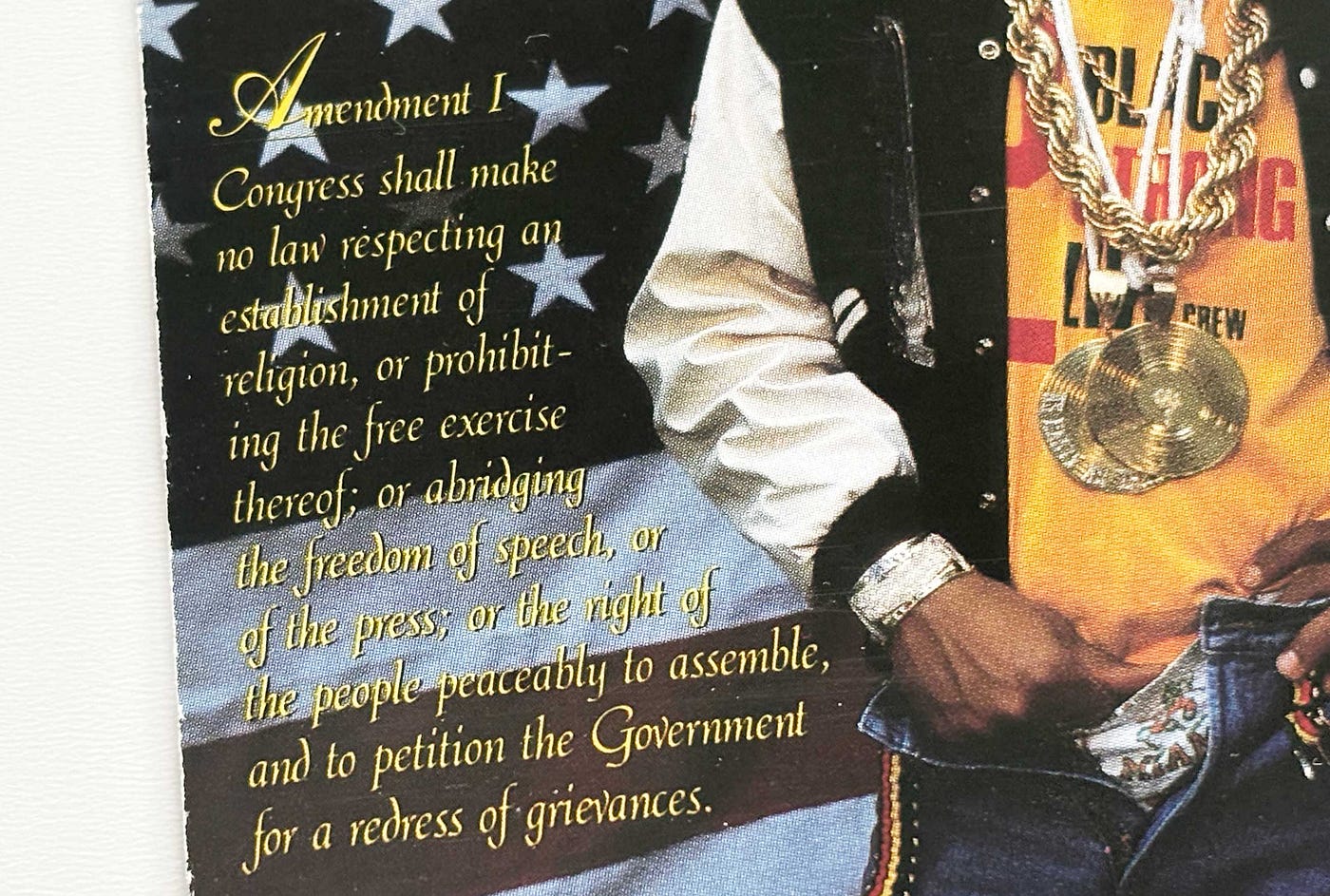
The First Amendment. Image copyright Jesse Karjalainen.
This parental guidance sticker was the start of the multi-decade practice of labelling records in the US as having explicit lyrics or content. It wasn’t just a label — like a game rating today — it was an act of political force.
For those who weren’t there to experience it, this was no obscure, underground band. The As Nasty as They Wanna Be album came out in 1989, and it dominated the Billboard charts. It sold millions and millions of physical copies. It was certified platinum.
The first track and lead single on that album was Me So Horny. Yet, in June 1990, the song was declared legally obscene in the state of Florida.
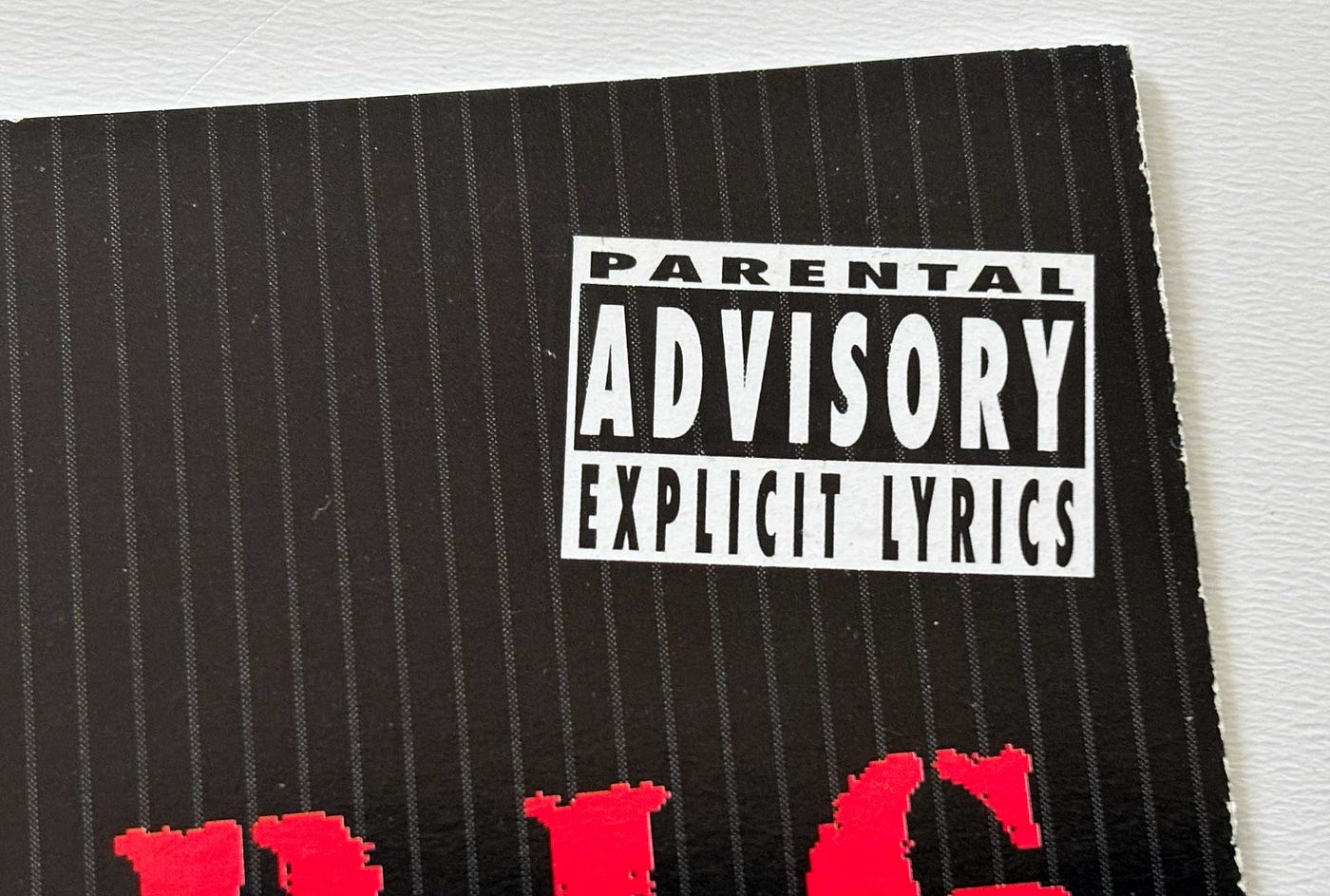
Parental Advisory. Image copyright Jesse Karjalainen.
Horny Spice
Here’s the important part: What was in the song that made it so obscene to bring a legal ban? I’m glad you asked. Well, the first objection seemed to be that the chorus comprised a looped sample of a female voice saying:
(moan) me so horny / x 3 / me love you long time
As for the lyrics, rapper Luke Skywalker begins by mentioning his “dick on hard,” and he’s scrolling his black book for “a freak to call.” He gets to her house, and he ends the first verse with:
I’m like a dog in heat, a freak without warning I have an appetite for sex, cause me so horny
In the rest of the song, we hear words like fuck, a quick nut (Google it), pussy, ass — before ending the second verse with a reminder that he’s like a dog in heat. In verse three, we hear that he’s not looking for romance; that he’ll leave his female friend “fucked and deserted.” He confesses that this is because:
I fuck all the girls and I make ’em cry
He’s clearly a cad. But also a dog.
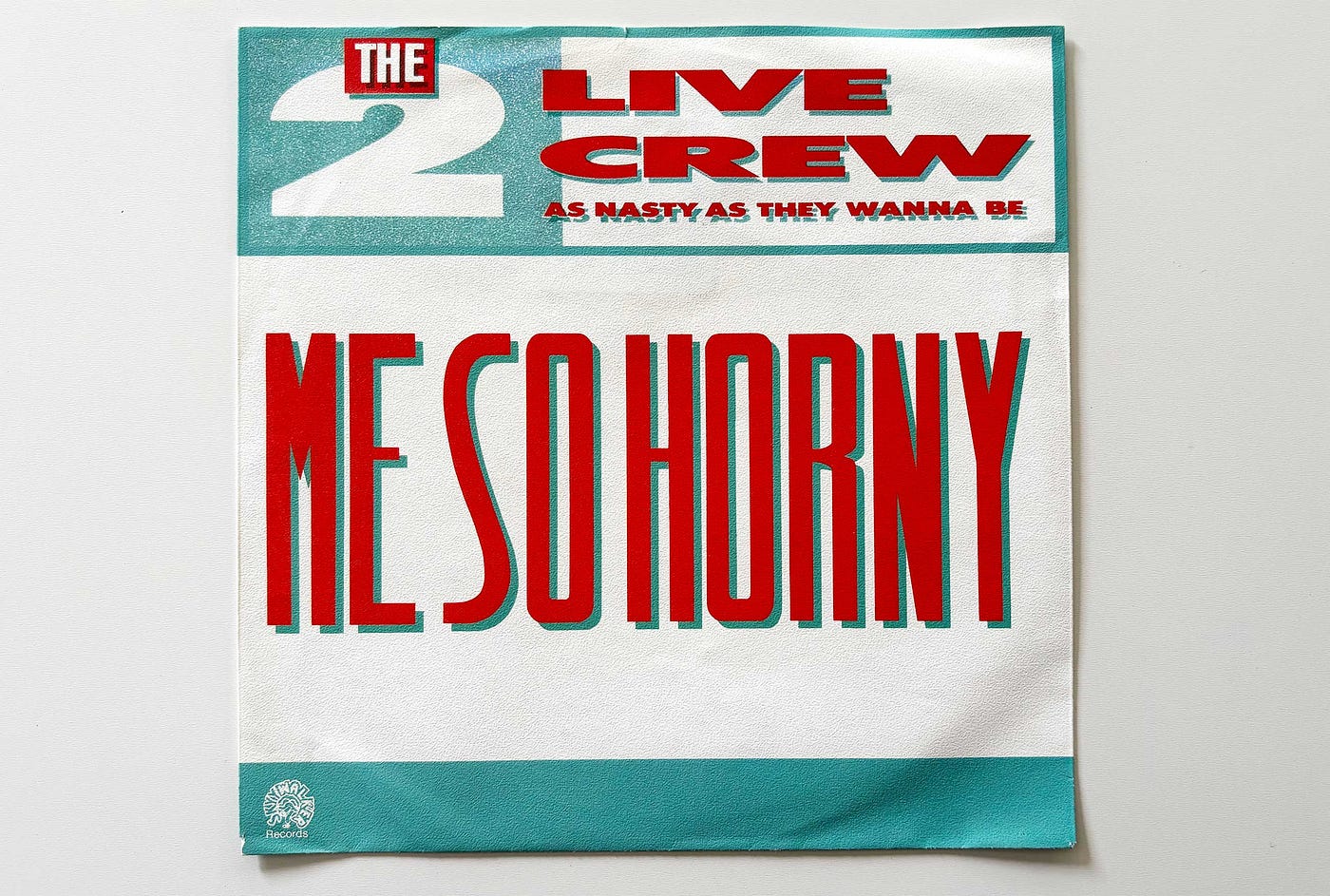
Me So Horny single on vinyl. Image copyright Jesse Karjalainen.
For the final verse, we find out that Luke was this female friend’s first. He was the first to make her “hot and wetty-wetty.” Now, as per the song, he’s coming to pick her up and take her straight to his house.
You said it yourself, you like it like I do Put your lips on my dick, and suck my asshole too
Cue chorus:
(moan) me so horny.
And that’s essentially the whole song. It might not be to everyone’s taste. But before you condemn the sexist words, let me introduce you to a book called Icebreaker.
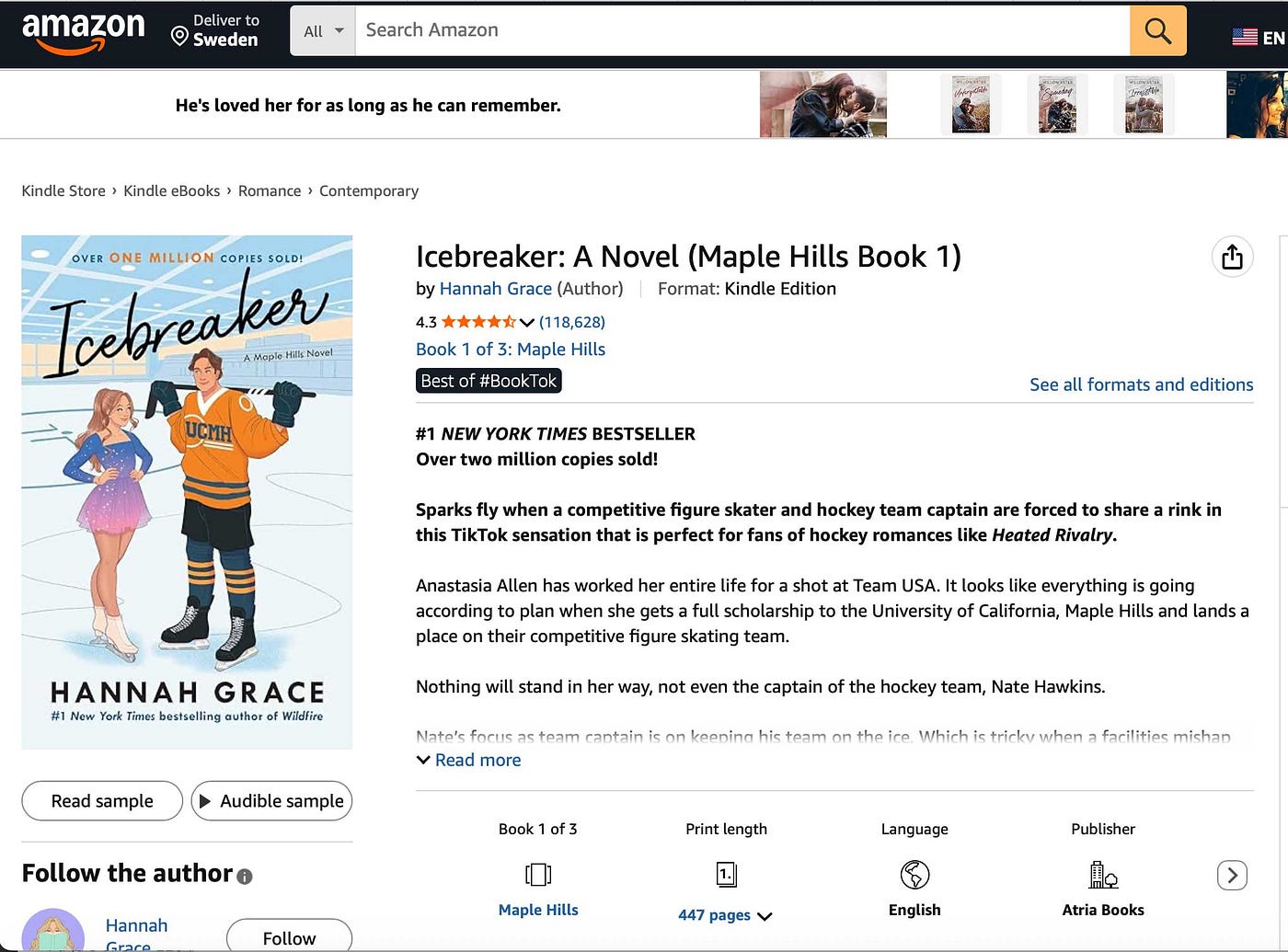
Screenshot of the book Icebreaker on Amazon. Image accessed June 2026.
It is part of the BIG trend in the 2020s of so-called “spicy romance” books that practically every woman under 30 will know very well. On Amazon US, it has 118,000 reviews. On Amazon UK, it has 117,000 reviews. Author Hannah Grace has sold millions MORE copies than The 2 Live Crew ever did.
In case you hadn’t cottoned on to this trend, these spicy books are EVERYWHERE. In a world of abundant online pornography and OnlyFans, this is what women from teen up are reading by the literal millions.
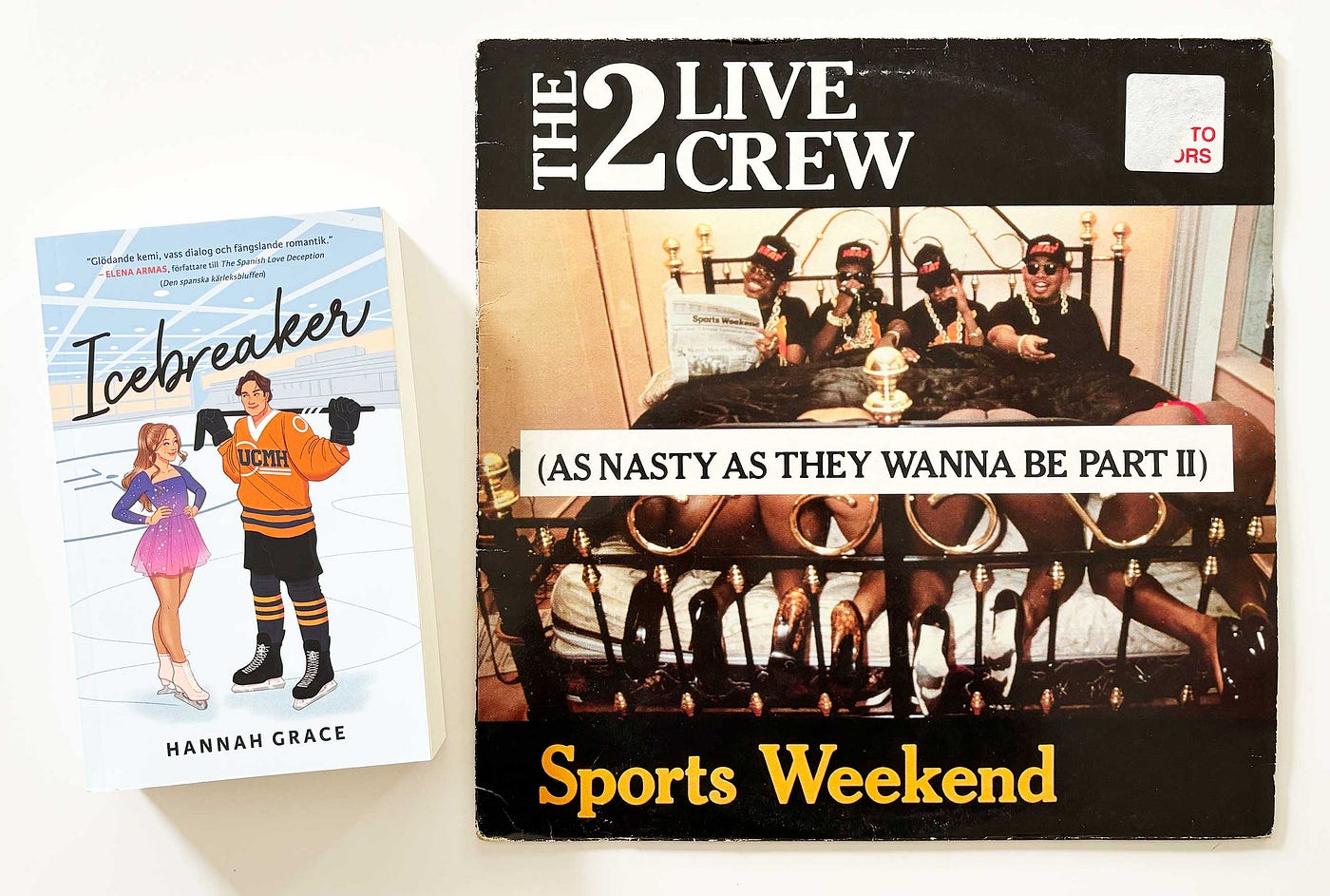
As explicit as they wanna be. Image copyright Jesse Karjalainen.
If you put the book side-by-side with an album by The 2 Live Crew, you are likely to go by the cover. But don’t be fooled by the cartoonish looks. Here are some words taken literally from a random page of Icebreaker. (Hint: here comes the explicit stuff.)
Don’t be gentle. Fuck me like you hate me … I’m going to fuck you like this tight little pussy is mine … her pussy pulsing around me … she takes every inch like a fucking champion … my fingers slowly tease her clit …
I jump forward 100 or so pages at random.
Open your mouth baby … slip into her hot, wet mouth … I’m ready to fuck the smugness off her face … she hollows her cheeks and tries to suck the soul from my body … hitting the back of her throat … watery eyes … noisily gagging on my dick … I keep thrusting …
Don’t tell her you love her during a blow job, you fucking loser… Fuuuckkk … I spill myself down her throat … I watch her clean up the corner of her mouth with her thumb, sucking it into her mouth
(That was pages 316–317, for those of you who no doubt will look into this outrage further). :)
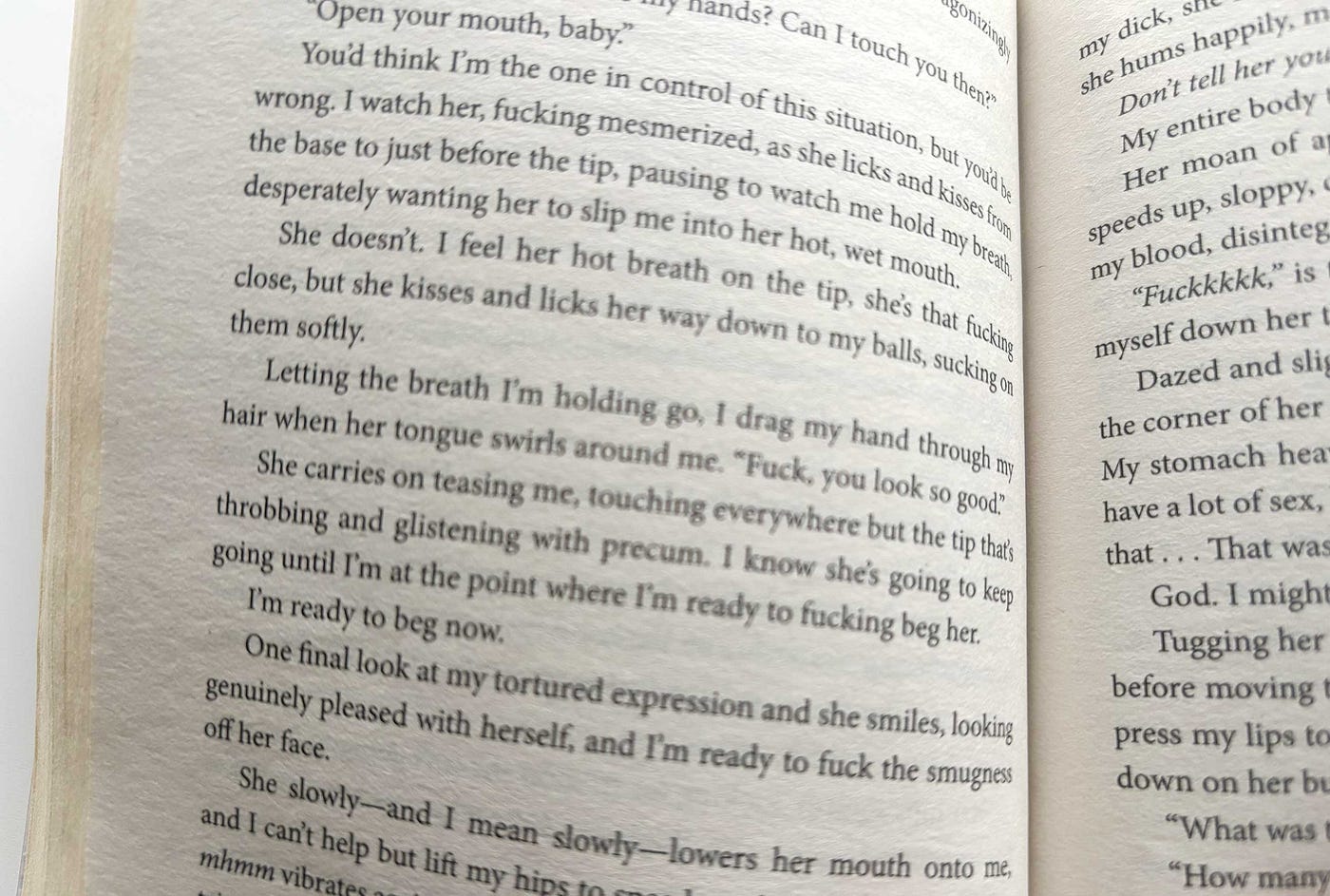
Explicit words of Hannah Grace in Icebreaker. Image copyright Jesse Karjalainen.
So, the consequences for The 2 Live Crew in 1990 because of Me So Horny were a political and media onslaught, banning of their albums and arrest on stage. For Hannah Grace, well, she’s a millionaire several times over and one of the biggest-selling authors in the world right now.
And there are PLENTY of authors and books like this in every book shop around the world. There you will find more cartoonish covers by the likes of Stephanie Archer, Chelsea Curto and Katee Robert. Curto has published 32 books at the time of writing.
The number one book on Amazon US right now is The Score, by Elle Kennedy. Her books also hold the positions 4, 5, 18, 26 and 50 of the bestselling books in the US right now.
She’s also number one on Amazon UK. Elle is number 5 and 6 on Amazon Germany, 2, 3 and 5 on Amazon France, she’s 15 and 16 on Amazon Spain, she holds positions 2, 4, 5 and 9 in Canada and in Australia, her books are currently in positions 1, 2, 3, 6 and 7.
The phenomenon that is Elle Kennedy has published more than 60 books since her debut in 2007, and according to the Interweb, her highest-rated steamy reads are the Off-Campus series and the Out of Uniform collection. The code word for all these books is “spice”.
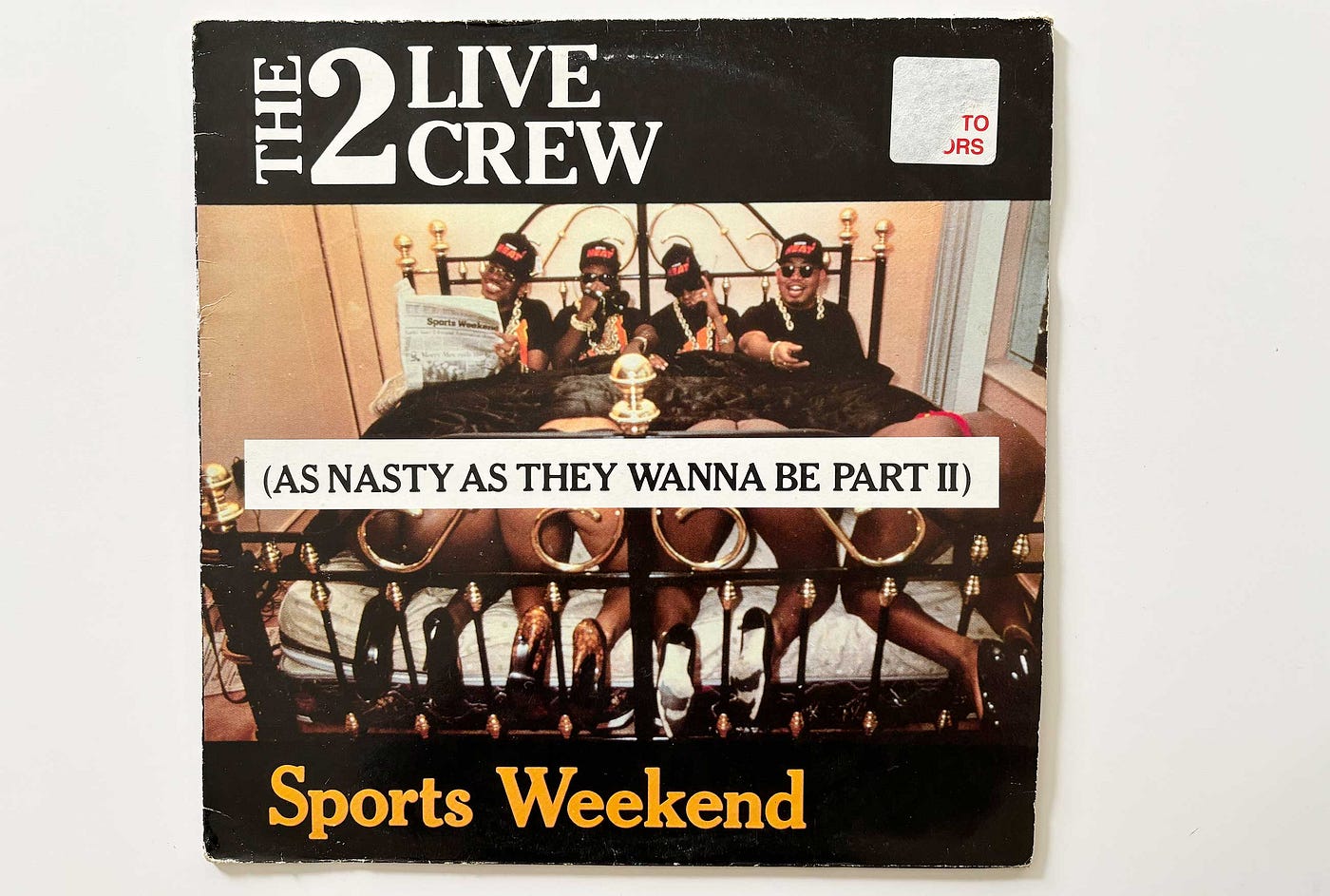
Was it just bad marketing? Image copyright Jesse Karjalainen.
Do you know what you won’t see on the cover of any of these books? A fucking legally mandated Parental Advisory Explicit Content sticker. Not for “spice”, but for “smut”.
‘Community standards’
Here’s the question for Gen Z readers. Can you imagine what would happen if the government declared war on the likes of Elle Kennedy and Hannah Grace and banned their books? Because they are popular. And because they are frank about sex.
What these groups were doing was expressing the frustrations of young people at the time, who felt excluded from society and were therefore questioning the entire system.
That’s what happened to our music in 1990. The governments of the US, UK and Australia came in and started banning albums. Sometimes it was because of the lyrics. Sometimes it was because of the album art.
Affected artists included not just rap artists. Nirvana, Jane’s Addiction, The Black Crowes, Pantera and Cannibal Corpse all had censorship problems.
Al Gore’s wife, Tipper, started her campaign against wicked rock bands and musicians in the mid-1980s. It all started in an aerobics class when she heard a song by Prince that used the word masturbation.
Appalled, Tipper formed the Parents Music Resource Centre (PMRC), a bipartisan United States government committee, whose stated goal was to increase parental control over children’s access to music deemed to have violent, drug-related, or sexual themes.
In the case of Me So Horny, the main issues with the song were the explicit themes and anatomical references, which, according to the judge, were aimed solely at “prurient interests” rather than “intellect”. The song allegedly lacked “serious artistic, political or scientific value”.
Judge Gonzales ruled to ban the album in Florida because he deemed it “patently offensive” according to the “community standards” of three South Florida counties: Broward, Dade, and Palm Beach. Donald Trump lives in Palm Beach. So, too… did Jeffrey Epstein.
Dangerous Music
Next question for Generation Z: Who would you say is/are the most dangerous musician(s) in the world right now?
Huh? What do you mean ‘What do you mean?’
Exactly. In 1990, the government and media actually called our music dangerous. The US, UK and Australian governments were censoring the fuck out of our tapes and CDs. And let me tell you: the music we listened to really was dangerous. It awoke us politically.
Guns N’Roses was called “the most dangerous band in the world,” but the truth was that, by 1990, rap was on the ascendancy, and the most dangerous rap groups in the world were the following:
Ice-T and Body Count NWA Ice Cube The 2 Live Crew Geto Boys Public Enemy Rage Against the Machine Paris
Unlike the music of today, the rage of a lost generation was coming out in their songs. And one by one, they were either censored, banned, arrested or dropped by their labels. The BIG problem, ironically, was not the sexual content of rap music, but the political content.
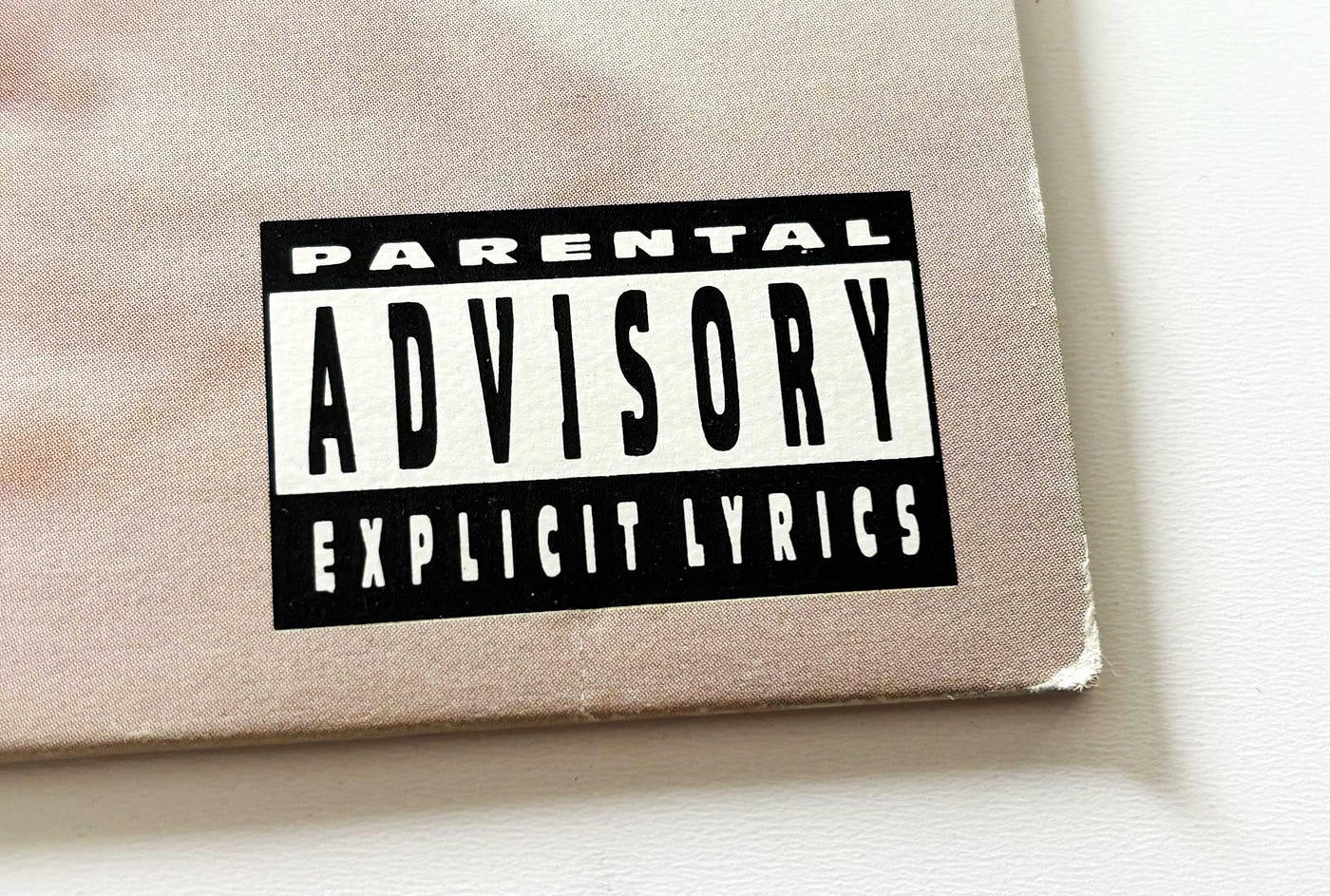
Hide it. Image copyright Jesse Karjalainen.
NWA were banned, boycotted and deplatformed from MTV and radio for their foul mouths, sexism and anti-authoritarian anthem about the Police. In 1998, police stormed the stage in Detroit, shut down the show and arrested the band members.
Straight Outta Compton became the first gangsta rap album to sell a million copies. Newsweek called it “grotesquely exciting,” and it was the first rap album to gain five stars from Rolling Stone magazine.
Although hated, it has been recognised as being one of the most influential and acclaimed works in hip-hop history. It was inducted into the Grammy Hall of Fame in 2016 and added to the US Library of Congress in 2017.
Public Enemy’s music was highly political, and the group was pulled off the air by Canada’s MuchMusic Network for their enduring goal of awakening political resistance. The common trope used by the media was that they were antisemitic. Lead singer Chuck D was later inducted into the Rock N’ Roll Hall of Fame.
And then, in late 1990, the Geto Boys looked at all the rap controversy and said: Hold my beer!
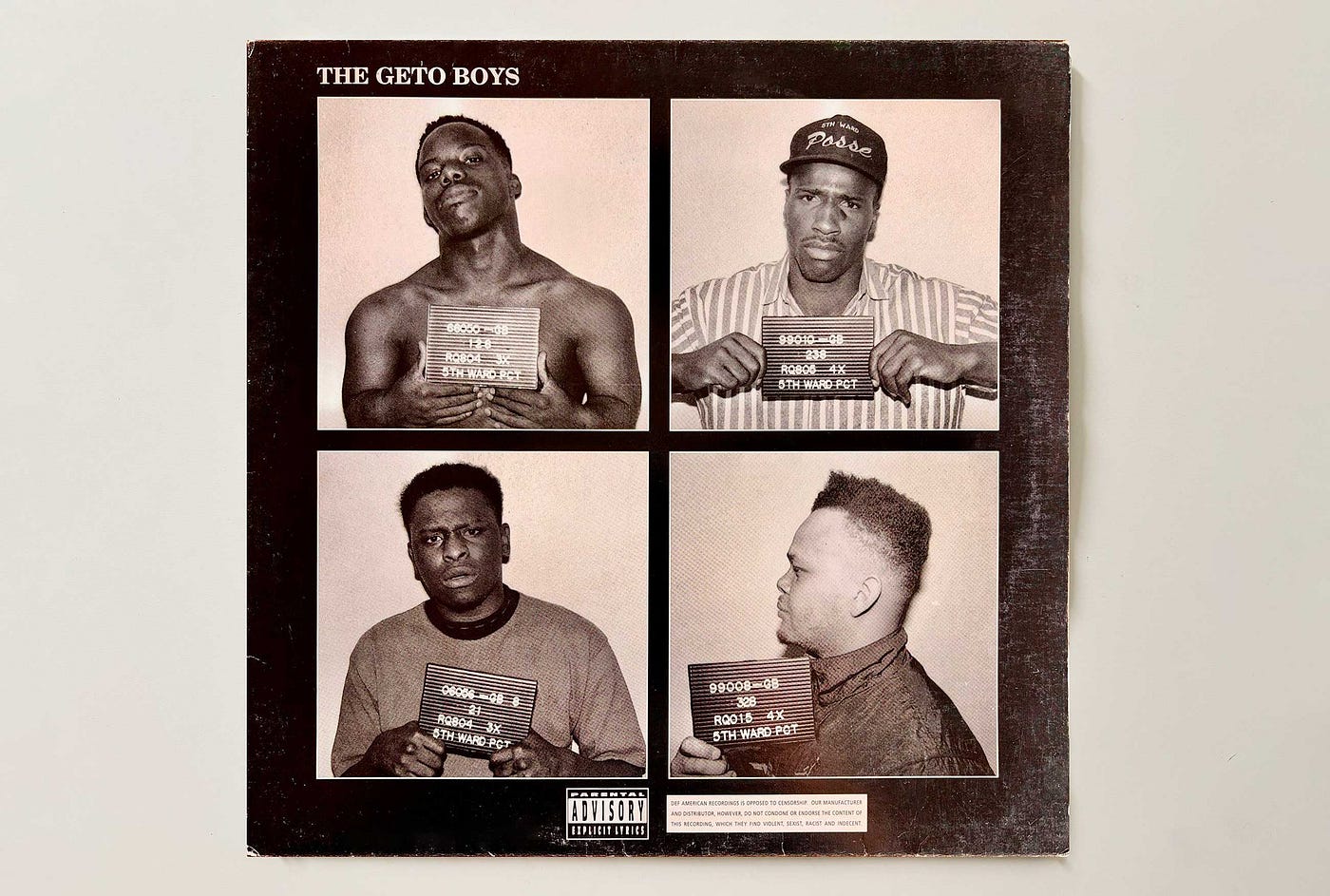
The Geto Boys album. Image copyright Jesse Karjalainen.
The remix album, Geto Boys, was stopped on the verge of release when the disc manufacturers refused to press their disc and distributors declared that they would not distribute the highly graphic album by the Houston group. It is one of the top-10 rap albums of history, IMO.
When it came out on the Def American label, under the Universal Music Group, it not only had the mandated Parental Advisory sticker on the cover but an additional label.
Def American Records is opposed to censorship. Our manufacturers and distributor, however, do not condone or endorse the content of this recording, which they find violent, sexist, racist and indecent.
When rapper Ice Cube left NWA, he also became the target of music censorship.
His 1991 album Death Certificate featured a cover image depicting a dead Uncle Sam, a manifest symbol of the United States. However, it wasn’t this cover that was the problem.
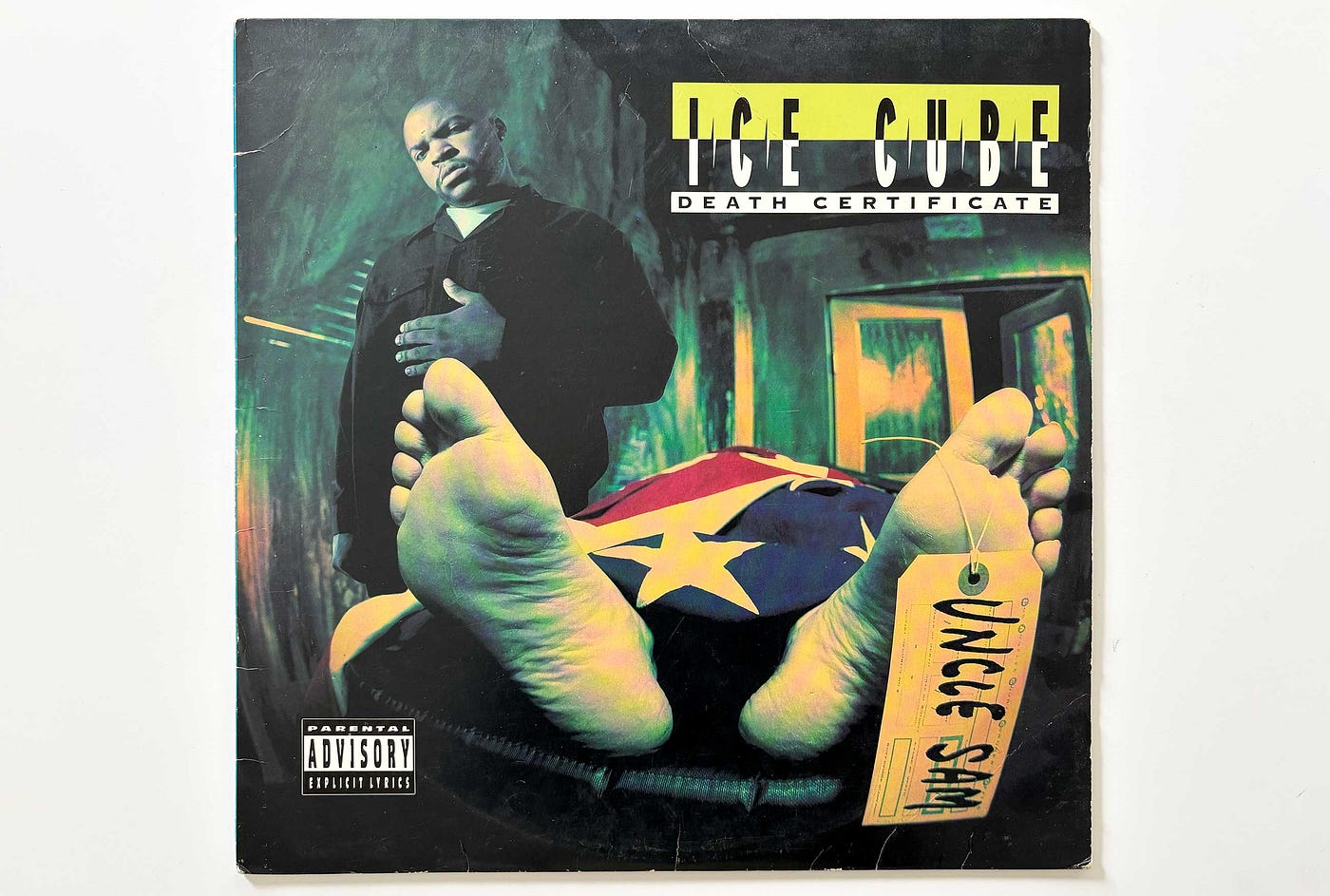
Ice Cube Death Certificate album. Image copyright Jesse Karjalainen.
Instead, it was the two songs Black Korea and No Vaseline. The latter is considered one of the greatest diss tracks of all time (bar Hit ’em Up, by Tupac). It, unfortunately, featured explicit and direct barbs aimed at his former bandmates — in a style that people didn’t like. That song was pulled.
The other song was seen as an attack on Korean-Americans, and the media always highlighted the violence in the lyrics “or your… ass will be a target”, but what they left out were the next four words — “…of a nationwide boycott.” Cube was talking about economic power, not muscle power.
I managed to buy that album in Australia before the version with the songs pulled. The album came out in the UK in its edited form and, even two decades later, I could only find that version in stores and on Amazon when I lived in the UK. On Spotify, however, it’s there. All the controversy… seemingly forgotten!
Not so with Ice-T’s heavy rock album, Body Count, which came out a year later, in 1992. This song, often wrongly labelled a rap song by the media, caused so much trouble that both the President and Vice-President intervened in getting the song Cop Killer removed.
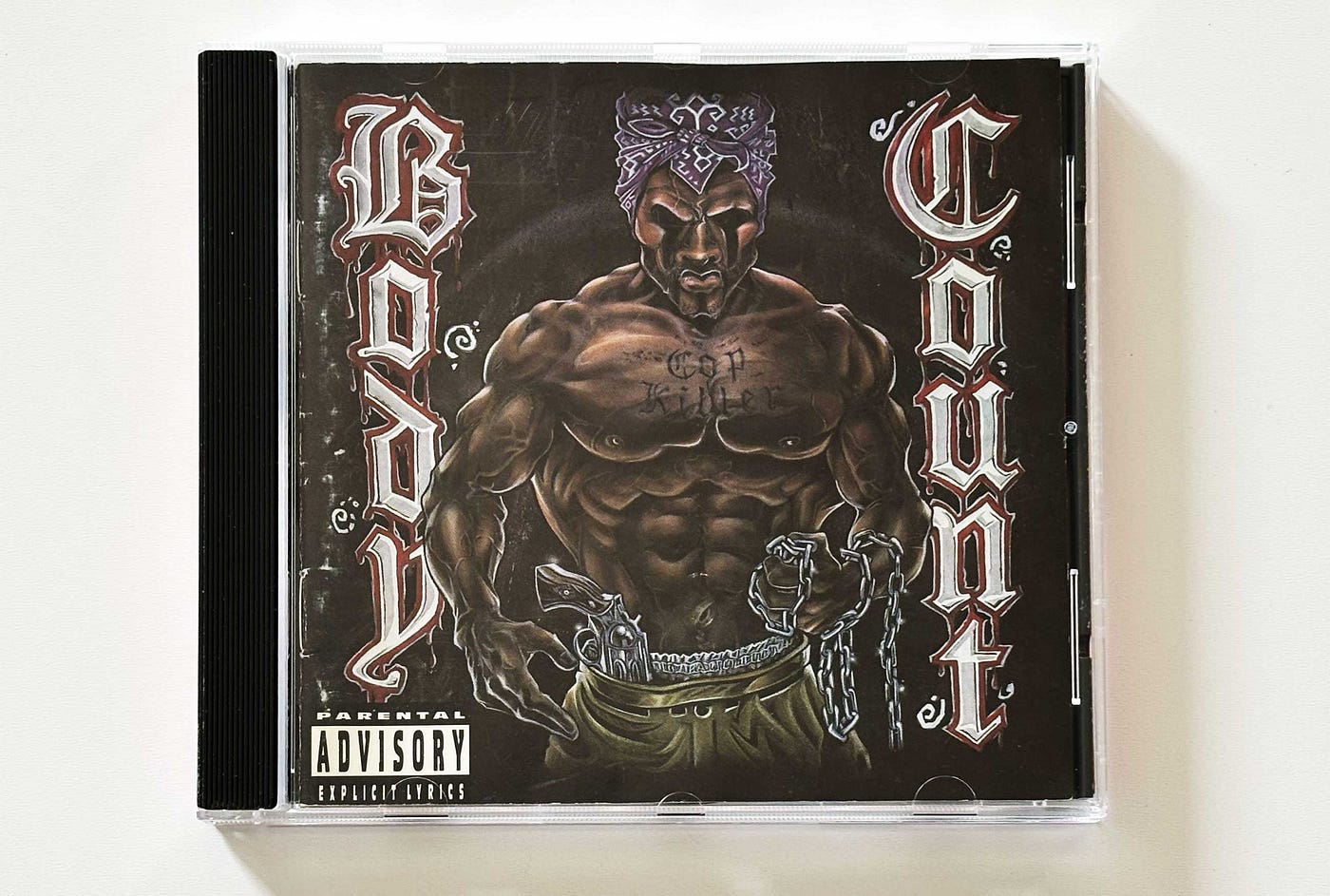
Body Count CD cover. Image copyright Jesse Karjalainen.
The album was quickly pulled, and the song removed from an updated version. I never had the chance to buy that album in Australia before the ban.
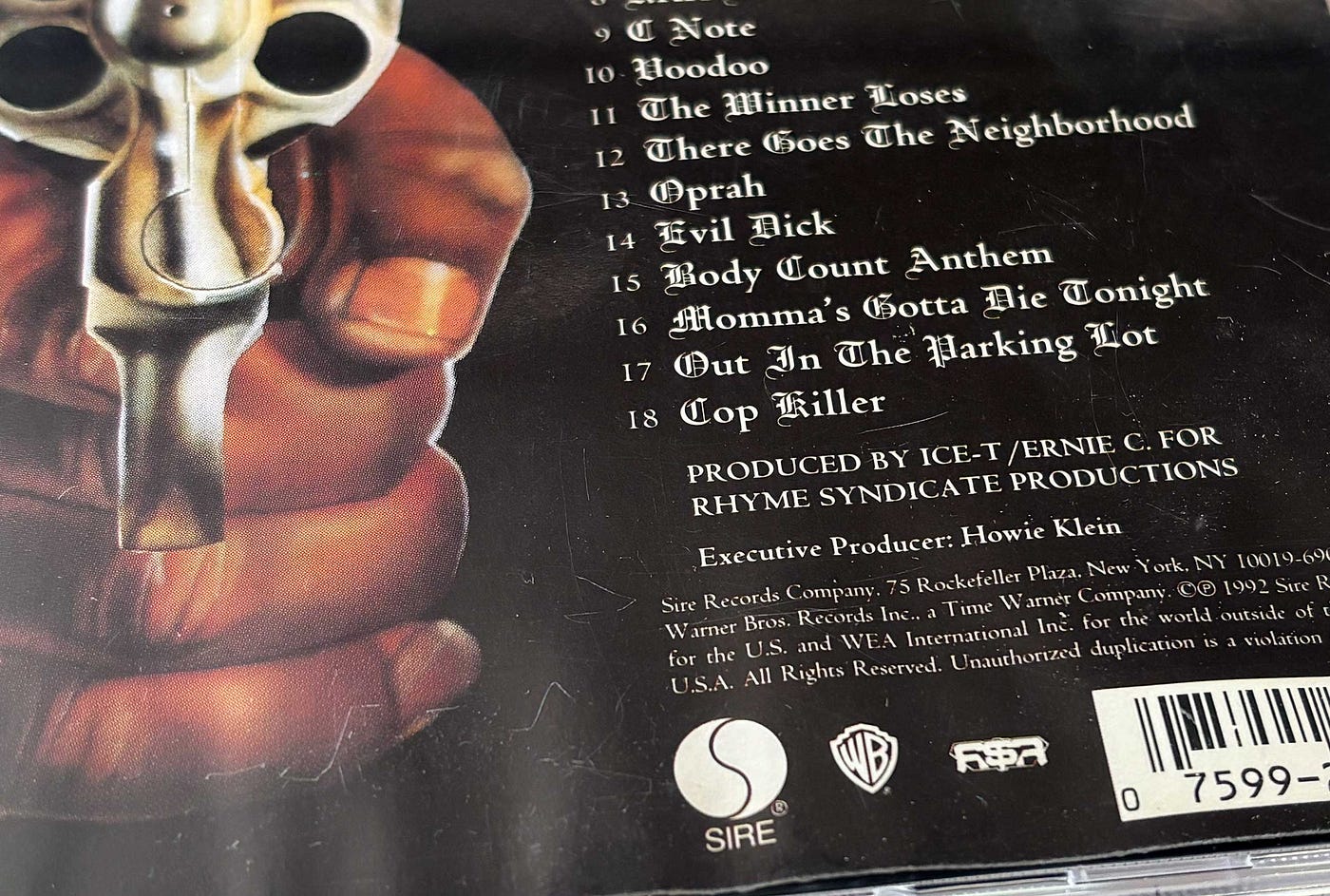
Banned music: Cop Killer. Image copyright Jesse Karjalainen.
Ice-T followed this up in 1993 with the rap album Home Invasion, which — because of the Cop Killer controversy — forced Ice-T to move record labels. The title and cover pointed to the problem: this music is violent and sexist, but what it was really giving kids was politics.
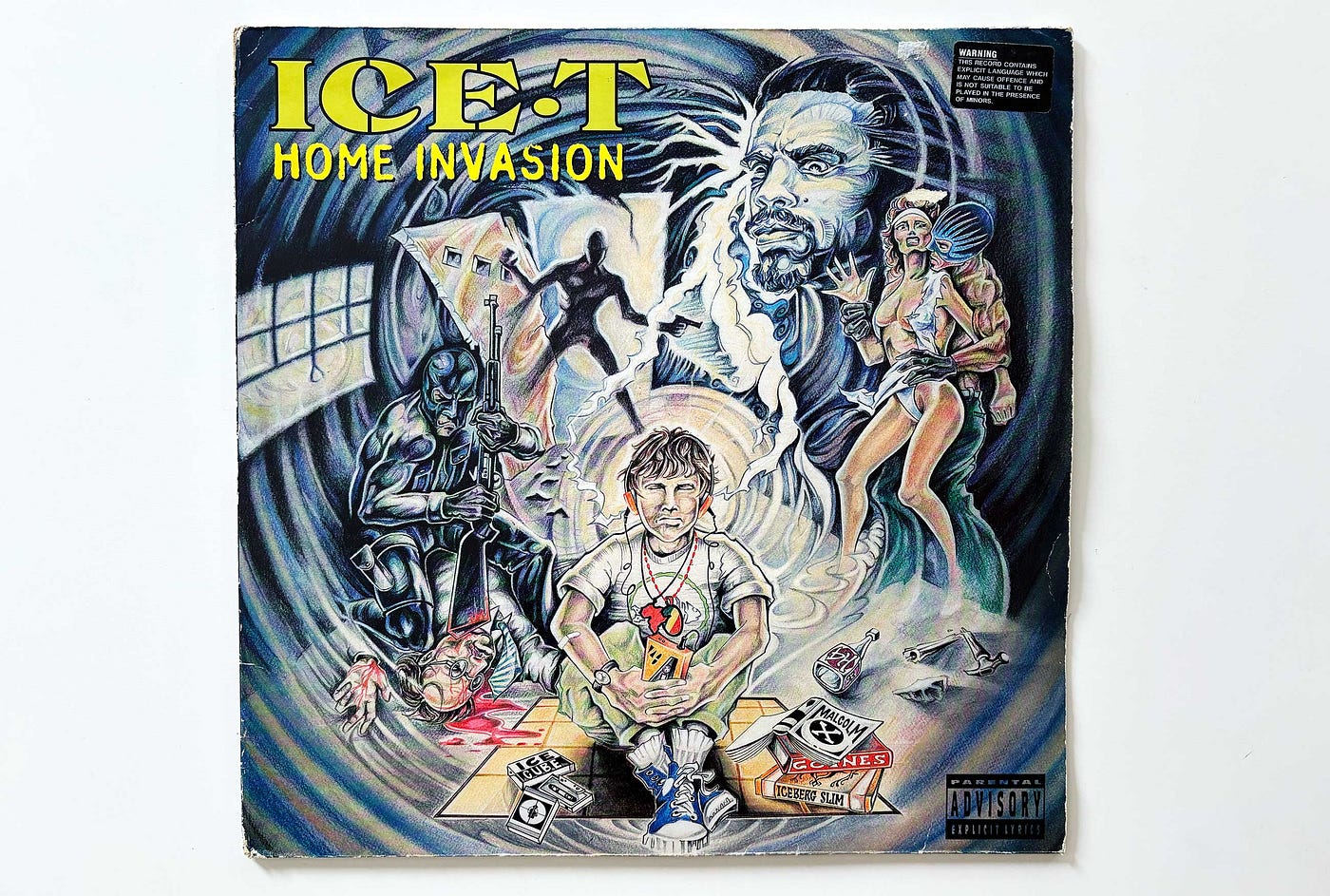
Home Invasion LP cover. Image copyright Jesse Karjalainen.
That kid could have been me.
But the final release was missing one track: Imagine That. This was a political spoof, yet it was pulled. On it, Ice-T spoke on the censorship row:
Yo, a lot of suckers out there might not like what I got to say, and to be honest, I don’t give a fuck. If the censorship keep moving the way it is, the future of hip-hop might sound like this:
Government approved rap Love the police Pay tax Government approved rap Trust the president Politicians are honest Make some noise Government approved rap (looped)
THAT was always the real danger. That’s why the CIA and FBI had files on all the rappers, but not the rockers.
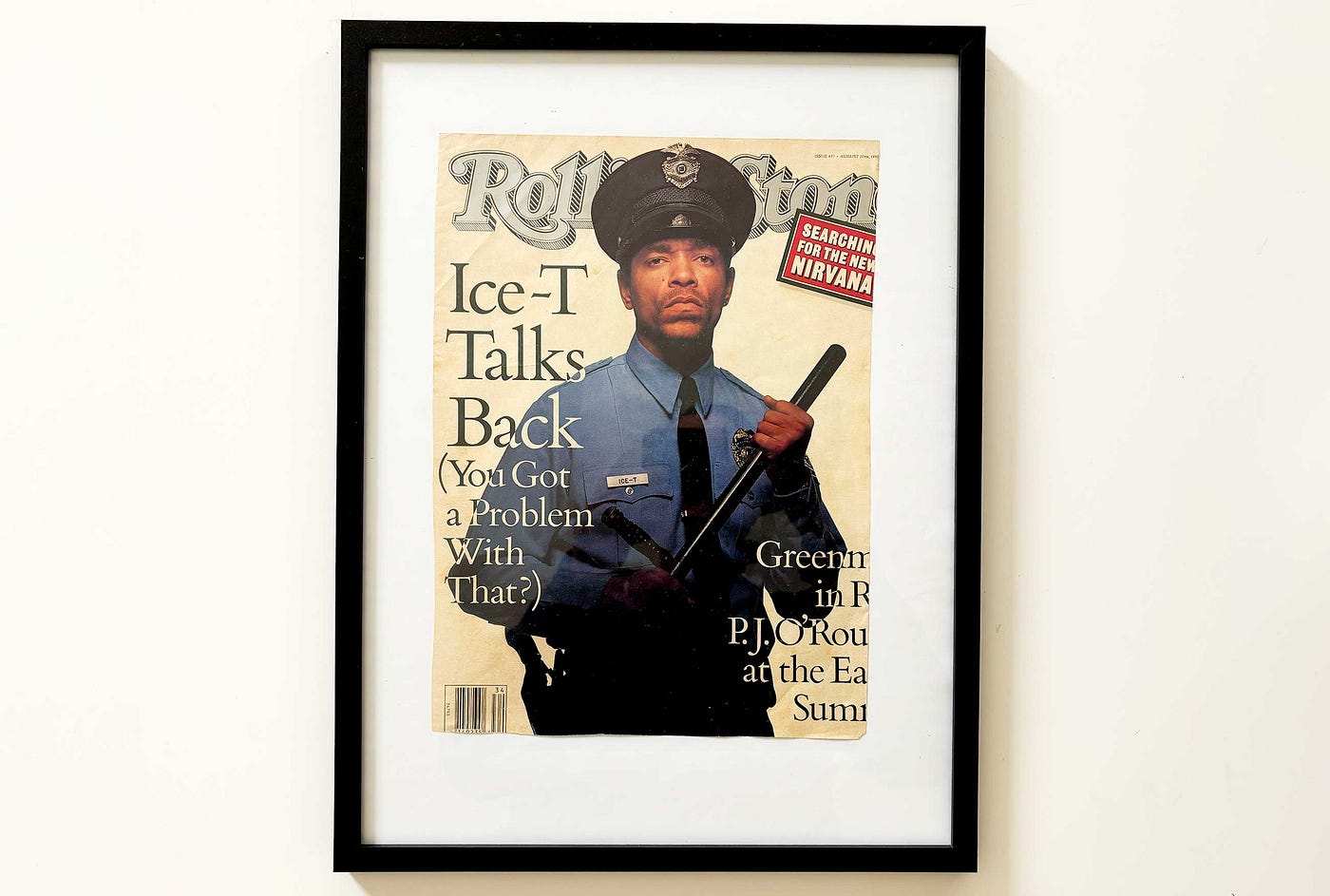
Famous Ice-T magazine cover. Image copyright Jesse Karjalainen.
I managed to get this song on a demo-tape version of the original Sire Records album of Home Invasion before it was refused by Warner. You can see the deleted track listed there.
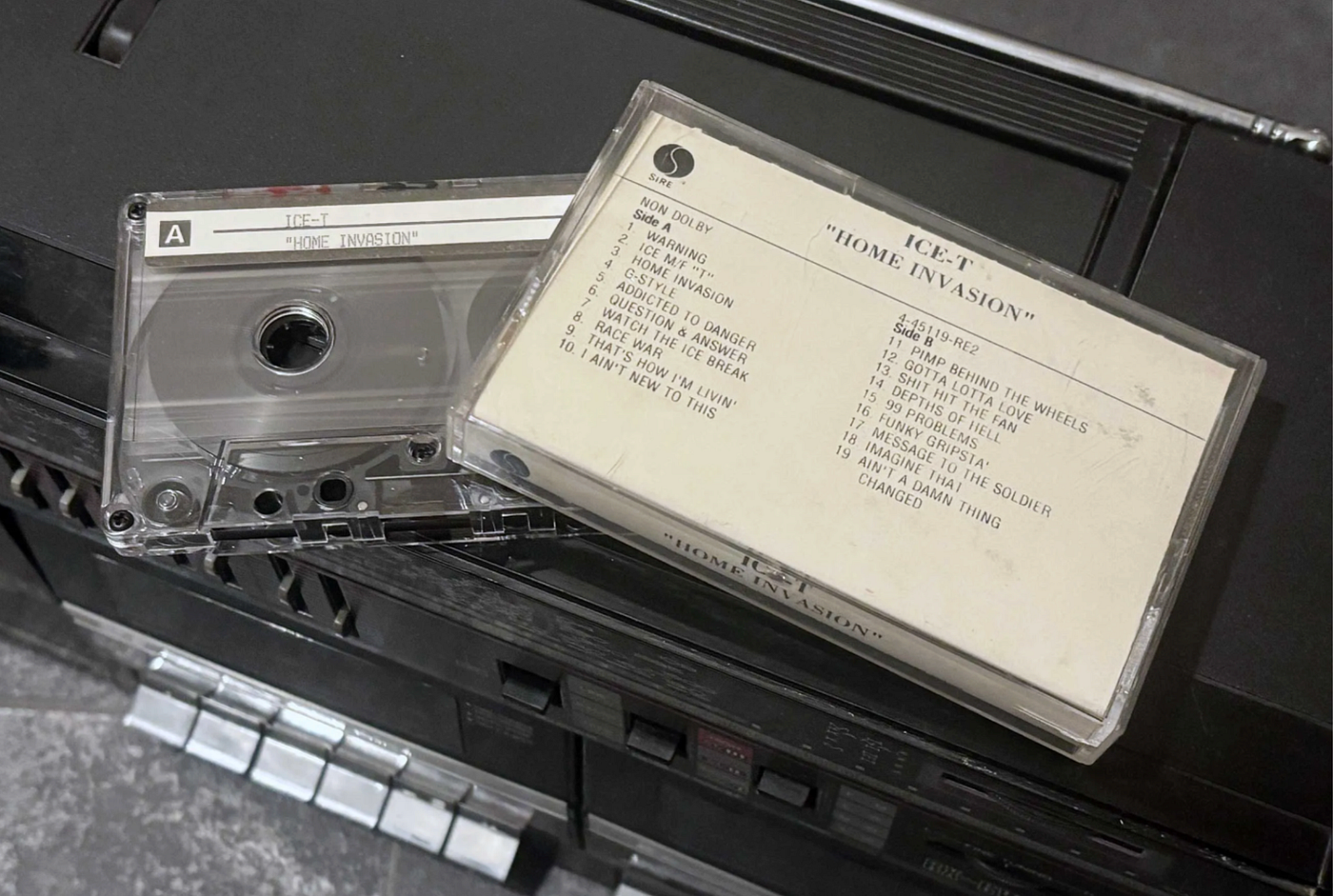
Never released. Image copyright Jesse Karjalainen.
The published version also featured the legally required Parental Advisory sticker. It, too, included a second sticker that read:
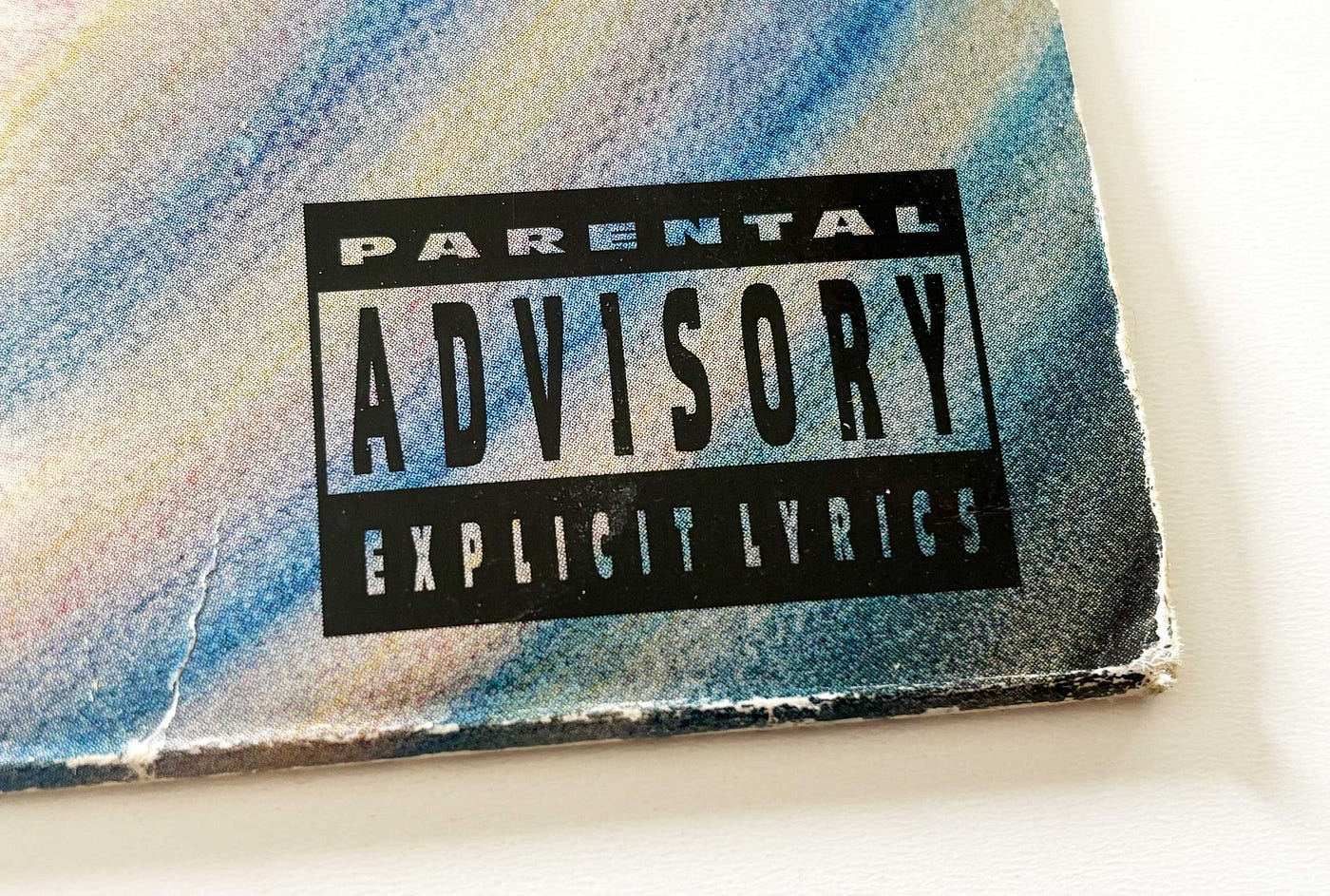
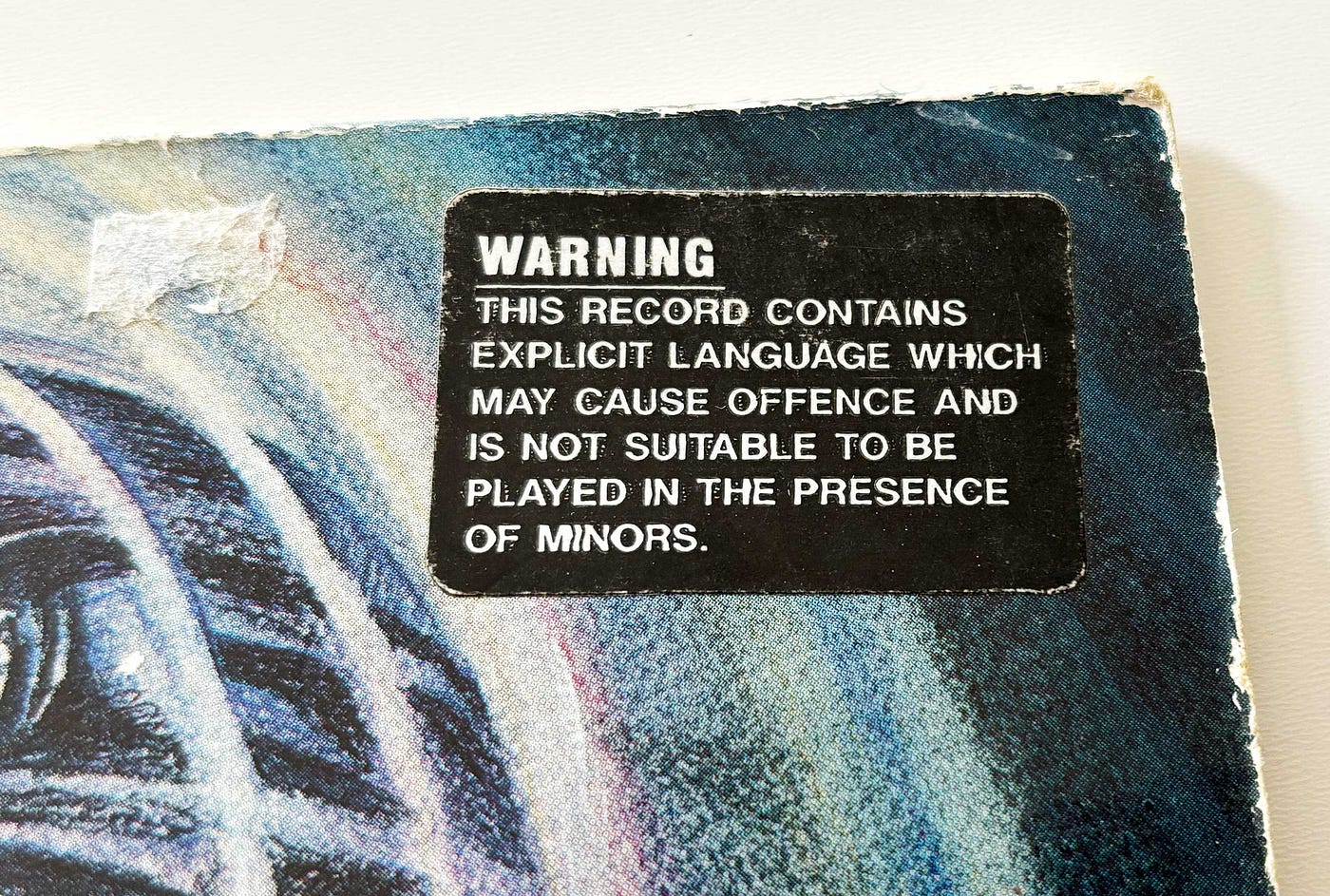
Warning stickers. Image copyright Jesse Karjalainen.
This record contains explicit language which may cause offence and is not suitable to be played in the presence of minors. That was me — and my generation.
Just watch what so you say
That Parental Advisory sticker was a milestone in history, and as stated earlier, Tipper Gore and her group introduced it in 1990. But there were unmandated predecessors. The album The 2 Live Crew is What We Are debuted in 1986.
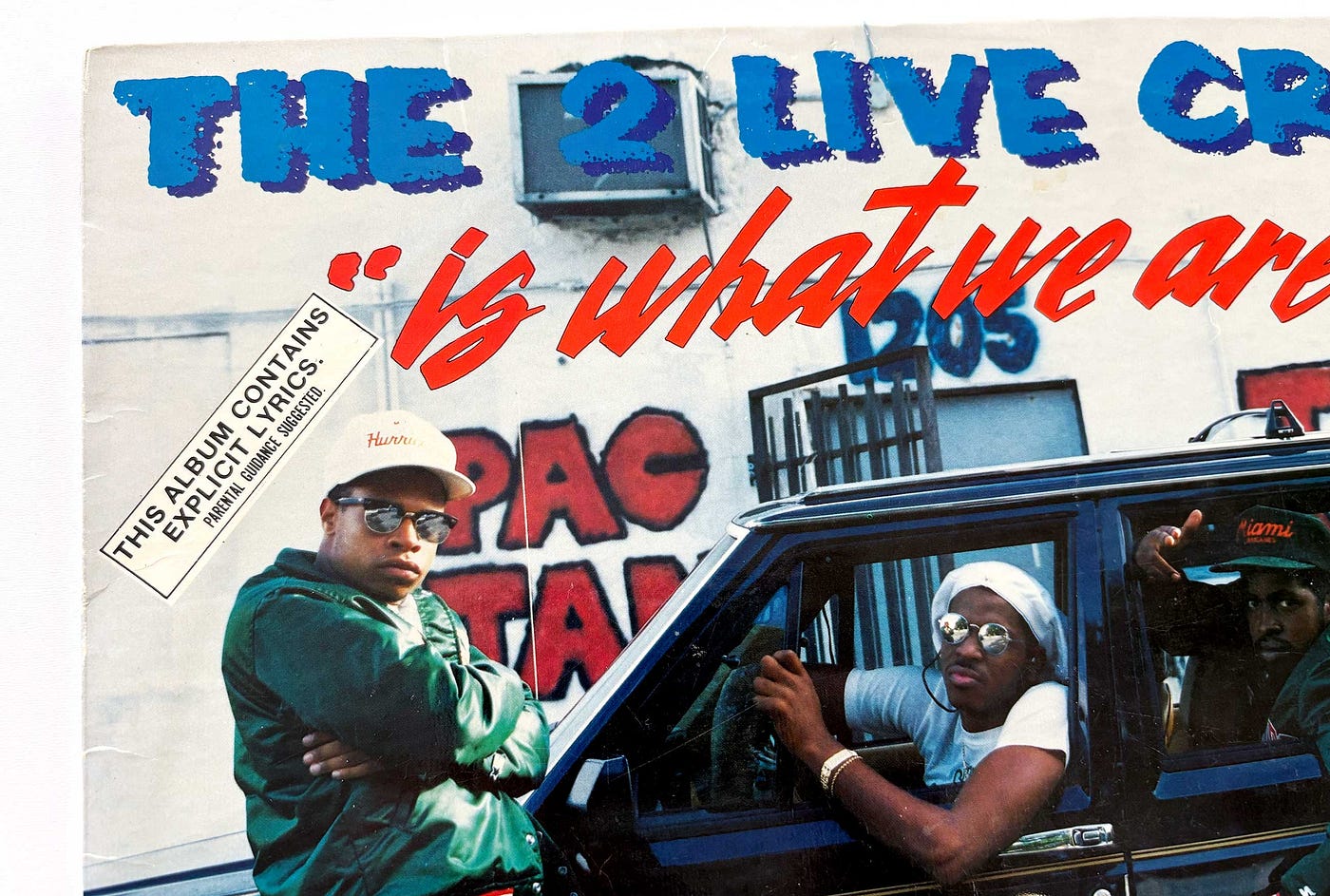
The debut album from The 2 Live Crew. Image copyright Jesse Karjalainen.
This album had a sticker that read:
This album contains explicit lyrics. Parental Guidance Suggested.
The number one single from that album was We Want Some Pussy. It was an international smash hit.
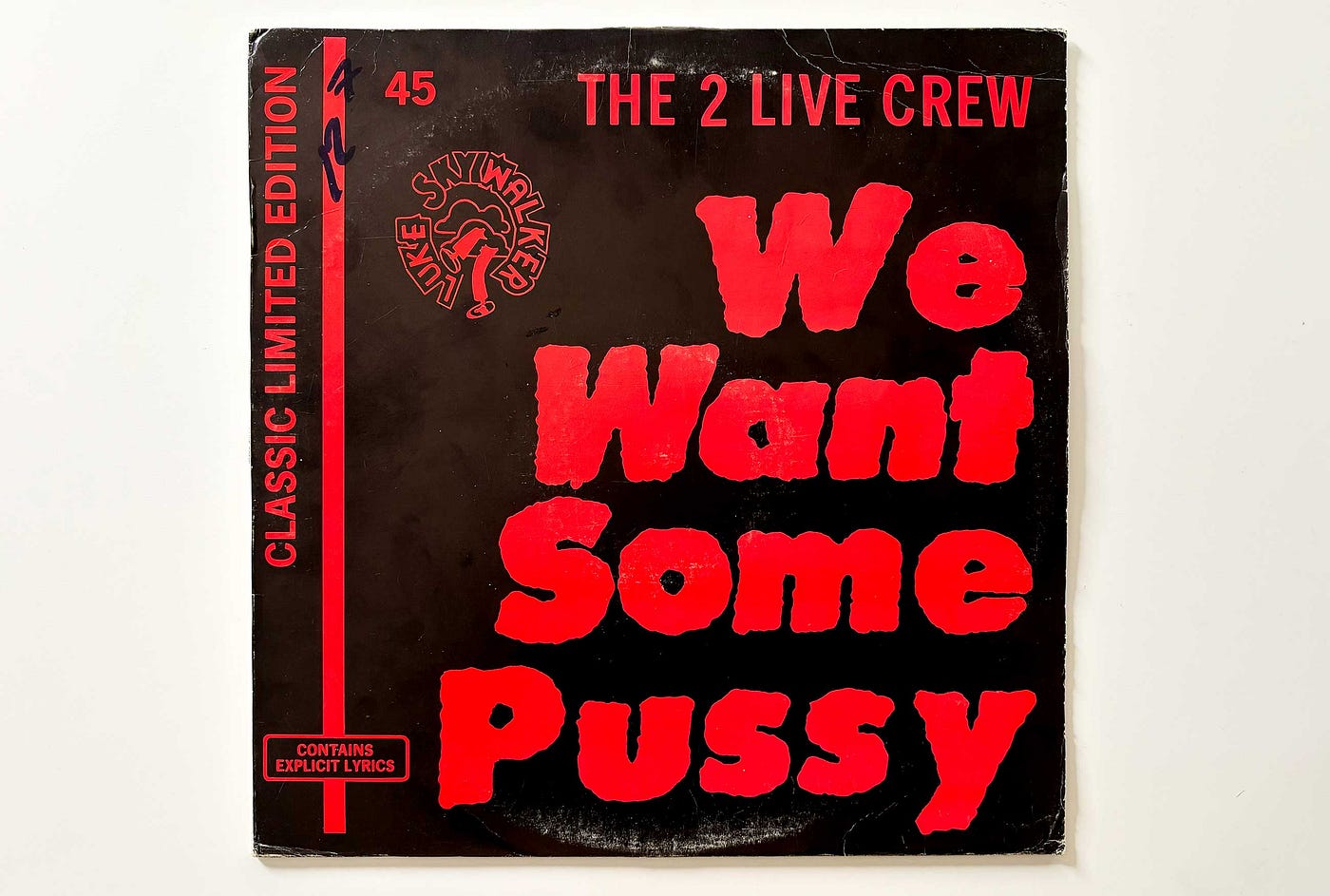
Cartoon version, anyone? Image copyright Jesse Karjalainen.
That single came with a warning. Or was it a marketing slogan?
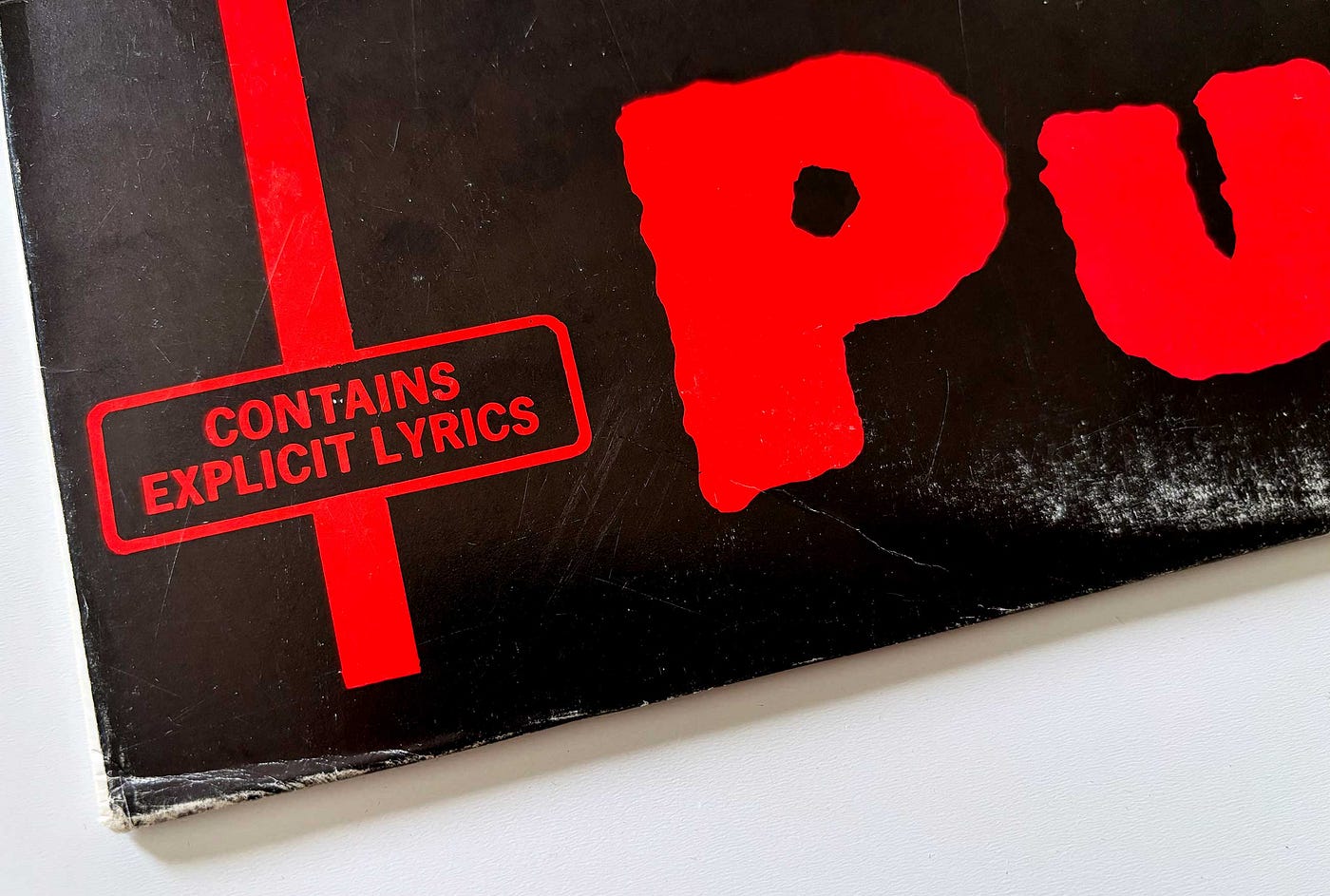
Warning label. Image copyright Jesse Karjalainen.
Two years later, in 1988, Ice-T released his second album, Power. The album was replete with street slang, so of course it was labelled with a rather innocuous explicit-lyrics sticker on the corner — right above the photo of Ice-T’s bikini-clad girlfriend.
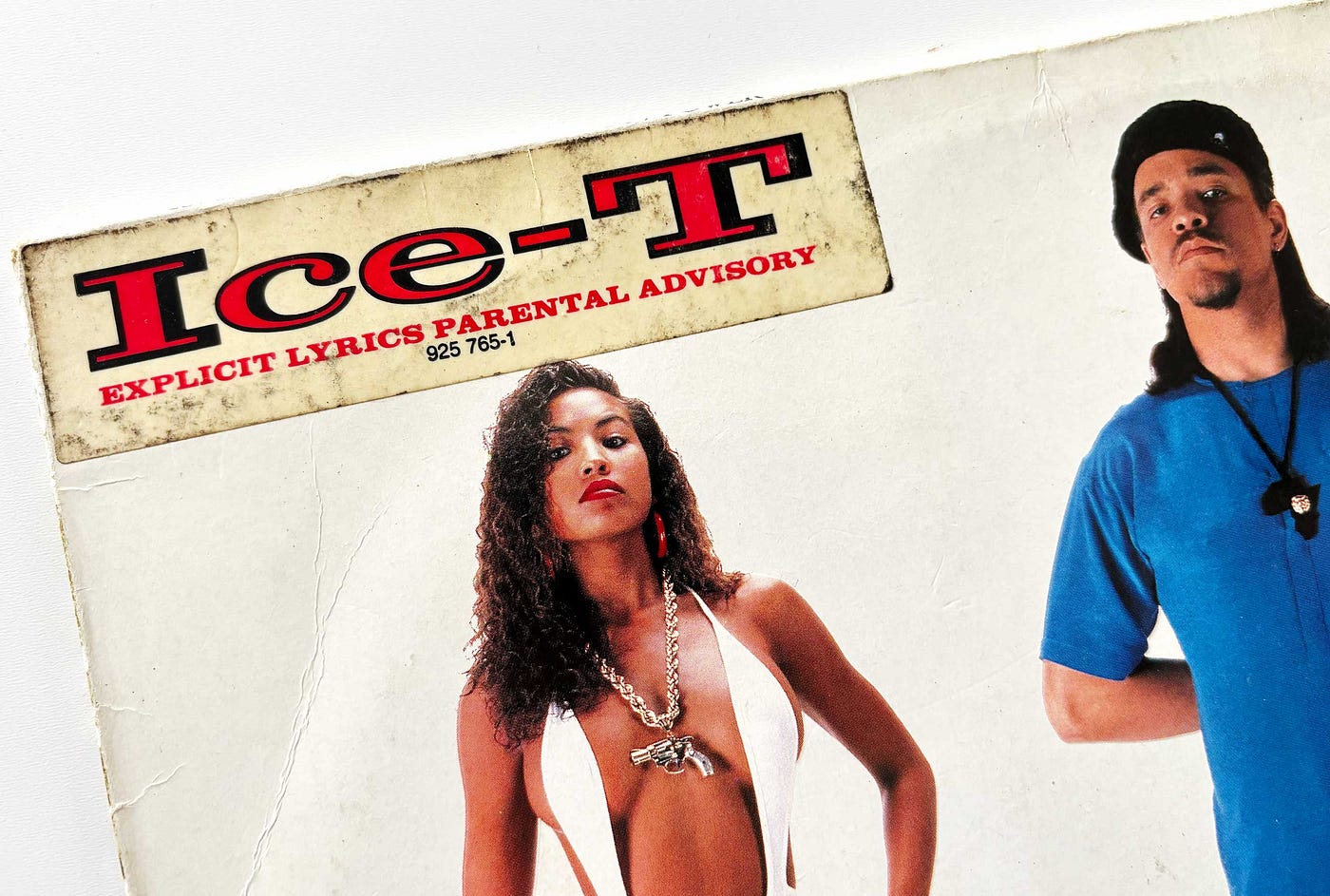
Ice-T album cover. Image copyright Jesse Karjalainen.
The single for the anti-drug song I’m Your Pusher also had a sticker, but this time it read:
Contains language which some may find offensive
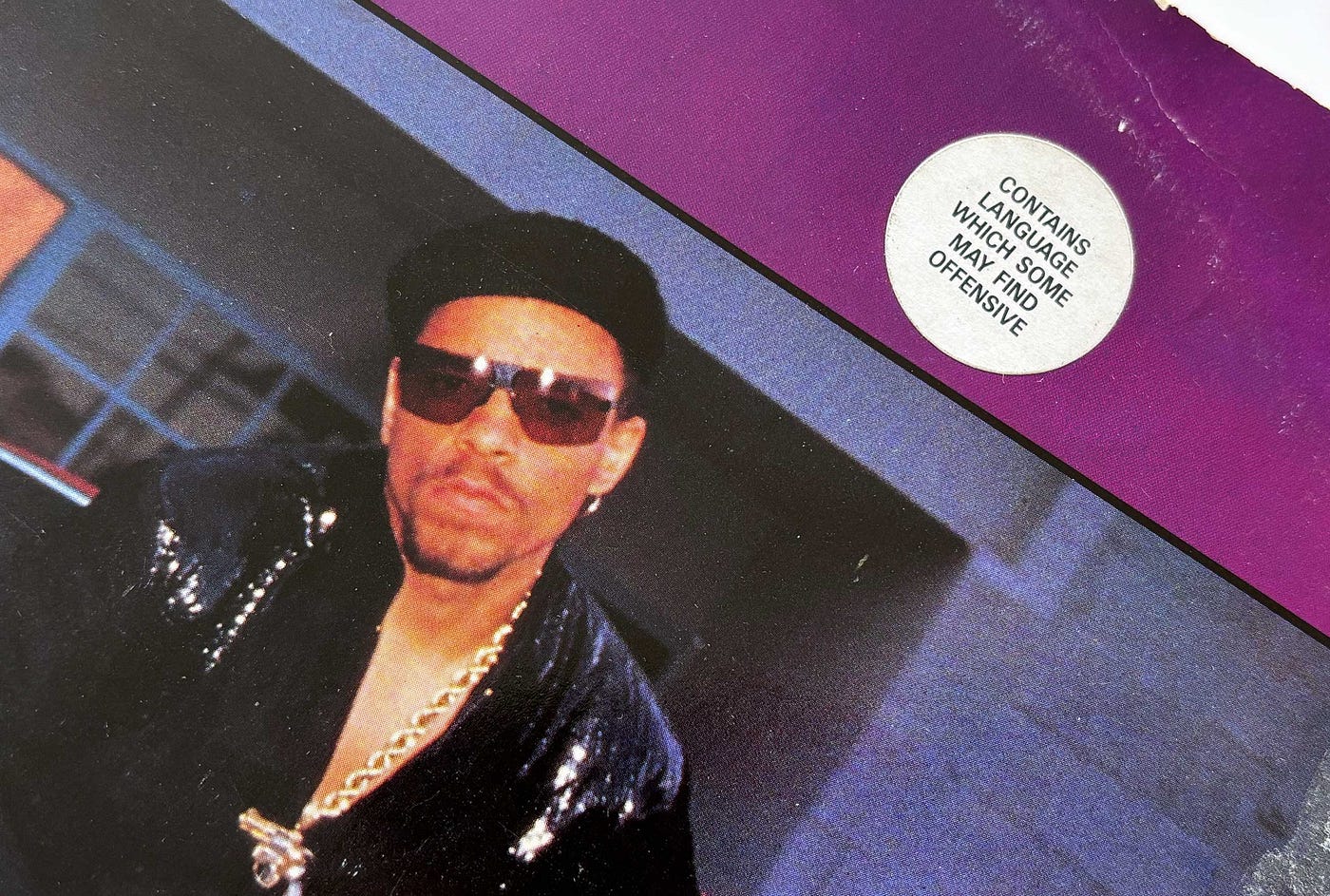
I’m Your Pusher album cover. Image copyright Jesse Karjalainen.
That was in 1988, and the album drew a lot of controversy. Reviews of Power described it as “glorifying violence”, “perpetuating stereotypes” and containing raps about sex, guns, violence and crime.
The New York Times said it had “the oppressive detail of a novel,” and The Village Voice described Ice-T’s “narrative style” as “gripping”. In Australia, where I was living, the Sydney Morning Herald mocked its “nauseating imagery” and “malevolent power”.
It was in 1989 that The 2 Live Crew came out with their next album, As Nasty as They Wanna Be. There was no sticker — instead, it came with a simple message:
Warning: Explicit Language Contained.
However, most young people would have been drawn to the four women in bikinis on the cover.
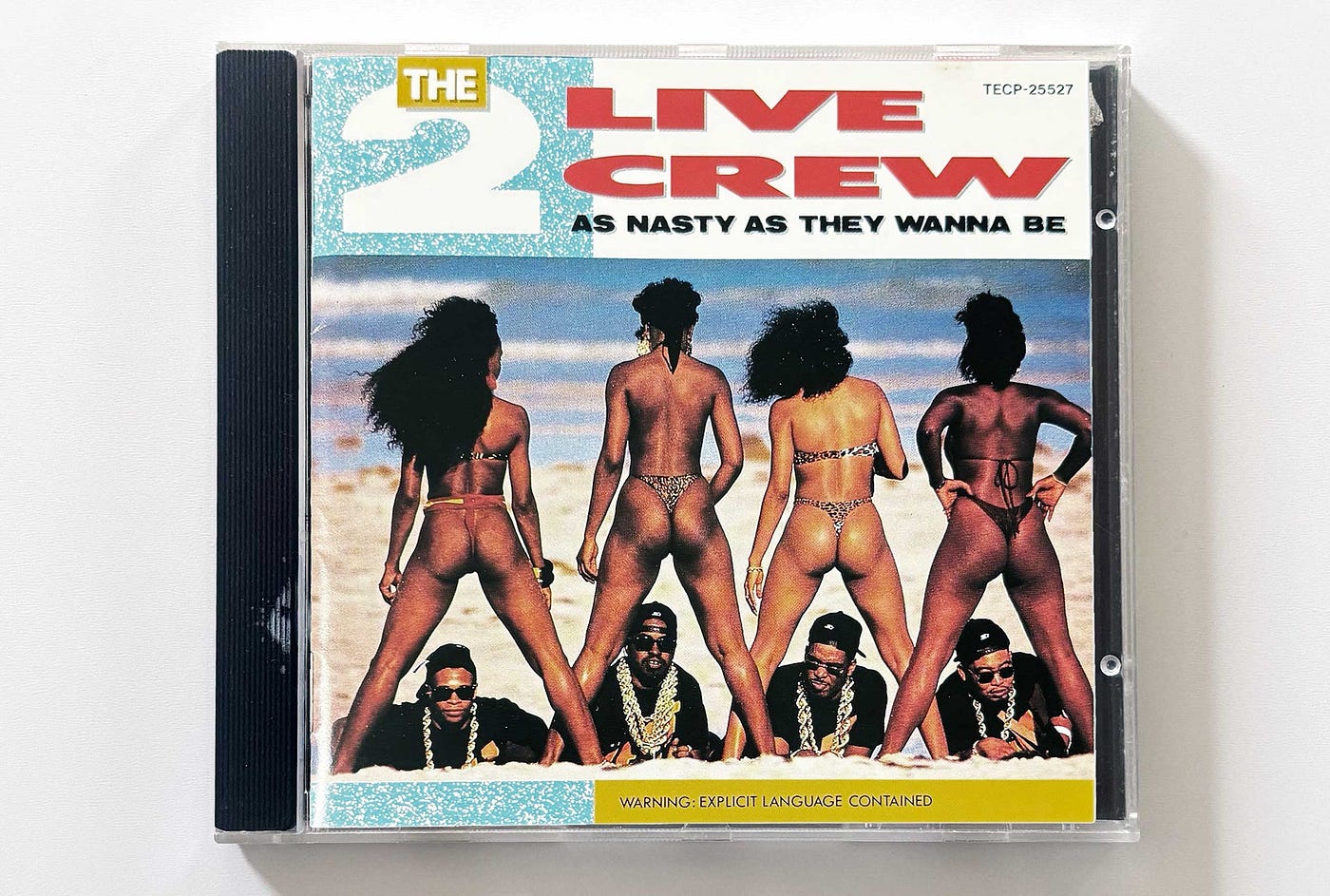
As Nasty As They Wanna Be CD cover. Image copyright Jesse Karjalainen.
This was the album that contained the Me So Horny song, which ultimately blew up into biblical explosiveness.
David Bowie interrupted his set to speak out against music censorship in the US, calling As Nasty as They Wanna Be “not the best album … but when I heard it was banned, I went out and bought it… Freedom of speech is one of the most important things we have.”
Ice-T then came out with his next album in 1989, which is highly political. The title was The Iceberg, but the subtitle was Just Watch What You Say.
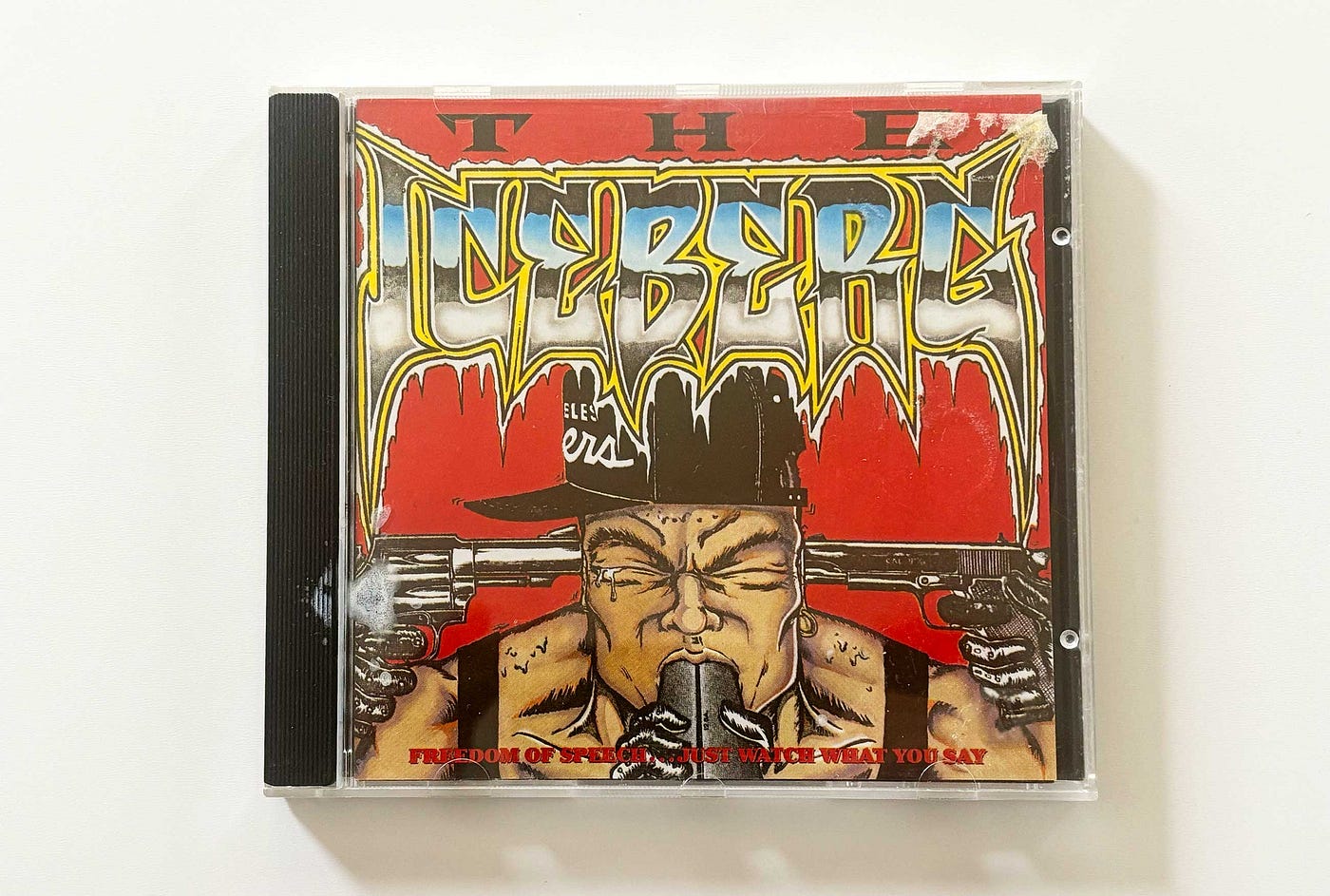
Ice-T Iceberg CD cover. Image copyright Jesse Karjalainen.
This album didn’t have the Parental Guidance sticker on the cover because it hadn’t been created yet. The CD version did, however, come with a message.
Ice-T. X-rated. Parents strongly cautioned. Some material may be X-tra hype and inappropriate for squares and suckers.
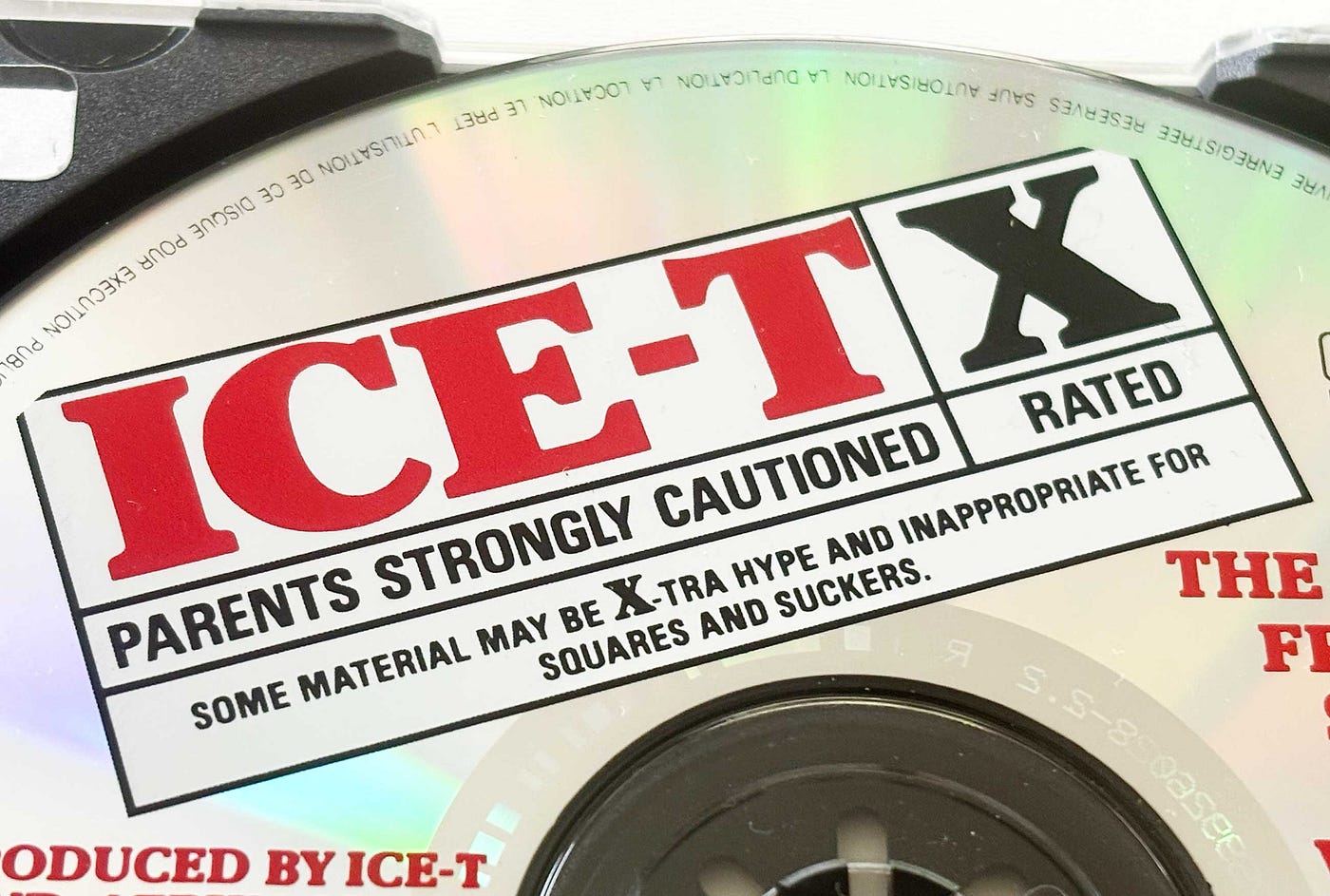
X rated music. Image copyright Jesse Karjalainen.
This was the first rap album that I fell in love with. A friend of mine gave me a copy on tape in early 1990, and I can honestly say that this album changed my life. I remember listening to the tape while doing something else, and all of a sudden, I heard Ice-T say something that caught my attention.
I said to myself, “Wait, WHAT did he say?” I rewound the tape a little and pressed Play on my Walkman:
cocaine can’t be made in the United States / kickin’ facts like this our government hates
young kids on the streets ain’t the enemy / just ghetto youth after money
they sell drugs but who sells the drugs to them? /
try the CIA my friend. Or the FBI or even Bush / somebody’s gettin rich, it damn sure ain’t us
This was my Red Pill moment. These were good questions. I was 16 years old, and I had never heard anything like this in my life on a song, let alone on TV or in the newspapers.
I realised at that moment that I had never really listened to the WORDS of songs that I listened to. We hear music and enjoy it, but we often don’t engage with the MESSAGE in the songs. (If you know the catchy 1990s song Mmm-Bop, by Hanson, go read the lyrics. You will be amazed that the words escaped you.)
The clever thing about rap music was that we young people may have been drawn to this desiderata because of the rebelliousness and the naughty stuff. What I had not counted on was how hardcore the political messages in a lot of rap music really were. The more I explored, the more politics I discovered.
Rappers like Paris.
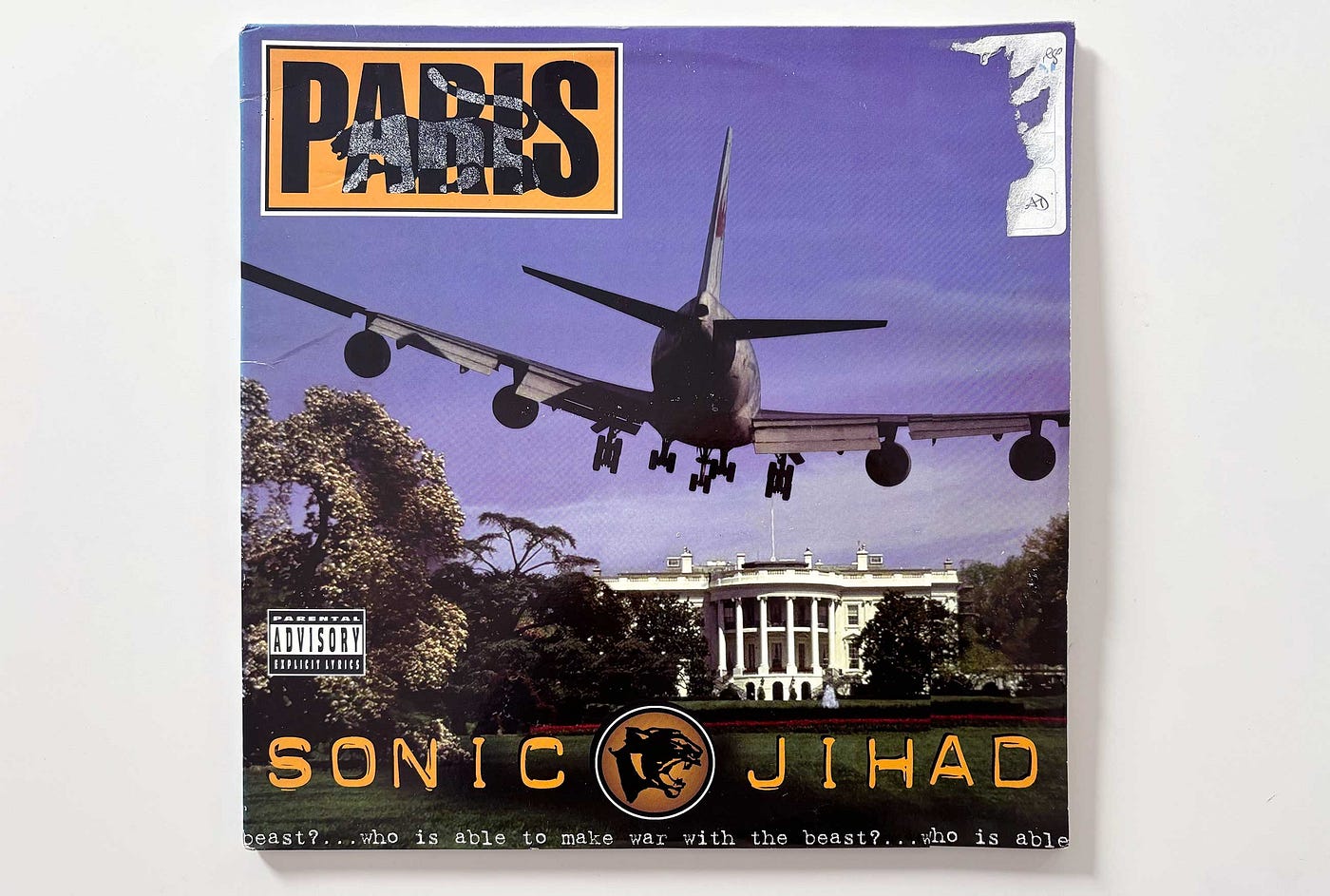
Paris album Sonic Jihad. Image copyright Jesse Karjalainen.
I bought Rage Against the Machine based solely on the fact that it had the sticker. It had to be good. And it was.
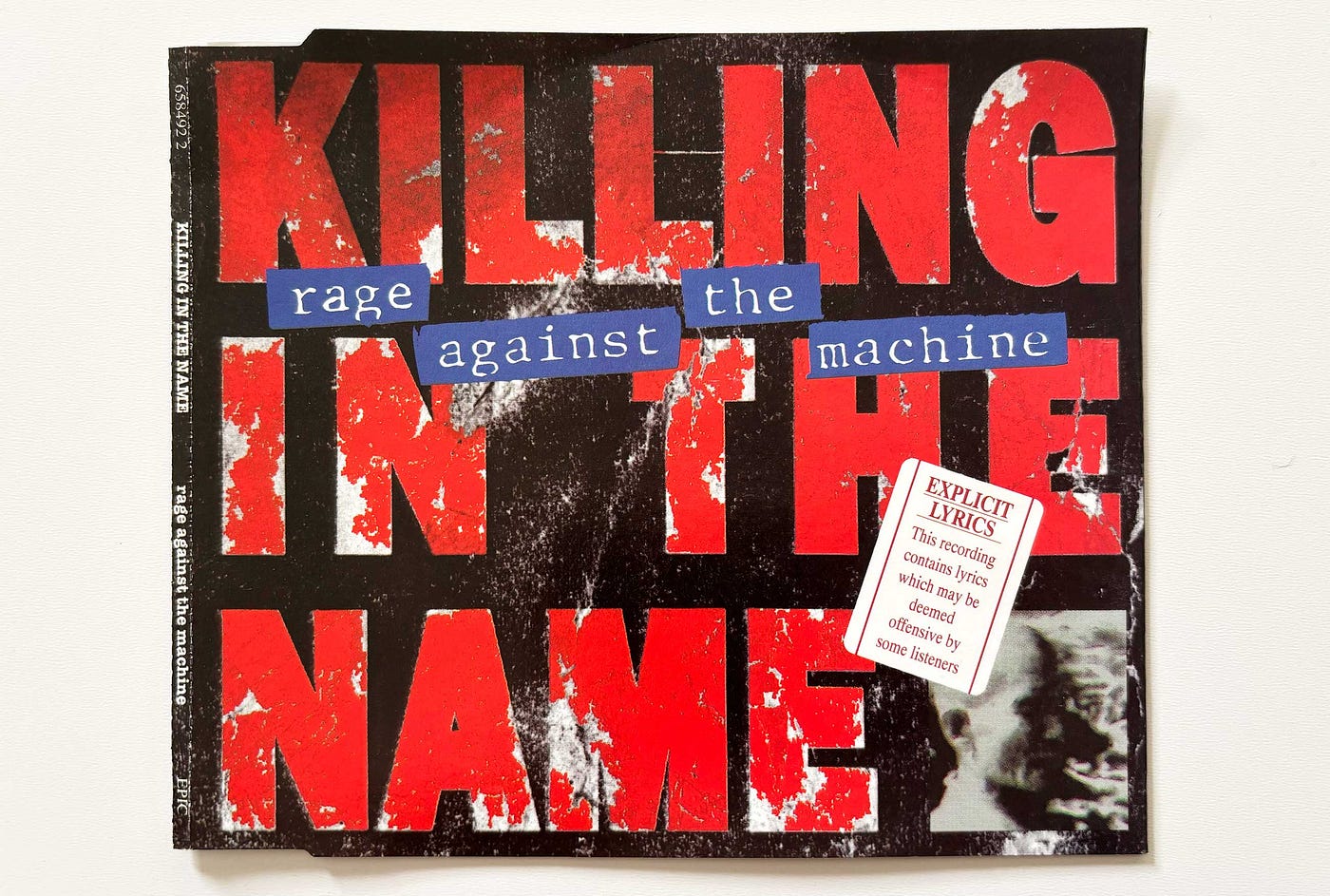
Rage Against the Machine. Image copyright Jesse Karjalainen.
This was my first awakening to politics that went beyond grey, big-bellied men in suits. And that’s what made rap music so dangerous. It wasn’t really the swearing or the aggression that worried Boomer politicians. It was the politics.
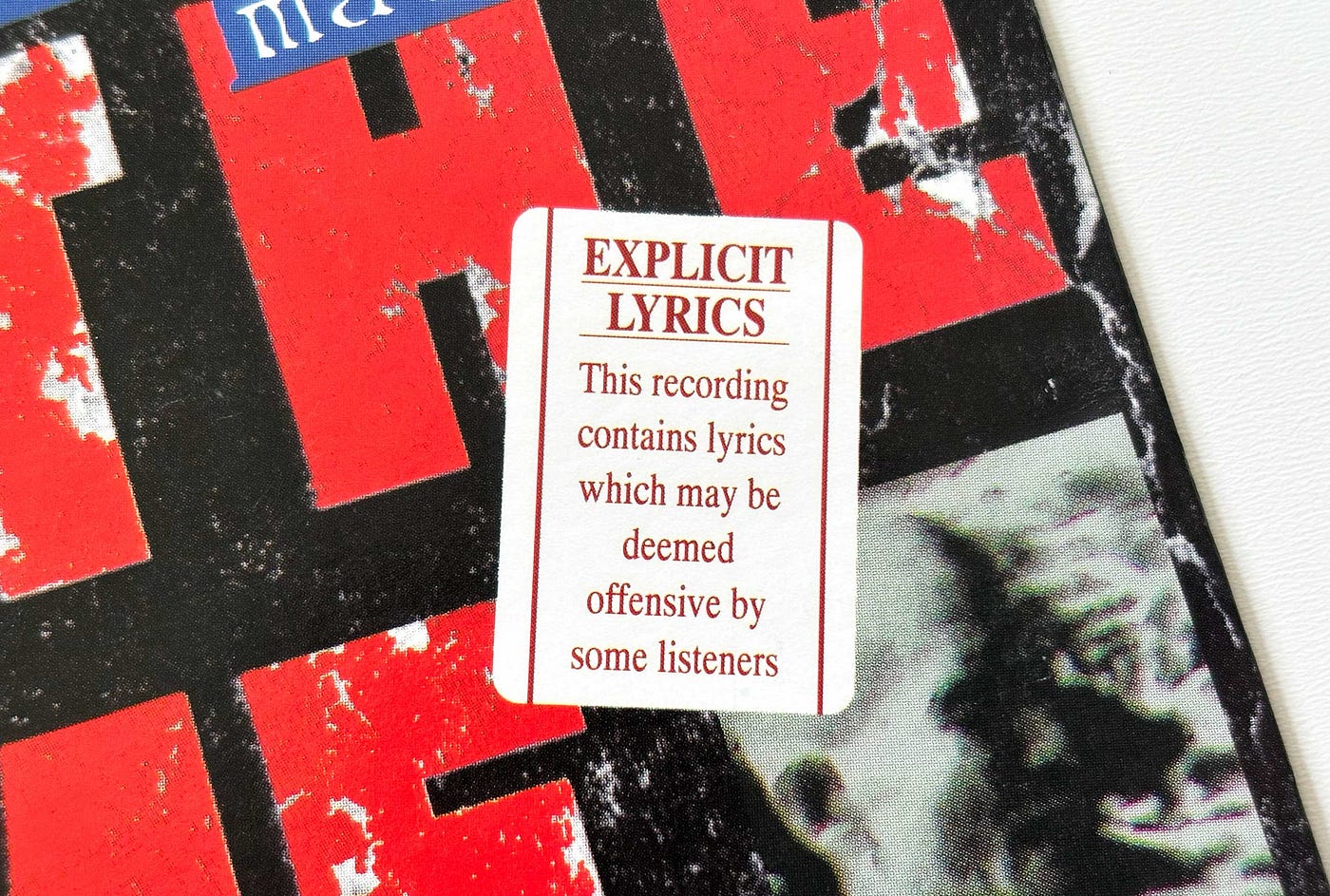
Explicit lyrics sticker. Image copyright Jesse Karjalainen.
Generation X were learning to question the Establishment status quo.
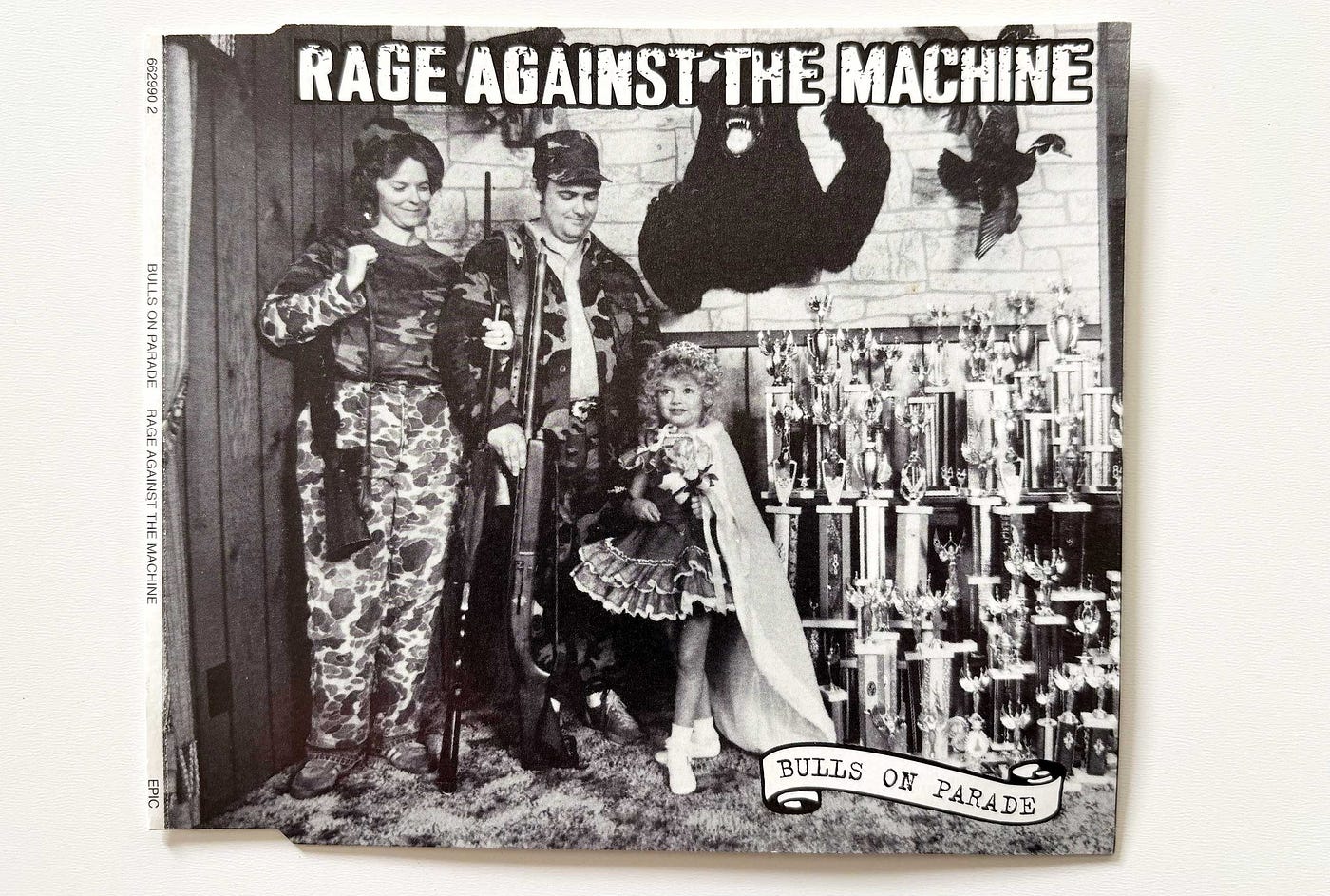
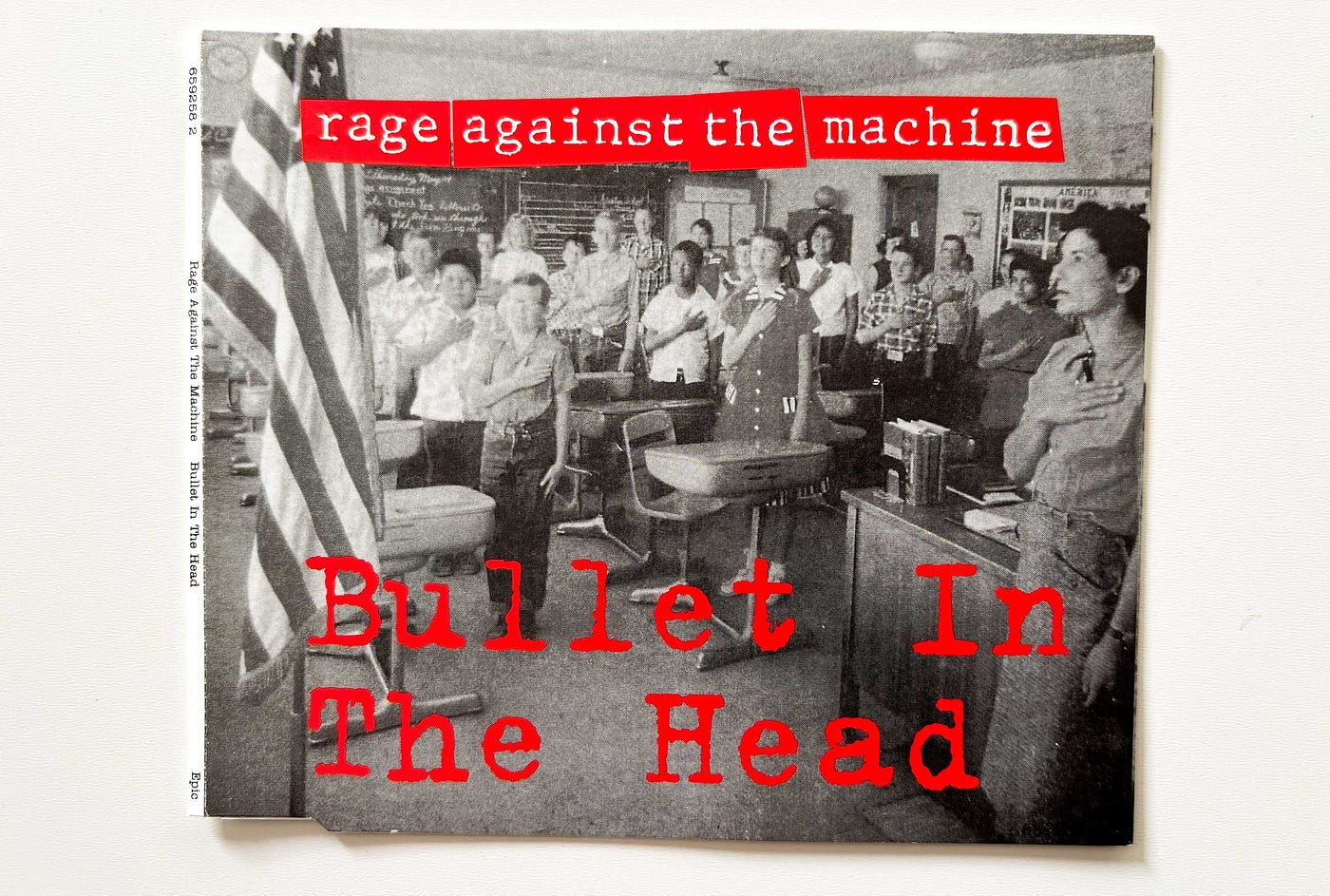
Question everything. Image copyright Jesse Karjalainen.
One of the ironies of the Parental Guidance sticker was that the most successful, political rap group of all time was Public Enemy. They rarely rapped, never made sexualised songs and refrained from using the N-word.
But what they did do was point out political realities from a different perspective. In a world before the World Wide Web, Chuck D famously called rap music “the Black CNN”. The 1992 single Hazy Shade of Criminal received significant censorship and limited radio play because it confronted topics such as systemic racism, crooked politicians and the American legal system.
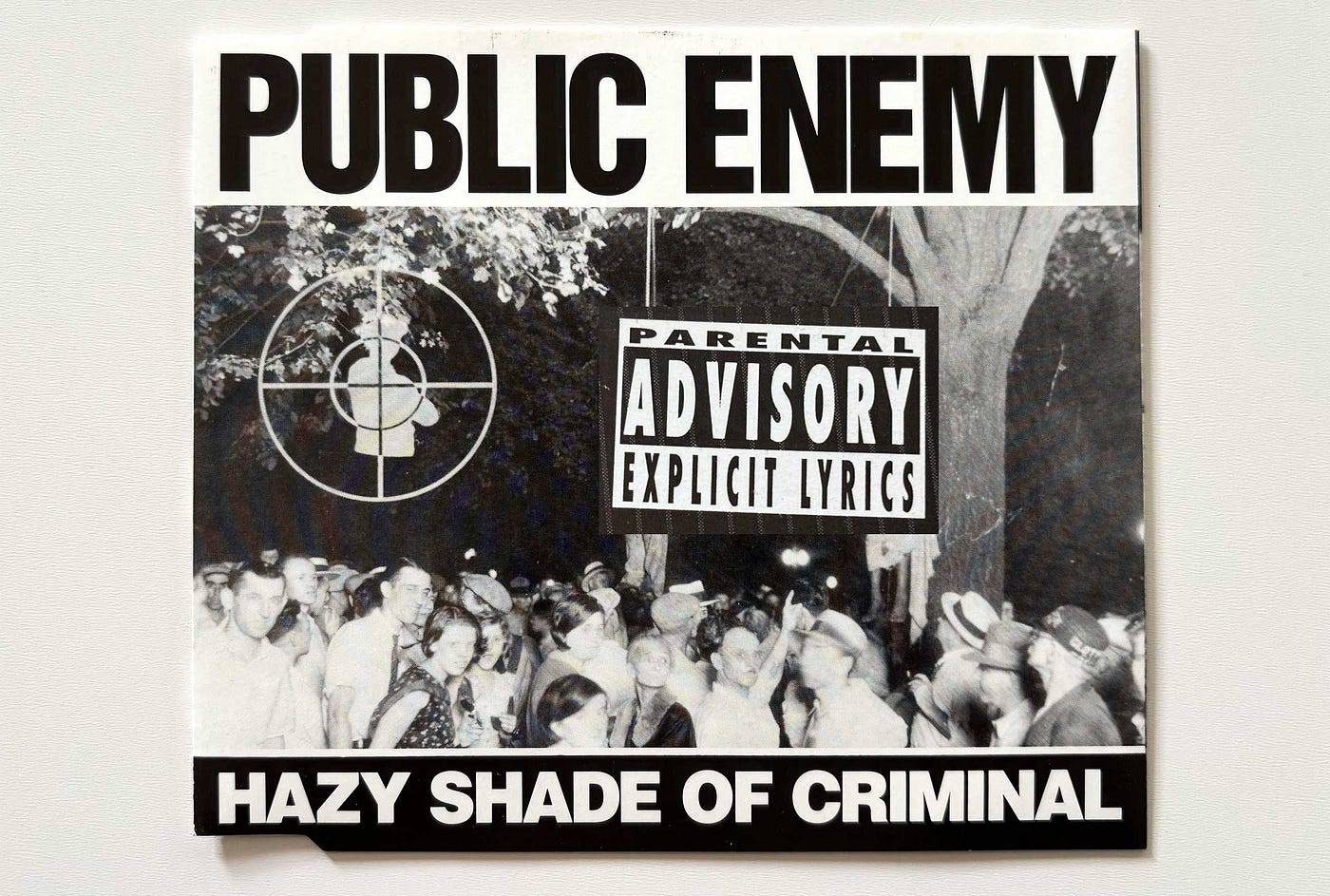
Hazy Shade of Criminal, sticker added and altered by author. Image copyright Jesse Karjalainen.
The cover featured the famous historical photo of a 1930s lynching in Indiana, which shows a gleeful crowd watching the hanging remains of two hanged men. (Censorship note: I am the one who added the sticker to cover their bodies, to respect their dignity.) As a result, many stores and music retailers refused to stock the single.
The irony was that there were no swear words or sexual content. So the government didn’t think it needed a sticker. Today, most of the heavily political rap has disappeared, and all that’s left is weak rappers rapping about sex. And books about sex. It turns out that it was never about explicit lyrics after all.
To quote Ice-T on Message to the Soldiers:
The First Amendment had absolutely nothin’ to do with black people. At the time Constitution was written, we were considered nothin’ but property. The expectation of havin’ black people speak on records never came to mind.
The difference between 1990 and the 2020s was that once a record was banned, it was practically impossible to get hold of a copy. CD-burners were not a thing, and there were no online networks or MP3 technology. In the analogue world, a ban was a ban.
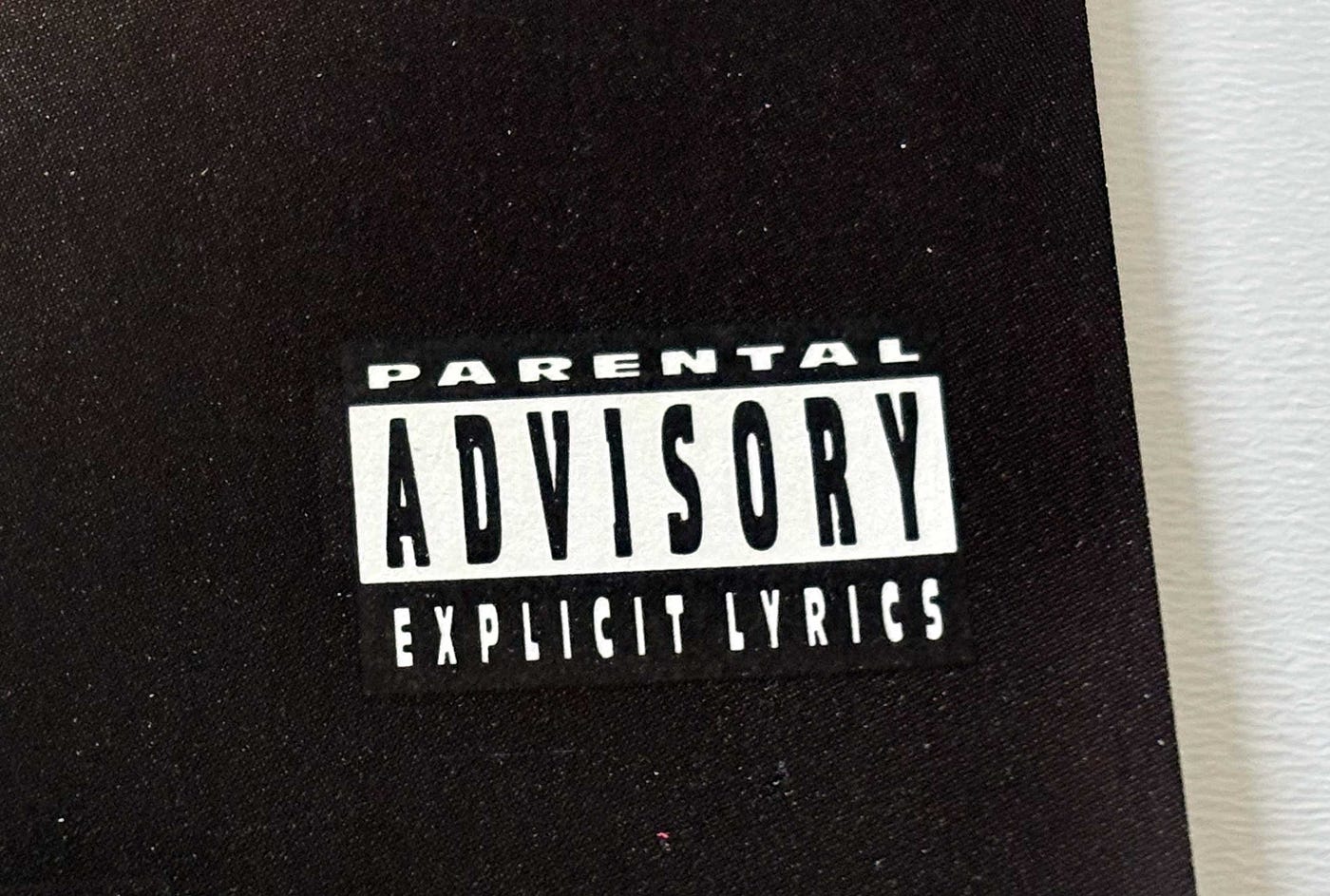
Sticker. Image copyright Jesse Karjalainen.
Now you know where, when and why those little black and white stickers came about. Perhaps where The 2 Live Crew went wrong was that they didn’t create a cartoon cover. They might have passed the censors had they done so.
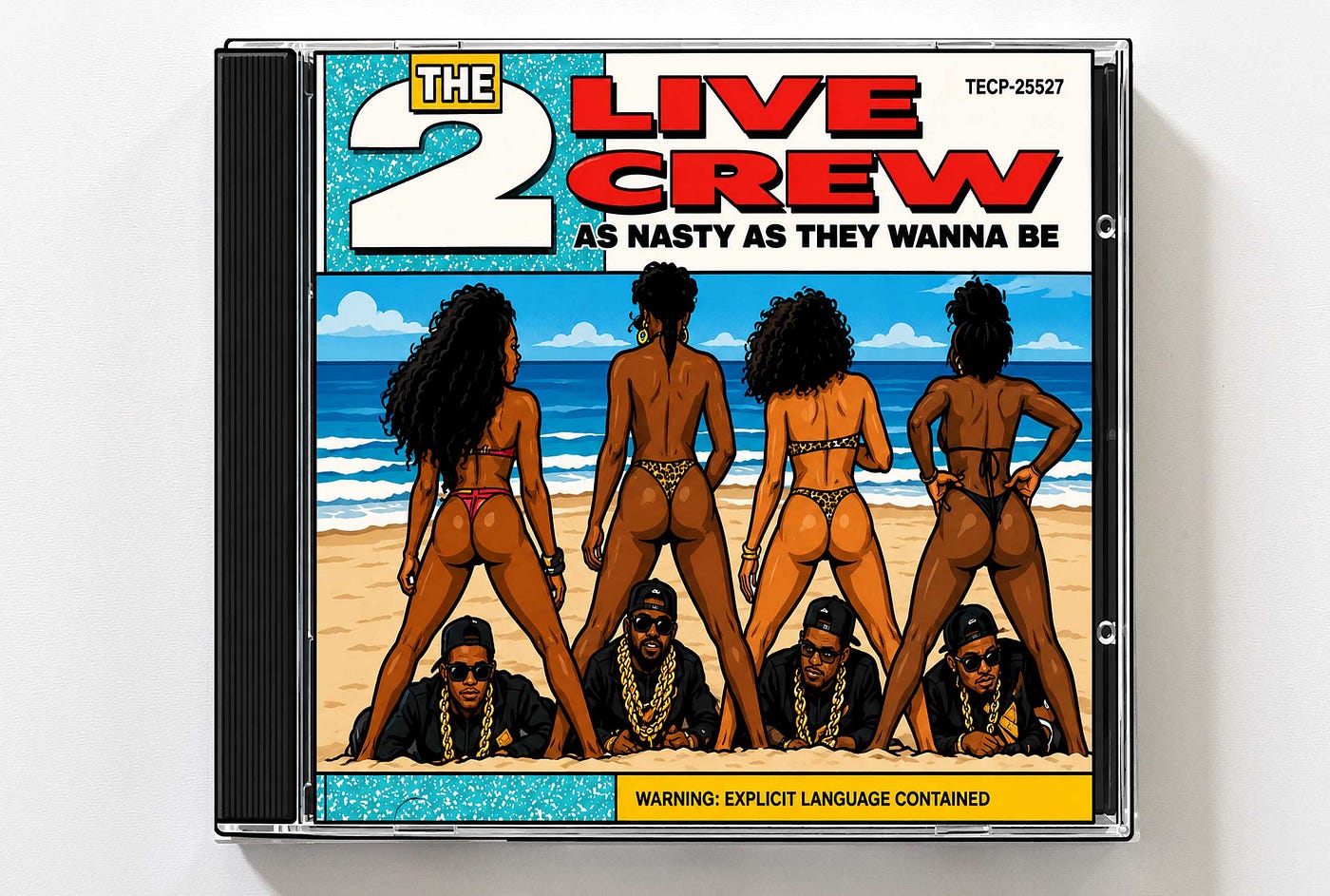
What if Elle Kennedy made raps? Image copyright Jesse Karjalainen.
Don’t hold your breath for a moral panic over the spicy-romance trend to break out any time soon. Just don’t call anyone fat.
See you next time.
Join me on all your favourite social platforms: **YouTube | [TikTok](https://www.tiktok.com/@retrotechshow?source=user_about----------------------1aa8cfb4ab15----------------------) | [Substack](https://substack.com/@retrotechshow?source=user_about----------------------1aa8cfb4ab15----------------------) | [Bluesky](https://bsky.app/profile/retrotechshow.bsky.social?source=user_about----------------------1aa8cfb4ab15----------------------) | [Gumroad](https://jessebooks.gumroad.com/?source=user_about----------------------1aa8cfb4ab15----------------------)**.
//
Jesse is an author, illustrator and content creator currently based in Sweden. The Retro Tech show aims in chronological order to chart how the world went from the analogue age to the digital age. This is a personal memoir, starting in 1973, of every major technology I encountered in each year of my life.
None of the words in this series have been written by AI. This is 100% human sweat and toil. This content may not be used for AI training, so bots can stay away.
메타데이터
- post_id
- 7ad4ea2ffc4a
- slug
- 1990-me-so-horny-music-censorship-and-the-parental-advisory-sticker-7ad4ea2ffc4a
- url
- https://medium.com/read-or-die-hq/1990-me-so-horny-music-censorship-and-the-parental-advisory-sticker-7ad4ea2ffc4a
- canonical_url
- https://medium.com/read-or-die-hq/1990-me-so-horny-music-censorship-and-the-parental-advisory-sticker-7ad4ea2ffc4a
- author_url
- https://medium.com/@RetroTechShow
- status
- ok
- fetched_at
- 2026-06-12 18:14:10