Best TripodFor Backcountry Hunting
My Quest for the Best Tripod for Backcountry Hunting
Best TripodFor Backcountry Hunting
My Quest for the Best Tripod for Backcountry Hunting
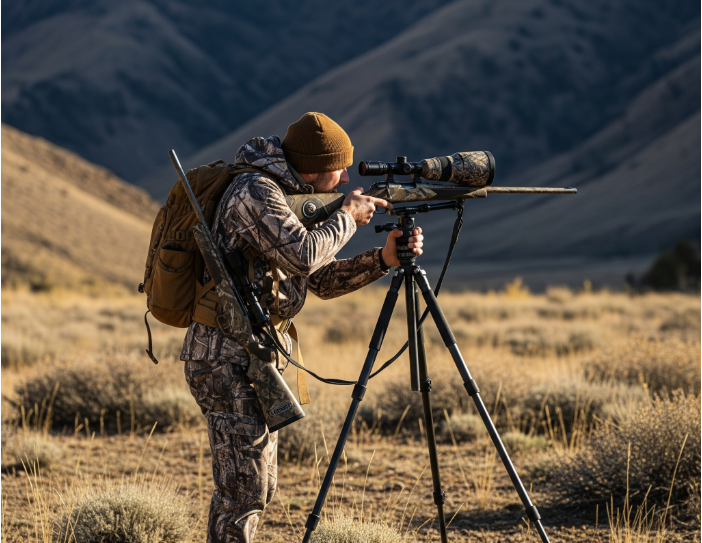
The bull elk bugled, a sound that vibrated deep in my chest, echoing off the granite walls of the Colorado basin. He was right there, 280 yards, broadside in the golden dawn light. My heart hammered against my ribs like a drum solo. Years of scouting, months of anticipation, boiled down to this single moment. I settled my rifle onto my… flimsy, bargain-bin tripod. As I touched the trigger, a gust of wind caught the legs. The crosshair danced wildly. The shot felt wrong even as it broke. A clean miss. The majestic bull vanished into the timber, leaving me with nothing but the echo of his bugle and the crushing weight of regret. That day, staring at that worthless piece of aluminum, I swore I’d never let unstable gear steal my opportunity again. My relentless search for the true best tripod for backcountry hunting began.
Forget the camera store specials or the flimsy sticks you see at the range. Backcountry hunting demands gear that’s an extension of your own resolve — lightweight enough to carry for miles over brutal terrain, yet unshakeably stable when a trophy of a lifetime presents itself. It’s not just about holding a rifle; it’s about anchoring your hope, your effort, and your ethics in that critical instant. Your tripod is your silent partner in the high country, your unwavering foundation when everything else is chaos. Skimp here, and you risk more than just a missed shot; you risk the entire essence of the hunt.
- Uncompromising Stability Under Fire (Literally): Even a slight wobble magnifies exponentially at distance. A premium hunting tripod locks down tight, absorbing recoil and eliminating the “jitters” that ruin precision.
- Precision Shot Placement = Ethical Harvest: This is paramount. Stability translates directly to accuracy, ensuring a quick, humane harvest. It’s the cornerstone of ethical hunting, especially with today’s capable long-range rifles.
- Weight Savings That Save Your Back (And Spirit): Ounces become pounds over 10 miles and 3,000 vertical feet. Ultralight carbon fiber isn’t a luxury; it’s essential endurance gear. The lightest hunting tripods make the difference between arriving energized or utterly spent.
- Brutal Terrain Durability: It will be dropped on rocks, scraped through scree, submerged in creeks, and frozen solid. It must shrug off abuse that would destroy lesser gear. Rugged hunting tripods are built for the punishment.
- Adaptability is King: From prone sniping to sitting shots to awkward standing positions behind cover, the terrain dictates your stance. A great tripod offers infinite adjustability and versatile tripod legs.
- Speed of Deployment: Opportunities vanish in seconds. Quick-deploy tripods with intuitive leg locks and smooth panning heads let you get on target fast.
- Safety & Observation: Rock-solid stability isn’t just for shooting. It’s crucial for confident glassing for hours, spotting game at extreme ranges without eye fatigue or wobble. A stable glassing platform is a game finder.
- My Experience: This is the tripod I trust when failure is not an option, deep in grizzly country on a solo sheep hunt. It feels like it’s carved from a single piece of mountain. Even fully extended in howling wind, supporting a heavy spotter and rifle, it’s like shooting off a concrete bench. The systematic design lets me swap heads or add a leveling base in seconds. It’s absorbed brutal falls onto talus that made me wince, showing only minor cosmetic scratches.
- Why It’s Great:
- Legendary Gitzo carbon fiber construction — The benchmark for strength-to-weight.
- Unmatched stability even at max height or in punishing conditions.
- Systematic design offers incredible modularity and future-proofing.
- Smooth, precise Anvil 30 head locks down with absolute authority, handles heavy rigs effortlessly.
- Leg angles offer superb adaptability for uneven ground.
- Downside: The price tag induces serious sticker shock. It’s also not the absolute lightest (though remarkably light for its capability). The leg locks require occasional maintenance in very gritty environments.
- Best For: The serious hunter who demands the absolute pinnacle of stability and durability, regardless of cost, especially for extended trips or heavy rifles/optics. Guides, outfitters, and hardcore backcountry enthusiasts.
- My Experience: When every ounce counts on a 10-day wilderness backpack hunt, this is my go-to. The first time I held it, I couldn’t believe how something so light felt so rigid. RRS machining is simply exquisite. The BH-30 head is the perfect balance of compact size and impressive holding power. It’s survived being strapped outside my pack, battered by branches and rain, emerging ready to perform. The speed and ease of setup with the lever locks is a genuine joy when you’re winded and game is moving.
- Why It’s Great:
- Best-in-class weight-to-stability ratio — Unbelievable performance for sub-3 lbs.
- RRS Lever-Lock legs are incredibly fast, secure, and easy to operate with cold or gloved hands.
- BH-30 Ballhead is a marvel of miniaturization without sacrificing strength or smoothness.
- Impeccable build quality and attention to detail — Feels like precision engineering.
- Excellent packability — Fits easily inside or outside most hunting packs.
- Downside: Premium price. The thin legs, while strong, feel more vulnerable than thicker options (though I’ve never had an issue). Maximum height is slightly less than bulkier models.
- Best For: Ultralight backpackers, spot-and-stalk hunters covering huge distances, archery hunters needing stability for rangefinding/binos, anyone prioritizing minimal weight without sacrificing critical stability. Top choice for ultralight hunting tripods.
- View the RRS Ascend-14 Tripod on Really Right Stuff
- View the RRS BH-30 Ballhead on Really Right Stuff
- My Experience: This tripod punches way above its price point. I took it on a brutal mule deer hunt in the Arizona desert — sharp rocks, dust storms, temperature swings. It never faltered. The twist locks are robust and easy to operate. The LH-40 head is surprisingly capable for the price, holding my .300 PRC rig steady for precise shots. It strikes a fantastic balance between Gitzo/RRS-level performance and a more accessible cost. It’s become my recommended “workhorse” for hunters wanting top-tier performance without the top-tier price.
- Why It’s Great:
- Exceptional value — Gets you remarkably close to Gitzo/RRS performance for significantly less.
- Robust carbon fiber construction — Feels solid and inspires confidence.
- Very good stability for its weight class, handles most hunting rifles and spotters well.
- LH-40 Ballhead is smooth and strong, a significant step up from budget heads.
- Wide leg angles provide excellent stability on steep or uneven terrain.
- Downside: Twist locks aren’t quite as fast as lever locks, especially with cold hands (though these are good twist locks). Slightly heavier than the absolute top ultralights like the RRS Ascend. Finish isn’t quite as refined as Gitzo/RRS, but still excellent.
- Best For: Hunters seeking near-premium stability and durability at a more reasonable price point. Excellent for those transitioning from budget tripods who want a significant upgrade. Great durable hunting tripod value.
- My Experience: Don’t let the price fool you — this setup is a revelation for hunters on a tight budget or just starting their backcountry journey. I keep one as a loaner for friends, and it consistently impresses. While not quite as bombproof or vibration-dampening as the Series 3 Leofoto or Gitzo, it’s leagues ahead of generic camera tripods. The SE-20 pan-tilt head is surprisingly intuitive and rock-solid for shooting, arguably better for pure rifle use than many budget ballheads. For glassing or moderate rifle weights, it’s a fantastic entry point.
- Why It’s Great:
- Outstanding value — The best performance you’ll find at this price for hunting.
- Solid carbon fiber legs provide good stability for the weight.
- SE-20 Pan-Tilt Head is purpose-built for shooting — simple, strong, no creep. Great for beginners.
- Significantly lighter and more stable than heavy “shooting sticks” or cheap tripods.
- Solid introduction to quality tripod benefits without breaking the bank.
- Downside: Not as stable with very heavy rifles or spotters compared to Series 3 options. Maximum height is lower. Pan-tilt head, while great for shooting, is less versatile for complex glassing positions than a good ballhead. Leg locks are functional but not as smooth as premium models.
- Best For: Budget-minded hunters, beginners entering the backcountry tripod world, youth hunters, those primarily using it for lighter rifles or as a dedicated glassing tripod. Excellent budget hunting tripod starter kit.
- My Experience: When speed and simplicity are paramount — like scrambling after a bugling bull with my bow or needing to deploy my binos instantly on a ridge line — this is my pick. The unique single-leg adjustment is brilliantly fast. Twist one knob and all legs extend simultaneously to your preset height. The QD-50 head is robust and features an Arca-Swiss clamp compatible with many popular mounting plates (like RRS, Kirk, etc.). It’s incredibly sturdy for its minimalist design and packs down compact.
- Why It’s Great:
- Unmatched deployment speed — Set up in literally 2–3 seconds.
- Simple, intuitive operation — Perfect when adrenaline is pumping.
- Surprisingly stable for its design, especially at common glassing/shooting heights.
- Robust QD-50 Ballhead with standard Arca clamp.
- Excellent packability — Short and relatively light.
- Downside: Maximum height is limited. Not as stable on extremely uneven ground as multi-angle leg tripods. Single adjustment means less fine-tuning for perfect leveling on slopes compared to individual legs. The unique mechanism requires understanding its use case.
- Best For: Bowhunters needing rapid deployment, spot-and-stalk hunters prioritizing speed, dedicated glassing setups where maximum height isn’t critical, mobile hunting tripod users. A fantastic quick-deploy tripod.
Which “Best Tripod for Backcountry Hunting” Should You Haul Up the Mountain?
Choosing isn’t about finding the “best” overall, but the best for YOU and YOUR hunt. Let’s break it down:
- The Weight-Weary Ultralight Backpacker: You count every ounce over 50 miles. Pick: Really Right Stuff Ascend-14 + BH-30. Its unmatched weight-to-stability ratio is your holy grail. The Two Vets Recon V2 is also a strong contender if max height isn’t critical and speed is key.
- The Stability Fanatic (No Compromise): You demand an unshakeable rock, hunt heavy rifles, or guide clients. Price is secondary to absolute performance. Pick: Gitzo Mountaineer GT5533LS + Anvil 30. It’s the bedrock foundation.
- The Value-Seeking Performer: You want top-tier stability and durability without maxing your credit card. Pick: Leofoto LS-324C + LH-40. This is the sweet spot for serious hunters who appreciate smart spending. It punches way above its weight class.
- The Budget-Minded Beginner or Glassing Guru: You’re entering the tripod world or primarily need a rock-solid glassing platform without rifle weight demands. Pick: Leofoto Ranger LS-223C + SE-20. Tremendous value, gets you into the game properly.
- The Speed-Focused Bowhunter/Stalker: Seconds matter when chasing elk or getting binos up fast. Pick: Two Vets Recon V2 + QD-50. Nothing deploys faster or simpler. Excellent for archery setups and quick glassing.
Beyond the Gear: Pro Tips from the Field
Buying the best tripod for backcountry hunting is step one. Using it effectively is step two:
- Master the Low Angle: The lower the tripod, the more stable. Get comfortable shooting from sitting or kneeling positions using the tripod. It’s often faster and steadier than standing.
- Use the Terrain: Nestle a leg against a rock or log for added rigidity. Sink legs into soft ground for better purchase. Position the tripod so one leg points directly at your target — this minimizes movement during recoil.
- Leveling Base Magic: Adding a small leveling base between the tripod and head (like RRS or Leofoto) is a GAME CHANGER on steep sidehills. It lets you level your rifle/scope independently of the tripod legs, maintaining natural body position. Essential for steep angle shooting.
- Pre-Load the Head: When taking the shot, gently push forward into the tripod with your shoulder before and during the trigger press. This “pre-loads” the system, minimizing jump and ensuring the recoil impulse travels straight back.
- Silence is Golden: Practice deploying and adjusting your tripod silently. Learn which locks click and how to minimize that sound. A quiet setup can mean the difference between spotting and spooking.
- Arca-Swiss Ecosystem: Invest in quality Arca-Swiss compatible plates (like RRS, Kirk, etc.) for your rifle, binos, and spotter. This universal system allows lightning-fast swaps between optics and rifle on the same tripod head. Non-negotiable for efficiency.
- Protect Your Investment: Use a simple protective sleeve or wrap (like a cut-down foam sleeping pad section) when strapping the tripod outside your pack to prevent scratches and dings.
The Bottom Line: Your Foundation for Unforgettable Hunts
Finding the best tripod for backcountry hunting transformed my experience. That heartbreak with the bull elk? It hasn’t happened again. Instead, I recall the perfect stillness as my crosshair settled on a ram at 400 yards on a windswept ridge, the unwavering platform letting me execute the shot with absolute confidence. I remember hours spent glassing distant basins, the tripod holding my heavy spotter steady, revealing hidden bucks that would have been invisible without that stability.
The mountains demand respect, and so does the hunt. Carrying a flimsy support is a disservice to the effort, the animal, and yourself. Investing in a true backcountry hunting tripod — whether it’s the featherweight precision of the RRS, the unyielding strength of the Gitzo, or the incredible value of the Leofotos — isn’t just about gear. It’s about building a foundation for success, for ethical harvests, and for memories forged in the crucible of wild places. It’s about ensuring that when the moment of truth arrives, your gear isn’t the weak link.
메타데이터
- post_id
- 7aec1a3cdf5f
- slug
- best-tripodfor-backcountry-hunting-7aec1a3cdf5f
- url
- https://medium.com/@adilprimexessllc65/best-tripodfor-backcountry-hunting-7aec1a3cdf5f
- canonical_url
- https://medium.com/@adilprimexessllc65/best-tripodfor-backcountry-hunting-7aec1a3cdf5f
- author_url
- https://medium.com/@adilprimexessllc65
- status
- ok
- fetched_at
- 2026-06-09 15:37:30