Marketing Strategies From Top CMOs: Five Marketing Strategies From Stephanie McCarty Of Taylor…
An Interview With Tavares Beverly
Marketing Strategies From Top CMOs: Five Marketing Strategies From Stephanie McCarty Of Taylor Morrison
An Interview With Tavares Beverly
Game-changing ideas are rarely the easy ones. They’re the ones you have to fight for. The ones that challenge the status quo. And the ones everyone tells you will never work.
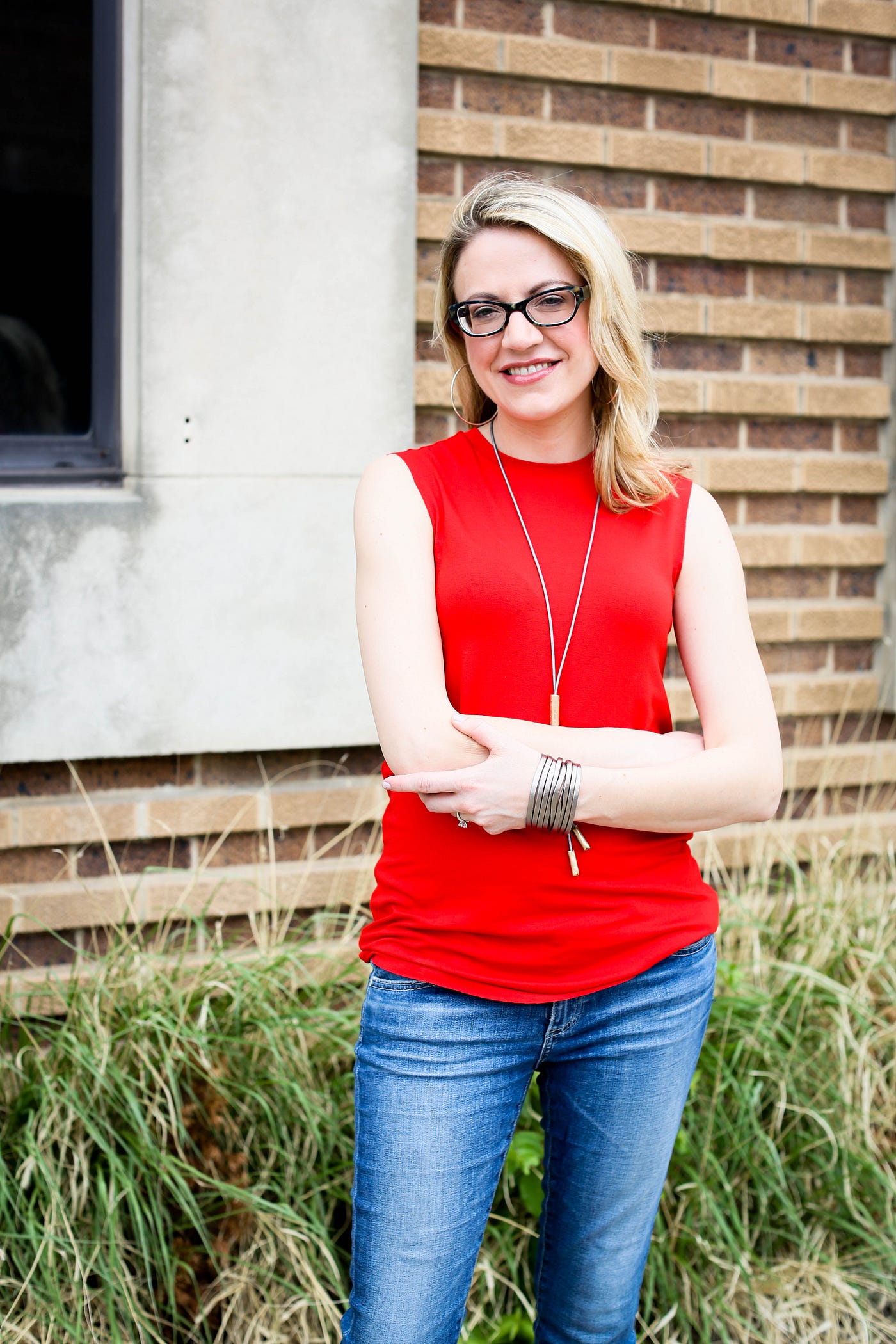
As a part of this series, I had the distinct pleasure of interviewing Stephanie McCarty.
As Taylor Morrison’s first-ever CMO, Stephanie McCarty has redefined what marketing and advertising means in the antiquated space of homebuilding, shifting the industry paradigm from stale sales tactics to a robust, brand-building, digital-first strategy that has propelled Taylor Morrison as a pioneer in new home residential construction. In her role, she has transformed the company culture and branding position nationwide, led acquisitions that helped catapult the company to one of the country’s largest residential homebuilders, and positioned Taylor Morrison among the first to move the future of new construction home shopping forward with innovative, industry-leading customer acquisition tools. Stephanie graduated from the Walter Cronkite School of Journalism and Mass Communication at Arizona State University, and was named one of Forbes Top 50 Entrepreneurial CMOs (2025), a Business Insider Most Innovative CMO (2024), one of Reuters Trailblazing Women in Marketing, Service and Experience (2024), and was included in the Phoenix Business Journal’s 40 Under 40 (class of 2019).
Thank you so much for joining us in this interview series! Can you tell us a story about what brought you to this specific career path?
Prior to joining Taylor Morrison more than a decade ago, I led communications for the University of Phoenix, Insight, ON Semiconductor, and McMurry. When I joined the organization as Vice President of Corporate Communications, I helped transform the company culture and branding position nationwide and then stepped into my current role as Taylor Morrison’s first CMO.
I never chased a title, and honestly, CMO never even made it to my vision board. What I’ve always chased (and still do) is the work. The gnarly, complex, keep-you-up-at-night projects that have the power to flip an entire organization on its head. The kind of challenges that transform people — their beliefs, their behaviors, their whole lives. The chance to make a lasting impact by applying new thinking and innovative solutions to real business problems.
Throughout my career, I’ve showed up each day with a fire in my belly and deep desire to do what I do best. And with that, the bigger titles started coming, one right after the other — along with the opportunity to solve more complex problems and make an even bigger impact.
Can you share the most interesting story that happened to you since you began at your company?
I spent years fighting to build an eCommerce platform for home building. Operators swore it would cannibalize our physical sales. They said customers who could buy online would never visit our communities. If they never visited our communities, they wouldn’t buy because no one buys a house without seeing it first. That we were sabotaging ourselves.
In fact, it did the opposite. Our digital experience didn’t replace in-person, instead, it made it a lot more powerful. Customers who started online and finished in person spent 23% more on their home, closed 40% faster and expressed they had more positive emotions throughout the entire process.
Today, Taylor Morrison’s online reservation system is the single most important activity taking place on our website. It converts at 60%, drives higher sales prices and higher option revenue, and lowers broker participation. Embracing this digital-first experience educated home shoppers on their own timeline, built trust through radical transparency, let customers explore without a salesperson hovering, and gave them control over the entire experience.
Game-changing ideas are rarely the easy ones. They’re the ones you have to fight for. The ones that challenge the status quo. And the ones everyone tells you will never work.
Can you share a story about the funniest mistake you made when you were first starting? Can you tell us what lesson you learned from that?
When I was working at my first job after college, there was a moment some might classify as a mistake. I still stand behind the decision today, but I will admit, it was bold — even for me!
My team was filming a holiday video message from our CEO to employees, and while he was reading off the teleprompter, I noticed his glasses were completely covered in fingerprints. I tried to ignore it — really, I did — but I just couldn’t. If it was distracting me, it would distract the thousands of people watching this video later, right? So, without really thinking my plan through, I said, “Stop,” walked into the shot, removed and cleaned my CEOs glasses, put them back on his face, and walked out of frame and back to my spot next to my manager. I’m still not sure if he was horrified by my brashness or grateful for the assist. But I didn’t get fired, so I like to think it was the latter.
Looking back, it is funny because I didn’t once pause to consider titles or hierarchy. I just saw something that needed to be fixed and acted on it. What I took away from that experience is that early in your career, you learn a lot about trusting your instincts. If your intention is to make something better and support the people around you, it is okay to speak up or step in, even if it feels a little uncomfortable at the time. I hope my team feels and operates with that same mindset today.
Ok super. Thank you for all that. Let’s now shift to the main focus of our interview. Marketing is always evolving. Is there a strategy you swore by five years ago that you’ve completely rethought today?
Marketing isn’t what it used to be, but many organizations operate as if it is. For years, the model was straightforward, featuring a small number of major campaigns, significant production budgets and long planning cycles. It was polished, controlled, and slow. That model made sense when organizations controlled both the message and the media — but brands don’t have that kind of power anymore.
Today, social media is the primary stage. Even the most thoughtfully produced campaign is often first encountered not where it was placed, but instead where it was shared. If it’s good, it travels through DMs, social media stories, and with viral likes and comments. If it’s not, that content quietly disappears. Five years ago, content was polished and rational. Flash forward to today, the social media content that resonates the most doesn’t necessarily fit that mold. The content that works stops you mid-scroll, makes you excited to share with a friend, and feels just self-aware enough to be human, even if it’s occasionally a little weird. Actually, especially when it’s a little weird. Weird is memorable.
Can you share a campaign or project that didn’t go as planned? What did you learn from that experience, and how did it shape your approach moving forward?
Early in my tenure at Taylor Morrison, I had to have a hard conversation with our field marketing teams. Creativity at the local level wasn’t going to mean one-off logos or off-brand taglines anymore. Instead, creativity would come to life through the flawless execution of a centralized brand strategy. Was it popular? Absolutely not. Did it work? Without question. It gave us a consistent national brand that could actually scale.
I learned that if you’re a new CMO and you’re not making people a little uncomfortable, you’re not doing your job. Tackling our field marketing as a whole right when I started the job wasn’t the comfortable decision. But I wanted to build something that was even stronger than what I inherited.
Data is everywhere now, but it can be overwhelming. How do you decide which metrics to prioritize when shaping your strategies?
As marketers, we’re asked to obsess over customer journey maps, NPS scores, brand health scores and funnel reports. While all these metrics matter, I’m most drawn to the metrics tied to customer behavior and that help stakeholders understand our impact on business outcomes.
The hardest part of being a CMO isn’t necessarily the marketing. It’s marketing marketing. The CMO sells marketing every day to our own organization by proving value, defending budgets, and explaining why brand matters just as much as the bottom line. Marketing is a specialized skill and having the data that backs up our work is key to accelerating a brand.
What’s one unconventional or bold marketing move you’ve made that turned out to be a game-changer for your company?
Last June, Liquid Death’s CEO, Mike Cessario and I were both invited to speak at the Pacific Coast Builders Conference (PCBC), one of the largest building shows and conferences in the U.S. about how traditional marketing is dead. We presented together and part of that conversation covered how people hate marketing. We both underscored that when brands market their products, we should do so in a way that feels good, isn’t pushy, and is ultimately worth their time. Immediately after we walked off the stage, we agreed that we should do something together.
While I wasn’t looking to partner with a brand whose packaging has a skull on, and they weren’t necessarily looking for a homebuilder, we realized we could create something bold. Nine months later, we are giving away a real Taylor Morrison home piped with Liquid Death’s soda-flavored sparkling water coming out of every faucet, where every can purchased and every model tour becomes an entry to win that house.
Turns out Taylor Morrison and Liquid Death are more alike than you’d think. We both operate in categories most would call “boring,” yet we’ve disrupted them with brand. We break industry norms, sell identity, not just a product, and prioritize storytelling over hard selling.
This unexpected marketing move has translated both with our own team members, as well as with potential homebuyers, media, and key stakeholders. Internally, our organization is buzzing with excitement over this collaboration. We have field team members taking it upon themselves to create content showcasing the partnership, and putting their own unique spins on it. Externally, we received approximately 650M media impressions, 9.6M views on social media, and over 38K new leads.
Ok super. Here is the main question of our interview. Based on your opinion and experience, what are your “Top Five Marketing Strategies” and why.
1. Unexpected works because it breaks patterns. In a world where most marketing is ignored, breaking patterns earns attention. In our recent Liquid Death partnership, we watched people go from skeptical, to confused, to fully invested. Homebuilding is an antiquated industry when it comes to marketing, and collaborating with a brand that has a skull plastered on the front of its product and the word “death” in its name…catches people off guard. This partnership is unexpected by design and because of that, it just works.
2. Stop pretending perfection is persuasive. For decades, advertising has been convinced that perfection is the right way to reach people. In the homebuilding industry, that meant that we polished everything, had gleaming kitchens, posed families, and golden lighting. But that’s not how people actually live. We created the Homes Built for Real Life platform to showcase that families don’t live inside mood boards, and that our homes aren’t the heroes of the story. Instead, our homes are the setting where real life happens — the good, the messy, the unforgettable. Rooted in authenticity, Homes Built for Real Life celebrates the everyday, ordinary moments, featuring household staples like the morning rush, witching hour, and dinner parties.
3. Play the long game. Homebuilding marketers can get tunnel vision on incentives, and because of that, our industry has never succeeded in selling the brand. At Taylor Morrison, we want you to know the brand before you even walk through the door. We’re focused on telling the story of value before the story of discount. We’re selling the craftmanship, the community, and the lifestyle. It can be a hard pivot, but it’s the only way we build something worth buying and create a brand worth being. While the next generation of homebuyers might not be ready to buy right now, we’re reaching them early on. When they’re ready to take that next step, we’re already on their minds.
4. Trust your gut. In marketing, logic gets you noticed. But emotion gets you chosen. Not everything that makes sense works. And not everything that works makes sense. The ideas that shouldn’t work on paper often hit hardest in real life. People don’t buy with reason, they buy with feeling. So, yes data and history can help lead to better decisions. Except when they don’t, and that’s where the magic happens.
5. Marketing marketing. The skill no one talks about but every long-tenured CMO masters. Internally, we have to sell the value of our work every single day — by defending budgets and explaining why brand matters just as much as the bottom line. In my role, I need to market and sell homes while simultaneously selling the discipline of marketing itself. It’s essential, because nothing kills a great idea faster than stakeholders who don’t believe. And nothing accelerates a brand faster than stakeholders who do.
With so many platforms and trends popping up constantly, how do you strike the right balance between trying new things and sticking with what you know works?
I think there’s not enough appreciation for the basics and doing those consistently well. So that will always be #1. But I am a big believer in experimenting new things and seeing how it supports the other marketing tactics and overall brand. We do that often at Taylor Morrison and we always learn a ton. I’d like to give a basic 20 percent rule — enough to play and learn, while keeping what you know works always humming.
Looking ahead, what’s a major shift or trend in marketing that you think CMOs need to prepare for in the next five years?
I’ve been hearing CMOs talking about how much time they’re spending in AI. While there’s a lot of enthusiasm on the topic and it’s driving efficiency, I think it’s also important to see the full impact and how AI is contributing to growth, driving revenue, increasing conversion, and improving campaign performance before shifting time and resources to this space.
Because of the role you play, you are a person of great influence. If you could inspire a movement that would bring the most amount of good to the most amount of people, what would that be? You never know what your idea can trigger. :-)
One of the campaigns I’m most proud of at Taylor Morrison is our annual holiday giving program, Build Joy, which will be in its tenth year this winter. Every holiday season, our teams across the country roll up their sleeves to make a difference in their communities — proving that homebuilding is about so much more than houses, it’s about heart.
Alongside funding our team members’ homegrown philanthropic ideas, last year we took a unique approach by teaming up with Freed’s Bakery in Las Vegas to create a limited-edition Build Joy Gingerbread House Kit. For every kit sold, Taylor Morrison donated $1,000 to help homeowners struggling to make their mortgage payments.
It has been inspiring to see how our annual Build Joy program brings lasting support to families in need, and I’m excited to watch the initiative evolve in the years to come.
This was really meaningful! Thank you so much for your time.
About The Interviewer: Tavares Beverly is the Founder and CEO of Beverly Boy Productions, a national video production company that has helped organizations tell their stories through video for more than two decades. Over the course of his career, he has worked with everyone from Fortune 500 executives and healthcare professionals to politicians, nonprofit leaders, educators, and artists, gaining a unique perspective on the role communication plays in leadership, business, and human connection. A frequent contributor on topics including communication, entrepreneurship, leadership, and personal development, Tavares believes that the ability to communicate effectively is one of the most valuable skills a person can develop. His work is driven by a passion for helping organizations connect with their audiences and helping individuals unlock their potential through mentorship, perseverance, and meaningful relationships. To learn more, connect with Tavares on LinkedIn or visit BeverlyBoy.com. If you’re interested in using the power of storytelling and communication to grow your organization, strengthen your brand, or inspire your audience, he welcomes the opportunity to connect.
메타데이터
- post_id
- 7af7ca8d300a
- slug
- marketing-strategies-from-top-cmos-five-marketing-strategies-from-stephanie-mccarty-of-taylor-7af7ca8d300a
- url
- https://medium.com/authority-magazine/marketing-strategies-from-top-cmos-five-marketing-strategies-from-stephanie-mccarty-of-taylor-7af7ca8d300a
- canonical_url
- https://medium.com/authority-magazine/marketing-strategies-from-top-cmos-five-marketing-strategies-from-stephanie-mccarty-of-taylor-7af7ca8d300a
- author_url
- https://medium.com/@tavares_beverly
- status
- ok
- fetched_at
- 2026-06-21 07:44:09