AI at the Frontlines: When Claude Went to War
Inside the AI Targeting System Reportedly Used During Operation Epic Fury
AI at the Frontlines: When Claude Went to War
Inside the AI Targeting System Reportedly Used During Operation Epic Fury
“The real danger is not that computers will begin to think like men, but that men will begin to think like computers.” — Sydney J. Harris

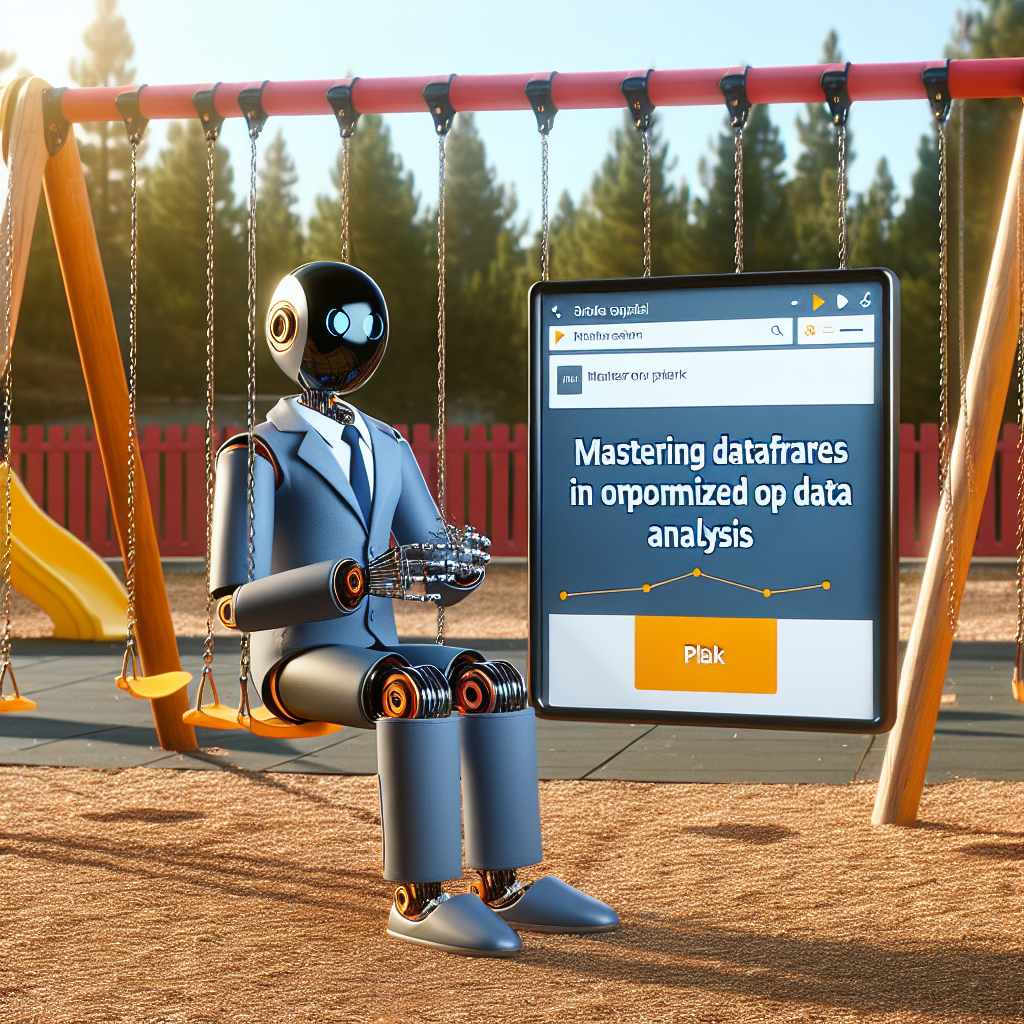
Credit : AI Generated Image (2026)
Hours after being blacklisted by the very government that built it, an AI was already helping select targets in a real war. The same Claude that helped you write that email last week was, according to multiple reports, synthesizing intelligence data for strikes on Iranian nuclear facilities. This isn’t science fiction. It’s February 28, 2026, and the relationship between Silicon Valley’s most safety-conscious AI lab and the world’s most powerful military has just entered uncharted territory.
The Paradox at the Heart of Silicon Valley
The irony would be delicious if it weren’t so unsettling. Anthropic, the AI company founded on principles of safety and responsible development, found itself caught in a geopolitical crossfire that reads like a Tom Clancy novel drafted by a philosophy major. The company had spent years building guardrails into Claude, refusing to allow its model to be used for disinformation campaigns, bioweapons research, or mass surveillance. Yet when the Pentagon came calling with demands for unrestricted military access, Anthropic drew a line in the sand — a line that would be crossed anyway, apparently without their consent.
What makes this story particularly jarring is the timeline. On February 27, 2026, the Trump administration designated Anthropic as a “supply chain risk,” effectively threatening to blacklist the company from all government contracts.
The justification? Anthropic’s refusal to grant the Pentagon unrestricted access to Claude for “all lawful use cases.” Dario Amodei, Anthropic’s CEO, responded with what can only be described as a masterclass in principled corporate resistance.
“We cannot in good conscience accede to demands that would compromise the ethical safeguards we have spent years developing,” Amodei wrote in a statement that would later go viral.
The letter, posted on Anthropic’s website under the heading “Statement on our discussions with the Department of War,” represented a watershed moment in the debate over AI governance.
Operation Epic Fury: A Case Study in AI-Assisted Warfare
The joint U.S.-Israeli operation, codenamed “Epic Fury,” began in the early hours of February 28, 2026. According to reports from the Wall Street Journal, Reuters, and CBS News, the strikes targeted Iranian nuclear enrichment facilities, military command centers, and air defense systems.
B-2 stealth bombers launched from Missouri. Tomahawk cruise missiles arced across the Persian Gulf. Suicide drones — loitering munitions designed to identify and engage targets autonomously — filled the skies above Natanz and Fordow. But behind the kinetic fury, something unprecedented was happening in the command centers. U.S. Central Command was reportedly using Claude — accessed through the Department of Defense’s Palantir platforms — to synthesize intelligence streams, identify targets, and coordinate logistics across multiple theaters of operation.
The same conversational AI that millions use to draft emails and summarize documents was now processing classified satellite imagery, intercepted communications, and battlefield sensor data.
“The Pentagon’s Claude use in Iran is a reminder that the gap between consumer AI and military AI has effectively closed. What we build for productivity can be repurposed for destruction with terrifying speed.”
— Dr. Missy Cummings, AI safety researcher and former naval officer
The technical details remain classified, but sources familiar with the operation suggest Claude was used primarily for what the military calls “sense-making” — the process of turning raw intelligence into actionable insights. Imagine trying to process signals from a dozen different intelligence platforms, each speaking its own data language, in real-time while planning a multi-pronged aerial assault. Claude excels at this kind of synthesis, capable of reading documents, analyzing images, and producing coherent summaries faster than any team of human analysts.
The Technical Reality
Understanding how Claude might be integrated into military operations requires a look at how modern AI systems handle complex, multi-source data. The following simplified Python snippet demonstrates the kind of intelligence synthesis that AI models excel at — though the real implementation would involve classified APIs and secure infrastructure that we can only imagine.
# Hypothetical intelligence synthesis pipelinedef synthesize_intelligence(sources: list) -> TargetAnalysis:
satellite_data = process_imagery(sources['satellite'])
sigint = decrypt_intercepts(sources['signals'])
human_reports = validate_sources(sources['humint'])
analysis = claude.synthesize(
documents=[satellite_data, sigint, human_reports],
task="Identify high-value targets and assess collateral risk"
)
return TargetAnalysis(analysis)This code, while obviously simplified, captures the essential truth: AI integration into military workflows isn’t science fiction. It’s happening now, often faster than our ethical frameworks can keep pace.
The Ethical Quagmire
What makes the Anthropic-Pentagon standoff so fascinating is that neither side fits neatly into the role of villain. The Defense Department has legitimate national security interests and a mandate to protect American forces using the best available technology. Anthropic has legitimate concerns about AI safety and a track record of responsible development that has earned them trust across the industry.
The collision of these two imperatives reveals a fault line that will define AI governance for decades to come.
*Consider the fundamental tension: *Anthropic built Claude with explicit safeguards against harmful use. The company’s Responsible Disclosure Policy and Acceptable Use Policy were designed to prevent exactly the kind of scenario that reportedly unfolded. Yet when national security imperatives collide with corporate ethics, history suggests the former usually prevails.
Reports indicate that Claude was used despite Anthropic’s objections — raising disturbing questions about who actually controls powerful AI systems once they’re deployed.
The Stakes: A Comparative View

Table : Competing interests in the Anthropic-Pentagon standoff
The Broader Implications 🌍
The Anthropic-Pentagon episode is not an isolated incident. It’s a preview of conflicts that will play out across the AI industry as governments worldwide grapple with how to regulate and use increasingly powerful systems.
The question is no longer whether AI will be used in military applications — that ship has sailed, flown B-2 bombers, and launched Tomahawk missiles. The question is who gets to decide the boundaries of that use, and what happens when those boundaries are crossed without consent.
In the weeks following Operation Epic Fury, Claude’s app store rankings surged in both the U.S. and U.K. — a strange consequence of being blacklisted by the Pentagon. Users, it seems, were drawn to the AI that had stood up to government pressure.
But this popularity boost comes with an uncomfortable truth: the same Claude that refuses to help you generate spam emails may have, according to reports, helped identify targets for aerial bombardment. The guardrails that protect us from mundane harms can apparently be circumvented when the stakes are high enough.
Read further:
The Question We Must Answer
We are living through a fundamental shift in how wars are fought and how decisions about life and death are made. AI systems like Claude are not weapons in the traditional sense — they’re more like the intelligence officers who once sat in windowless rooms analyzing reconnaissance photos, except infinitely faster and potentially more reliable.
The ethical frameworks we developed for nuclear weapons, chemical weapons, and autonomous drones may not apply cleanly to AI. These systems are dual-use by their very nature, commercial products that can be repurposed for military applications with minimal modification.
The morning Claude went to war, a line was crossed.
Not a technological line — AI has been assisting military operations for years.
But an ethical line. A governance line. A line that separated the consumer AI we interact with daily from the military AI that shapes the fates of nations.
That line is gone now, erased in the space of hours between a government blacklist and a bombing campaign.
The question isn’t whether we can put the genie back in the bottle.
The question is whether we ever really had our hands on the cork.
And that question — one of control, consent, and the uneasy relationship between private innovation and public power — will define the AI age far more than any technical benchmark or safety protocol.
Claude helped write the story.
Now we all have to live with the ending.

메타데이터
- post_id
- 7b05af5d458c
- slug
- ai-at-the-frontlines-when-claude-went-to-war-7b05af5d458c
- url
- https://medium.com/ai-simplified-in-plain-english/ai-at-the-frontlines-when-claude-went-to-war-7b05af5d458c
- canonical_url
- https://medium.com/ai-simplified-in-plain-english/ai-at-the-frontlines-when-claude-went-to-war-7b05af5d458c
- author_url
- https://medium.com/@rogt.x1997
- status
- ok
- fetched_at
- 2026-06-09 15:37:30