How Cross-Border Payments Actually Work
(And Why They’re Broken)
How Cross-Border Payments Actually Work
(And Why They’re Broken)
The global financial system moves trillions of dollars every day. So why does sending money to your cousin in Canada take three days and cost you a small fortune?
It Started With a Simple Transfer
Picture this. You’re a student in Delhi. Your university abroad has just sent you a panic email — tuition deadline in 48 hours. You log into your bank, initiate a transfer of ₹1,00,000, and confidently hit send.
Three days later, your university receives ₹94,200. No explanation. No breakdown. Just a smaller number staring back at you.
You call your bank. They say the money was sent correctly. You call the university. They say they received what they received. Nobody knows where the ₹5,800 went — or who took it.
Welcome to the world of cross-border payments. Where your money goes on an adventure you didn’t plan — and doesn’t always come back whole.
This isn’t a one-off horror story. It’s the everyday reality for millions of students, freelancers, and small businesses trying to move money across borders. And to understand why it happens, we need to understand how the system actually works.
So What Even Is a Cross-Border Payment?
When you pay a friend on UPI, the money zips from your account to theirs in under a second. Both accounts live in India, both banks are connected to the same national network. Simple.
Cross-border payments are a completely different beast. When money moves from India to the US, or Canada, or Germany — you’re not just moving funds. You’re crossing banking systems, currencies, regulatory frameworks, and time zones all at once.
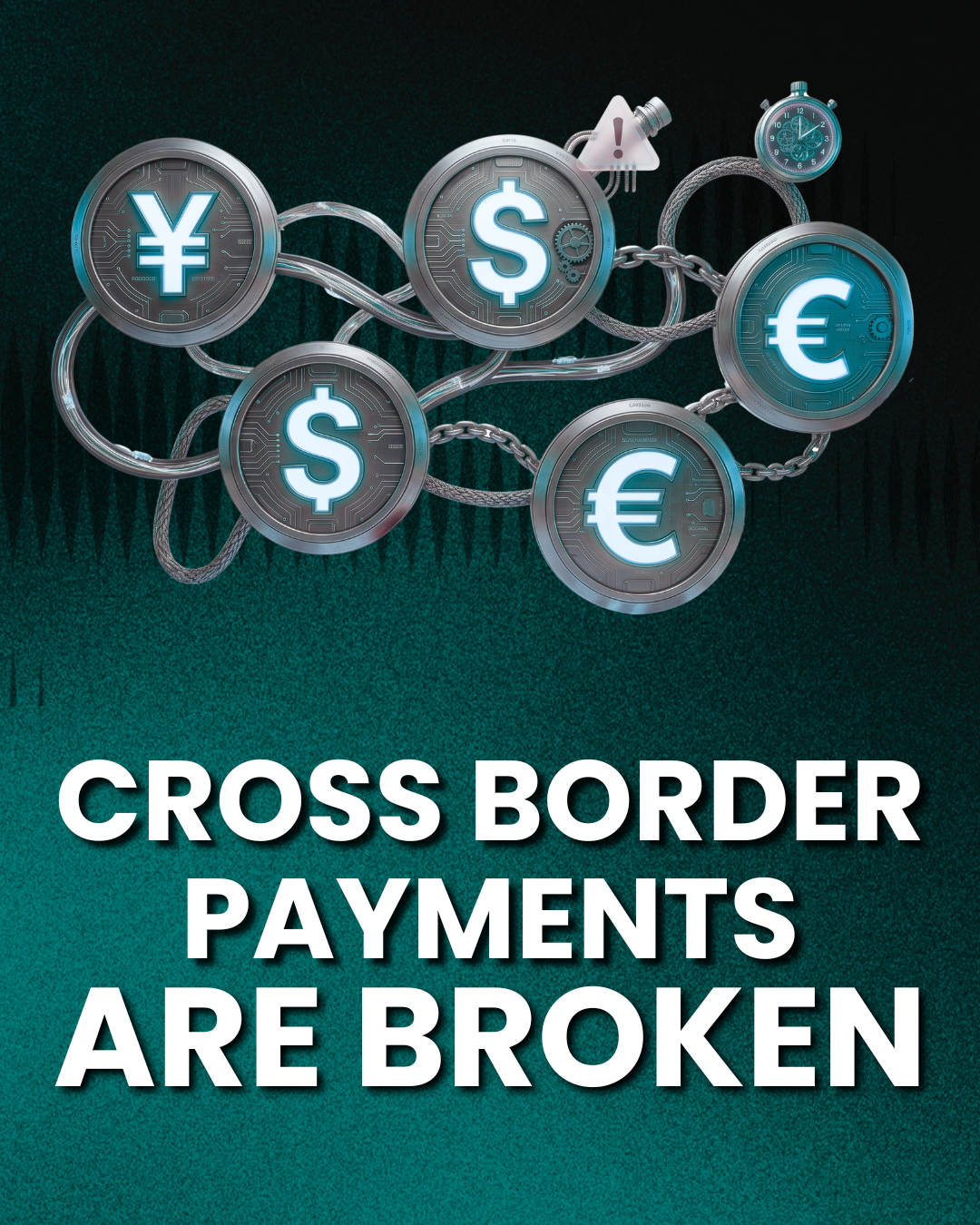
There’s no single global banking network that connects every bank to every other bank. Instead, it’s a patchwork of relationships, agreements, and intermediaries stitched together over decades. And that patchwork is exactly why your money arrives late, arrives less, or sometimes doesn’t arrive at all.
Enter SWIFT — The Backbone of Global Banking
SWIFT stands for Society for Worldwide Interbank Financial Telecommunication. It sounds impressive. And in a way, it is — it’s a network that connects over 11,000 financial institutions across 200+ countries.
But here’s the crucial thing most people don’t know: SWIFT doesn’t move money.
SWIFT only sends messages. Secure, standardized messages between banks — like a very fancy, very expensive email system. One bank messages another to say: “Please move this amount, from this person, to that person.” The actual money moves separately, through a chain of bank accounts.
This distinction matters more than you’d think. Because when the messages and the money move through different systems, things slow down. A lot.
The Nostro/Vostro Problem (Simplified)
Here’s a question: if Bank A in India and Bank B in the US don’t have a direct relationship, how does money actually get there?
The answer is pre-funded accounts — called Nostro and Vostro accounts. Your Indian bank maintains a dollar account in the US (that’s a Nostro). A US bank maintains a rupee account in India (that’s a Vostro).
When you send money, your bank pulls from its pre-funded foreign account and credits the receiver. Behind the scenes, banks are constantly reconciling, topping up, and managing these accounts across dozens of currencies. It’s enormously complex — and that complexity gets priced into every transfer you make.
Your Money’s Journey: Step by Step
Let’s trace a real transfer — ₹1,00,000 from Delhi to Toronto. Here’s what actually happens:
01 You initiate the transfer. Your bank in India accepts your instruction and debits your account.
02 Your bank sends a SWIFT message. Not the money — just a message. It says: ‘Move this amount to this account in Canada.’
03 An intermediary bank gets involved. Your Indian bank may not have a direct relationship with the Canadian bank. So a middleman — usually a large global bank — steps in. Sometimes two.
04 FX conversion happens somewhere in the middle. Nobody tells you where or at what rate. The bank uses its own rate, which is always less favorable than the market rate. The difference? Pocket money for the bank.
05 More messages. More reconciliation. Each bank in the chain updates its ledger. This takes hours. Sometimes it waits for end-of-day batch processing.
06 Final bank credits the receiver. 1–3 business days later, your money arrives — minus fees from every bank in the chain.
Six steps. Three days. Multiple banks. Zero transparency. This is the system trusted by the global economy.
The Hidden Problems Nobody Talks About
1. The Speed Problem
In 2024, while you can stream 4K video in real-time from across the globe, your bank needs 72 hours to confirm a wire transfer. Business deals stall. Rent goes unpaid. Emergency funds arrive after the emergency.
Time is money — and the old system wastes both.
2. The Fee Problem
Here’s how the costs stack up on a typical international transfer:
→ Your bank charges a flat transfer fee: ₹500 — ₹1,500
→ Intermediary bank(s) take a cut: $10 — $30 each
→ FX margin (the spread between market rate and bank rate): 2–4%
→ Receiving bank may charge a fee: another $10–$25
On a ₹1,00,000 transfer, you could easily lose ₹4,000–₹7,000. Nobody shows you a clear breakdown. It just… disappears.
3. The Transparency Problem
Once you click send, your money enters a black box. You can’t track it. You can’t see which banks it’s passing through. You can’t see what FX rate was applied. You just wait — and hope.
In the age of real-time GPS tracking on your pizza delivery, your bank can’t tell you where your money is.
4. The Access Problem
Small businesses and individual senders get the worst deal. Large corporations negotiate better FX rates and lower fees. An MSME exporting goods from Surat to Germany? They pay the full retail price for a system built to serve Wall Street.
So Why Does This System Still Exist?
Fair question. The honest answer: because it works — just not for you.
SWIFT was built in the 1970s and has evolved incrementally since. Thousands of banks have built their entire operations around it. Replacing it isn’t like upgrading an app — it’s like rebuilding the plumbing of a skyscraper while people are still living in it.
There’s also the trust layer. Banks have spent decades building correspondent relationships, legal agreements, and compliance frameworks. Regulators in every country have approved this system. Tearing it down isn’t just a technical challenge — it’s a political and legal one.
And honestly? The banks aren’t in a hurry. Cross-border payment fees generate billions in annual revenue. Every hidden FX margin, every intermediary fee — it goes somewhere. And that somewhere isn’t your pocket.
The Shift That’s Already Happening
The cracks in the old system have become impossible to ignore. And challengers have started filling the gaps.
Fintechs like Wise built a clever workaround: instead of sending money across borders, they hold local pools of currency in each country and net out transfers internally. It’s faster and cheaper — but it still runs on the same rails underneath.
Now something bigger is happening. Blockchain technology offers something the patchwork system never could: a single, shared ledger that any participant can write to and read from, in real time, without needing a chain of trusted intermediaries.
Blockchain doesn’t just improve the old system. It makes the old system’s problems irrelevant.
No pre-funded nostro accounts needed. No SWIFT messages bouncing between middlemen. No batch processing at 5 PM. Settlement happens when the transaction happens — instantly, verifiably, and on-chain.
This Is Where NivixPe Comes In
NivixPe was built with one belief: cross-border payments should work for the people who need them most — not just for the banks that profit from them.
The platform uses blockchain infrastructure to settle payments in real time. No intermediary banks. No hidden FX margins. No black box.
What NivixPe looks like in practice:
→ Instant settlement — transactions finalize in seconds, not days.
→ Transparent FX pricing — you see exactly what rate you’re getting before you confirm.
→ No hidden layers — blockchain provides a verifiable, auditable record of every step.
→ Built for students & MSMEs — the people who pay the most under the old system benefit the most here.
This isn’t about disrupting banks for the sake of it. It’s about building the system that should have existed all along — one that treats a student sending tuition fees the same way it treats a multinational moving millions.
The Bottom Line
The global payments system isn’t broken because no one cares. It’s broken because it was built for a different era — one before the internet, before smartphones, before the idea that money could move at the speed of information.
We’re now in that era. The technology to do better exists. The demand to do better is overwhelming. What’s left is the will to build it.
The future of money isn’t just digital. It’s instant, transparent, and borderless.
And that future is being built right now — one transaction at a time.
메타데이터
- post_id
- 7b2effbe2a3d
- slug
- how-cross-border-payments-actually-work-7b2effbe2a3d
- url
- https://medium.com/@sahi0046/how-cross-border-payments-actually-work-7b2effbe2a3d
- canonical_url
- https://medium.com/@sahi0046/how-cross-border-payments-actually-work-7b2effbe2a3d
- author_url
- https://medium.com/@sahi0046
- status
- ok
- fetched_at
- 2026-06-27 18:20:27




