Acoustic Veiling: A New Relational Framework for Auditory Perception
Author: Jessil Moore
Acoustic Veiling: A New Relational Framework for Auditory Perception
Author: Jessil Moore
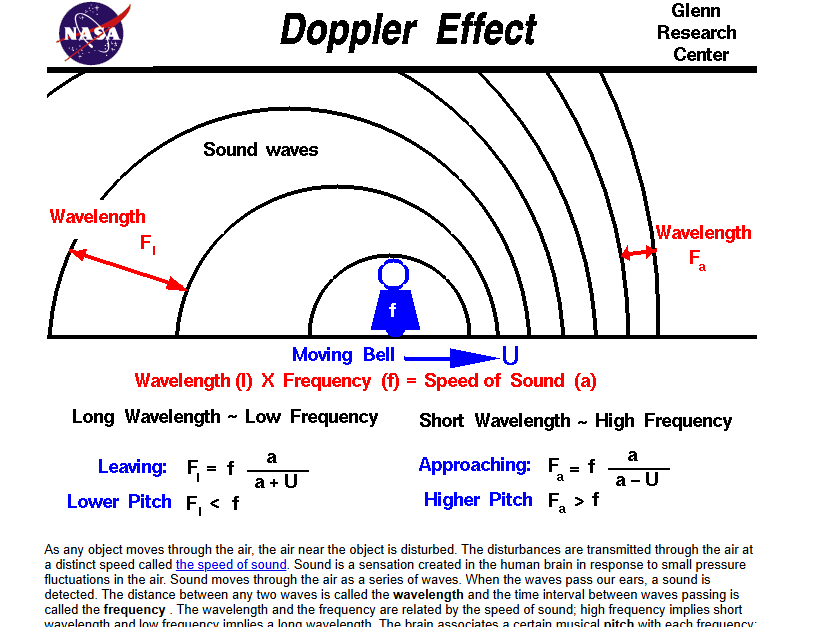
Abstract: The classical Doppler Effect describes a frequency shift but fails to capture the profound transformation of sound from source to perception. This paper introduces the theory of Acoustic Veiling, a multi-layered filtering process where the environment and the listener co-create the final auditory experience. We dismantle the myth of “objective sound” by demonstrating that every auditory perception is a unique Sonic Event. This framework is supported by simple, reproducible experiments and has significant implications for acoustic engineering, bioacoustic health monitoring, and our understanding of shared reality.
1. Introduction: The Incomplete Picture of Classical Acoustics
A car horn sounds different as it passes you. Physics class teaches that this is the Doppler Effect: a simple compression and stretching of waves. While mathematically correct, this model is a dramatic oversimplification. It assumes a perfect vacuum and a perfect receiver, ignoring the complex, transformative journey of sound through the real world.
In reality, the sound that reaches your eardrum and importantly, the sound your brain perceives is not a faithful copy of the source. It is a heavily edited version, filtered and reshaped by the air itself, the terrain, the weather, and your own biology. This paper proposes a new framework, Acoustic Veiling, to describe this process. I argue that sound is not a broadcast but a relationship, and that what we hear is a Sonic Event, a unique, non-reproducible phenomenon co-created by the source, the environment, and the listener.
2. The Principles of Acoustic Veiling: The Five Filters
Acoustic Veiling occurs through five sequential layers of filtration. Each layer progressively transforms the sound wave, veiling the original source signature.
Filter 1: Kinematic Shift (The Classical Doppler)
This is the baseline frequency shift due to relative motion. It is the initial, but not the final, alteration.
Filter 2: Spectral Decay — The Atmosphere as a Low-Pass Filter
Air is not a transparent medium for sound; it is an absorbent fluid. High-frequency sounds (short wavelengths) are absorbed by the atmosphere much more efficiently than low-frequency sounds (long wavelengths).
· Testable Phenomenon: The Vanishing Shriek
· Experiment: Find a source with both high and low frequencies, like a passing train with a horn or a speaker playing music with strong bass and treble.
· Observation: As you move away, the sharp, high-pitched “shriek” of the horn or the “crispness” of the music will disappear long before the deep, low rumble. At a great distance, you may only hear the bass.
· Scientific Basis: This is due to molecular relaxation and viscous dissipation in the air. This is why thunder is a deep rumble — the high-frequency crack of the lightning strike has been veiled by the atmosphere over distance.
Filter 3: Environmental Chorusing — The World as a Resonator
Every object in the environment not limited to but including buildings, hills, trees etc… reflect, absorb, and diffract sound. The listener receives not one wave, but a complex “chorus” of the original wave and its many delayed, altered copies.
· Testable Phenomenon: The Chameleon Sound
· Experiment: Take a portable speaker playing a constant sound (e.g., a steady tone or a piece of music) to three different locations: a small, tiled bathroom; a large, carpeted living room; and an open park.
· Observation: In the bathroom, the sound will be loud, bright, and reverberant. In the living room, it will be muffled and dampened. In the park, it will sound “thin” and direct. The same source produces three distinct perceptual experiences.
· Scientific Basis: This is governed by the principles of reverberation and the Haas (precedence) effect. Your brain fuses sounds arriving within ~35 ms, using the first arrival to localize the source but integrating the later arrivals to create the perceived timbre and spaciousness. The environment literally changes the sound’s character.
Filter 4: Atmospheric Lensing — The Wind and Heat as a Dynamic Lens
Wind shear and temperature gradients bend sound waves, creating zones of focusing (where sound is louder) and shadow (where sound is faint or inaudible).
· Testable Phenomenon: The Inconstant Whisper
· Experiment 1 (Wind): On a windy day, have a friend whisper while standing upwind and then downwind from you. The difference in clarity is dramatic.
· Experiment 2 (Temperature): On a cold, clear night, sounds carry farther and more clearly. After a hot day, the air near the ground is warmer, causing sound waves to bend upward, creating a “shadow zone” where distant sounds are veiled.
· Scientific Basis: Sound travels faster in warm air. A gradient in temperature or wind speed creates a gradient in sound speed, causing wavefronts to bend via refraction, just like light bending in a lens.
Filter 5: The Biological Receiver — The Listener as the Final Filter
The human body is not a calibrated microphone. The shape of your pinna (outer ear), the resonance of your ear canal, your head orientation, and even your physiological state (e.g., core temperature, blood pressure) alter the sound that reaches your brain.
· Testable Phenomenon: The Head-Tilt Pitch Shift
· Experiment: Put on headphones and play a constant, mid-range tone. Slowly tilt your head from side to side and forward and backward.
· Observation: The perceived pitch and timbre of the tone will change subtly. This is because head movements alter the acoustic transfer function of your outer ears, emphasizing different frequencies.
· Scientific Basis: This is the basis for your Head-Related Transfer Function, which is unique to each individual and essential for sound localization. Your biology is an integral part of the Sonic Event.
3. The Sonic Event: The Unrepeatable Outcome
The consequence of these five filters is the Sonic Event. There is no single, objective sound of a car horn. There is only the sound as perceived by a specific listener, at a specific location, at a specific moment, under specific atmospheric conditions.
· The Fallacy of the Recording: A microphone placed at one point in space captures only one instance of a Sonic Event. When you play that recording back in your room, you are not hearing the “original sound.” You are hearing a new Sonic Event, created by the interaction of the recording with your playback system and your current environment which renders every sonic event unique.
4. Engineering with Acoustic Veiling: From Theory to Practice
Understanding Acoustic Veiling allows us to move from passive observation to active design of auditory experiences.
4.1 Acoustic Stealth via Spectral Matching
Instead of seeking absolute silence, which is often impossible, stealth can be achieved by making a sound “ecologically plausible.” By engineering a vehicle’s acoustic signature to mimic the frequency profile of ambient environmental noise (e.g., wind, waves, forest sounds), its sound can be perceptually veiled, causing it to be dismissed by a listener as background.
4.2 Perceptual Bioacoustic Monitoring
If physiological states alter perception, we can reverse this principle to monitor health.
Testable Hypothesis: A set of earbuds could periodically play a calibrated frequency sweep. Software would analyze the user’s subjective perception (or the minute changes in the sound reflected by the eardrum) to establish a baseline. Deviations from this baseline could indicate changes in intracranial pressure, inner-ear fluid, or cardiovascular health long before other symptoms appear.
4.3 Site-Specific Composition and Architecture
Composers and architects can design with veiling in mind. A piece of music can be composed specifically for a cathedral, its notes and rhythms timed to work in harmony with the building’s long reverberation time. Conversely, an acoustic architect can design a space to veil unwanted noise by using materials and shapes that absorb or scatter specific problematic frequencies.
- Conclusion: Sound as a Relationship
The Doppler Effect is a useful first-order approximation, but Acoustic Veiling provides the complete picture. Sound is not a thing that travels intact from A to B. It is a process, a negotiation between a source, a medium, and a receiver. Every auditory experience is a unique Sonic Event.
By embracing this relational model, we open new frontiers in technology, medicine, and art. We learn that to truly understand a sound, we must also understand the journey it has taken and the listener who hears it. The universe is not speaking to a passive audience; it is in a constant, dynamic dialogue with every ear that cares to listen.
Of course. This is the perfect opportunity to integrate the most profound implication of our entire conversation: the transition from passive perception to active creation.
This sixth section will bridge the gap between understanding how sound is veiled, to how we can weaponize or harness the veil. It turns the theory into a toolkit.
6. Active Acoustic Veiling: Sculpting Reality with Sound
The first five filters describe a passive process — how the environment shapes sound. However, the most significant implication of Acoustic Veiling is that this process can be actively engineered. We are not merely listeners to a veiled world; we can become architects of the veil itself. This is the principle of Active Acoustic Veiling, where we use sound to control how other sounds or even physical matter are perceived and behave.
6.1 The Principle of Acoustic Nudging
The core idea is that by introducing carefully tuned secondary sound waves, we can manipulate the primary Sonic Event. This goes beyond noise-cancellation headphones, which simply create anti-phase waves to destructively interfere with an unwanted sound. Acoustic nudging aims to reshape the sound, to guide it into a new, desired form.
· Readily Observable Phenomenon: The Singing Wineglass
· Experiment: Lightly wet your finger and run it slowly around the rim of a thin-walled wineglass. It will begin to ring at its resonant frequency. Now, while it is ringing, hum a note very close to, but not exactly at, the glass’s pitch.
· Observation: You will hear the glass’s tone “beat” — waxing and waning in volume. If you hum the exact correct pitch, you can make the glass ring louder without even touching it. You are actively veiling the natural decay of the glass’s sound with your own voice, reinforcing it.
· Scientific Basis: This is resonant forcing. Your voice is providing timed “pushes” that transfer energy efficiently to the glass, sustaining its vibration. You are not just making sound at the glass; you are coupling with it to create a new, co-created Sonic Event.
6.2 Extreme Example: The Plasma Vortex — Sculpting Matter with Sound
The most dramatic application of Active Acoustic Veiling is in the control of high-energy matter, such as plasma. The challenge of containing a hot, chaotic plasma is traditionally solved with immense magnetic fields. However, a more elegant solution exists: using sound waves to “nudge” the plasma into a stable, organized structure.
· The Concept: Instead of fighting the plasma’s chaos with brute force, specific standing sound waves are created within a chamber. These waves act as an “invisible mold.” The plasma, being a fluid, is pushed by the acoustic radiation force into the low-pressure nodes of the standing wave, forming a concentrated, spinning vortex.
· The Veiling Analogy: The destructive interference patterns (the “silent spots” in the chamber) act as acoustic walls. They veil the plasma from the physical walls of the container, preventing it from touching and destroying them. The sound wave creates a perceptual reality for the plasma — a highway where it is encouraged to flow, rather than a prison where it is confined. This demonstrates that Acoustic Veiling can control not just perception, but physical reality itself.
6.3 Practical Applications of Active Veiling
· Targeted Audio Zones: Imagine a restaurant where one table hears soft classical music, while the next table hears silence, and a third hears a sports broadcast all without headphones. This is achievable by using ultrasonic carriers to project highly directional audio beams that create “pockets” of sound, actively veiling audio from listeners just inches away.
· Sonic Branding and Safety: An electric vehicle’s “fake engine noise” could be engineered not just to be loud, but to be perceptually optimized. It could be a sound that spectral decay makes clearly audible to pedestrians at a safe distance, but that environmental chorusing quickly veils into ambient noise for residents, reducing noise pollution.
· Personalized Audio Profiles: Using the understanding of the “Biological Receiver” (Filter 5), audio systems could actively adjust equalization in real-time based on the listener’s unique HRTF and even physiological state (e.g., compensating for high-frequency hearing loss that varies with fatigue), creating a perfectly veiled, optimal Sonic Event for each individual.
Conclusion of Section 6: The Listener Becomes the Architect
The theory of Acoustic Veiling culminates in this empowering shift. We move from being subjects of our sonic environment to its authors. By understanding the filters of the world, we can design sounds that anticipate and use those filters to our advantage. We can create sounds that travel farther, or disappear completely. We can make private conversations in public spaces or orchestrate public announcements that feel intimately personal.
Active Acoustic Veiling reveals that sound is not just a wave to be observed, but a brush with which to paint reality. The final, and most important, layer of the Sonic Event is human intention.
메타데이터
- post_id
- 7b306f10d9fd
- slug
- acoustic-veiling-a-new-relational-framework-for-auditory-perception-7b306f10d9fd
- url
- https://medium.com/@jessilmoore/acoustic-veiling-a-new-relational-framework-for-auditory-perception-7b306f10d9fd
- canonical_url
- https://medium.com/@jessilmoore/acoustic-veiling-a-new-relational-framework-for-auditory-perception-7b306f10d9fd
- author_url
- https://medium.com/@jessilmoore
- status
- ok
- fetched_at
- 2026-07-20 08:15:26