What Does Design Engagement Look Like?
As AI compresses timelines and disciplines overlap, collaboration itself is starting to change
What Does Design Engagement Look Like?
As AI compresses timelines and disciplines overlap, collaboration itself is starting to change
This question about design engagement keeps coming up, and it’s a tricky one. It reveals an organizational model under duress, one that assumes design is a separate function, a service layer that others engage with periodically rather than something embedded directly into how products are built.
For much of my career, this model shaped how teams were structured and how work moved across disciplines. Product managers coordinated priorities, requirements, and planning. Developers focused on implementation and system behavior. Designers operated between these groups, using specialized tools and workflows to help shape decisions before developer time was committed.
Each discipline developed its own language, rituals, and authority structures, and organizations adapted around those boundaries because the work itself moved in phases. Teams could tolerate delays between disciplines. Context could move through meetings, handoffs, review cycles, tickets, and documentation without immediately disrupting delivery.
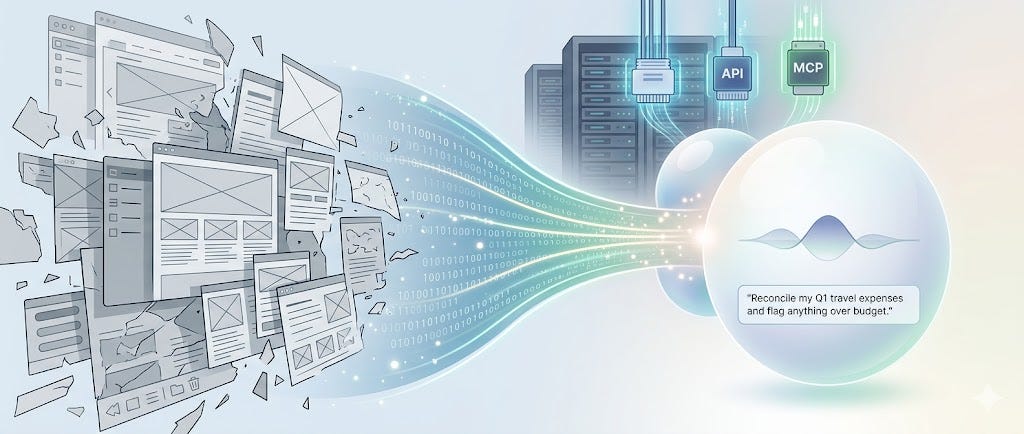
That feels altogether different now. AI erodes disciplinary boundaries and compresses timelines. A developer can move from an idea to a functioning prototype in an afternoon. Designers are moving closer to the realities of implementation. Developers are reasoning through user flow and interaction decisions much earlier in the process. Product managers can visualize workflows directly instead of discussing them abstractly.
We are in an adjustment period. With the right prompts and enough context, AI tools can quickly produce something that appears finished long before the underlying thinking, validation, and collaboration are actually resolved. But the work itself still thrives on feedback, iteration, and shared understanding across teams, perhaps even more than before.
As the cost of building drops dramatically, the terms of collaboration change with it, creating tension as disciplinary overlaps disrupt long-standing assumptions around ownership, authority, and expertise.
Acceleration ≠ Alignment
Time has always been one of the defining constraints in product development. It shaped what fit into a sprint, what became a nice-to-have, and what eventually made it into a release.
But when almost anything begins to feel possible, our default reaction to AI is to optimize for speed. Development teams optimize around implementation velocity. Product teams optimize around planning throughput. Design teams optimize around generating prototypes and exploratory artifacts more quickly.
Teams can produce significantly more output with fewer bottlenecks than before, but acceleration alone does not resolve the coordination problems that already existed between disciplines. In some cases, the gaps become harder to see because the work appears more complete much earlier in the process.
From an operations perspective, that coordination layer is the real issue underneath many conversations about AI transformation.
Large organizations have always operated with structural imbalances. A company may have thousands of developers and only a relatively small number of designers supporting an enormous portfolio of work, which means substantial amounts of implementation inevitably happen without direct design involvement.
Historically, organizations compensated for that imbalance through highly collaborative individuals. Strong designers often became connective tissue between product and development teams. They carried context across meetings, resolved ambiguity manually, facilitated alignment discussions, and used prototypes to negotiate shared understanding between groups.
But as prototypes become easier to generate, scarcity shifts elsewhere.
The difficult part is no longer producing artifacts. The difficult part is determining which directions are actually worth pursuing and maintaining design intent as decisions move at speed toward implementation.
Designers now have increasing access to areas of the product lifecycle that historically sat much further downstream:
- implementation constraints
- system behavior
- repositories and code generation workflows
- operational realities
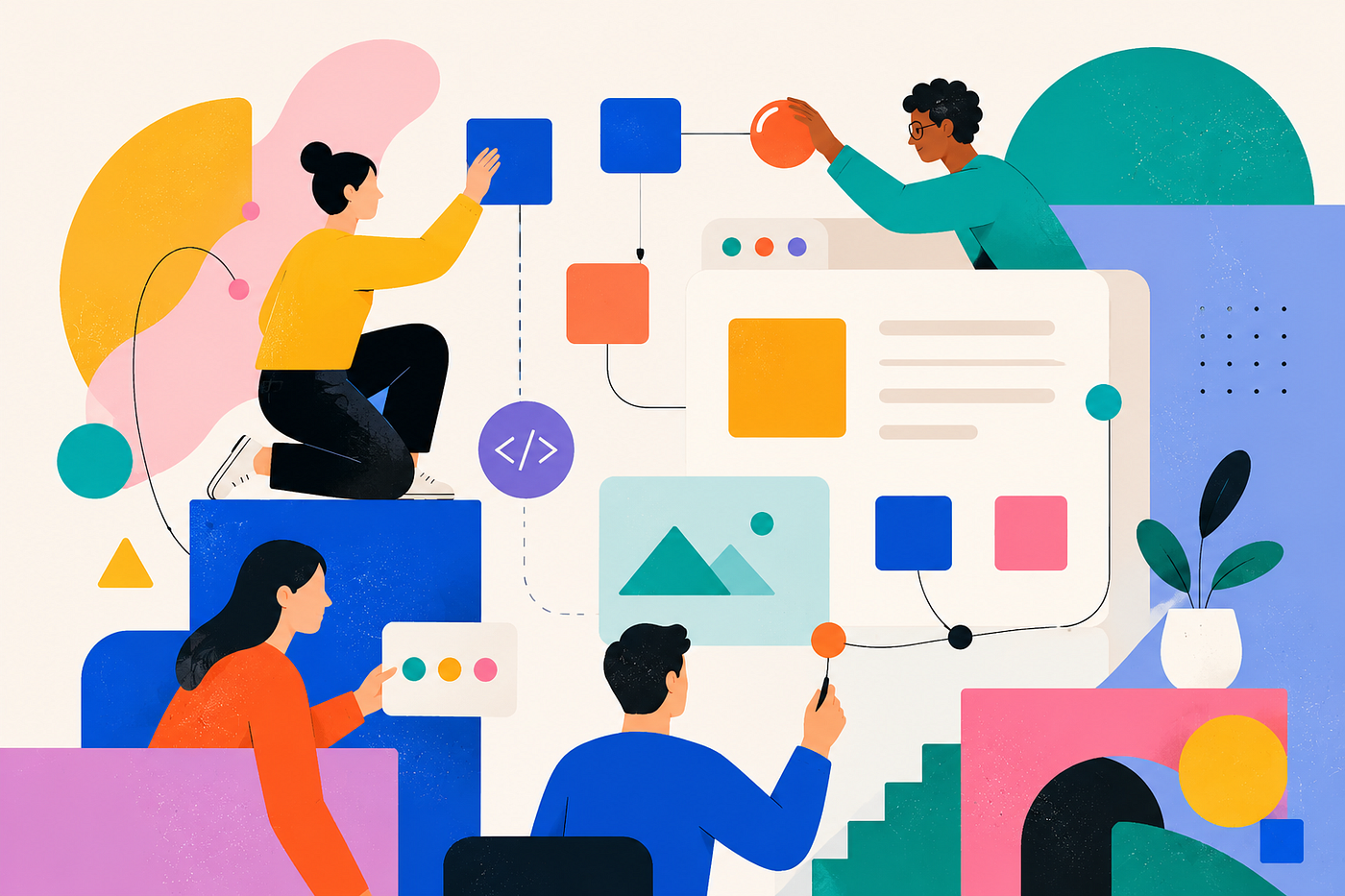
Products are no longer shaped entirely through isolated deliverables passed between departments. They are shaped through continuous coordination between systems, workflows, implementation decisions, research, content, and operational trade-offs happening simultaneously.
Design isn’t becoming development. Modern product work increasingly depends on shared situational awareness across disciplines, even as many organizations continue pretending those boundaries are cleaner than they really are.
Design Engagement
“Design engagement” implies collaboration is optional. It frames design, content, research, product, and development as independent functions periodically coordinating with one another instead of participants operating within the same decision-making system.
As timelines compress, maintaining real-time awareness of priorities, constraints, and intent becomes a prerequisite for coherent product development.
At scale, that distinction matters because coherent products rarely emerge from isolated excellence inside individual disciplines. They emerge when teams maintain shared understanding while decisions move quickly across organizational boundaries.
Good collaboration is not a meeting structure or review process. It is the ongoing operational work of maintaining alignment between intent and implementation as decisions move across teams and systems while products are actively being built.
The organizations that succeed in the AI era will not be the ones generating the highest volume of output. They will be the ones capable of maintaining coherence as execution speeds increase.
And coherence does not happen accidentally. It has to be built into the way people work together.
메타데이터
- post_id
- 7b30c8dd6776
- slug
- what-does-design-engagement-look-like-7b30c8dd6776
- url
- https://medium.com/design-bootcamp/what-does-design-engagement-look-like-7b30c8dd6776
- canonical_url
- https://medium.com/design-bootcamp/what-does-design-engagement-look-like-7b30c8dd6776
- author_url
- https://medium.com/@pixelrake
- status
- ok
- fetched_at
- 2026-06-09 15:37:30