How We Built a Complete Cinematic Universe With AI — And Everything You Can Learn From It for Free
A behind-the-scenes breakdown of Desert Grand Prix: the creative decisions, the tools, and the process that turned a vintage Ferrari…
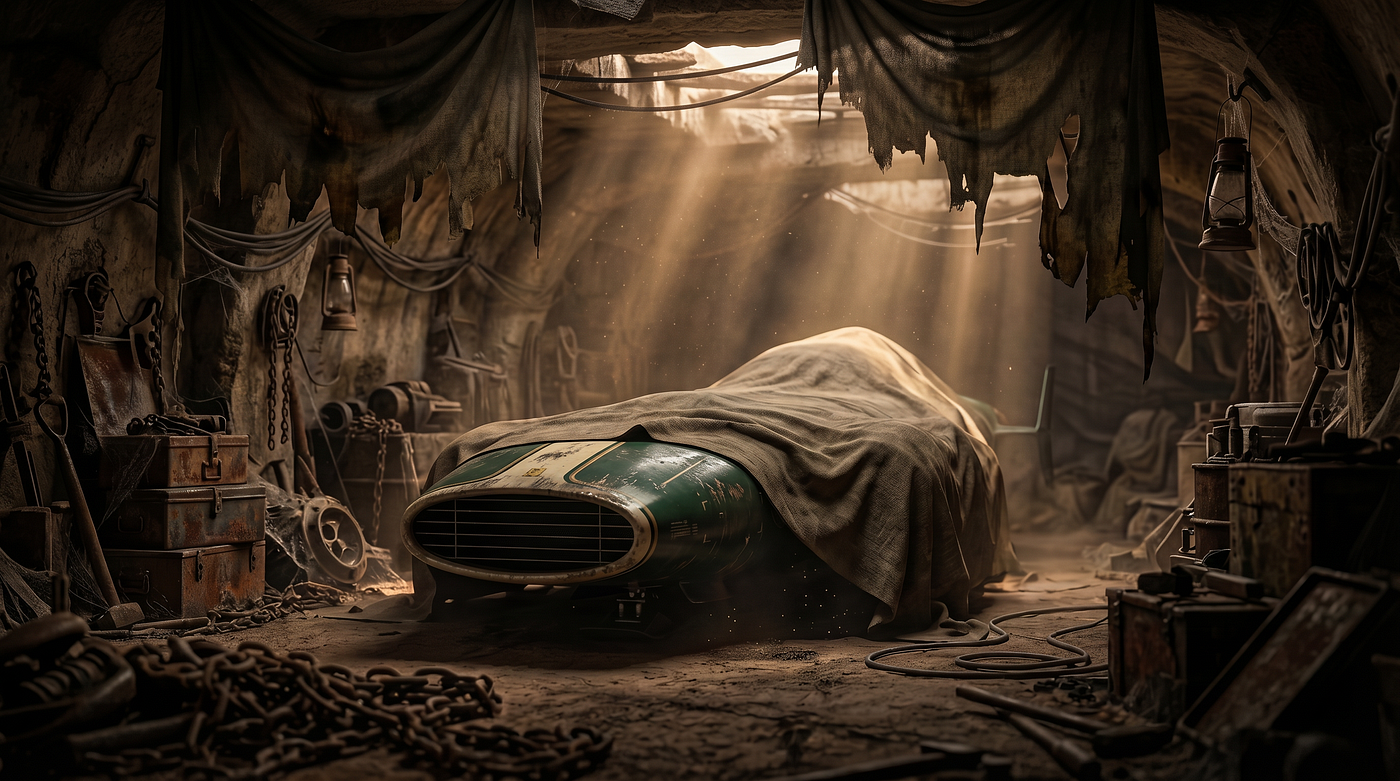
How We Built a Complete Cinematic Universe With AI — And Everything You Can Learn From It for Free
A behind-the-scenes breakdown of Desert Grand Prix: the creative decisions, the tools, and the process that turned a vintage Ferrari obsession into a Star Wars-style short film.
This article is a free masterclass.
No course to buy. No subscription required. Just a detailed breakdown of how we produced Desert Grand Prix — a fully AI-generated cinematic video — from the first idea to the final cut.
But here’s the thing: this isn’t really about AI tools.
It’s about creative direction. About knowing what you want before you touch any tool. About the fact that the gap between generic AI output and extraordinary visual storytelling isn’t the model — it’s the person giving instructions.
Let me show you exactly how we did it.
THE CONCEPT
Every great project starts with an obsession.
Ours was simple: what if vintage 1970s Ferrari race cars existed in the Star Wars universe?
That single question became Desert Grand Prix — a world where races happen on a desert planet that’s part Tatooine, part Le Mans 1975. Hostile, grand, covered in dust and rust and ambition.
Before generating a single image, we wrote a full creative brief: visual references (real vintage race photography), color palette (racing green, oxidized metal, golden desert light), narrative arc (a veteran pilot, one last race, a crash that says everything), and tone (cinematic, weathered, melancholic).
Lesson: AI doesn’t build your creative vision. You do. The tool just executes it.
THE TOOL: MAGNIFIC We used Magnific (formerly known as Freepik AI) as our primary production engine — and it handled every stage of the visual pipeline.
Magnific isn’t just an image generator. It’s a complete AI creative suite: you use it to generate base concepts, refine drafts, create final-quality shots, and animate still images into cinematic motion. Think of it as your entire art department in one platform.
The key difference between our results and generic AI output came down to how we prompted. We didn’t write descriptions. We wrote director’s notes.
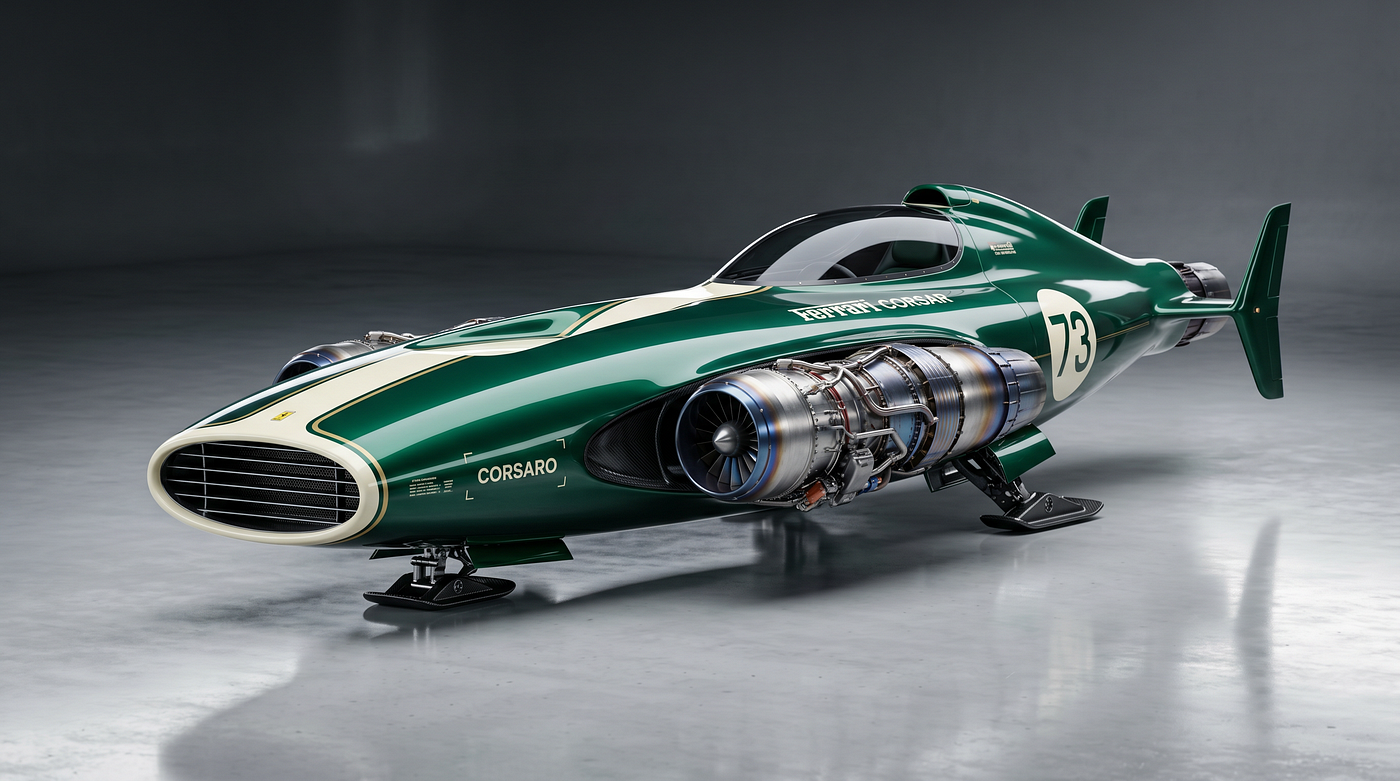
Instead of “a futuristic race car,” we wrote: “a low-slung open-wheel racing vessel inspired by 1971 Ferrari 312B proportions, racing green with oxidized chrome details, number 73, exposed turboreactor in place of an engine cover, studio lighting to study form and proportion.”
That level of specificity only comes from knowing design, photography, and visual language. When you understand framing, lighting ratios, lens behavior, and composition — your prompts stop being requests and start being briefs.
THE VEHICLE: EL CORSARO
The Corsaro was our hero vehicle. Green. Number 73. Low to the ground. An exposed turboreactor where a traditional engine cover would be — a visual nod to the open mechanics of classic racing cars.
Every design iteration was a deliberate creative choice, not a lucky accident. We referenced the Ferrari 312B for proportion. Sports photography from the 1970s for lighting. Star Wars concept art for the sci-fi integration.
Magnific allowed us to refine the vehicle across multiple passes — sharpening textures, improving the metallic quality of surfaces, deepening the sense of weight and mechanical wear that makes a vehicle feel real rather than rendered.
Lesson: treat AI generation like a photography session. You don’t stop at the first frame. You iterate, you refine, you direct.
THE WORLD: DESERT GRAND PRIX
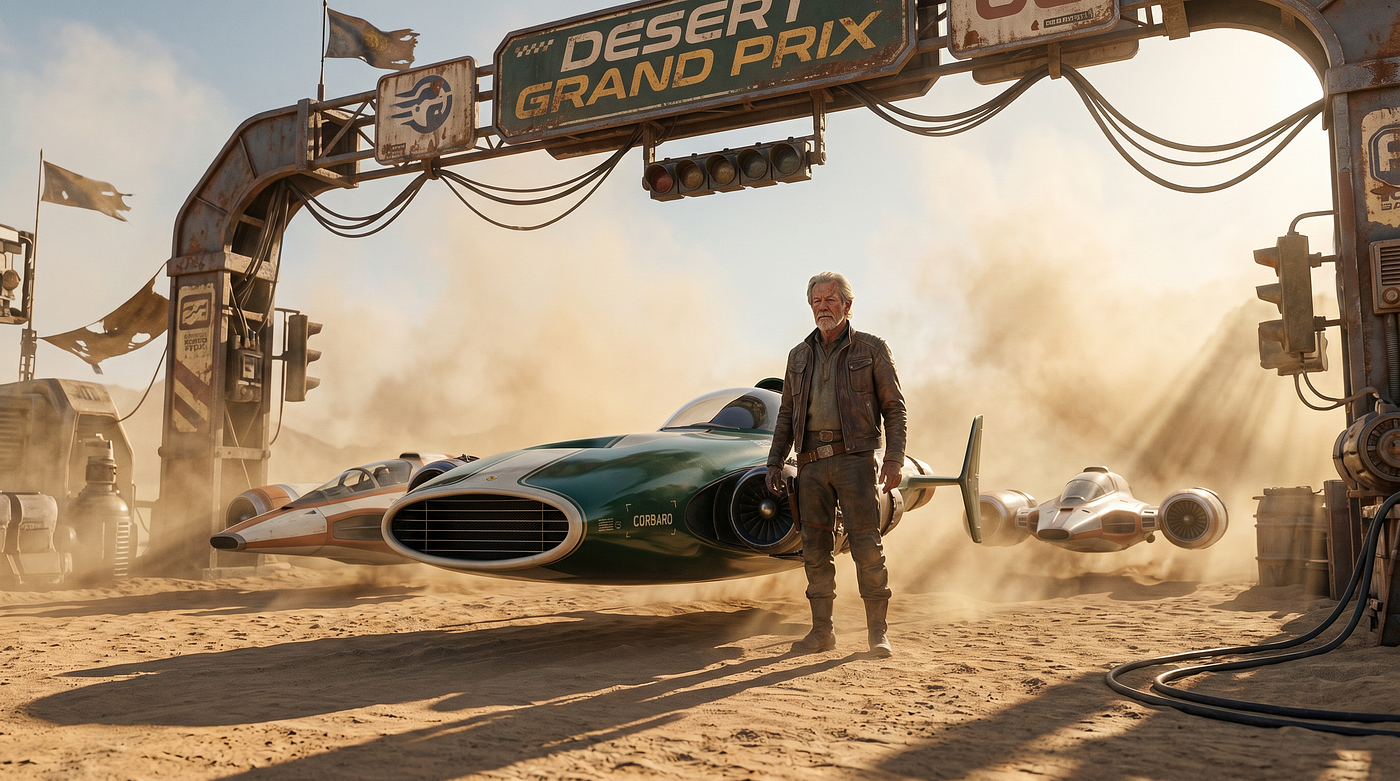
Once we had the vehicle, we built the environment around it.
The world needed to feel lived-in. Hostile. Like racing here isn’t sport — it’s survival.
The key scene: our pilot standing in front of the Corsaro at the starting line. This isn’t just a visual setup — it’s a classic motorsport language. The driver and the machine as one entity, before the chaos begins. Every element was deliberate: the starting lights, the arch structure, the atmospheric dust, the hard midday light.
We tested the vehicle inside the world before committing to full production. Does the color hold? Does the scale read? Does the mood carry?
Lesson: always test your assets in context before building the full shot list.
THE CHARACTER
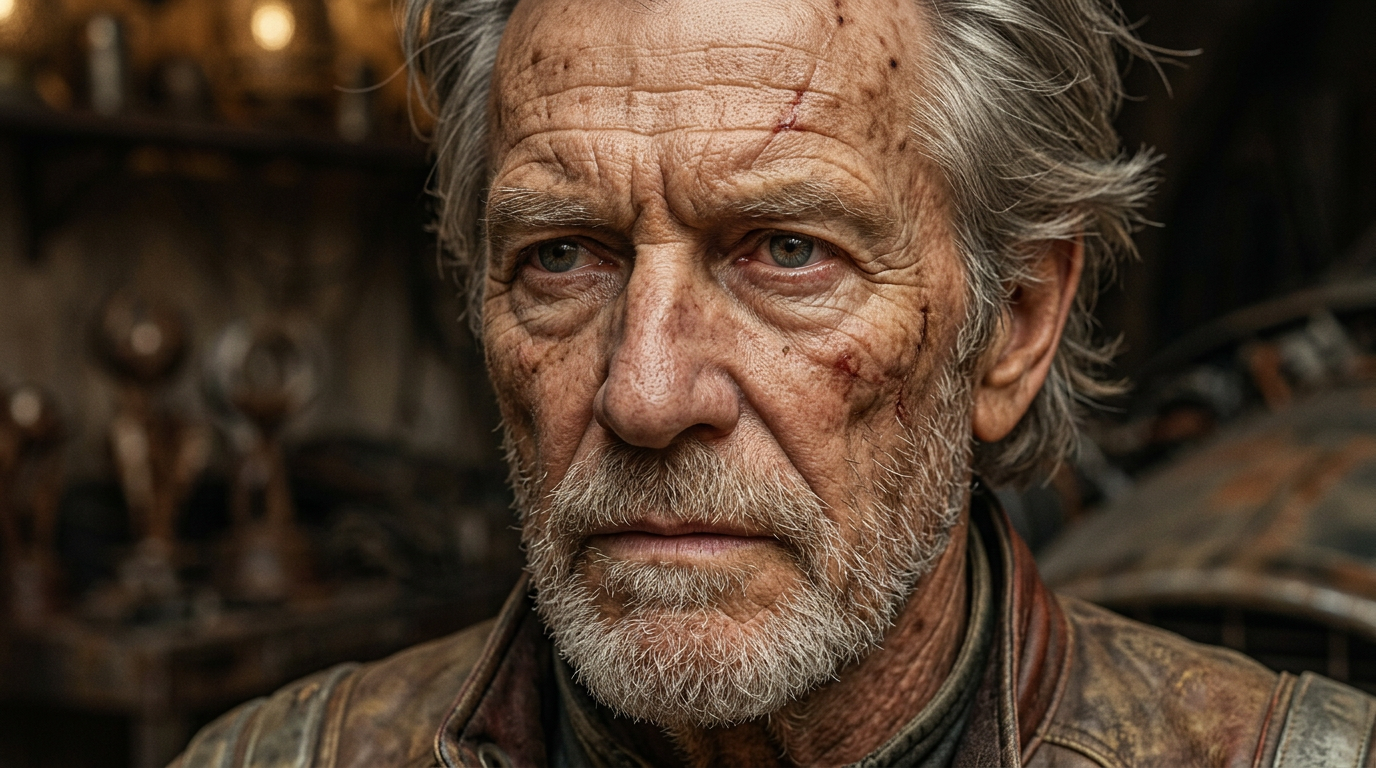
A machine needs a pilot. And a pilot has a history.
Ours: a man in his 70s. Face carved by decades of desert racing. Scars that tell stories he never explains. Not a young hero. Someone who has been doing this his whole life and came back to the track because he doesn’t know how to stop.
Giving a character a backstory changes how the AI renders them. We didn’t prompt “old man with a helmet.” We wrote: “a weathered 70-year-old veteran racing pilot, sun-damaged skin, quiet intensity, the kind of stillness that comes from having survived too many crashes.”
The portrait Magnific generated from that brief has weight to it. You can feel the history.
Lesson: your characters need biography before they need appearance.
THE FINAL FRAME
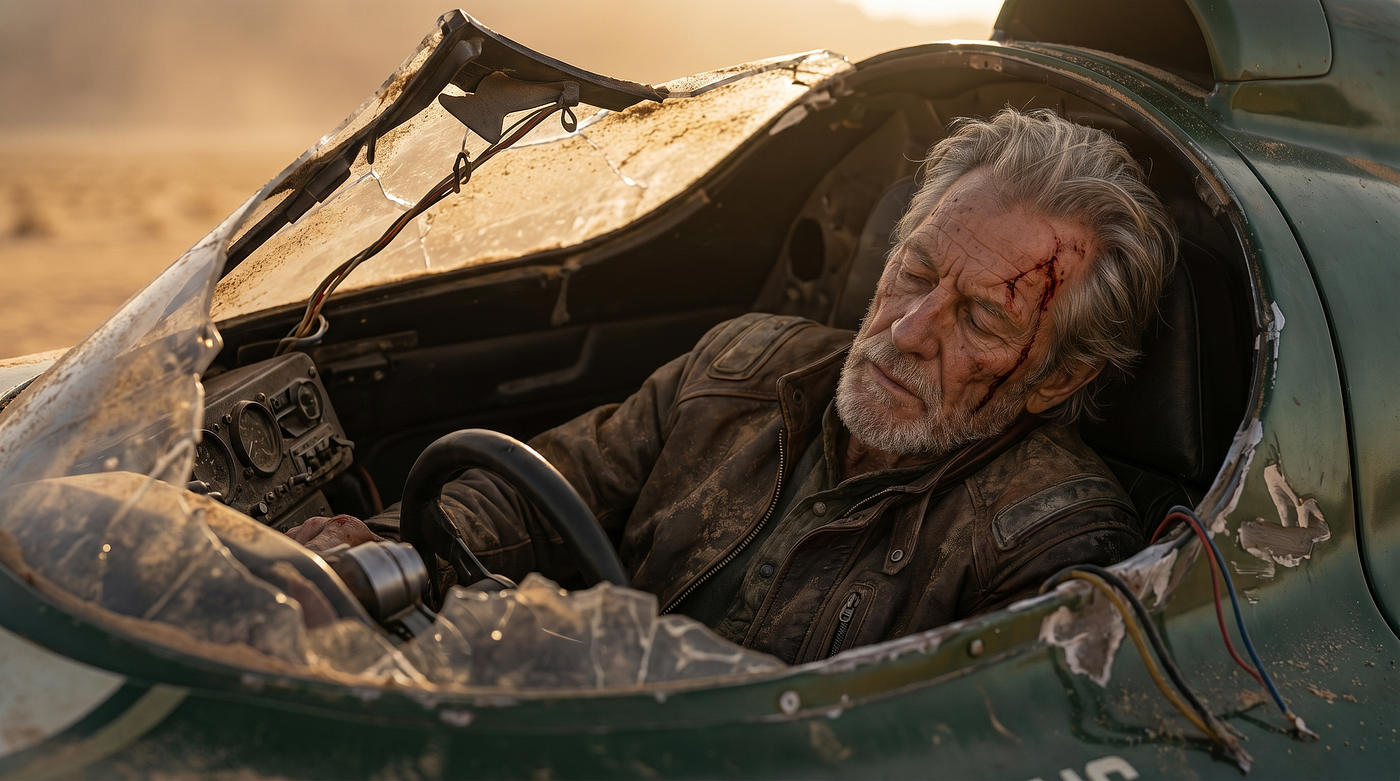
The last shot closes the story without a single line of dialogue.
The pilot unconscious in a damaged cockpit. Shattered windshield. Golden desert light bleeding through. A complete narrative in a single frame — the ending of someone who pushed too far, one more time.
To build this image, we specified: the exact body position, the type and location of cockpit damage, the direction and quality of the light, the emotional state the image needed to carry.
THE EDIT: CAPCUT
Once all the visual material was ready from Magnific, we moved to CapCut for the final edit.
Editing is not a technical step. It’s where the story either lives or dies.
Every cut was an editorial decision: the pacing of tension before the race, the silence in the crash sequence, the music that carries the emotional weight the images can’t carry alone.
We treated CapCut like a proper editing suite — not a social media clip maker. The result is a piece that feels like it came from a real production, not a weekend experiment.
WHAT YOU CAN TAKE FROM THIS
AI didn’t democratize creativity. It democratized production. The difference is enormous.
Anyone can generate images. Building a visual universe with coherence, emotion, and narrative requires something no model can replace: judgment. And judgment is built years before you ever open a creative tool.
Here’s the free takeaway from this entire process:
- Start with a clear creative brief — references, palette, tone, narrative
- Write director’s notes, not descriptions
- Iterate like you’re on a photo shoot — first frame is never the final frame
- Give your characters biography before appearance
- Edit with intention — pacing and music are storytelling decisions
- Use Magnific for the full visual pipeline: concept, refinement, animation
- The quality gap is almost always creative direction, not the tool
Desert Grand Prix isn’t a tech demo. It’s proof that when you train your team’s creative judgment instead of replacing it, AI multiplies what they already know — and the result is something a prompt alone can never produce.
Follow along for the next project. And if you want to build something like this together, reach out directly.
Disclaimer: This is a non-profit educational case study created by a fan community with the sole purpose of teaching and exploring new AI technologies applied to audiovisual production. All characters, universes, and references used are inspired by fictional and fan-created worlds. No commercial use is intended. All AI-generated images and content were produced exclusively for learning and creative experimentation purposes.
메타데이터
- post_id
- 7b4d9d55fac1
- slug
- how-we-built-a-complete-cinematic-universe-with-ai-and-everything-you-can-learn-from-it-for-free-7b4d9d55fac1
- url
- https://medium.com/@danielmurcia_59254/how-we-built-a-complete-cinematic-universe-with-ai-and-everything-you-can-learn-from-it-for-free-7b4d9d55fac1
- canonical_url
- https://medium.com/@danielmurcia_59254/how-we-built-a-complete-cinematic-universe-with-ai-and-everything-you-can-learn-from-it-for-free-7b4d9d55fac1
- author_url
- https://medium.com/@danielmurcia_59254
- status
- ok
- fetched_at
- 2026-06-09 15:37:30




