Autonomous Vehicles Market Hits USD 3,084.4 Billion by 2033, Fuelled by a CAGR of 34.5%
The global autonomous vehicles market is experiencing substantial growth, with a projected market size of approximately USD 3,084.4 billion…
Autonomous Vehicles Market Hits USD 3,084.4 Billion by 2033, Fuelled by a CAGR of 34.5%
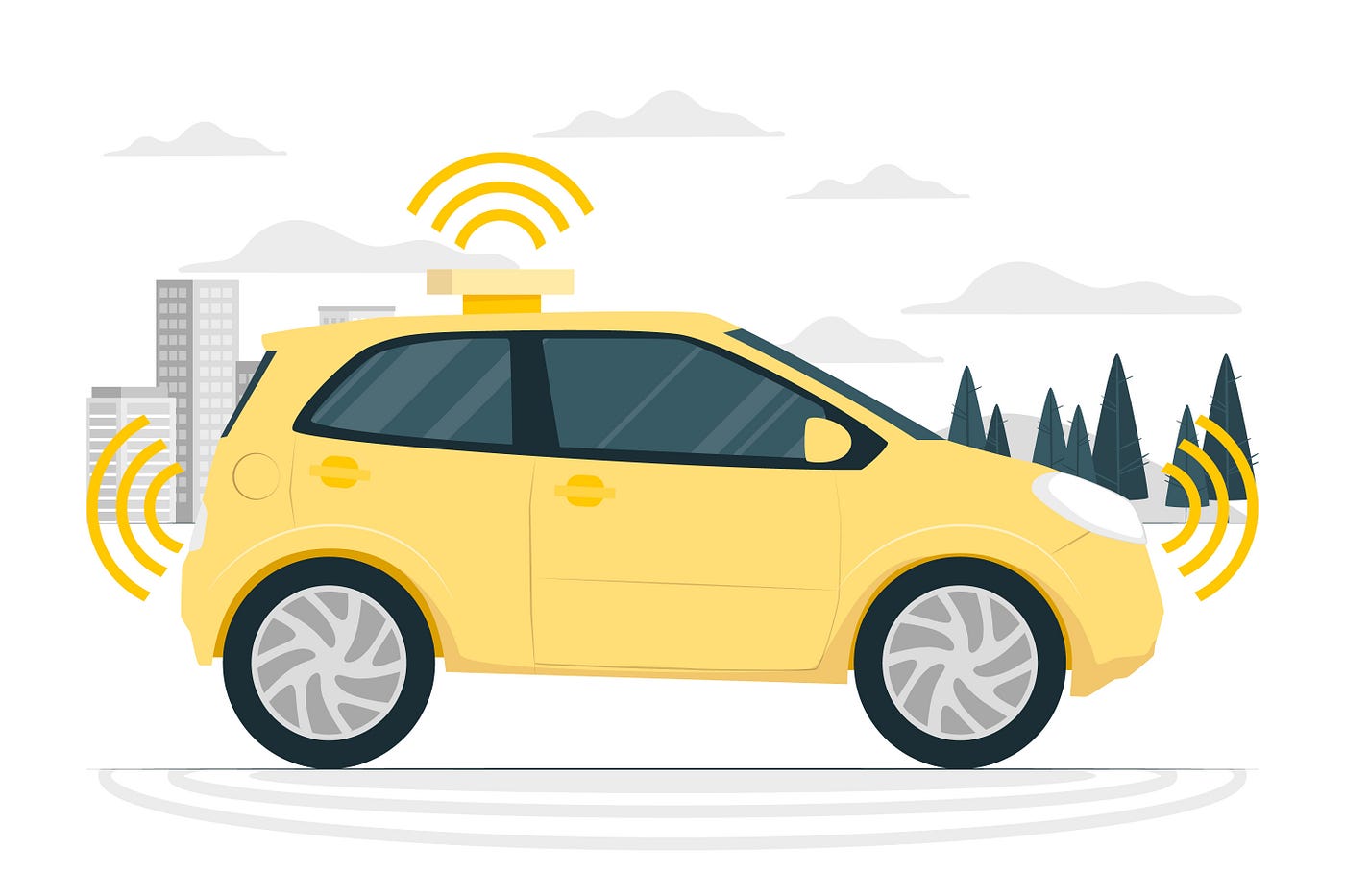
The global autonomous vehicles market is experiencing substantial growth, with a projected market size of approximately USD 3,084.4 billion by 2033, compared to USD 159.2 billion in 2023. This remarkable growth is fueled by a compound annual growth rate (CAGR) of 34.5% during the forecast period from 2024 to 2033. The rise of autonomous vehicles (AVs) is set to transform the automotive industry, reducing human intervention in driving, enhancing safety, and improving overall transportation efficiency.
Autonomous vehicles, also known as self-driving cars, are equipped with advanced technologies such as sensors, cameras, and artificial intelligence (AI) to navigate and operate without human intervention. These vehicles offer promising benefits, including increased safety, reduced traffic congestion, and enhanced mobility. The market growth is driven by continuous advancements in automation technology, regulatory support, and rising consumer demand for safer, more efficient transportation solutions.
Request a Detailed Sample Report and Discover Key Insights at https://market.us/report/autonomous-vehicles-market/request-sample/
Market Overview
The autonomous vehicles market refers to the global industry encompassing the design, development, manufacturing, and deployment of self-driving vehicles. These vehicles use a combination of hardware and software technologies to perform tasks typically handled by human drivers, such as steering, braking, acceleration, and navigation. The market includes vehicles designed for personal, commercial, and shared use, as well as the technology and infrastructure supporting them, such as sensors, mapping systems, and AI algorithms.
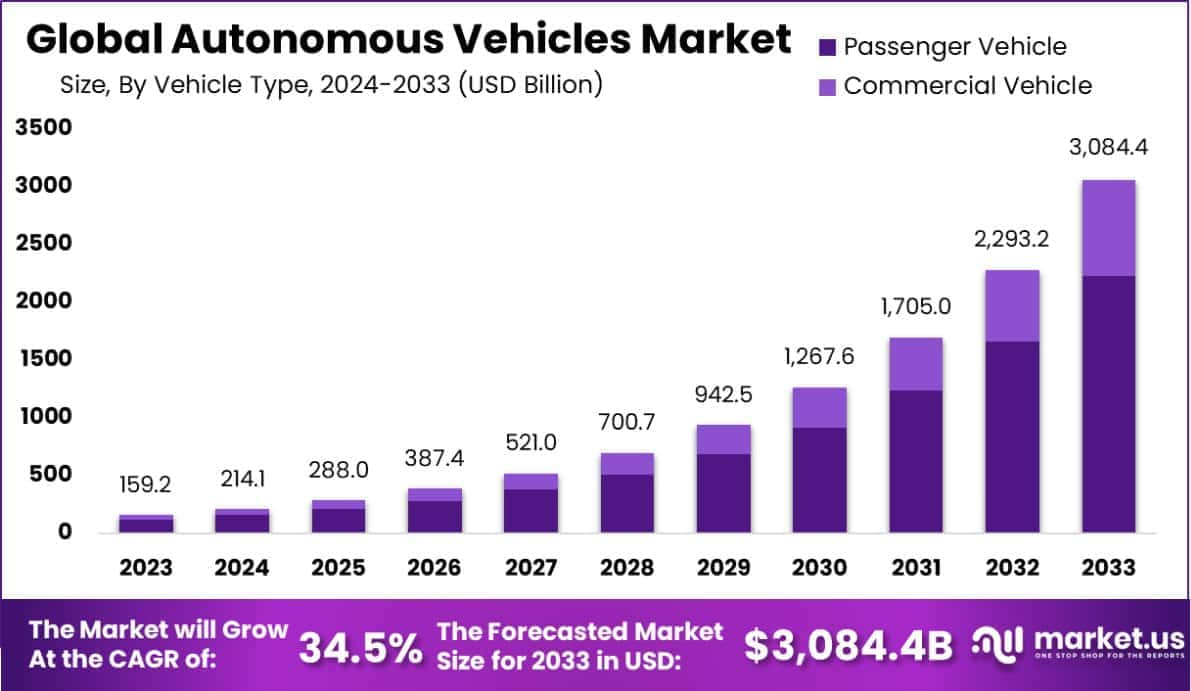
Key aspects of the market include different levels of automation, ranging from partial automation (Level 1) to full automation (Level 5), and applications in sectors like passenger transport, freight, and public services. With technological advancements and evolving regulatory frameworks, the autonomous vehicle market is poised to reshape the future of transportation across the globe.
Key Takeaways
- The global autonomous vehicles market is projected to reach USD 3,084.4 billion by 2033, growing at a CAGR of 34.5% from 2024 to 2033.
- In 2023, passenger vehicles dominated the market, accounting for 72.3% of the market share by vehicle type.
- Level 1 automation led the market in 2023, with a 48.3% share of the overall market in terms of automation levels.
- The transportation sector held a commanding 88.3% share in the market’s application segment in 2023.
- North America led the global autonomous vehicles market with a 39.4% share, generating USD 62.7 billion in revenue in 2023.
Market Growth and Factors Affecting Growth
The autonomous vehicle market is witnessing rapid expansion due to several factors that are fueling its growth. The primary driver is the advancement in artificial intelligence (AI), machine learning (ML), and sensor technologies, which have enhanced the capabilities of self-driving cars. The rise in consumer awareness regarding safety, fuel efficiency, and the convenience offered by autonomous vehicles is also contributing to the market’s growth.
Government initiatives and regulations are also playing a critical role in the development and deployment of autonomous vehicles. Countries like the United States, Germany, and China have introduced favorable regulations to support the testing and deployment of self-driving cars, which has encouraged investments from both automakers and technology companies. Additionally, partnerships between tech companies and automotive manufacturers are accelerating the pace of innovation and improving vehicle performance.
Despite these positive factors, there are several challenges affecting the growth of the autonomous vehicles market. High development costs, technological barriers, and consumer concerns regarding safety and privacy continue to pose challenges for the widespread adoption of AVs. However, with ongoing research and development efforts, these obstacles are expected to be overcome, driving market growth in the coming years.
Segmentation Analysis
The autonomous vehicles market can be segmented based on vehicle type, automation level, application, and region.
- By Vehicle Type: The passenger vehicles segment holds the largest share in the autonomous vehicles market, accounting for 72.3% of the total market in 2023. Passenger vehicles are the primary focus of many AV manufacturers, and innovations in autonomous driving technologies are being implemented primarily in this category. The commercial vehicle segment, including trucks and freight transport, is expected to witness significant growth as autonomous technologies improve.
- By Level of Automation: The market is also segmented by the level of automation, ranging from Level 1 (driver assistance) to Level 5 (full autonomy). In 2023, Level 1 automation dominated the market, with a 48.3% share. As technologies continue to mature, the share of Level 4 and Level 5 autonomous vehicles will likely increase, as these systems offer full autonomy without human intervention.
- By Application: The primary application of autonomous vehicles is in the transportation sector, which held a dominant 88.3% share in 2023. The transportation sector includes both personal and commercial use, as well as public transport systems. As the technology matures, other applications like healthcare and logistics are also expected to see growth in the coming years.
Regional Analysis
The global market for autonomous vehicles exhibits different growth patterns across various regions. North America is the dominant region in the autonomous vehicles market, holding a 39.4% share of the global market in 2023, valued at USD 62.7 billion. This dominance is attributed to the strong technological infrastructure, large-scale investments in research and development, and favorable regulatory environments, particularly in the United States and Canada.
Europe is another key market, with significant investments in autonomous driving technology and supportive policies for testing and deployment. Germany, in particular, is home to many prominent automakers, such as BMW, Daimler, and Volkswagen, which are at the forefront of developing autonomous vehicle technologies.
Asia-Pacific is also emerging as a vital region for the autonomous vehicle market, with countries like China and Japan investing heavily in AV technologies. China’s government has introduced several initiatives to support the development and deployment of autonomous vehicles, making it one of the largest markets for AVs in the future.
Key Players in the Market
The autonomous vehicles market is highly competitive, with several major players vying for market share. Key players in the market include:
- Honda Motor Co. Ltd.
- Ford Motor Company
- Daimler AG
- BMW AG
- Volvo Car Corporation
- Volkswagen AG
- Toyota Motor Corporation
- Tesla Inc.
- Uber Technologies Inc.
- Audi AG
- General Motors Company
- Google LLC
- Nissan Motor Co. Ltd.
These companies are heavily investing in research and development, forming strategic partnerships, and launching new products to maintain their competitive edge. For example, in June 2023, Volkswagen AG entered into a partnership with a Silicon Valley-based AI startup to develop next-generation autonomous vehicles. Similarly, BMW AG launched its fully autonomous driving system for luxury models in early 2023.
Market Drivers
Several key factors are driving the autonomous vehicles market:
- Technological Advancements: Continuous improvements in AI, machine learning, sensors, and connectivity are enhancing the capabilities of autonomous vehicles.
- Safety Concerns: Autonomous vehicles are designed to reduce human error, which is a leading cause of road accidents. This has led to increased demand for AVs.
- Environmental Benefits: Autonomous vehicles are expected to reduce emissions and energy consumption, aligning with global sustainability goals.
- Government Support: Many governments worldwide are providing incentives and regulatory support to facilitate the development and testing of autonomous vehicles.
Market Restraints
Despite its growth, the autonomous vehicles market faces several challenges:
- High Development Costs: The costs associated with developing AV technologies remain high, which could limit the affordability and accessibility of AVs.
- Consumer Concerns: Many consumers remain hesitant about fully trusting autonomous vehicles, particularly regarding safety and privacy issues.
- Regulatory Hurdles: The lack of universal regulations for AVs can slow down their deployment across different markets.
- Technological Limitations: While significant progress has been made, fully autonomous vehicles are not yet capable of handling all driving conditions, such as extreme weather or complex traffic scenarios.
메타데이터
- post_id
- 7b4fa8d962d0
- slug
- autonomous-vehicles-market-hits-usd-3-084-4-billion-by-2033-fuelled-by-a-cagr-of-34-5-7b4fa8d962d0
- url
- https://medium.com/@hazelkkim10/autonomous-vehicles-market-hits-usd-3-084-4-billion-by-2033-fuelled-by-a-cagr-of-34-5-7b4fa8d962d0
- canonical_url
- https://medium.com/@hazelkkim10/autonomous-vehicles-market-hits-usd-3-084-4-billion-by-2033-fuelled-by-a-cagr-of-34-5-7b4fa8d962d0
- author_url
- https://medium.com/@hazelkkim10
- status
- ok
- fetched_at
- 2026-07-28 03:23:09