A Quantum Crunch: The Densest Thing In The Universe
In the grand theatre of the cosmos, where stars burn and galaxies spin, there exist entities so dense, so compact, that even light cannot…
A Quantum Crunch: The Densest Thing In The Universe
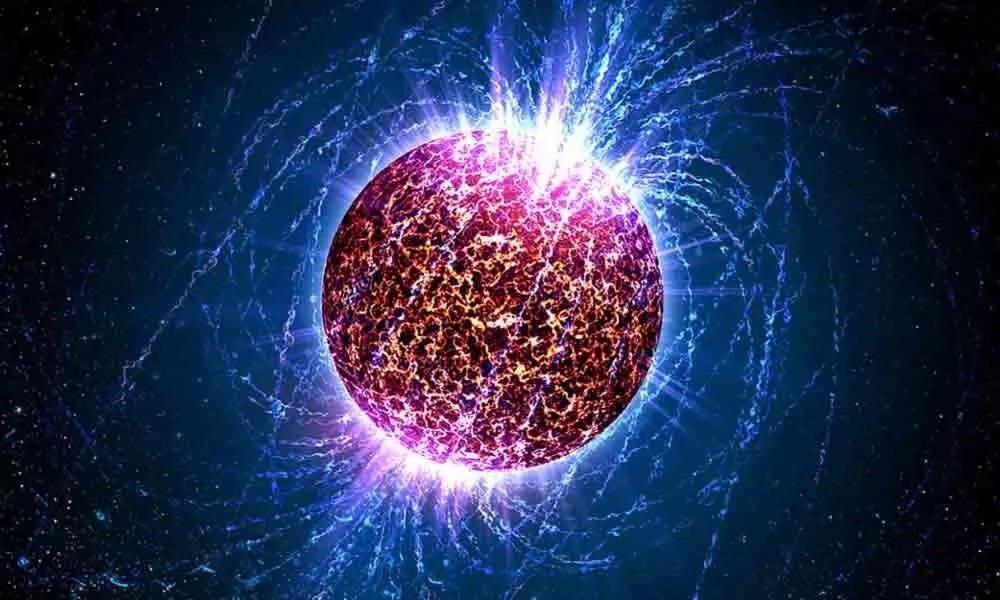
Quantum Crunch — Densest Thing In Universe
In the grand theatre of the cosmos, where stars burn and galaxies spin, there exist entities so dense, so compact, that even light cannot escape their grasp. These are black holes, neutron stars, and quark stars — among the densest objects in the universe. But to understand why they’re so dense, we must dive deep into the world of quantum mechanics and gravitational forces, exploring the fascinating interplay of the smallest particles in existence.
“Trust the universe to bring you what you need, not always what you want.” — Unknown
What is Density on a Cosmic Scale? On Earth, we think of dense objects as things like metals — iron, for instance, weighs significantly more than wood or plastic. But in the cosmic arena, density takes on a whole new meaning. The densest stars, like neutron stars, compress matter to an unimaginable scale. To provide some context, a teaspoon of neutron star material would weigh around six billion tons on Earth!
[embed]
This extraordinary density is the result of gravitational forces so intense that they crush atoms together. But, let’s zoom in and break down how this occurs.
“Trusting the universe means having faith in the unknown and surrendering to the flow of life.” — Rebecca Campbell
The Quantum Mechanism Behind Extreme Density In regular stars, the balance between thermal pressure (from nuclear fusion) and gravitational force maintains their structure. However, in dense objects like neutron stars, this balance is broken, and the collapse of the star’s core reaches a point where electrons and protons are squeezed together to form neutrons.
This process is governed by quantum mechanics, particularly the Pauli Exclusion Principle. It states that two fermions (particles like neutrons, electrons, and protons) cannot occupy the same quantum state simultaneously. In neutron stars, this principle prevents neutrons from collapsing entirely, creating a form of pressure known as degeneracy pressure, which keeps the star from imploding under its own gravity.
However, in black holes, even this degeneracy pressure is overcome, and matter is thought to collapse to a singularity, a point of infinite density. Theoretical objects like quark stars may even represent a transitional state, where quarks (the building blocks of neutrons and protons) are free from their usual confines within atomic nuclei, forming an even denser object.
[embed]
The Densest of All: Black Holes Black holes are the densest known objects in the universe. Once the core of a massive star collapses under its own gravity, not even quantum forces can prevent a complete collapse into a singularity — a point where density becomes infinite. This infinite density is what makes black holes so bizarre: their mass is concentrated in an infinitely small space.
The boundary around a black hole, known as the event horizon, is the point of no return. Once something crosses this boundary, not even light can escape, hence the term “black” hole. The event horizon’s radius depends on the black hole’s mass, but the interior is thought to contain an incredibly dense core — a singularity where our understanding of physics breaks down.
Applications in Modern Physics and Technology While black holes and neutron stars may seem purely theoretical, their extreme densities have inspired practical applications, particularly in quantum physics and materials science.
1. Quantum Computing and Superdense Coding In quantum computing, the concept of superdense coding draws on the principles of quantum mechanics to transmit more information than classical systems allow. For instance, a single quantum bit (or qubit) can exist in multiple states simultaneously (superposition), allowing for exponentially faster computing speeds compared to traditional binary systems.
Superdense coding uses entanglement to send two classical bits of information using just one qubit, reducing the amount of quantum resources needed for data transmission. This method is inspired by the compact nature of particle states at the quantum level, mirroring the density of information storage in systems like black holes.
[embed]
2. Material Science: Neutron-Star-Inspired Alloys The structural integrity of neutron stars, despite their immense gravity, has intrigued scientists studying materials that can withstand extreme pressure. Researchers have been investigating materials that mimic the density-resistance found in neutron star matter. This could lead to the development of next-generation alloys capable of enduring extreme environments, such as deep-space exploration or high-pressure industrial applications.
3. Gravitational Waves: A Window into Dense Objects One of the most revolutionary discoveries of modern astrophysics has been the detection of gravitational waves. These ripples in spacetime are caused by massive, dense objects like black holes or neutron stars colliding. By detecting and analyzing gravitational waves, scientists gain unprecedented insights into the properties of these incredibly dense cosmic objects.
For example, the merger of two neutron stars can produce gravitational waves that tell us about the matter’s behavior under extreme density — information that could be applied in advanced quantum materials research or high-energy physics.
Conclusion: A Universe Compressed The densest things in the universe — whether they are black holes, neutron stars, or the speculative quark stars — are more than cosmic oddities. They represent extreme states of matter and quantum mechanics, pushing the boundaries of our understanding of physics. Their study not only advances our knowledge of the universe but also has real-world applications in technology, materials science, and data transmission systems.
These dense cosmic objects are a testament to nature’s ability to compress unimaginable amounts of matter into the smallest possible spaces — a “quantum crunch” that continues to inspire and challenge scientists in every field.
Thank you for reading! If you enjoyed this, don’t forget to follow and subscribe to see more of my writing.
메타데이터
- post_id
- 7b5c64a699c9
- slug
- a-quantum-crunch-the-densest-thing-in-the-universe-7b5c64a699c9
- url
- https://medium.com/@jckapadia003/a-quantum-crunch-the-densest-thing-in-the-universe-7b5c64a699c9
- canonical_url
- https://medium.com/@jckapadia003/a-quantum-crunch-the-densest-thing-in-the-universe-7b5c64a699c9
- author_url
- https://medium.com/@jckapadia003
- status
- ok
- fetched_at
- 2026-07-22 20:22:31