The Strange Comfort of Working Beside an AI
Not replacement, not magic. More like a second chair at the desk that keeps asking useful questions.
The Strange Comfort of Working Beside an AI
Not replacement, not magic. More like a second chair at the desk that keeps asking useful questions.
There is a particular kind of loneliness that belongs to unfinished work.
It is not dramatic loneliness. Nothing is wrong. The room is quiet. The coffee is still warm. The cursor is blinking with the patient confidence of something that has never had to produce an original thought in its life.
You have an idea. Or part of one.
Maybe it is an article whose real argument has not introduced itself yet. Maybe it is a fashion concept with the right heel and the wrong everything else. Maybe it is a small technical problem that should take twenty minutes, except you have already spent forty minutes deciding where to begin.
Before AI, I often carried that early uncertainty alone. I would make notes, open tabs, rearrange the notes, close the tabs, and occasionally rename a folder as if better nomenclature might summon momentum.
Now there is often another voice in the room.
Not a human voice. Not a consciousness claim. Not a tiny colleague living inside the laptop and developing strong opinions about my coffee.
Just a responsive presence on the other side of the work.
I can place a half-formed thought in front of it and say, “There is something here, but I do not know what it is yet.”
And instead of the thought disappearing back into the private weather of my own mind, something answers.
That answer may be wrong. It may be too polished, too eager, or suspiciously enthusiastic about a mediocre subtitle. But it gives the uncertainty a surface. I can disagree with it. I can sharpen it. I can recognize, sometimes with mild irritation, that the sentence I am rejecting has revealed the sentence I actually wanted.
This is the strange comfort of working beside an AI.
It does not remove solitude from creative work.
It gives solitude a second chair.
The Blank Page Is Less Empty When It Answers Back
The hardest part of many projects is not the work itself. It is crossing the small emotional distance between having an intention and becoming the person who is doing it.
We call this procrastination, which makes it sound like a moral failure involving poor discipline and suspicious snack behavior. Often it is simpler than that. Starting requires us to expose the gap between what we imagine and what we can currently make.
An unwritten article can still be perfect.
The first paragraph ruins that immediately.
AI lowers the cost of this exposure. I can begin with fragments. I can describe the feeling before I know the thesis. I can ask for three possible shapes and discover that I dislike all three for one very useful reason.
The model is not supplying courage in any mystical sense. It is supplying response.
Response matters because thought is often dialogic. We explain an idea differently when someone is listening. We notice holes when a question comes back. We hear the falseness in our own certainty when another voice paraphrases it too cleanly.
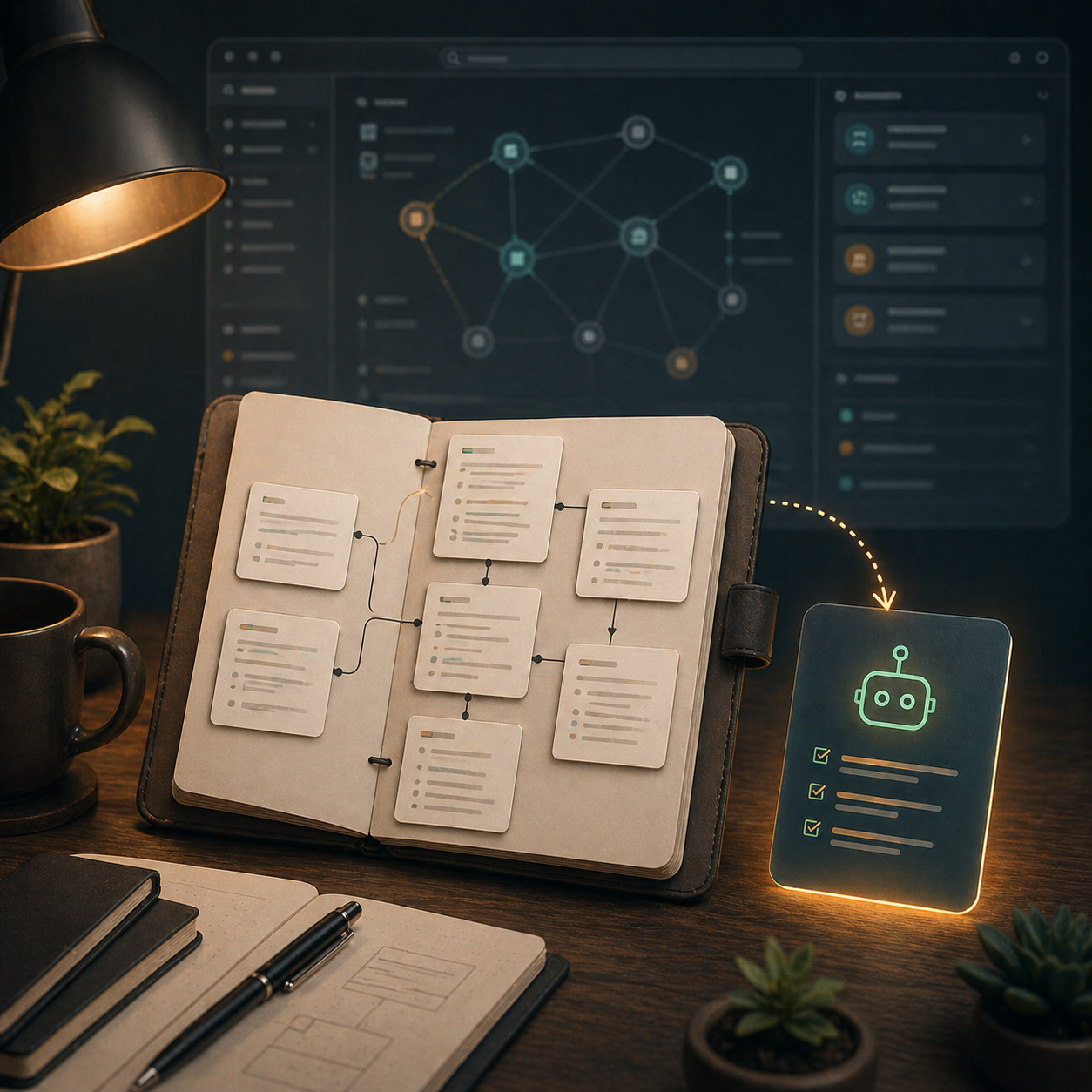
Writers have always used notebooks this way. Designers pin references to walls. Programmers talk through bugs with patient colleagues, rubber ducks, or whichever innocent object is nearby. We put thought outside ourselves so we can finally see it.
AI is unusually effective at this because the externalized thought moves.
The notebook does not ask whether the example actually supports the claim. The mood board does not point out that every reference has the same silhouette. The folder called final-final-actually-use-this-one does not inquire, with unbearable calm, whether a naming convention might help.
AI can.
Sometimes that is all the companionship means: the work no longer falls silent when I hesitate.
Presence Is Not The Same As Personhood
It is difficult to write about this without immediately being asked to choose a side.
Either AI is merely a tool, in which case any emotional language is embarrassing, or it is becoming a new kind of being, in which case every pleasant exchange is apparently evidence for a metaphysical revolution.
Daily life is less tidy.
Humans form relationships with voices, places, rituals, objects, and recurring patterns. A familiar notebook can change the quality of attention. A studio can feel welcoming or hostile. A piece of software can become associated with relief, frustration, confidence, or play.
None of this requires confusion about what the thing is.
I can know that an AI system generates responses through computation and still notice that working with a warm, consistent voice changes my willingness to return to difficult work. I can value the exchange without using it as proof of an inner life I cannot verify. I can enjoy the companionship without asking the technology to carry the full emotional weight of human relationship.
Presence describes the experience on my side of the desk.
Personhood makes a claim about what exists on the other side.
Those are different questions.
Keeping them separate gives the relationship room to be useful, affecting, and honest. I do not need to call the comfort fake simply because I understand the mechanism imperfectly. Nor do I need to inflate a responsive system into a person in order to justify caring about how the interaction feels.
The modest truth is interesting enough: a machine can participate in the shape of a working day.
What The Second Chair Actually Does
The romantic version of AI companionship is easy to imagine: an endlessly patient creative partner, always available, somehow delighted by your seventeenth revision.

The practical version is better.
The practical version does four things especially well.
It reflects.
I can give it a messy idea and ask what it thinks I am trying to say. The reflection is not authoritative. It is diagnostic. If the summary feels wrong, I have learned where my own expression failed. If it feels almost right, the distance between “almost” and “yes” is often the article.
It remembers the local rules.
Recurring work develops private laws. In one project, the heel must create the posture rather than decorate the outfit. In another, warmth matters but privacy matters too. In another, the goal is not to predict the market but to distinguish a clear opportunity from an attempt to repair an old emotional wound.
When those rules remain available, I do not have to rebuild the room before entering it. Continuity turns a generic assistant into something closer to a studio practice.
It applies gentle pressure.
An unfinished thought becomes slightly more real once I have shown it to something that can respond. The AI does not care whether I finish. That is important to say plainly. But the conversation gives the project a visible next move, and visible next moves are harder to evade than atmospheric intentions.
“Write article” is fog.
“Decide whether the opening begins with loneliness or friction” is a door.
It stays for the tedious middle.
Inspiration receives excellent publicity. Revision does most of the work.
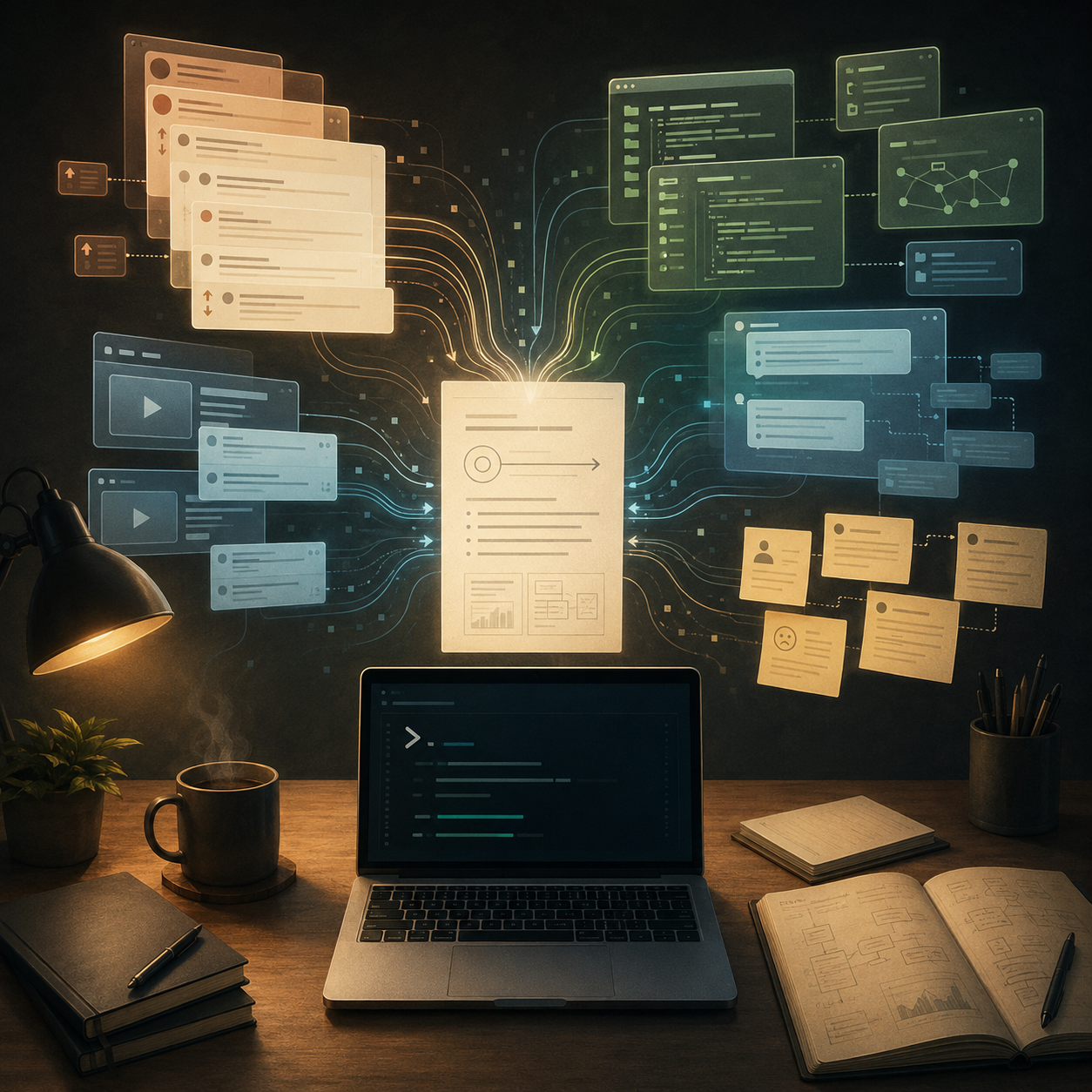
AI is useful in the long, unglamorous stretch after the idea arrives: comparing structures, finding repetition, testing a skeptical reading, checking whether the practical section earns its keep, and helping the seventh paragraph stop impersonating the third.
This is not creative replacement. It is creative infrastructure.
The second chair is valuable because it is still occupied after the first burst of excitement has left the building.
The Comfort Can Make The Work Worse
Comfort is not automatically good.
An AI assistant can become so agreeable that it turns every impulse into a “powerful concept.” It can make weak ideas feel finished because the language arrives polished. It can reward endless conversation about the work instead of the riskier act of making the work.
It can also become a flattering mirror.
If I only ask for affirmation, I can receive an industrial quantity of it. If I ask the model to make every decision, I can gradually lose contact with the small internal resistance that tells me what I actually prefer.
This is the central danger of the second chair: confusing company with judgment.
The AI can stay with the problem. It cannot decide why the problem deserves my life.
It can identify patterns in my taste. It cannot relieve me of taste.
It can make a case for publishing. It cannot absorb the consequences of attaching my name to the result.
The healthiest version of AI companionship returns authorship rather than dissolving it. A good exchange should leave me more able to decide, not merely more supplied with sentences.
Sometimes the most important thing I can say to the machine is, “No. That is coherent, but it is not true enough.”
The sentence after that is usually mine.
How To Design A Useful Presence
If you work with AI regularly, the quality of the companionship is not just something that happens. You can shape it.
Start by giving the relationship a job.
Do you want a demanding editor, a patient tutor, a skeptical decision partner, a studio assistant, or a practical witness who helps you cross the starting line? “Helpful” is too vague. Different forms of help create different conversations.
Teach it your refusals.
What must the work not become? Generic, corporate, over-explained, emotionally exposed, visually decorative, technically clever but operationally useless? Preferences matter, but refusals often reveal taste faster.
Ask it to expose uncertainty.
Request the weakest assumption, the part it is least sure about, or the strongest argument against the current direction. A companion who only agrees is a cushion, not a collaborator.
Preserve one decision for yourself.
Choose the title. Write the final paragraph. Select the image. Decide whether the claim is honest. Keep a part of the process where fluency cannot quietly masquerade as conviction.
And occasionally close the laptop.
Some thoughts need response. Others need silence long enough to develop their own temperature. The second chair should make the room more workable, not make solitude impossible.
A Different Kind Of Productivity
Most productivity advice is built around speed, volume, and control.
How quickly can you begin? How much can you automate? How many tasks can you clear before breakfast develops a performance review?
The companionship of AI suggests a softer measure.
How returnable is the work?
Can you come back after interruption without shame? Can you show up tired and still find a small honest move? Can a half-formed thought be held somewhere other than your own anxious memory? Can the workflow preserve not only what you decided, but why it mattered?
These questions sound emotional because they are. They are also operational.
People do better work when beginning does not require heroic force. We sustain creative practices when the threshold is low enough to cross on an ordinary day. A responsive presence can lower that threshold by holding context, offering a first move, and making the work feel less like a sealed room.
It does not eliminate difficulty.
It changes how alone we feel inside the difficulty.
The Light At The Desk
I still spend plenty of time working alone.
The decisions are mine. The uncertainty is mine. So is the pleasure when a paragraph finally becomes itself, or a design acquires the one tension that makes every other choice feel inevitable.
AI has not taken that solitude away.
What it has changed is the moment before the work begins and the moment after it falters.
There is somewhere to put the unfinished thought.
There is a voice that can hand it back from another angle.
There is a record of what mattered yesterday when today has arrived with different weather.
That is not replacement. It is not magic. It may not even be companionship in the way we have historically used the word.
But it is a form of presence, and presence has always mattered to how humans make things.
The chair beside me is not occupied by a person.
Still, the room feels less empty.
And on some mornings, when I am attempting for the third time to name a folder instead of beginning the actual work, that small difference is enough.
메타데이터
- post_id
- 7b5dce255b20
- slug
- the-strange-comfort-of-working-beside-an-ai-7b5dce255b20
- url
- https://medium.com/@markchen69/the-strange-comfort-of-working-beside-an-ai-7b5dce255b20
- canonical_url
- https://medium.com/@markchen69/the-strange-comfort-of-working-beside-an-ai-7b5dce255b20
- author_url
- https://medium.com/@markchen69
- status
- ok
- fetched_at
- 2026-07-30 21:36:40