How Do Fitness Trackers Monitor Heart Rate? The Surprising Science Happening on Your Wrist
The science behind smartwatch heart rate tracking, PPG sensors, and why your wearable knows your pulse in real time.
How Do Fitness Trackers Monitor Heart Rate? The Surprising Science Happening on Your Wrist
The science behind smartwatch heart rate tracking, PPG sensors, and why your wearable knows your pulse in real time.
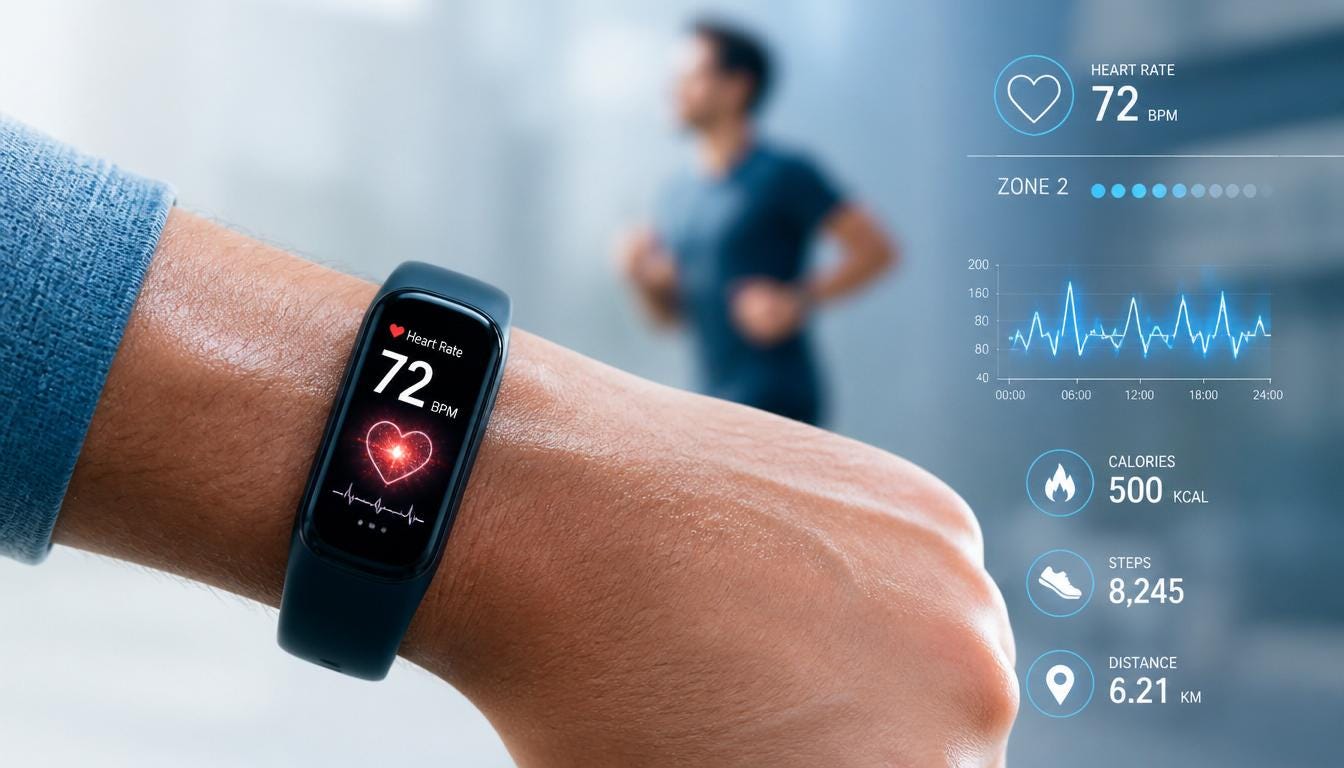
You glance at your wrist during a workout and instantly see your heart rate. It feels almost magical. But have you ever wondered: how do fitness trackers monitor heart rate so accurately without wires, chest straps, or medical equipment?
The answer lies in a fascinating combination of light sensors, smart algorithms, and biometric technology working together every second.
If you’ve ever questioned whether your smartwatch is actually measuring your heart rate correctly — or how it can track stress, recovery, and sleep — this guide breaks it down in simple terms.
For a deeper look into wearable health technology and heart monitoring, check out this detailed guide on **how fitness trackers monitor heart rate**.
The Technology Behind Heart Rate Tracking
Most modern fitness trackers use a method called Photoplethysmography (PPG).
That name sounds complicated, but the concept is surprisingly simple:
Fitness trackers shine tiny LED lights into your skin and measure how blood flow changes with each heartbeat.
Every time your heart pumps blood, the amount of blood flowing through your wrist changes slightly. Blood absorbs light differently than surrounding tissue, allowing the sensor to detect those changes.
Think of it like this:
- More blood flow = more light absorbed
- Less blood flow = more light reflected
- The tracker analyzes these changes and calculates beats per minute (BPM)
That’s how your watch knows when your heart rate jumps during a sprint or drops while you’re sleeping.
Why Fitness Trackers Use Green Lights
Have you noticed the bright green LEDs underneath many smartwatches?
They’re not there for decoration.
Green light is particularly effective because hemoglobin — the protein that carries oxygen in your blood — absorbs green wavelengths very well. This makes it easier for sensors to detect changes in blood volume beneath the skin.
Some advanced devices also use:
- Red LEDs
- Infrared LEDs
- Multiple light wavelengths
These additional sensors help improve accuracy and enable features such as blood oxygen monitoring and recovery tracking.
If you’re curious about the science behind these sensors, this breakdown of **fitness tracker heart rate technology** explains the process in more detail.
What Happens After the Sensor Detects Blood Flow?
Capturing light data is only the first step.
Modern fitness trackers rely heavily on software and machine learning algorithms to transform raw sensor readings into meaningful heart rate data.
The tracker continuously:
- Collects optical signals
- Filters out noise
- Removes motion interference
- Detects heartbeat patterns
- Calculates BPM in real time
Without these algorithms, your watch would struggle to distinguish between actual heartbeats and arm movement.
This is particularly important during activities like:
- Running
- Weightlifting
- Cycling
- High-intensity interval training
Researchers have spent years improving these systems because wrist movement creates significant measurement challenges.
Why Heart Rate Accuracy Changes During Exercise
One of the biggest complaints users have is:
“My smartwatch says one thing, but my chest strap says another.”
There’s a reason for that.
Wrist-based fitness trackers measure blood flow optically, while chest straps measure the electrical activity of the heart directly. Chest monitors are generally considered more precise, especially during intense exercise.
Several factors can affect tracker accuracy:
Motion
Rapid arm movement can create noise in the sensor signal. This is one of the biggest challenges for wearable devices.
Sweat
Excessive sweat can interfere with light transmission and sensor contact.
Device Fit
A loose tracker may allow external light to enter, reducing measurement quality.
Skin Tone and Tattoos
Certain skin characteristics may affect how light is absorbed and reflected, although modern devices continue improving their performance across different users.
High-Intensity Training
Rapid heart rate fluctuations are harder for optical sensors to capture instantly.
How Fitness Trackers Measure Resting Heart Rate
Monitoring your resting heart rate is often easier than tracking intense workouts.
When you’re still:
- Blood flow is more stable
- Motion interference is minimal
- Sensor readings become cleaner
This is why many devices provide highly reliable overnight heart rate measurements. Studies have found that wearable heart rate tracking tends to perform better during sleep and rest than during vigorous exercise.
That’s also why many health platforms use overnight readings to estimate:
- Recovery
- Stress
- Cardiovascular fitness
- Sleep quality
Can Fitness Trackers Detect Heart Problems?
This is where things get interesting.
Many modern wearables can identify unusual heart rate patterns and alert users to potential abnormalities. Some advanced devices can even help detect irregular rhythms such as atrial fibrillation (AFib).
However, there’s an important limitation:
Fitness trackers are health tools, not medical diagnostic devices.
They can provide useful signals and early warnings, but they shouldn’t replace professional medical evaluation.
If your device repeatedly flags abnormal readings, consulting a healthcare professional is the safest next step.
For readers exploring wearable health monitoring, this guide on **how fitness trackers monitor heart rate and health metrics** offers additional insights into how these measurements are used.
Beyond Heart Rate: What Else Are Trackers Measuring?
The same sensor system used for heart rate often powers several additional features.
Today’s fitness trackers can estimate:
Heart Rate Variability (HRV)
HRV measures tiny variations between heartbeats and is commonly used to assess recovery and stress levels.
Blood Oxygen (SpO2)
Using red and infrared light, many devices estimate oxygen saturation levels.
Sleep Tracking
Wearables combine heart rate, movement, and other signals to estimate sleep stages and quality.
Stress Monitoring
Changes in HRV and heart rate patterns help estimate physiological stress levels.
Recovery Scores
Many platforms use heart rate trends to recommend workout intensity and recovery periods.
Are Fitness Trackers Getting Better?
Absolutely.
The latest generation of wearables uses:
- More advanced sensors
- Multiple wavelengths of light
- AI-powered algorithms
- Better motion filtering
- Improved signal processing
Researchers are even developing systems that can identify inaccurate readings in real time and warn users when measurements may be unreliable.
As wearable technology evolves, the gap between consumer fitness devices and medical-grade monitoring continues to narrow.
That doesn’t mean your smartwatch replaces a doctor, but it does mean you’re carrying increasingly sophisticated health technology on your wrist every day.
Final Thoughts
So, how do fitness trackers monitor heart rate?
They use photoplethysmography (PPG) — a technology that shines light into your skin and measures blood flow changes caused by each heartbeat. Combined with powerful software and machine learning, these devices can estimate heart rate, recovery, stress, sleep quality, and much more.
While they’re not perfect, especially during intense activity, today’s fitness trackers are remarkably advanced compared to what existed just a few years ago.
The next time you check your pulse on your smartwatch, remember: there’s an impressive blend of biology, optics, and data science working behind that tiny number on the screen.
Did this help? Follow for more health tech insights, wearable technology breakdowns, and evidence-based fitness guides.
메타데이터
- post_id
- 7b82f77fea3d
- slug
- how-do-fitness-trackers-monitor-heart-rate-the-surprising-science-happening-on-your-wrist-7b82f77fea3d
- url
- https://medium.com/@hr6098736/how-do-fitness-trackers-monitor-heart-rate-the-surprising-science-happening-on-your-wrist-7b82f77fea3d
- canonical_url
- https://medium.com/@hr6098736/how-do-fitness-trackers-monitor-heart-rate-the-surprising-science-happening-on-your-wrist-7b82f77fea3d
- author_url
- https://medium.com/@hr6098736
- status
- ok
- fetched_at
- 2026-06-09 15:37:30