Brain Plasticity: This Neuroscientist Explains All the Secrets in Simple Terms
The book “ Why isn’t my brain working?” by Dr. Datis Kharrazian reveals truths about the brain function.
Brain Plasticity: This Neuroscientist Explains All the Secrets in Simple Terms
The book “ Why isn’t my brain working?” by Dr. Datis Kharrazian reveals truths about the brain function.
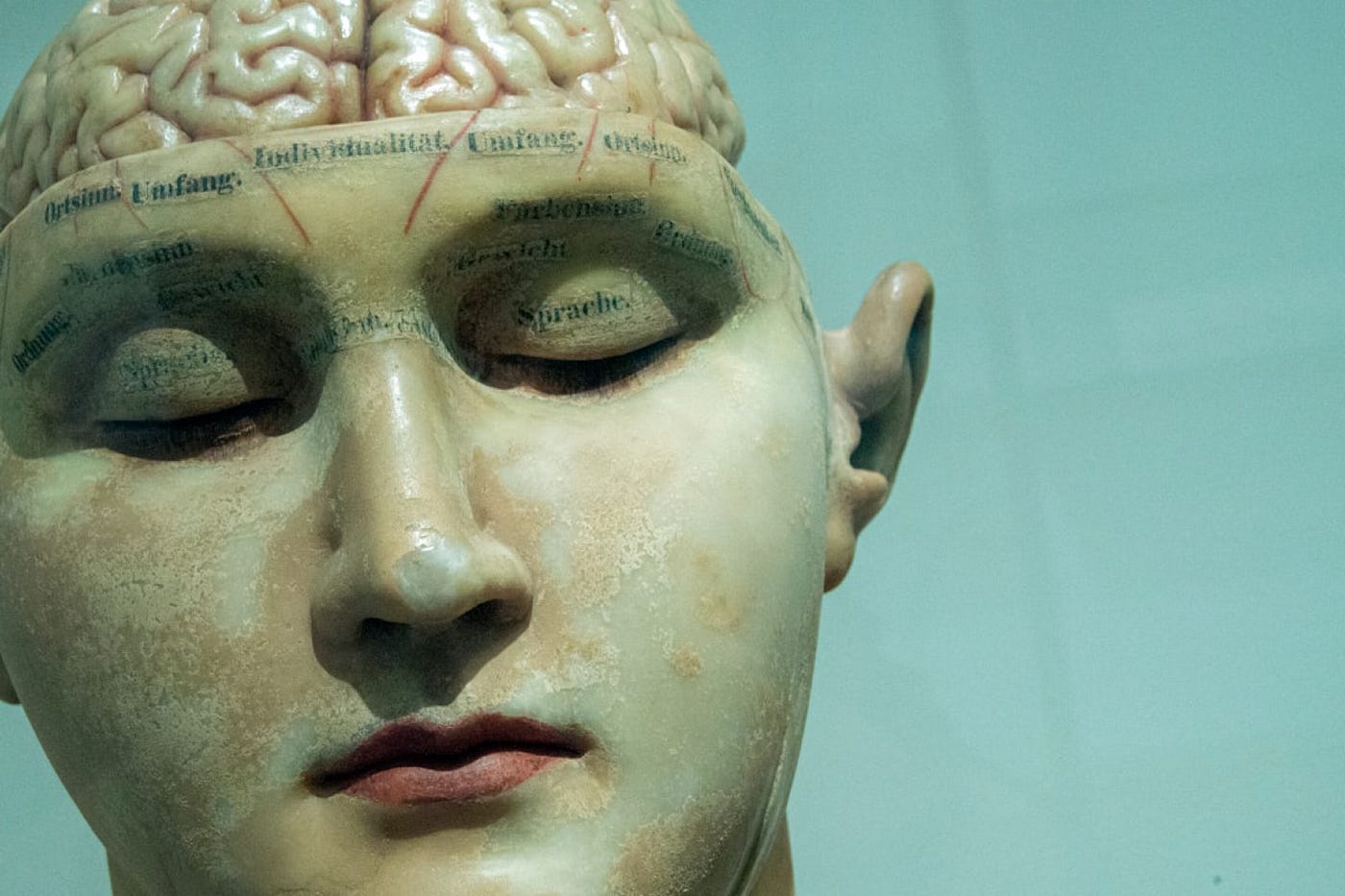
Photo by David Matos on Unsplash
Imagine two people learning the exact same dance routine.
One is a 22-year-old student. The other is a dance instructor in her sixties who has spent decades teaching choreography.
If you were to measure their brain activity using a PET scan while they learned the routine, you might expect the older instructor’s brain to work harder. Surprisingly, the opposite is true. The experienced instructor’s brain may use significantly less energy to learn a new routine, becoming more efficient.
Brain plasticity is one of the most remarkable properties of the human nervous system, as explained by Dr. Datis Kharrazian in his book “ Why isn’t my brain working?”
Brain Plasticity Is Not About Brain Size – Then It’s About What?
Many people assume that intelligence depends on how many brain cells they have. In reality, your brain’s performance depends far more on how effectively those neurons communicate with one another.
Every thought, movement, memory, and emotion relies on billions of neurons passing electrical and chemical signals across microscopic gaps called synapses. The stronger and more efficient these communication pathways become, the less effort your brain needs to perform the same task.
This explains why a beginner struggles with an activity that feels almost automatic to an expert.
Importantly, these changes cannot usually be seen on a routine MRI. Before learning a new skill and after mastering it, the brain may appear structurally identical. The real changes occur at the microscopic level, where neurons develop stronger branches, establish more efficient synaptic connections, and communicate with greater precision.
Brain Plasticity: How Do You Know If You Have It?
Brain plasticity means that your nervous system changes in response to repeated experience. Every time you practice a skill, solve a problem, play an instrument, read a challenging book, or learn a new language, specific neural networks become active.
If the same pathways are activated repeatedly, the brain begins strengthening them.
Brain plasticity begins. Neurons develop additional branches to increase communication. Synapses become more efficient. Signals travel more easily. Over time, the task requires less conscious effort because the brain has optimized the pathway.
In neuroscience, this strengthening process is closely associated with long-term potentiation (LTP).
Although scientists continue to study the precise mechanism, repeated activation appears to increase the sensitivity of receptors on the receiving neuron. As a result, fewer neurotransmitters are required to produce the same response, making communication faster and more efficient.
Unlike temporary changes that disappear after a task is completed, long-term potentiation allows these improvements to persist.
A simple question offers an important clue. Is learning something new easier or harder today than it was five years ago? If acquiring new skills has become increasingly difficult, your brain may not be adapting as efficiently as it once did.
While aging impacts learning, the brain can retain significant plasticity with proper stimulation and support.
How Is Brain Plasticity Beneficial Or Ddetrimental?
One of the most important principles of neuroscience is that the brain does not distinguish between good habits and bad habits. The brain simply strengthens whatever you repeatedly practice. If you practice learning, problem-solving, social interaction, emotional regulation, and physical movement, those neural networks become stronger.
If you repeatedly practice fear, chronic stress, pain, worry, or anger, those pathways also become stronger.
This is known as negative plasticity.
Chronic pain provides a powerful example of negative plasticity. Initially, pain protects the body by signaling tissue damage. However, persistent pain repeatedly activates the same neural circuits. Over time, these pathways become increasingly efficient.
Pain fibers may branch into additional connections, and pain-processing circuits become hypersensitive.
Eventually, the nervous system no longer requires the original injury to produce significant pain. The brain has learned pain so well that relatively minor signals can generate major discomfort. The problem is no longer limited to damaged tissue – it has become embedded within the nervous system itself.
How Does Stress Affect Brain Plasticity?
Negative plasticity extends beyond pain and can also alter the brain’s emotional centers. For example, individuals exposed to severe trauma, such as combat, develop increased activity within the amygdala, a brain structure responsible for processing fear, anger, and threat detection. This contributes to the symptoms of post-traumatic stress disorder (PTSD).
But you do not have to experience war for stress to reshape your brain.
Repeated exposure to everyday stress also strengthens stress-response pathways. The more often your brain generates anxiety, the better it becomes at generating anxiety. Over months or years, minor inconveniences that once caused little concern can begin triggering insomnia, elevated blood pressure, excessive worry, or emotional overwhelm because the stress circuits have become highly efficient.
How do you know if someone is having this response?
The person is stimulated by any loud sound or smell or emotion. Your brain simply improves at what it practices.
How Does Childhood Shape Brain Plasticity?
Plasticity is especially powerful during childhood. A child who spends years engaged almost exclusively in solitary video gaming, with little reading, imaginative play, or face-to-face social interaction, repeatedly stimulates emotional and reward circuits while providing less stimulation to the frontal lobe.
The frontal lobe is responsible for planning, judgment, impulse control, attention, and regulating emotions generated by the limbic system.
Without sufficient stimulation, these executive networks may not develop as robustly, making emotional regulation more difficult. By contrast, reading, social interaction, creative play, learning, and problem-solving repeatedly activate the frontal cortex, strengthening its ability to regulate emotional responses.
The brain develops according to how it is used.
What Does The Brain Need To Build Healthy Plasticity?
Neuroplasticity is not driven by stimulation alone. Neurons require oxygen to produce energy. They require glucose to fuel their activity. They require adequate neurotransmitters to communicate effectively.
Postsynaptic receptors must remain responsive, while neurotransmitters must also be efficiently cleared after signaling is complete so communication remains precise rather than chaotic.
Equally important, neurons function best in an environment free from chronic inflammation. Persistent neuroinflammation can impair neuronal health, interfere with communication between cells, and reduce the brain’s ability to adapt.
For this reason, supporting overall brain health through nutrition, sleep, physical activity, and appropriate medical care may help create conditions that favor healthy plasticity.
Brain Plasticity Is Continuous
Every experience changes your brain. Every repeated thought strengthens a pathway. Every habit leaves a neurological footprint. The question is not whether your brain is changing.
The question is which direction your brain is changing.
Because the brain is constantly rewiring itself, every decision to learn, move, read, practice, socialize, or manage stress is also a decision about which neural networks become stronger tomorrow than they are today.
Love hidden secrets. Love brain plasticity. Love reading books.
With love ❤️
Hit subscribe if you’re ready for a chemist-nutritionist who serves science with a side of fu
Disclaimer: The content of my stories reflects my professional insights and the results of scientific studies, but it’s for informational purposes only. This information does not constitute medical advice, diagnosis, or treatment. Always seek the advice of your personal physician for any questions you may have about your health.
메타데이터
- post_id
- 7bb39c40f259
- slug
- brain-plasticity-this-neuroscientist-explains-all-the-secrets-in-simple-terms-7bb39c40f259
- url
- https://baos.pub/brain-plasticity-this-neuroscientist-explains-all-the-secrets-in-simple-terms-7bb39c40f259
- canonical_url
- https://baos.pub/brain-plasticity-this-neuroscientist-explains-all-the-secrets-in-simple-terms-7bb39c40f259
- author_url
- https://medium.com/@leiladrouby
- status
- ok
- fetched_at
- 2026-07-13 06:23:13