Makeup Keeps Getting Lighter. The Job Keeps Getting Harder.
Social media didn’t change how beauty is sold. It quietly rewrote what a makeup artist has to pull off — one face, every camera, all at…
Makeup Keeps Getting Lighter. The Job Keeps Getting Harder.
Social media didn’t change how beauty is sold. It quietly rewrote what a makeup artist has to pull off — one face, every camera, all at once.
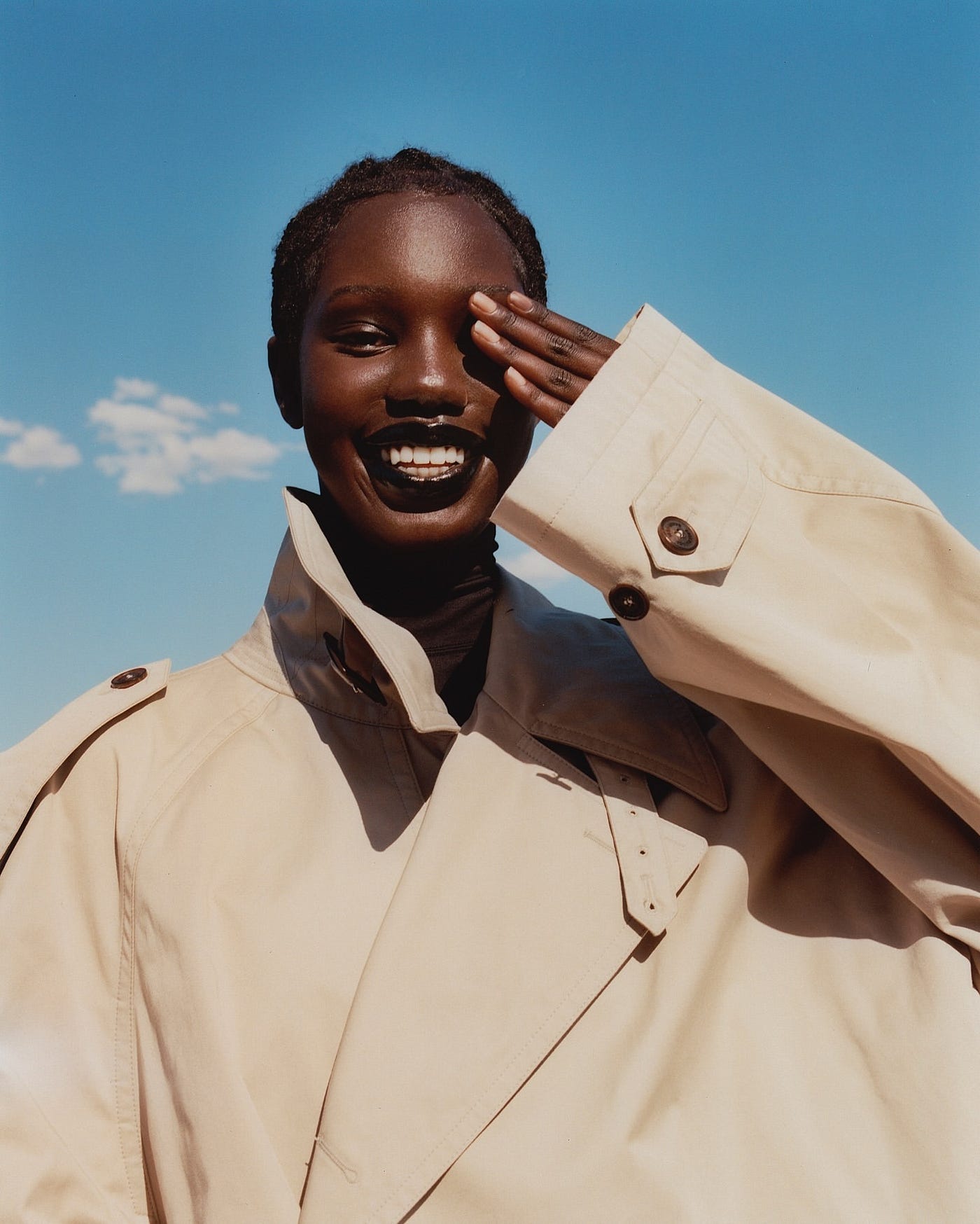
Photo by Yana Kalina, Makeup by Terezka Fras, Model Martha Reec
Social media’s effect on beauty usually gets discussed as a marketing story — discovery, consumer behavior, where people buy. That story is real. But it quietly triggered a second change that gets far less attention: it rewrote the technical job of the makeup artist.
Over the last decade, the craft moved. It used to be optimized for one controlled environment — a photographic frame you could plan around completely. Now the same work has to hold up across platforms, lighting conditions, camera systems, and viewing experiences at the same time. The expectations on a professional artist today are meaningfully more complex than they were even ten years ago, and the reason isn’t a new trend in looks. It’s a new set of conditions the look has to survive.
From a controlled image to continuous visibility
Beauty campaigns were built for control. The artist worked shoulder to shoulder with the photographer, the lighting director, the retoucher, the creative team — every element of the production engineered around one predetermined final image.
Inside that system, complexion products could be applied strategically for the studio’s exact light, the camera’s exact settings, the retoucher’s exact process. The goal was never skin that looked undetectably natural in every possible circumstance. The goal was skin that photographed exceptionally well in one specific visual environment. That was the whole job.
Social media dismantled that premise.
A campaign production now spins off a whole spread of assets at once — advertising stills, short-form video, behind-the-scenes footage, creator collaborations, livestream segments, social-first cutdowns. One model can move through professional photography, smartphone video, and open daylight inside a single production day.
So the makeup stopped being judged through one controlled frame. It’s now under continuous scrutiny, on platforms where anyone can pause, zoom, compare, and pick apart the detail with a precision the old model never had to answer to.
The technical bar went up, not down
This is where the assumption gets it backwards. More visibility didn’t lower the standard. It raised it.
A complexion used to be solved for a single camera-and-lighting setup. That same complexion now has to keep its integrity across professional photography, high-resolution video, smartphone cameras, the compression algorithms of social platforms, natural daylight, artificial light, and hours of wear. The problem is no longer perfection inside one frame. It’s consistency across a spectrum of conditions that don’t agree with each other.
That demands a deeper command of product formulation, skin physiology, color theory, texture, how light reflects, how a camera behaves. Every application decision — product choice, layering, skin prep, finish control — has to account for how that skin will read not just under a softbox, but in motion, in close-up video, in light nobody on set controls. It’s a level of technical sophistication well past traditional photographic makeup.
Why the skin started looking like skin
The most visible result of all this is a complexion that looks increasingly like real skin.
Once social media handed audiences an endless feed of unfiltered and half-filtered faces, heavily constructed makeup got hard to sustain. A technique that looked flawless under studio light often turned noticeably heavier the moment it hit a smartphone camera or afternoon daylight. It didn’t fail in the studio. It failed everywhere else.
So artists and brands adapted — toward lightweight complexion products, targeted correction instead of blanket coverage, careful texture management, formulas built to imitate healthy skin rather than bury it. Read casually, that looks like less makeup. It’s the opposite. Building skin that looks effortlessly real across every one of those conditions usually takes more technical control than building a visibly perfected face. The artistry didn’t shrink. It got harder to see, which is not the same thing.
As makeup gets lighter, the skin underneath matters more
Here’s the consequence that ties the whole shift together. Once complexion products go lighter and more transparent, the actual skin underneath stops being a starting point and becomes part of the final result. You can’t hide it, so you have to prepare it — hydration, barrier support, targeted skincare protocols become part of getting makeup to perform at all.
That’s the real reason skincare and makeup keep collapsing into each other, and why hybrid, skincare-driven products keep multiplying on shelves.
The skincare boom isn’t a trend running alongside makeup. It’s a direct downstream effect of makeup getting lighter.
The lighter the makeup, the more of the work the skin has to do — and the industry followed that logic all the way into its product formulations.
What actually changed
Social media didn’t just change how beauty gets sold. It reshaped the technical foundation of the craft underneath it.
The modern artist is expected to build work that performs across campaign photography, digital content, social platforms, livestreams, and plain real-world observation — all at once, and all convincing. Meeting that takes more precision, more product knowledge, and more adaptive expertise than the job ever asked for before.
None of this happened in a single jump. Makeup got lighter gradually, over years, as the conditions it had to survive multiplied — until you reach the moment we’re in now, where you can look at a major campaign and see the texture of real skin, pores and all, left deliberately intact. That would have read as a mistake not long ago. Now it reads as the point.
The defining challenge of modern makeup is no longer building a look that wins a single image. It’s building a look that stays credible everywhere it appears.
The lighter the look gets, the more honest the skin underneath it has to be
메타데이터
- post_id
- 7bca1b080d1f
- slug
- makeup-keeps-getting-lighter-the-job-keeps-getting-harder-7bca1b080d1f
- url
- https://medium.com/@omaluchenko/makeup-keeps-getting-lighter-the-job-keeps-getting-harder-7bca1b080d1f
- canonical_url
- https://medium.com/@omaluchenko/makeup-keeps-getting-lighter-the-job-keeps-getting-harder-7bca1b080d1f
- author_url
- https://medium.com/@omaluchenko
- status
- ok
- fetched_at
- 2026-07-10 01:40:30