The Alliance Without America
From a Swedish island ringed with tanks to a Canadian Arctic radar deal snubbing Washington, the democracies of the West are quietly…

U.S. Marines and Swedish Soldiers pose for a photo during exercise Baltic Operations (BALTOPS) 24 at Gotland, Sweden, June 12, 2024. BALTOPS 24 is the premier maritime-focused exercise in the Baltic Region.
The Alliance Without America
From a Swedish island ringed with tanks to a Canadian Arctic radar deal snubbing Washington, the democracies of the West are quietly building a security order they can no longer trust the United States to guarantee
Something has shifted in the architecture of Western security. It is not a single dramatic rupture but a series of tremors — quiet, cumulative, and increasingly impossible to ignore.
From the windswept limestone plains of a Swedish island in the Baltic to the corridors of government ministries in Ottawa, Reykjavik, and Berlin, political leaders and military planners are reaching the same unsettling conclusion: the post-Cold War order, already badly cracked by Russia’s full-scale invasion of Ukraine in 2022, is now fracturing along a second, more unexpected fault line.
The United States — architect, guarantor, and backbone of the Western alliance for eighty years — can no longer be counted upon as it once was.
The consequences of this realization are playing out simultaneously across multiple theaters.
NATO allies are scrambling to fortify exposed territories they had long assumed were protected by collective deterrence.
Countries that had maintained careful neutrality are now reconsidering whether any position can still be called safe. Energy partnerships are being rewired across continents.
Defense procurement decisions that would once have been purely technical are now freighted with geopolitical meaning. And beneath it all, European governments are grappling with a question that the entire post-war generation had been spared: what does it mean to defend yourself when you can no longer entirely trust your most powerful friend?
The island of Gotland, rising out of the Baltic Sea some three hundred kilometers from Russia’s heavily militarized exclave of Kaliningrad, has become one of the starkest symbols of this new reality.
It is a place of medieval churches, summer tourists, and tranquil limestone coastlines — and it is also, in the assessment of NATO military planners, one of the alliance’s most exposed and most vital strategic assets. Fighter jets taking off from Gotland can reach any capital city in the Baltic region within minutes.
Long-range missiles positioned there could be used to defend an arc of territory stretching from the Finnish border to the Polish coast.
Conversely, if Russia were to seize it and install its own air defense systems, it could choke off sea and air supply lines to the three Baltic states and Finland, potentially isolating hundreds of thousands of alliance troops from reinforcement.
As Niklas Granholm of the Swedish Defence Research Agency put it bluntly: whoever controls Gotland controls much of what happens in the Baltic Sea.
For much of the post-Cold War period, Gotland was treated as something close to a strategic afterthought.
The drawdown that followed the Soviet Union’s collapse left the island with a garrison that could barely have defended a town square, let alone a coastline.
Then Russia invaded Ukraine. Then Sweden joined NATO. And now, with startling speed, the island is being transformed back into the military stronghold it once was during the Cold War. Sweden has poured more than two hundred million euros into infrastructure upgrades.
Air defense systems that had sat dormant for years have been reactivated. A regiment armed with CV90 armored fighting vehicles and Leopard 2 tanks has been reinstated.
The island’s commander, Andreas Gustafsson, says that at least a thousand more rotational troops will join the forty-five hundred already stationed there within the year, with longer-range artillery expected to follow.
By 2028, Gotland is expected to host new medium-range IRIS-T air defense systems — weapons designed to intercept cruise missiles and aircraft at distances that would cover a substantial portion of the surrounding sea.
The urgency driving this buildup is not abstract.
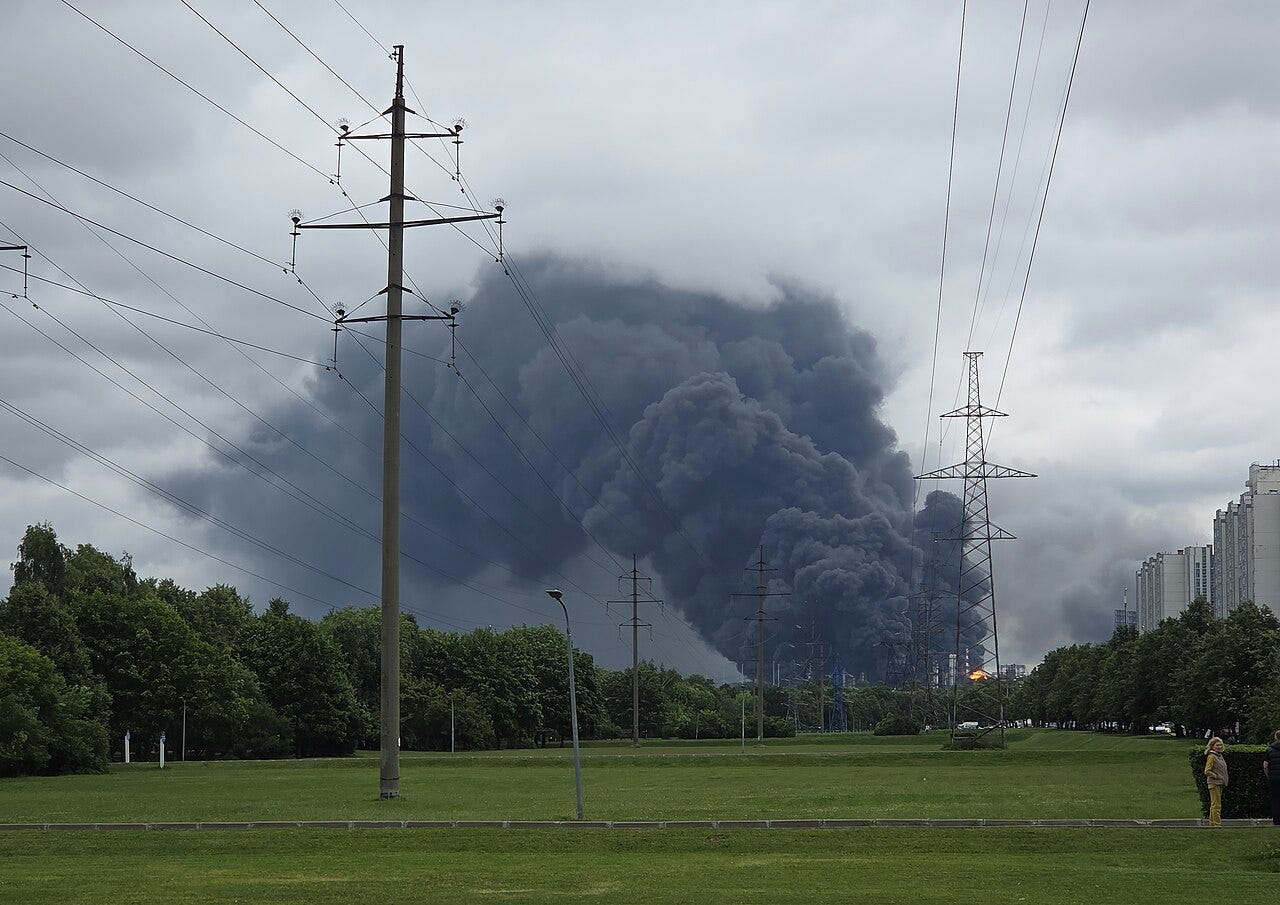
In the past eighteen months alone, Gotland has experienced what Swedish officials describe as an escalating campaign of Russian hybrid activity. A critical water pump was sabotaged, causing a sudden major leak.
A subsea fiber optic cable was cut. Radio interference, suspected to originate from Russian electronic warfare systems, has disrupted communications affecting everything from commercial aircraft to ambulances.
Sweden’s Chief of Defense, Michael Claesson, says he is “pretty concerned” — not merely by the frequency of such incidents, but by their nature. They represent, he argues, the deliberate application of Russian doctrine: identify vulnerabilities, probe them constantly, and exploit them when the moment is right.
It is precisely this kind of pressure — relentless, deniable, operating in the space between peace and open conflict — that makes the current situation so difficult to navigate. A conventional military threat can be deterred with conventional military means.
Hybrid warfare, by design, blurs the threshold at which a response is justified and complicates the political will required to mount one.
The island’s civilian administrator, Meit Fohlin, has taken to meeting every week with representatives from the coast guard, police, firefighters, the military, the hospital, the water authority, and the energy operators, mapping out responses to every conceivable scenario from a supply blockade to a direct assault on the harbor.
She works with all ninety-two parishes on the island, preparing them to respond to crises that may not look anything like the conflicts of previous generations.
The training exercise Sweden concluded recently on Gotland illustrated both the alliance’s strengths and its emerging fault lines. Around eighteen thousand troops from thirteen countries gathered on the island’s dusty plains to rehearse a response to a hypothetical Russian assault.
Canadian and Danish soldiers trained alongside Finnish F-18 fighters, British snipers, Dutch Apache helicopters, and a contingent of American and Norwegian marines. But the exercise also surfaced something troubling: the United States, in a move that surprised several European partners, significantly reduced the number of troops it had originally planned to send.
A spokesperson for US Army Europe and Africa insisted that participation levels routinely change during planning, noting that three hundred American soldiers did ultimately take part. What the spokesperson declined to say was how many had originally been expected.
For the European participants, that silence carried its own message.
Trump had already blindsided the alliance in recent weeks by announcing sudden troop withdrawals from Germany and Poland and continuing to chip away at the credibility of America’s security commitments.
The exercise also produced a sobering tactical lesson: a unit of just seventeen Ukrainian soldiers, deploying the drone warfare techniques honed in two years of grinding combat against Russia, destroyed a Swedish armored detachment so efficiently that the Swedes had to restart the exercise three times. “I just flew with my drone — I saw all of them, so it was easy targets,” said one Ukrainian operator, a twenty-four-year-old who goes by the call sign Tarik, as a patched-together one-way attack drone buzzed across the rural skyline behind him.
The Swedish commander watched and took careful notes. His main takeaway: his forces need to train with drones far more intensively than they currently do. Russia and Ukraine are operating in a different technological universe when it comes to drone warfare, and NATO’s armies are scrambling to catch up.
The question of what NATO is and what it can still promise its members has become one of the defining anxieties of European strategic thought.
François Heisbourg, one of France’s most distinguished defense analysts and the author of a new book on what he calls Europe’s “predators,” argues that the continent now faces simultaneous pressure from three directions that, while different in nature, share a common orientation: each views Europe as prey.
Russia sees it as a terrain for military expansion and territorial revision, as the events since 2021 have made brutally clear. China sees it as an economic and ideological target — a collection of what Beijing considers decadent democracies destined for irrelevance.
And the United States, under the current administration, has come to see it as a collection of countries that are insufficiently democratic, insufficiently self-reliant, and insufficiently willing to join American geopolitical campaigns, including the ongoing confrontation with Iran.
That last point deserves emphasis, because it marks a genuinely new development.
The Trump administration has made it clear that the future of American participation in NATO may be conditioned, at least in part, on European willingness to support US policy positions that European governments — mindful of international law, economic interest, and their own democratic constituencies — find deeply problematic.
The closing of the Strait of Hormuz by Iran has imposed real costs on European economies. But the suggestion that refusing to join an American-led military campaign in the Middle East might affect the security umbrella extended over European territory represents a departure from everything the alliance was built to be.
Heisbourg is careful to note that Europe’s position, while genuinely difficult, is not as weak as the fashionable discourse of decline might suggest.
The narrative that Europe has “exited history,” as he puts it, has been internalized by European elites to a damaging degree — but it is not simply true. European countries managed the COVID-19 crisis more effectively than the United States, Russia, or China. They have stepped into the breach left by retreating American support for Ukraine with considerable speed and increasing capacity.
A group of European states is now working with France and the United Kingdom to “Europeanize” nuclear deterrence — a concept that would have been politically unthinkable a decade ago. And when Trump attempted to pressure Greenland toward American acquisition, European countries used the threat of trade countermeasures and a symbolic military presence to push back and, for the time being, block the operation.
This pattern — Europe reacting defensively but effectively when sufficiently threatened — suggests a different kind of strength than the imperial power that Brussels has never sought to become.
But it also raises the question of what comes next, when reactive responses to individual provocations are not enough, and when the structural conditions that made European security cheap and easy no longer apply. The answer, increasingly, involves money — massive new investments in defense that were politically impossible ten years ago and are now being treated as existential necessities.
Germany’s Bundeswehr offers a window into just how deep the process of reconstruction must go.
The German government has committed to building one of the largest land forces in NATO, eventually targeting more than four hundred and sixty thousand battle-ready soldiers from its active force and reserve. Its current active strength stands at approximately one hundred and eighty-five thousand — meaning the armed forces must nearly double in size.
That is an enormous undertaking in terms of recruitment, equipment, and infrastructure. But it turns out that the challenges run even deeper than anyone fully appreciated.
A court ruling last year by Germany’s Administrative Court of Appeal in North Rhine-Westphalia exposed a legal landmine embedded in the promotion system for non-commissioned officers — the experienced sergeants and staff sergeants who form the practical backbone of any functioning military.
The ruling struck down a longstanding practice under which soldiers in the NCO corps were automatically promoted after sixteen years of service.
That system, the court found, was incompatible with the German Basic Law, which guarantees access to public office based on aptitude, qualifications, and professional performance — not on tenure.
The decision was not unprecedented: a 2004 ruling from Germany’s Federal Administrative Court had established a similar principle in the context of police promotions. But despite fifteen years of working groups, internal debates, and political hand-wringing, the Defense Ministry had never actually reformed the system.
Now it has no choice.
Defense Minister Boris Pistorius announced that existing promotions must be paused and that new criteria, based on merit rather than time served, must be developed by early 2027. The General Inspector of the Bundeswehr, Carsten Breuer, is overseeing the process.
The practical consequences are significant. Tens of thousands of soldiers who had built their career expectations around the old system now face uncertainty about their prospects and, in some cases, about pay increases worth several hundred euros per month.
The German Armed Forces Association has warned that the disruption risks damaging the Bundeswehr’s attractiveness as an employer precisely at the moment when it needs to recruit at scale. Whether the forced reform produces a military that is actually more effective, or merely one that is legally defensible, remains to be seen.
But the episode illustrates something important about the nature of European rearmament: it is not simply a matter of allocating money. It requires rebuilding institutions, legal frameworks, and organizational cultures that were allowed to atrophy over decades of strategic holiday.
Canada, meanwhile, is undertaking its own profound reorientation — one that reflects not just the changing strategic environment but the particular shock of watching its closest ally become, at least in some respects, an adversary.
Donald Trump’s imposition of tariffs on Canadian goods, his casual suggestions that Canada could become the fifty-first American state, and his administration’s broader posture of transactional contempt toward longtime partners have transformed Canadian foreign policy in ways that would have seemed implausible just a few years ago.
Prime Minister Mark Carney, who built his political identity in large part around the promise of a different relationship with the United States, has responded by pivoting Canada toward Europe and other partners with a speed and decisiveness that has surprised even some of his supporters.
The clearest expression of this shift came when Canada signed an agreement to export up to one million metric tons of liquefied natural gas annually to Germany, beginning in the early 2030s and running for two decades.
The gas will flow from a terminal on Canada’s Pacific coast in British Columbia — specifically from the Ksi Lisims LNG project, which has already received government approval but has not yet been fully financed.
The buyer is Securing Energy for Europe, a German state energy company that was once owned by Russia’s Gazprom and was nationalized after Russia’s invasion of Ukraine. The deal is freighted with symbolism: two democracies, both facing pressure from a revisionist superpower on one side and an unpredictable ally on the other, deciding to build their security around each other.
The mechanics are complex. Canadian Pacific coast gas is more expensive to ship to Germany than American Gulf coast gas, and the route — whether through the Panama Canal, the Suez Canal, or via complex swap arrangements with Asian buyers — adds cost and logistical variables. German officials are candid that price is not the only consideration.
After depending on a single supplier for decades, with catastrophic results when that supplier invaded a neighboring country, Germany has concluded that diversity of supply is worth paying a premium for. The Canadians, who send the vast majority of their energy exports to the United States, have equally powerful reasons to develop alternative customers.
Carney has set a target of doubling Canadian exports to non-American markets by 2035. The LNG deal is the most concrete progress toward that goal to date.
The defense dimension of Canada’s European pivot is no less striking.
In a direct rebuke to Washington, Carney announced that Canada will not purchase American early-warning surveillance aircraft, a decision that breaks with decades of deep interoperability between Canadian and American defense systems.
Instead, Canada is buying the Saab GlobalEye, a Swedish-developed surveillance platform built on a Canadian-manufactured Bombardier Global 6500 jet — a choice that is simultaneously a statement of capability, commercial logic, and political intent.
The GlobalEye’s powerful radar systems can track aircraft and missile movements over vast distances, detect hostile naval activity, and guide fighter jets to their targets. Its role in monitoring Canada’s Arctic, an enormous and strategically critical territory of more than four million square kilometers that Canada has historically relied on American partnership to watch, will be central to a new national defense posture that Carney has framed in terms of full Canadian sovereignty. Saab has pledged to invest in Canadian research and development as part of the deal.
Canada, meanwhile, is reviewing its planned purchase of American F-35 fighter jets to explore European alternatives — a review whose outcome will be watched closely on both sides of the Atlantic.
The thread connecting all of these developments — Gotland’s fortifications, Germany’s military legal reforms, Canada’s European pivot, the LNG deal — runs through Iceland, where the question of whether to seek European Union membership has moved from theoretical curiosity to live political debate with a summer referendum now on the calendar. Iceland has been a NATO member since the alliance’s founding but has never joined the EU, fiercely protecting its fishing rights and its political independence.
That calculus has begun to shift. Trump’s repeated threats against Greenland — Iceland’s nearest neighbor — created a psychological rupture among a population of four hundred thousand people who had long assumed that their position in the American-led alliance made them safe.
Iceland’s defense situation is unusually exposed: it is the only NATO member with no military of its own, relying entirely on the alliance’s collective guarantee. When that guarantee begins to feel conditional, the vulnerability becomes viscerally apparent.
The EU’s appeal, for many Icelanders, is not primarily about political integration or the single market. It is about belonging to a structure that, unlike NATO, operates through legal obligations of mutual assistance that do not run through Washington.
The EU’s mutual defense clause — Article 42.7 of the Treaty on European Union — is less powerful in practice than NATO’s Article 5, but it represents a different kind of commitment, one anchored in a community of democracies that share Iceland’s values and are not subject to the whims of a single head of state.
The EU has signaled openness to Icelandic membership, and has indicated it might be flexible on fishing quotas — the most politically sensitive issue for a country where the fishing industry is a core pillar of national identity and economic survival.
None of that guarantees a yes vote.
The debate is closely contested. But the fact that it is happening at all is itself a measure of how much has changed.
What is emerging from all of this, imperfectly and unevenly, is something that might be called a European security architecture by default — not the product of a grand strategic plan, but of many separate governments reaching similar conclusions about their circumstances and choosing, one by one, to act.
Some of the architecture is military: expanded garrisons, new weapons systems, reformed promotion structures, surveillance aircraft bought from allies rather than from a superpower that has become unreliable.
Some of it is economic: energy deals designed to reduce dependence on both Russia and the United States, trade diversification efforts that will take years to bear full fruit. Some of it is institutional: Iceland considering EU membership, European countries pooling defense capabilities, France and Britain sharing nuclear planning with a broader coalition of partners.
None of it is fast enough. Russia is already generating the capabilities it eroded in Ukraine, and Western analysts warn that it may be in a position to test NATO again within a decade — possibly sooner if it judges that American commitment has frayed sufficiently to make the gamble worthwhile.
That is precisely the logic that Michael Claesson, Sweden’s defense chief, articulates when he warns against sitting on one’s hands. “We should not wait for this and that level of regeneration of Russian armed forces to happen,” he said during the Gotland exercise, “but instead be constantly on our toes and prepared.”
His is the voice of a soldier who has watched one generation of assumptions collapse and is determined not to see another generation do the same.
The deeper challenge is political. Defense budgets can be legislated. Weapons can be procured. Fortifications can be built. But the willingness to sustain a serious, costly, long-term security posture — to accept restrictions on civilian infrastructure for military purposes, to tolerate drones overhead and soldiers in your backyard, to vote for governments that prioritize defense spending over popular services — depends on something harder to manufacture: a public that understands the stakes and trusts its institutions to manage them honestly.
That public trust has been worn thin in many European countries by years of austerity, inequality, polarization, and the corrosive influence of foreign-funded political movements. Heisbourg’s observation about sovereignty is pointed here: the populist parties that spent years claiming to defend European sovereignty while routing their legitimacy through Moscow or Washington are discovering that their constituents have understood the contradiction better than they did.
The electoral corrections underway in Poland, Hungary, Romania, and Italy suggest that democratic publics, when genuinely threatened, tend to recalibrate toward coherent self-defense rather than toward the ideological comfort of submission dressed up as independence.
Whether that recalibration happens fast enough, and whether it produces the institutional depth and strategic coherence that the moment demands, remains genuinely uncertain.
What is no longer uncertain is the nature of the moment itself.
The era in which European security could be outsourced, energy supplies taken for granted, Arctic territories assumed to be beyond the reach of great-power competition, and American guarantees treated as automatic — that era is over.
The windswept island of Gotland, bristling with tanks and air defense systems and drone operators learning from veterans of the most intense land war in Europe since 1945, is one version of what comes next. The LNG terminal rising on Canada’s Pacific coast is another.
The referendum ballot being prepared in Reykjavik is a third. They are different in scale, geography, and character, but they share a common logic: nations in the democratic world, looking at the world as it is rather than as they had wished it to be, are deciding they had better be ready to defend themselves.
Sources and Further Readings
메타데이터
- post_id
- 7bd5b39335f2
- slug
- the-alliance-without-america-7bd5b39335f2
- url
- https://medium.com/the-geopolitics-report/the-alliance-without-america-7bd5b39335f2
- canonical_url
- https://medium.com/the-geopolitics-report/the-alliance-without-america-7bd5b39335f2
- author_url
- https://medium.com/@jens_sorensen_geopol.
- status
- ok
- fetched_at
- 2026-06-09 15:37:30